Key Points:
- Michele Bullock surprises markets by ruling out 2026 rate cuts and hinting at a possible hike.
- Economic caution remains due to persistent inflation and mixed labour data.
- Market volatility rises as traders adjust expectations for 2026.
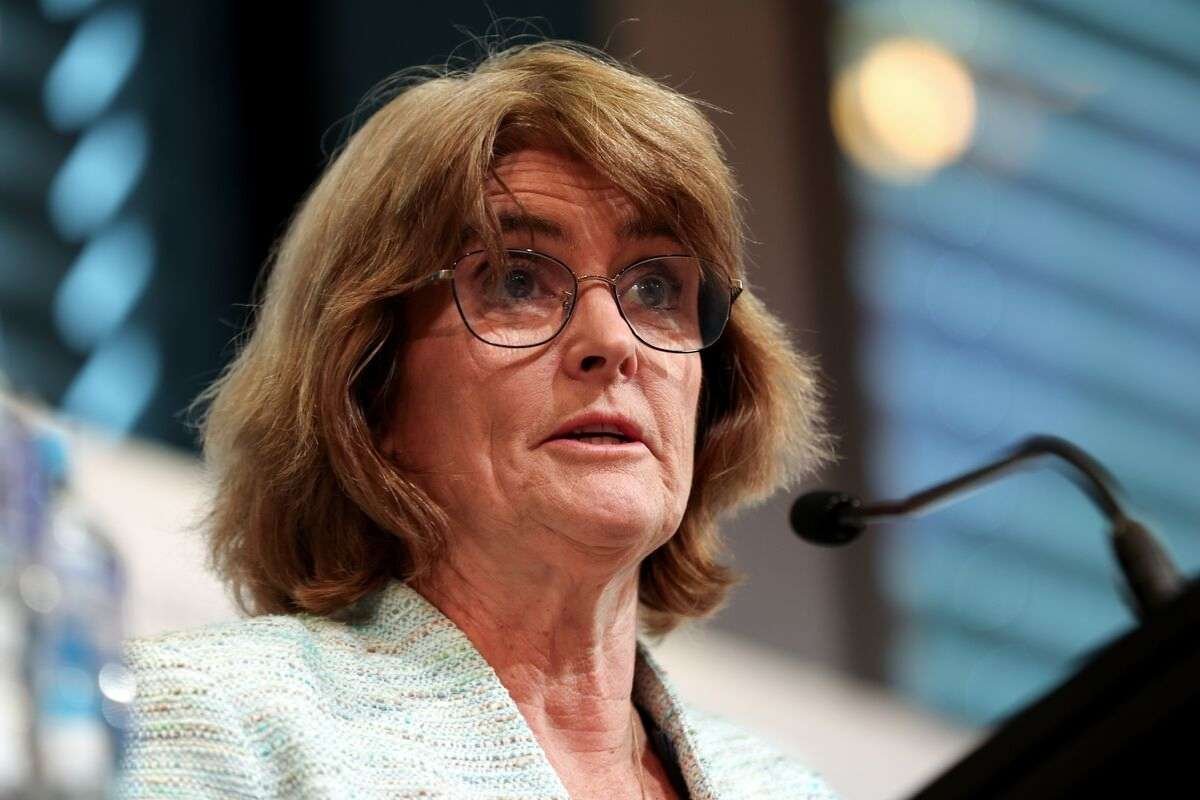
Australia’s financial markets swung sharply this week after Reserve Bank of Australia (RBA) Governor Michele Bullock delivered comments that deviated dramatically from the expectations investors had priced in. Although the central bank kept the official cash rate steady at 3.6%, the governor’s tone, not the decision itself, triggered a wave of volatility across bond and currency markets.
In her post-decision briefing, Bullock moved away from earlier signals hinting at gradual rate cuts in 2026. Instead, she stressed that further reductions were “not needed” at this stage and emphasised that the next possible move could, in fact, be a rate hike. She outlined only two realistic scenarios: keeping the cash rate unchanged for an extended period or tightening policy further if inflation pressures persist.
The remarks forced traders to rapidly unwind expectations of early-2026 easing. Until recently, markets had anticipated the cash rate drifting toward 3.35% next year. Following Michele Bullock’s comments, pricing flipped dramatically, with projections now leaning toward a rise to around 3.85% by mid-2026, potentially climbing beyond 4% if inflation remains stubborn.
The sudden shift overshadowed the otherwise predictable rate announcement and set the tone for heightened uncertainty ahead of the RBA’s next major meeting in February.
Mixed Economic Signals Add to Policy Ambiguity
The RBA’s sharper tone comes against the backdrop of a complex economic landscape. Inflation remains above target, with underlying price pressures proving far more persistent than policymakers expected earlier in the year. Despite easing global supply chain issues, domestic costs, particularly in service,s continue to drive inflation higher.
Labour market data released shortly after the monetary policy statement painted an equally mixed picture. Although unemployment held at 4.3%, the economy shed more jobs than anticipated, hinting at a cooling labour market. Even so, the RBA remains concerned that wage dynamics could continue adding upward inflation pressure, especially in sectors struggling with chronic worker shortages.
Household spending figures also complicate the outlook. While discretionary consumption remains weak, spending on essential goods and services has been surprisingly resilient, signalling that underlying demand has not softened enough to guarantee a smooth path back to the inflation target.
Against these contradictory indicators, the RBA appears unwilling to shift into outright easing mode. Instead, it is focused on maintaining caution, waiting to see whether inflation cools further or whether the economy requires additional tightening in 2026.
Markets Brace for More Volatility as 2026 Approaches
Following Michele Bullock’s speech, Australian bond yields surged, and the Australian dollar strengthened as investors recalibrated their expectations. The reaction contrasted with trends in major global markets, where several central banks, including the U.S. Federal Reserve, have already begun loosening policy. This divergence has raised concerns about potential currency pressures and capital flow imbalances heading into the new year.
Analysts warn that markets may experience more turbulence as upcoming data releases, particularly January inflation and early-2026 employment figures, play a decisive role in shaping the RBA’s next policy shift. With traders now split between expecting a prolonged pause and a possible hike, volatility is becoming the new normal in Australian financial markets.
The RBA faces a delicate balancing act: curbing inflation without crushing household finances or stalling business momentum. Michele Bullock’s unexpected change in tone has heightened the stakes, leaving investors closely watching every signal ahead of what is likely to be a pivotal start to 2026.
Visit more of our news! CIO Women Magazine