Nothing ruins a midnight snack faster than a pint of ice cream that’s actually a chocolate milkshake. I learned that lesson the hard way when my freezer dial bumped a notch, turning my groceries into a soggy mess. Keeping the right temperature for your refrigerator and freezer prevents those messy kitchen heartbreaks.
It feels like a small detail until you’re throwing out a week’s worth of spoiled greens. Your food deserves better, and so does your wallet. Once you lock in the right temperature for your refrigerator and freezer, you can finally trust your appliances again.
But what is the right temperature? Let’s find out!
What Should Be the Temperature for Your Refrigerator?
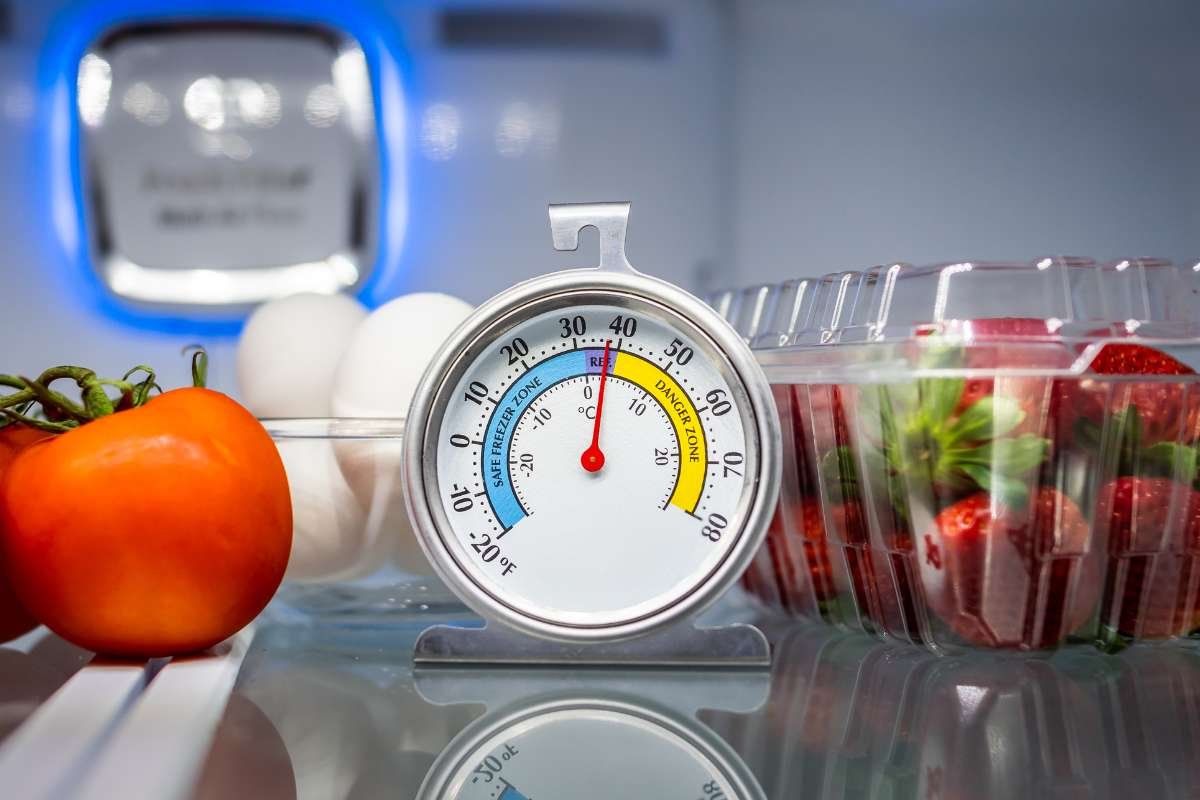
To keep your groceries in the “safe zone,” aim to set your fridge between 35°F and 40°F (1.67°C to 4.44°C.). This sweet spot, backed by the FDA and USDA, keeps your food crisp without accidentally turning your spinach into a block of ice. If you let the mercury dip below 33°F, you risk freezing sensitive items such as milk or berries.
However, you must stay under 40°F to stop bacteria such as Listeria from moving in. Mastering the right temperature for your refrigerator ensures your food stays delicious and your family stays healthy.
Don’t rely solely on those built-in dials, as they often give you a vague estimate rather than the truth. Instead, use a standalone thermometer to get an honest reading of your appliance’s performance.
Place it in different spots, like the back or the door, to find any hidden warm zones. Once you confirm the right temperature for your refrigerator and freezer, you can rest easy knowing your groceries are actually protected. It is a simple step that takes the guesswork out of food safety.
Now that you know the right temperature for the refrigerator, let’s talk about the freezer.
What is the Right Temperature for a Freezer?
To keep your frozen favorites in peak condition, you should maintain your freezer at 0°F (-18°C) or colder. This specific setting does more than just keep things icy; it effectively halts bacterial growth and preserves the texture of your meats and veggies.
If you use a standalone chest freezer for long-term storage, aim even lower, somewhere between -10°F and -20°F. Locking in the right temperature for your freezer ensures that your bulk buys don’t suffer from nasty freezer burn or flavor loss over time.
Precision is key, so don’t expect instant results after you twist the dial. You must allow at least 24 hours for the internal environment to stabilize before you recheck the reading with your thermometer.
Checking too early gives you a false sense of security, leading to thawed edges or frosted-over bags. Once you finally dial in the right temperature for your refrigerator and freezer, your food stays dormant and safe until the moment you’re ready to cook.
The Right Temperature for Your Freezer and Refrigerator in a Commercial Setting
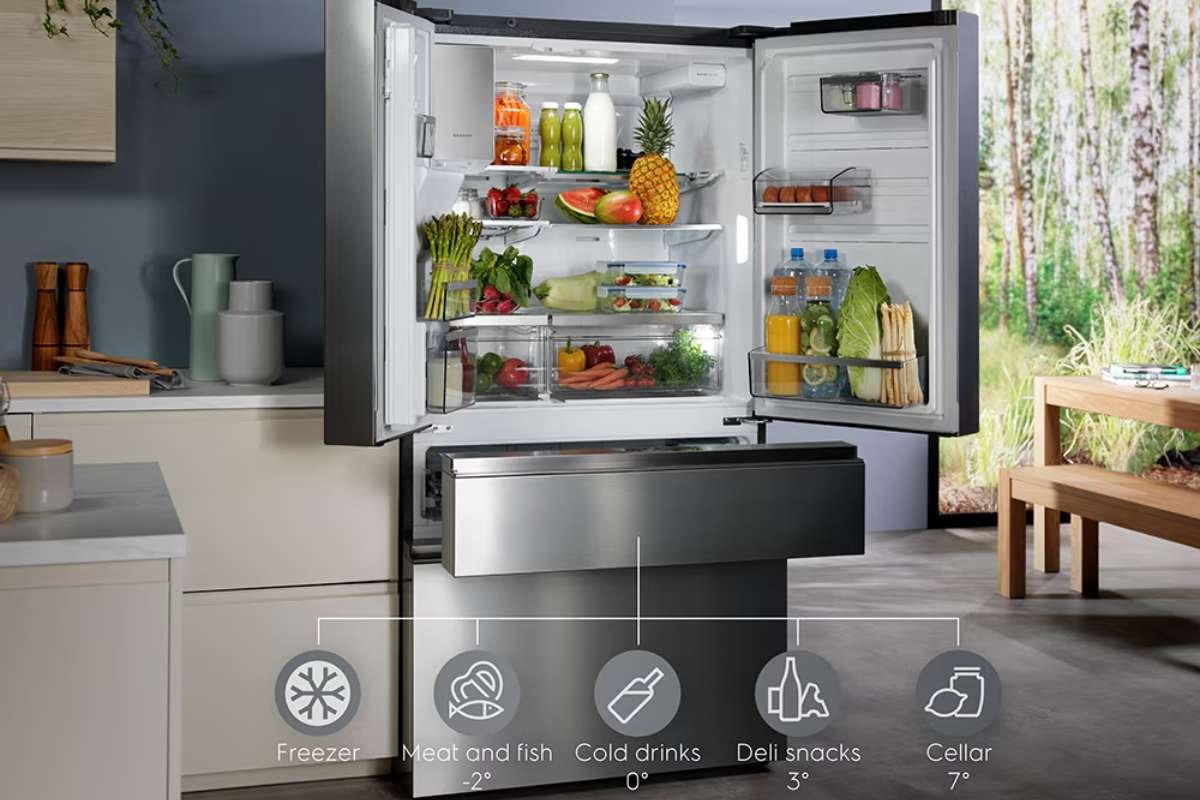
We spoke about the correct temperature for them in a household and what hotel owners get from this information.
Let’s look at the optimal temperature for a refrigerator in a hotel.
Professional Standards: Why Your Local Diner Works Harder
When you transition from a home kitchen to a professional one, the stakes for food safety skyrocket. In a high-traffic restaurant, the fridge door might open a hundred times during a lunch rush. Because of this constant battle against incoming warm air, achieving the right temperature for your refrigerator and freezer isn’t just a goal—it’s a legal requirement.
Commercial Refrigerator Precision
To stay safely out of the FDA “danger zone,” commercial fridges usually run between 34°F and 40°F. While reach-in units hover around 35°F to 38°F, walk-in coolers have their own microclimates; it might be 35°F near the door but a steady 37°F deep inside. Following the FDA Food Code ensures that “Time/Temperature Control for Safety” (TCS) foods stay below 41°F, preventing costly fines and, more importantly, keeping customers safe.
The Deep Freeze for Pros
Freezer standards are even more intense. A standard commercial reach-in might sit between -10°F and 5°F, but if you’re storing ice cream, you’re looking at a bone-chilling -20°F to keep it from becoming grainy. Using the right temperature for your refrigerator and freezer in these settings halts pathogens entirely, ensuring that bulk inventory stays at peak quality for months.
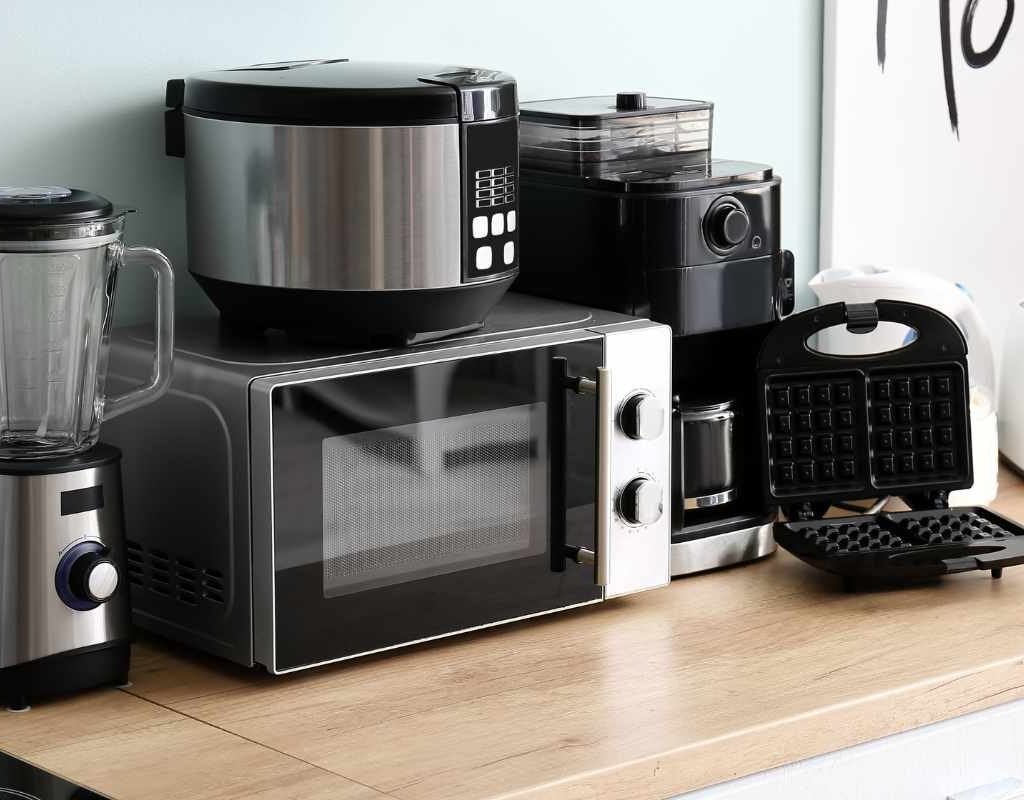
How to Choose the Best Energy-Efficient Kitchen Appliances for a Greener Home?
In this all-inclusive Kitchen appliances guide, we’ll take you through the decision-making process in buying energy-efficient appliances and provide useful instructions on how to make your purchases more environmentally friendly as well as charge less to power.
High Stakes and Smart Tools
Unlike your fridge at home, pro units often use high-tech data loggers and alarms. Because heat rises, top shelves can hit that 41°F limit quickly, while the bottom remains the frostiest. Keeping an eye on these variations with daily logs is the only way to prove you’ve maintained the right temperature for your refrigerator and freezer. It’s a game of inches where one degree can be the difference between a successful service and a shut-down.
How to Measure the Right Temperature of Your Refrigerator and Freezer?
Getting an accurate reading is about more than just glancing at a digital display. Appliances often have “hot spots” or “cold pockets” that can trick a basic sensor.
To find the true temperature for your refrigerator and freezer, follow these steps:
- Use a Liquid Test for the Fridge: Place your thermometer in a glass of water and set it on the middle shelf. Since air temperature fluctuates every time you open the door, measuring the liquid gives you a much more stable and accurate reading of your food’s actual temperature.
- Try the “Frozen Sandwich” Method: For the freezer, nestle your thermometer between two bags of frozen veggies. This mimics the core temperature of your food rather than just measuring the chilly air circulating it.
- Check the Door vs. the Back: The door is the warmest part of your unit, while the back wall is usually the coldest. Test both areas to ensure your most perishable items, like milk and eggs, aren’t sitting in a “danger zone” above 40°F.
- Wait Before You Read: Every time you open the door to check the gauge, you let heat in. For the most precise results, leave the thermometer inside for at least 5 to 8 hours (or overnight) without opening the door.
- Calibrate Your Expectations: If you notice your readings vary by more than a couple of degrees, it’s time to adjust your dials. Achieving the right temperature for your refrigerator and freezer requires a bit of patience, but it’s the only way to be 100% sure your food is safe.
Benefits of Keeping the Right Temperature of Your Freezer and Refrigerator
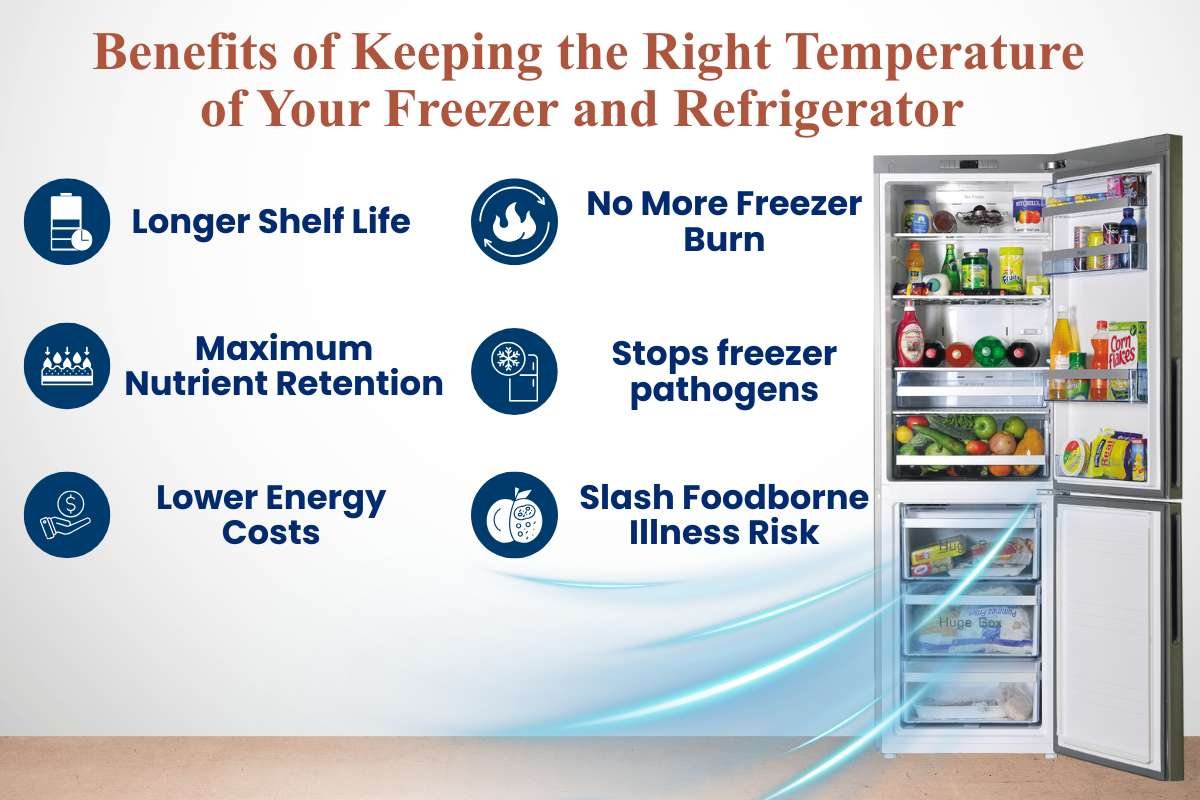
Getting the settings exactly right does more than just keep your milk cold; it changes how your entire kitchen functions. When you maintain the temperature for your refrigerator and freezer, you notice the difference in your food and your bills immediately.
- Longer Shelf Life: Your groceries stay fresh for days longer. Crispy lettuce and firm berries mean you actually eat what you buy instead of clearing out a wilted mess every Sunday.
- Maximum Nutrient Retention: By locking in the right temperature for your refrigerator and freezer, you ensure your family gets the most nutritional value from every meal.
- Lower Energy Costs: Your compressor doesn’t have to work overtime when the airflow and settings are optimized. This efficiency translates directly into a smaller carbon footprint and a lower monthly power bill.
- No More Freezer Burn: Stable, icy temperatures prevent the moisture shifts that cause those jagged ice crystals on your meat. Your steaks and chicken will taste exactly like they did the day you bought them.
- Stops freezer pathogens: 0°F (-18°C) halts all bacteria/yeast, maintaining food quality for months vs. rapid spoilage above.
- Slash Foodborne Illness Risk: Keeping your fridge between 35°F and 40°F significantly slows pathogens such as Salmonella and E. coli. Federal studies show that keeping deli meats under 41°F can reduce listeriosis risks by up to 16% per serving.
Tips to Preserve the Right Temperature for Your Refrigerator and Freezer
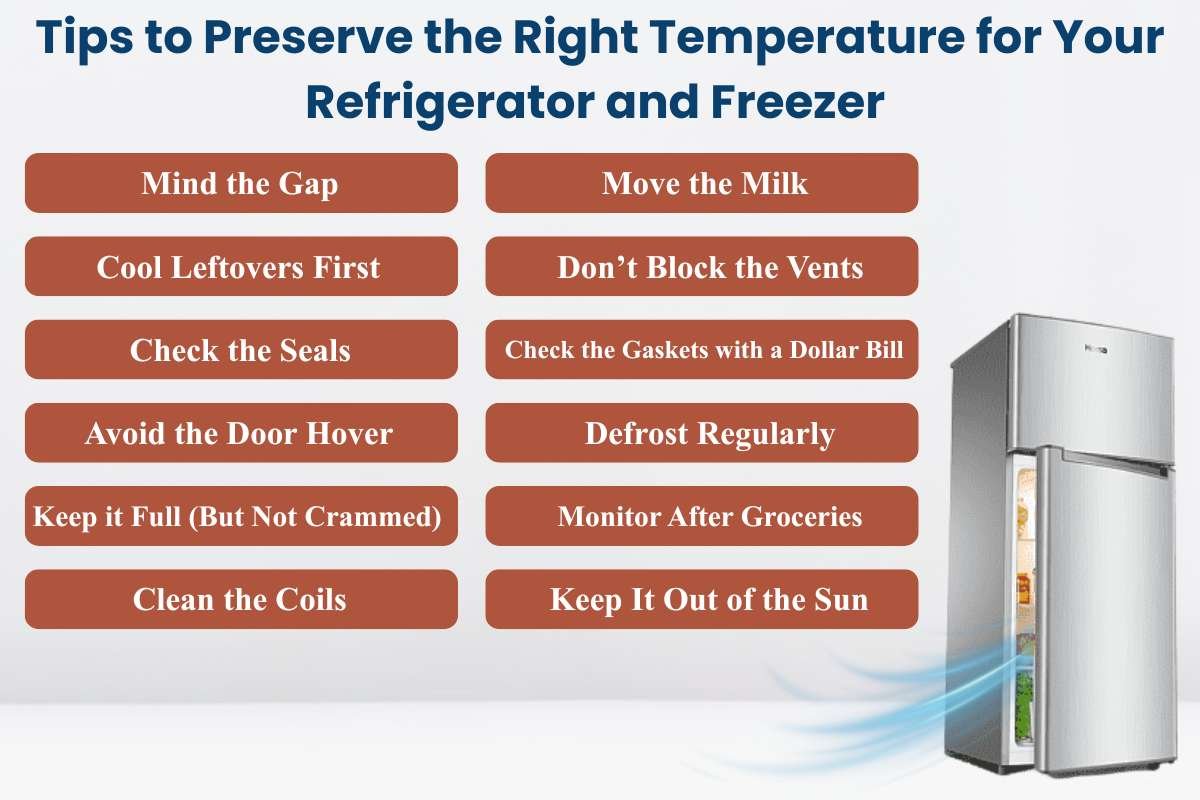
Keeping the right temperature for your freezer and refrigerator is an ongoing team effort between you and your appliance. Even the best fridge needs a little help to fight off the heat. Here are some simple tips to keep your kitchen running perfectly:
- Mind the Gap: Leave space between items. Air needs to circulate to keep every corner at the right temperature for your refrigerator and freezer.
- Cool Leftovers First: Never put steaming hot soup directly in the fridge. Let it reach room temperature first so you don’t spike the internal climate.
- Check the Seals: If your door gaskets are cracked or dirty, cold air escapes. Give them a quick wipe with soapy water to keep the seal tight.
- Avoid the Door Hover: We’ve all stood there staring at the shelves. Grab what you need quickly to prevent the internal temp from climbing.
- Keep it Full (But Not Crammed): A full fridge acts like an ice block, holding the cold better than an empty one. If it’s sparse, toss in a few jugs of water.
- Clean the Coils: Dust on the back or bottom of the unit makes the motor work harder. A quick vacuum once a year keeps things efficient.
- Move the Milk: The door is the warmest spot. Keep your milk and eggs on the middle or bottom shelves to maintain the right temperature for the freezer.
- Don’t Block the Vents: Identify where the cold air blows in and make sure no large boxes are sitting right in front of them.
- Check the Gaskets with a Dollar Bill: Close the door on a dollar bill. If it slides out easily, your seal is weak and needs replacing.
- Defrost Regularly: If you see ice buildup in the freezer, it’s time to clear it out. Ice actually acts as an insulator, making the unit less effective.
- Monitor After Groceries: After a big shopping trip, the fridge works extra hard. Give it a few hours to settle back to the right temperature for your refrigerator.
- Keep It Out of the Sun: If possible, don’t place your fridge right next to the oven or in direct sunlight, as the external heat forces it to run constantly.
Conclusion:
Learning the right temperature for your refrigerator and freezer is one of those small kitchen wins that pays off every single time you cook. You no longer have to worry about the sniff test with your milk or find frozen, ruined strawberries in the morning. It turns your kitchen from a place of guesswork into a reliable hub for fresh, delicious meals.
When you take control of these settings, you aren’t just saving a head of lettuce; you are protecting your family’s health and your hard-earned money. Finding the right temperature for your refrigerator and freezer can upgrade your home routine. With your settings locked in and your thermometer in place, you can finally cook with total confidence.
FAQs
1. What happens if my fridge is too cold?
If it drops below 33°F, you’ll find frozen milk and ruined, icy produce. This wastes energy and destroys the texture of delicate greens.
2. Why is my freezer at 0°F if water freezes at 32°F?
While 32°F freezes water, 0°F is the right temperature for your freezer to stop bacterial growth and prevent freezer burn, keeping your food safe and nutrient-rich for much longer periods.
3. How often should I check the settings?
Check your thermometer every season or after a power outage. Frequent monitoring ensures you maintain the right temperature for your refrigerator and freezer, protecting your groceries from unexpected warm spots or mechanical failures.
Thank You For Reading!
Read More
Why Specializing in Refrigerator Repair is More Beneficial?