
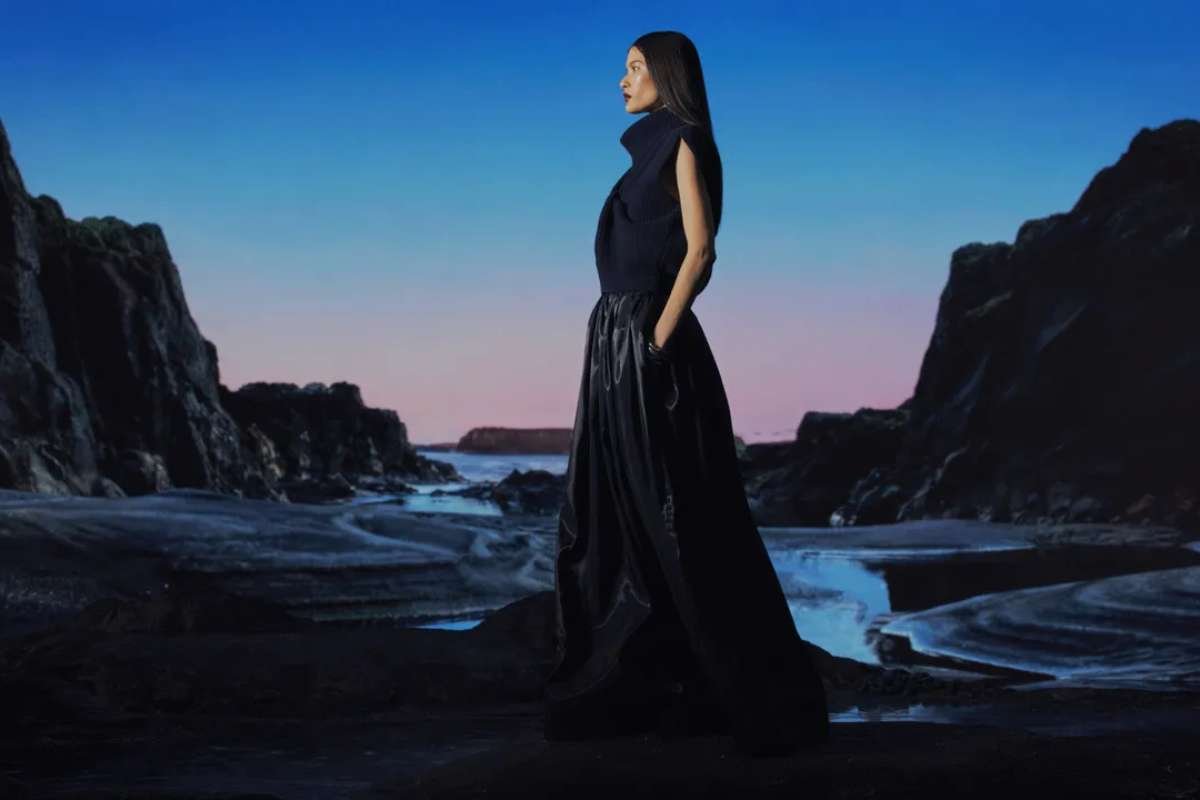
Key Points:
- Kate Barton’s NYFW show integrated AI as a central element, allowing guests to interact with a multilingual agent for garment insights and styling options.
- The experience was powered by IBM WatsonX and Fiducia AI, using visual recognition and cloud infrastructure to deliver real-time responsiveness.
- Barton positioned AI as a creative storytelling tool, highlighting its role in accessibility and engagement while stressing the irreplaceability of human artistry.
New York Fashion Week witnessed a striking fusion of couture and cutting-edge technology as designer Kate Barton unveiled a collection powered by artificial intelligence. In collaboration with IBM and AI startup Fiducia AI, Barton transformed her runway presentation into an immersive digital experience, signaling how deeply technology is beginning to shape the fashion landscape.
Instead of limiting AI to behind-the-scenes experimentation, Kate Barton placed it at the center of the show. Guests interacted with a multilingual AI agent that responded in real time, offering insights into garment construction, fabric selection, and design inspiration. Through voice or text, attendees could identify specific looks and explore styling options, while virtual try-on capabilities added a futuristic layer to the traditional runway format.
For Kate Barton, the integration of AI was not a marketing stunt but an extension of her creative philosophy. She positioned technology as a storytelling enhancer, an instrument that amplifies accessibility and audience engagement rather than overshadowing craftsmanship.
The Technology Powering the Experience
The presentation was built using IBM’s WatsonX platform on IBM Cloud, with Fiducia AI developing the interactive architecture. A visual recognition component enabled the system to instantly detect garments, pulling up contextual information and digital renderings within seconds.
Delivering this experience required more than sophisticated algorithms. Behind the scenes, teams managed extensive image datasets and cloud infrastructure to ensure real-time responsiveness during a live event. The technical challenge lay in orchestrating multiple AI models and storage systems seamlessly, avoiding latency or disruption in a high-profile environment.
Industry observers note that while luxury brands have quietly adopted AI for design prototyping, supply chain management, and marketing analytics, few have showcased it so prominently in a runway setting. Kate Barton’s presentation demonstrated that AI is evolving from experimental utility to production-ready innovation within the fashion industry’s most visible platforms.
A Glimpse Into Fashion’s Digital Future
The collaboration reflects a broader industry shift. Technology leaders involved in the project suggest that AI integration could become standard in runway shows within the next few years, eventually extending across retail ecosystems from personalized shopping assistants to intelligent inventory systems.
Despite the enthusiasm, Kate Barton underscored that human creativity remains irreplaceable. AI, she argues, should serve as a supportive tool that enhances storytelling, streamlines operations, and expands inclusivity. She also highlighted the importance of establishing ethical frameworks around data usage, licensing, and attribution as AI’s presence grows in creative fields.
Her NYFW showcase ultimately functioned as a proof of concept illustrating how fashion and artificial intelligence can coexist without compromising artistry. By merging physical craftsmanship with digital intelligence, Barton offered a preview of a runway experience that is interactive, multilingual, and globally accessible.
As fashion increasingly intersects with advanced computing, Kate Barton’s tech-forward presentation may be remembered as a pivotal moment, one where the runway became not just a stage for garments but a platform for innovation.