Key Points:
- Japan PM Sanae Takaichi and the U.S. launched a $36B investment initiative as part of a $550B trade framework.
- Major projects include a $33B Ohio power plant, $2.1B Texas oil terminal, and $600M Georgia diamond facility.
- The deal strengthens energy independence, industrial resilience, and strategic supply chains.
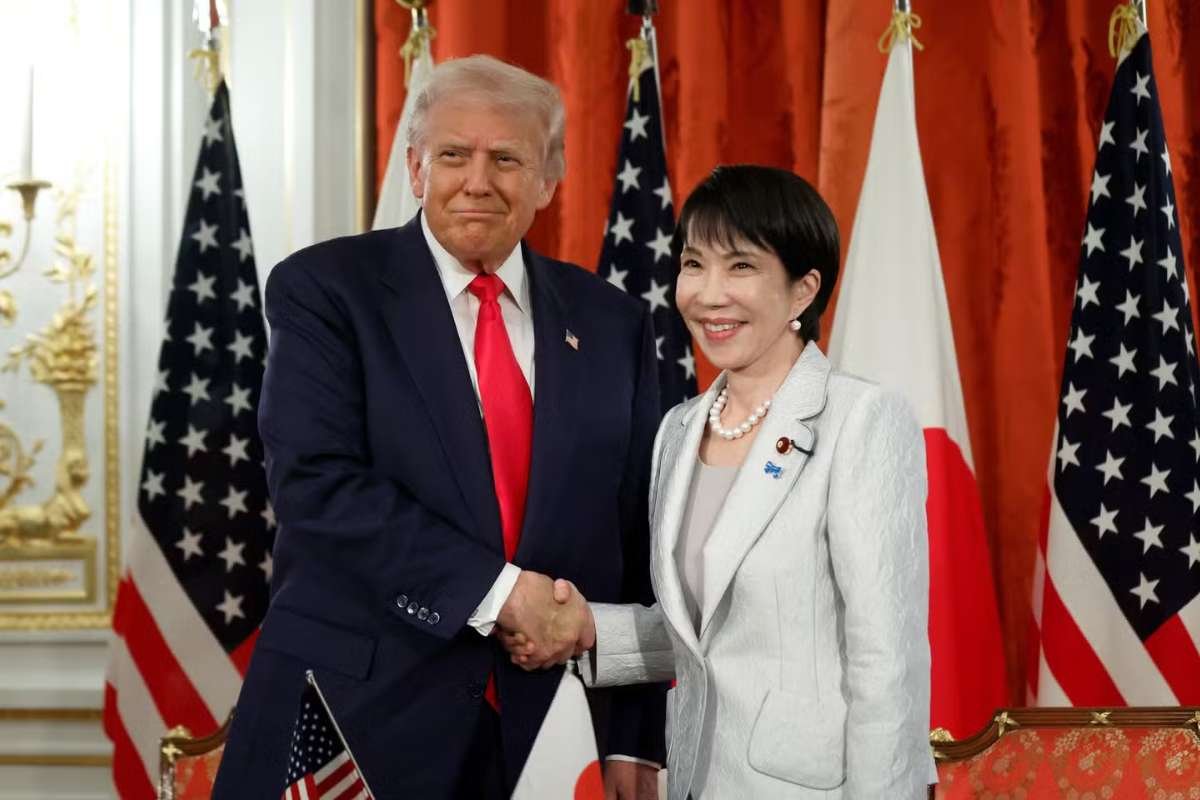
Japanese Prime Minister Sanae Takaichi and U.S. President Donald Trump have formally launched the first phase of a sweeping bilateral investment program, unveiling approximately $36 billion in Japanese-backed projects across the United States. The announcement marks the opening installment of a broader $550 billion commitment tied to a trade framework negotiated between the two governments.
The investment rollout represents a strategic component of the U.S.–Japan trade agreement finalized last year, under which tariff adjustments on selected Japanese exports were paired with large-scale capital deployment into priority American industries. Officials from both governments described the initiative as a long-term economic partnership designed to strengthen energy independence, rebuild industrial capacity, and secure supply chains in sectors considered vital to national security.
The first wave of funding will support projects in Ohio, Texas, and Georgia, with construction expected to generate significant employment and regional economic activity. According to administration officials, the agreement was structured to ensure commercial returns for Japanese investors while advancing U.S. industrial and energy objectives.
Energy Expansion and Industrial Reinforcement
The largest portion of the initial investment, approximately $33 billion, will fund the development of a natural gas-fired power generation facility in Portsmouth, Ohio. Designed to produce roughly 9.2 gigawatts of electricity, the plant is projected to become one of the most powerful generation sites in the country. Analysts say the project arrives at a critical moment, as electricity demand continues to rise due to manufacturing expansion, artificial intelligence infrastructure, and data center growth.
In Texas, a $2.1 billion deepwater crude oil export terminal along the Gulf Coast will expand the nation’s petroleum export capacity. The facility is expected to handle substantial annual volumes, strengthening America’s position in global energy markets and reinforcing the administration’s energy-dominance agenda.
Georgia will host a $600 million synthetic industrial diamond manufacturing plant, aimed at producing high-grade diamond grit used in semiconductor fabrication, aerospace systems, and advanced manufacturing. The facility is expected to reduce reliance on overseas suppliers for critical materials and support the expansion of domestic high-tech industries.
Together, the three projects underscore a coordinated effort to reinforce American energy output and industrial resilience while deepening bilateral economic cooperation.
Strategic and Geopolitical Implications
Beyond their immediate economic impact, the investments reflect a broader geopolitical alignment between Washington and Tokyo. Prime Minister Sanae Takaichi has emphasized strengthening strategic supply chains and enhancing Japan’s global economic partnerships, particularly in sectors tied to advanced technology and critical resources.
For the United States, the agreement represents a hybrid trade-investment model that leverages tariff policy to attract large-scale foreign capital into targeted industries. The framework aims to bolster domestic production capacity, secure access to key materials, and counter intensifying global competition in energy and advanced manufacturing.
Economic observers note that the remaining portion of Japan’s pledged $550 billion is expected to be rolled out in phases through the end of the decade, potentially expanding into additional infrastructure, technology, and mineral development projects.
With implementation now underway, both governments are positioning the initiative as a cornerstone of long-term economic cooperation, one that blends trade diplomacy, industrial policy, and strategic investment to reshape supply chains and reinforce economic security in an increasingly competitive global landscape.
Visit CIO Women Magazine for the latest information.