
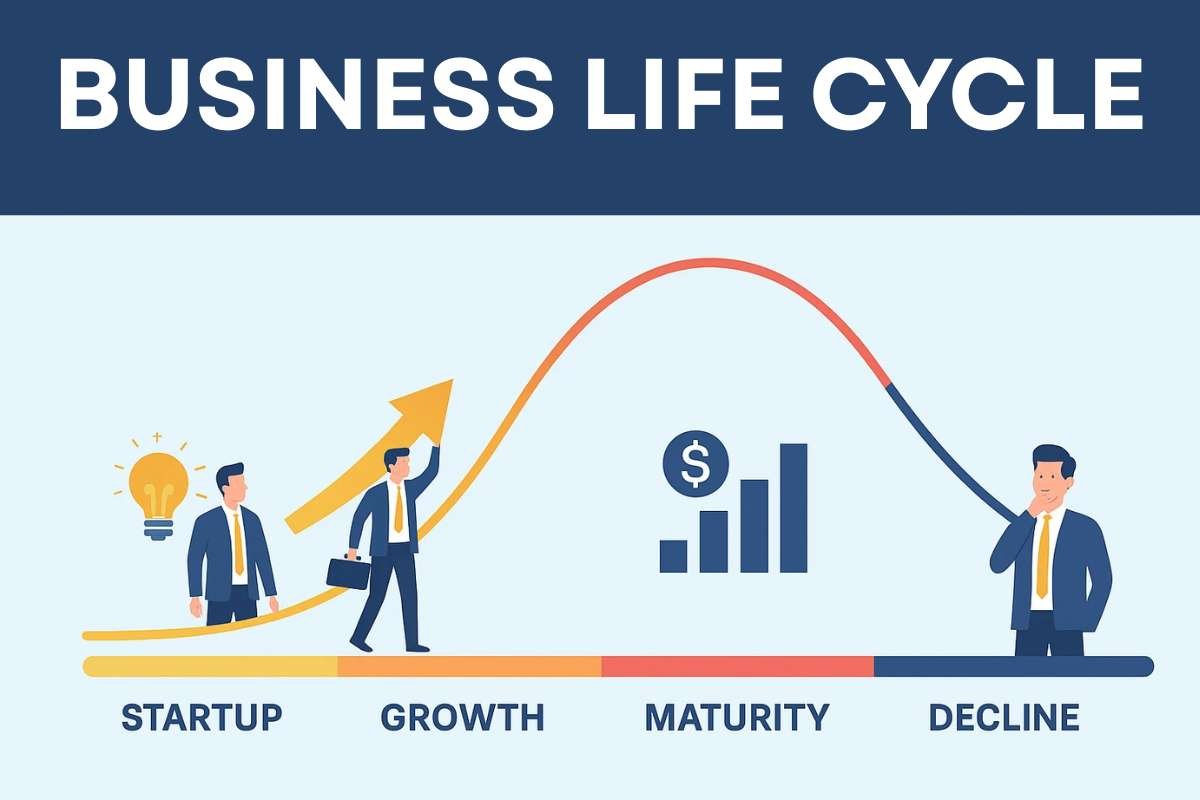
Every business, regardless of size, from tiny startups to multinational conglomerates, follows a predictable course of expansion and change. While some companies grow quickly and take over markets, others find it difficult to overcome early obstacles. Managers, investors, and entrepreneurs can all make better decisions at each stage if they are aware of this progression.
This predictable path is known as the Business Life Cycle, a concept that explains how companies evolve from initial ideas to mature organizations and, in some cases, decline or reinvention. Leaders can use the appropriate tactics to maintain growth and stay competitive by identifying where a company falls in this cycle.
What is the Business Life Cycle?
The Business Life Cycle refers to the sequence of stages a company goes through from its formation to eventual maturity or decline. Each phase reflects different operational priorities, financial realities, and growth challenges.
In the early stage, companies focus on developing a product or service and finding their first customers. As the business grows, priorities shift toward scaling operations, building brand recognition, and managing competition. Eventually, businesses reach maturity, where stability and efficiency become key objectives.
Understanding the Business Life Cycle helps entrepreneurs anticipate market shifts, prepare for growth challenges, and plan long-term strategies. Instead of reacting to problems after they appear, leaders can proactively align resources, marketing, and operations with the needs of each stage.
Key Stages of the Business Life Cycle:
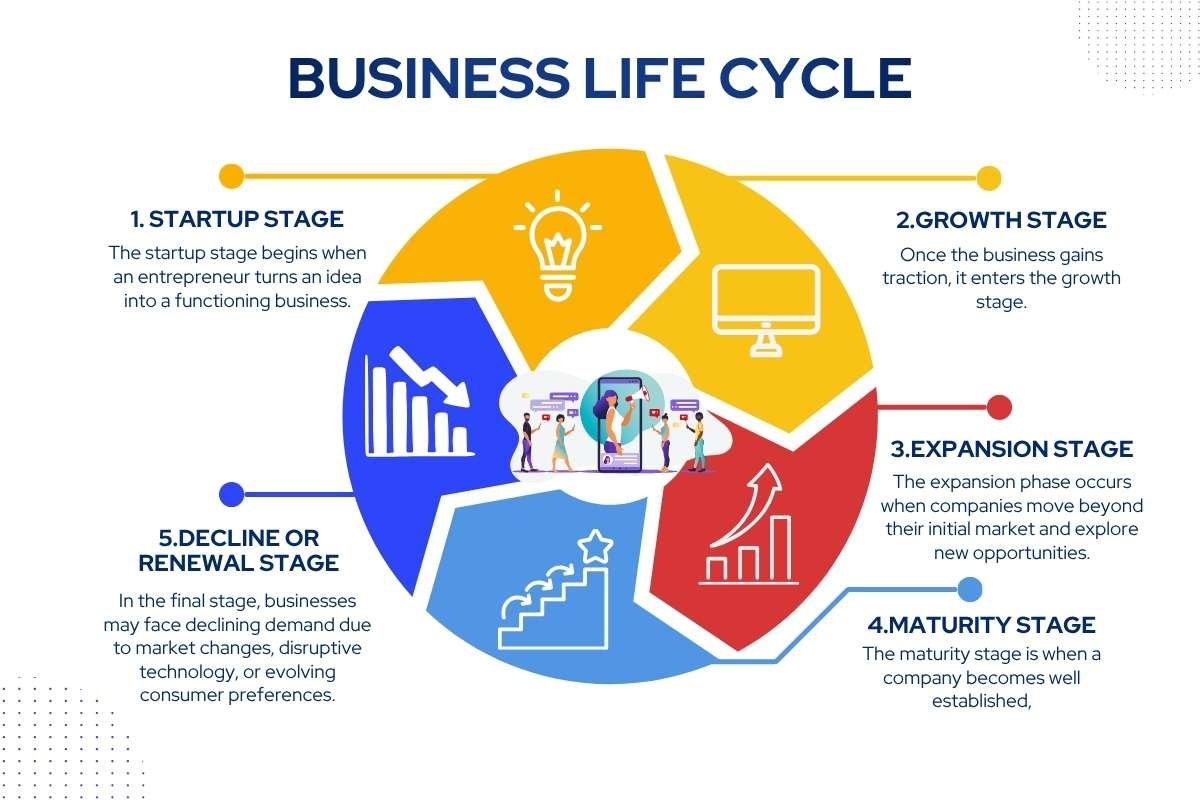
Most business experts divide the journey into five major stages. Each stage represents a unique set of goals and risks.
1. Startup Stage
The startup stage begins when an entrepreneur turns an idea into a functioning business. This phase involves product development, early customer acquisition, and testing market demand.
Key characteristics include:
- Limited resources and funding
- High uncertainty and experimentation
- Small teams or solo founders
The primary goal during this stage is to validate whether the product solves a real problem and whether customers are willing to pay for it.
2. Growth Stage
Once the business gains traction, it enters the growth stage. Revenue increases, customer demand expands, and the company begins scaling operations.
Common features include:
- Hiring employees
- Expanding marketing efforts
- Increasing production or service capacity
During this stage, businesses focus heavily on market expansion and brand building. Companies that manage growth effectively often establish strong competitive positions.
3. Expansion Stage
The expansion phase occurs when companies move beyond their initial market and explore new opportunities. This may include entering international markets, launching additional products, or forming strategic partnerships.
Key priorities include:
- Operational efficiency
- Market diversification
- Strategic investment
Many companies experience rapid revenue increases during this period, but must manage complexity carefully.
4. Maturity Stage
The maturity stage is when a company becomes well established, and growth stabilizes. Sales remain strong, but rapid expansion slows due to market saturation or increased competition.
Characteristics of this stage include:
- Stable revenue streams
- Strong brand recognition
- Established customer base
At this point, companies prioritize profitability, operational efficiency, and customer retention rather than aggressive expansion.
5. Decline or Renewal Stage
In the final stage, businesses may face declining demand due to market changes, disruptive technology, or evolving consumer preferences. However, decline is not inevitable.
Many companies choose reinvention through innovation, rebranding, or entering new markets. Successful transformation can restart the cycle and create new growth opportunities.
Understanding the Business Life Cycle allows companies to recognize these transitions early and respond strategically rather than reactively.
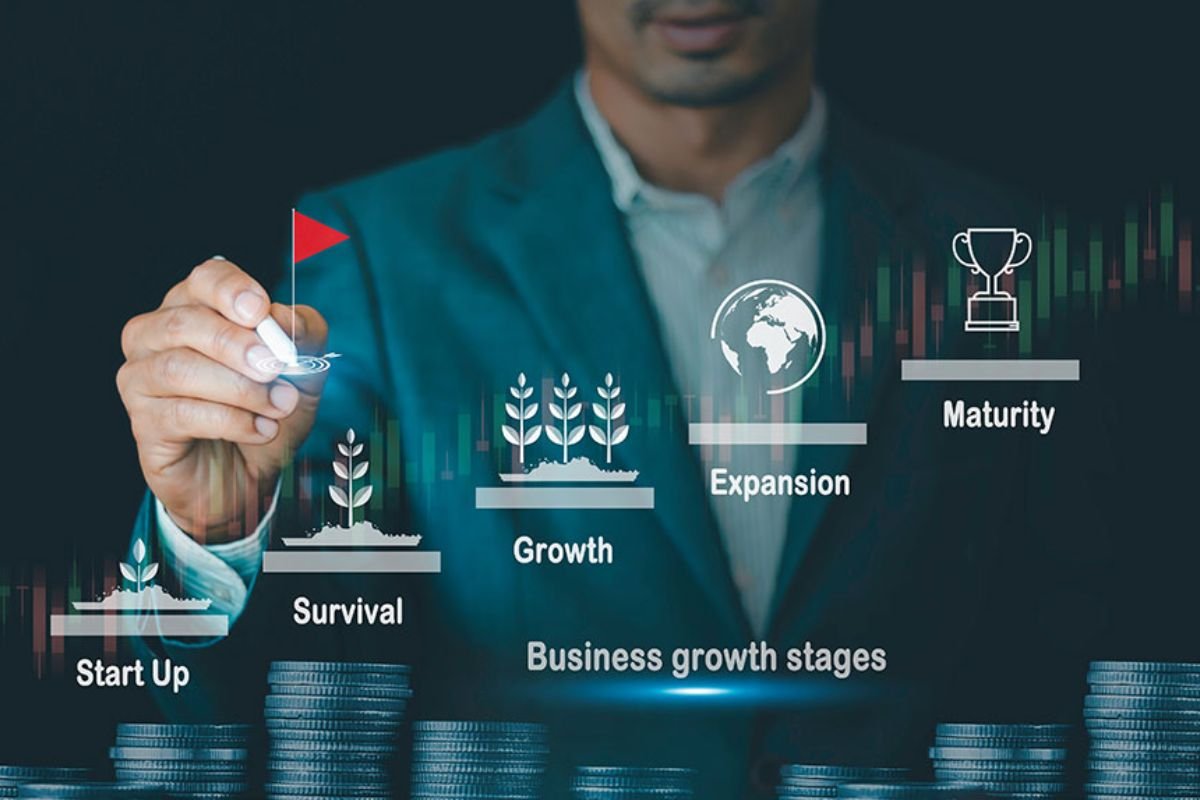
Business Life Cycle Chart:
A typical Business Life Cycle chart visually represents the relationship between time and business growth.
The chart usually appears as a curve with five distinct phases:
| Stage | Revenue Trend | Key Focus |
|---|---|---|
| Startup | Low but increasing | Product validation |
| Growth | Rapid increase | Market expansion |
| Expansion | Strong growth | Scaling operations |
| Maturity | Stabilization | Efficiency and retention |
| Decline/Renewal | Decreasing or reinventing | Innovation |
This model helps entrepreneurs and investors visualize how companies evolve and when strategic adjustments become necessary.
Common Challenges at Each Stage:
Every stage presents unique challenges that can determine whether a company succeeds or fails.
Startup Challenges
- Limited funding
- Lack of brand recognition
- Difficulty finding product-market fit
Entrepreneurs must test ideas quickly while managing limited resources.
Growth Challenges
- Maintaining product quality while scaling
- Hiring and managing larger teams
- Handling increased operational complexity
Rapid expansion can create internal inefficiencies if not carefully managed.
Expansion Challenges
- Entering unfamiliar markets
- Managing larger organizational structures
- Balancing innovation with operational stability
Businesses must maintain agility even as they become more complex.
Maturity Challenges
- Market saturation
- Increased competition
- Declining innovation
Companies often struggle to maintain relevance in mature markets.
Decline Challenges
- Decreasing sales
- Shifting consumer preferences
- Technological disruption
At this stage, businesses must innovate quickly or risk losing market relevance.
Recognizing these obstacles early helps leaders adjust strategies and protect long-term growth within the Business Life Cycle.
Strategies for Navigating Each Stage:
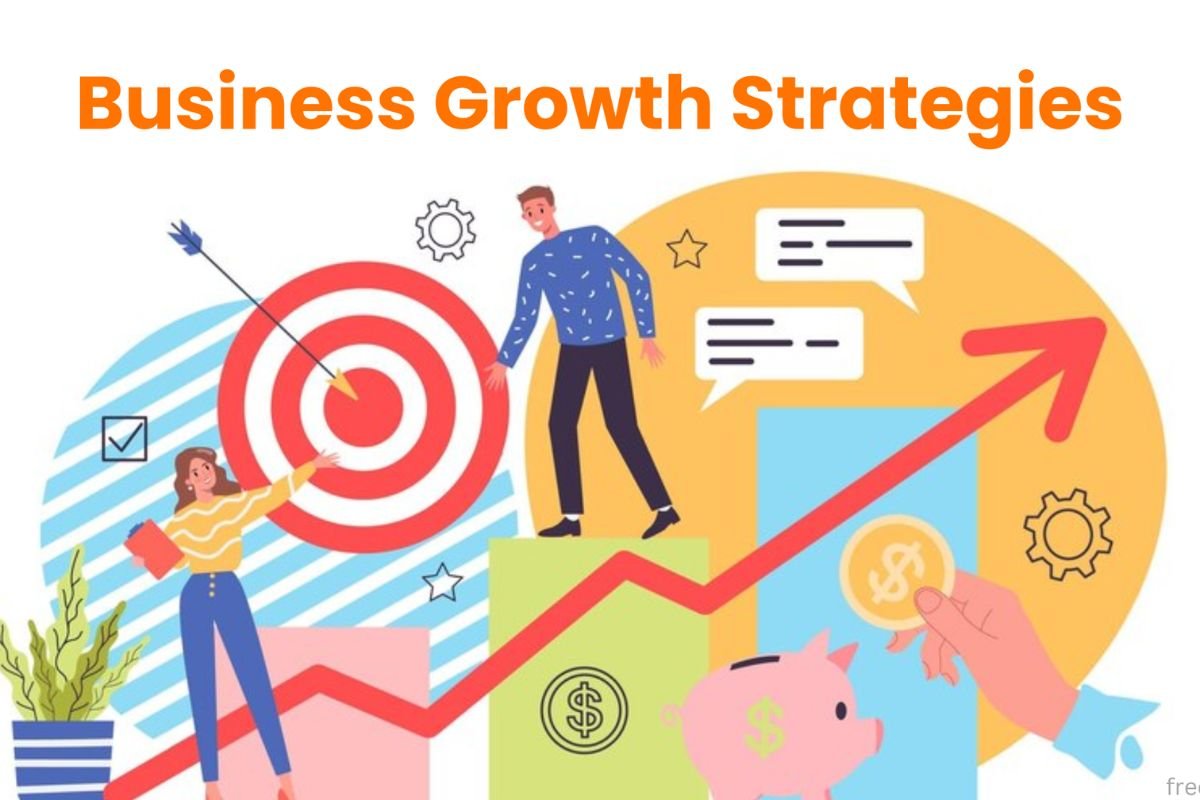
Successful companies adapt their strategies based on their current stage of development.
i) Startup Strategies
- Focus on customer feedback
- Build a minimum viable product
- Secure early funding and partnerships
ii) Growth Strategies
- Invest in marketing and branding
- Improve operational processes
- Strengthen customer experience
iii) Expansion Strategies
- Diversify products or services
- Enter new geographic markets
- Develop strategic alliances
iv) Maturity Strategies
- Optimize costs and efficiency
- Focus on customer loyalty
- Invest in incremental innovation
v) Renewal Strategies
- Introduce new technology
- Reposition the brand
- Explore emerging market trends
Businesses that apply these strategies effectively are more likely to extend their longevity and maintain competitiveness.
Real-World Examples of Business Life Cycles:
Many globally recognized companies demonstrate how organizations evolve through different stages of development.
One example is Apple, which began as a small startup in a garage. The company experienced rapid growth with the introduction of personal computers and later expanded globally with groundbreaking products like the iPhone and iPad.
Another example is Netflix, which started as a DVD rental service before transitioning to streaming technology. By adapting to digital trends and investing heavily in original content, the company successfully reinvented itself and avoided decline.
Similarly, companies like Kodak illustrate the risks of failing to adapt. Once dominant in the photography industry, the company struggled to respond quickly to digital transformation.
These examples highlight how understanding the Business Life Cycle can influence strategic decisions and long-term success.
Future of Business Life Cycles in the Digital Age

The digital economy is reshaping how businesses evolve. Technology, global connectivity, and data analytics are accelerating growth stages while shortening product lifespans.
Startups can now scale globally within a few years using digital platforms, cloud infrastructure, and social media marketing. At the same time, competition has intensified as new entrants disrupt traditional industries more frequently.
Artificial intelligence, automation, and digital transformation are also pushing companies to innovate continuously. Businesses that embrace technology and data-driven decision-making can adapt faster and extend their lifecycle.
As markets become more dynamic, companies must stay agile and innovative to remain competitive.
Conclusion:
Every organization goes through phases of growth, stability, development, and possibly reinvention. Leaders who comprehend this progression are better able to foresee obstacles, distribute resources wisely, and make strategic choices that promote long-term success.
The Business Life Cycle offers a useful framework for identifying a company’s current position and the steps required to maintain momentum. Businesses can overcome challenges, seize opportunities, and stay relevant in quickly evolving markets by modifying their strategies at every stage.
In the end, businesses that identify growth patterns and consistently adapt to the demands of a constantly shifting business environment are the ones that prosper.