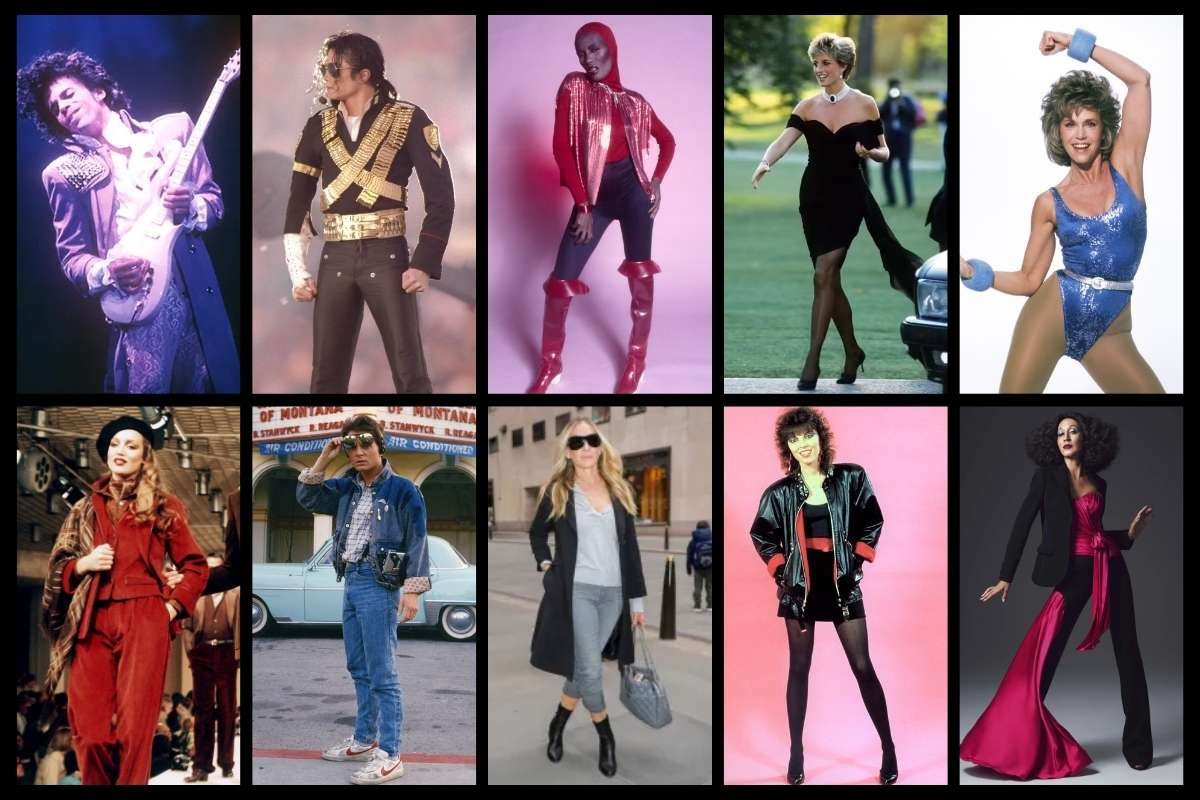
There are decades that influence fashion, and then there’s the 1980s, a cultural supernova that exploded and never truly faded. The ‘80s barged in with shoulder pads, neon heat, leather rebellion, and silhouettes that screamed possibility. If you’ve ever wondered why some styles feel larger than life, louder than trends, and too bold to die, the answer lies in the Iconic ’80s Outfits.
Back then, fashion wasn’t curated; it was felt. Teenagers raided thrift stores like treasure hunters. Pop stars became walking billboards for self-invention. Corporate women sharpened their ambition through shoulder pads that could cut glass. Subcultures bloomed from basements to stadium stages. And every outfit, whether sewn, torn, thrifted, or sculpted, carried an attitude that refused to be polite.
This blog takes you back into that electric moment, the era when Madonna made chaos a trend, Prince turned velvet into power, Michael Jackson turned a jacket into mythology, and Grace Jones turned her own body into a futuristic canvas. These weren’t just clothes; they were declarations. Movements. Identities.
Step into the time machine. The Iconic ’80s Outfits that defined a generation are about to remind you why fashion has never been the same since.
Here are the 42 Iconic ’80s Outfits
1. Madonna — The Rebel Who Turned Lingerie into Streetwear
Madonna didn’t just wear clothes in the ‘80s; she weaponized them. Her lace bras, layered pearls, tulle skirts, and crucifix jewelry turned Catholic symbolism into pop rebellion. This “Like a Virgin” era aesthetic introduced a new kind of femininity: unapologetic, sexual, street-smart, and playful. Madonna’s style mattered because it wasn’t curated by luxury houses at first; it was thrift-store chaos turned into global fashion currency. By the mid-’80s, teenage girls worldwide were replicating her messy hair bows and DIY layers, making her one of the first viral style icons before the internet existed. More importantly, Madonna opened the door for women to reclaim and redefine sexual expression in fashion.
Key Highlights:
- Inspired a 40% spike in lace glove and rubber bracelet sales in the U.S. between 1984–85 (retail archives).
- Wore the now-iconic “Boy Toy” belt, originally a joke, later a symbol of ownership over her image.
- Jean-Paul Gaultier’s collaboration with her turned lingerie-as-outerwear into a legitimate high-fashion category.
- The “Like a Virgin” 1984 MTV VMA look became the most imitated teen costume of the decade.
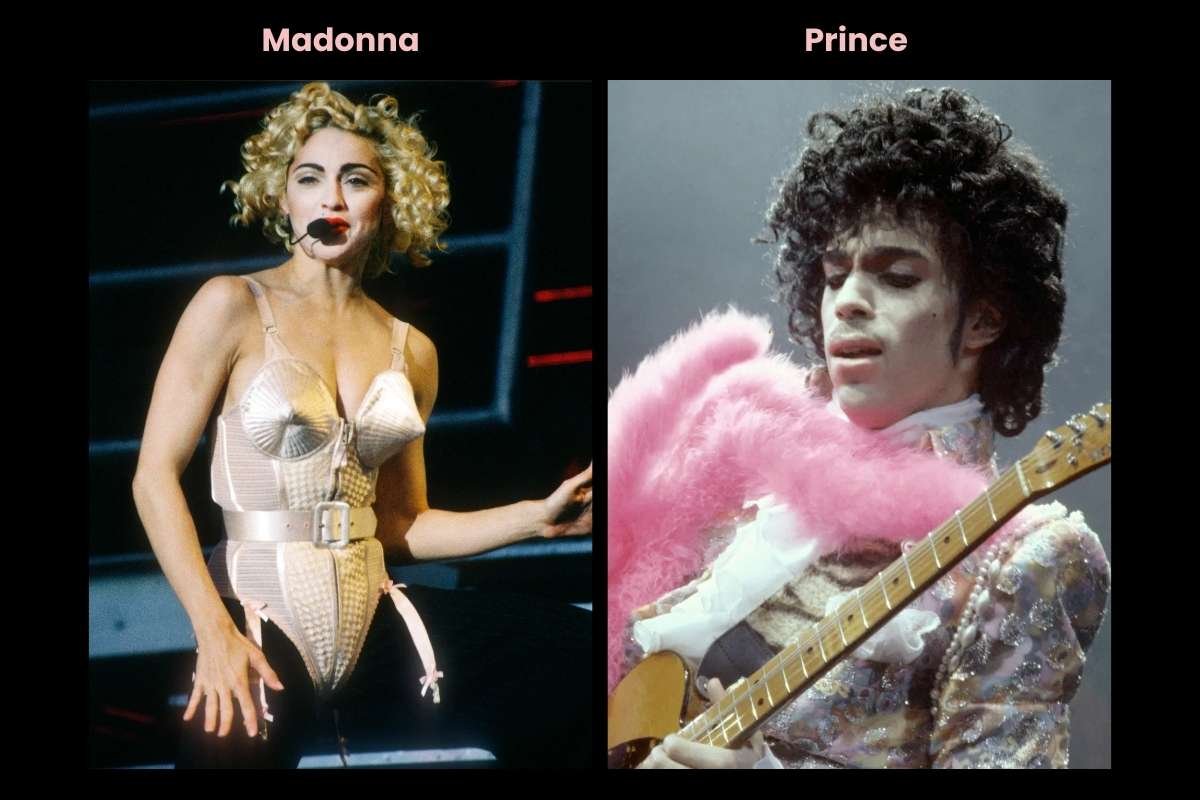
2. Prince — Purple Royalty, Gender Fluidity, and Baroque Rock
Prince didn’t follow fashion trends; he blew them up and rebuilt them with lace, velvet, ruffles, and heels. His purple ruffled shirts, tailored polka-dot suits, and lace gloves blurred the lines between masculinity and femininity long before gender fluidity became mainstream. Prince’s style during the “Purple Rain” and “LoveSexy” era created a new language of glam: Victorian romance meets Minneapolis funk. The result was an aesthetic that felt erotic, theatrical, and mysteriously elegant, a visual extension of his musical genius.
Key Highlights:
- His custom 3-inch heeled booties were engineered for onstage splits and spins, not just height.
- Purple wasn’t random; he used specific Pantone-like shades to enhance stage-light absorption.
- Lace gloves came from women’s vintage shops he personally frequented in Minneapolis.
- His polka-dot suit in 1988 was tailored to accentuate high guitar movement and hip thrusts.
3. Michael Jackson — Precision, Pop Mythology, and the Birth of Iconic Streetwear
Michael Jackson’s “Thriller” era wardrobe reshaped global street fashion. The red leather jacket with black stripes wasn’t just a costume; it became one of the highest-selling jacket replicas of all time. Paired with cropped trousers, white socks, loafers, and the legendary single glove, MJ built an instantly recognizable silhouette. Every element had intention: movement visibility, rhythm emphasis, and stage lighting contrast. Between 1983-85, Michael essentially created the blueprint for what we now call the “pop star uniform.”
Key Highlights:
- The white socks were chosen to emphasize moonwalk footwork under dim stage lighting.
- The single glove featured 50+ hand-sewn Swarovski crystals designed to sparkle during finger pops.
- The iconic red Thriller jacket was designed by Deborah Landis and sold 35k+ replicas within months.
- Pepsi’s sponsorship required MJ to approve wardrobe materials that wouldn’t ignite near pyrotechnics.
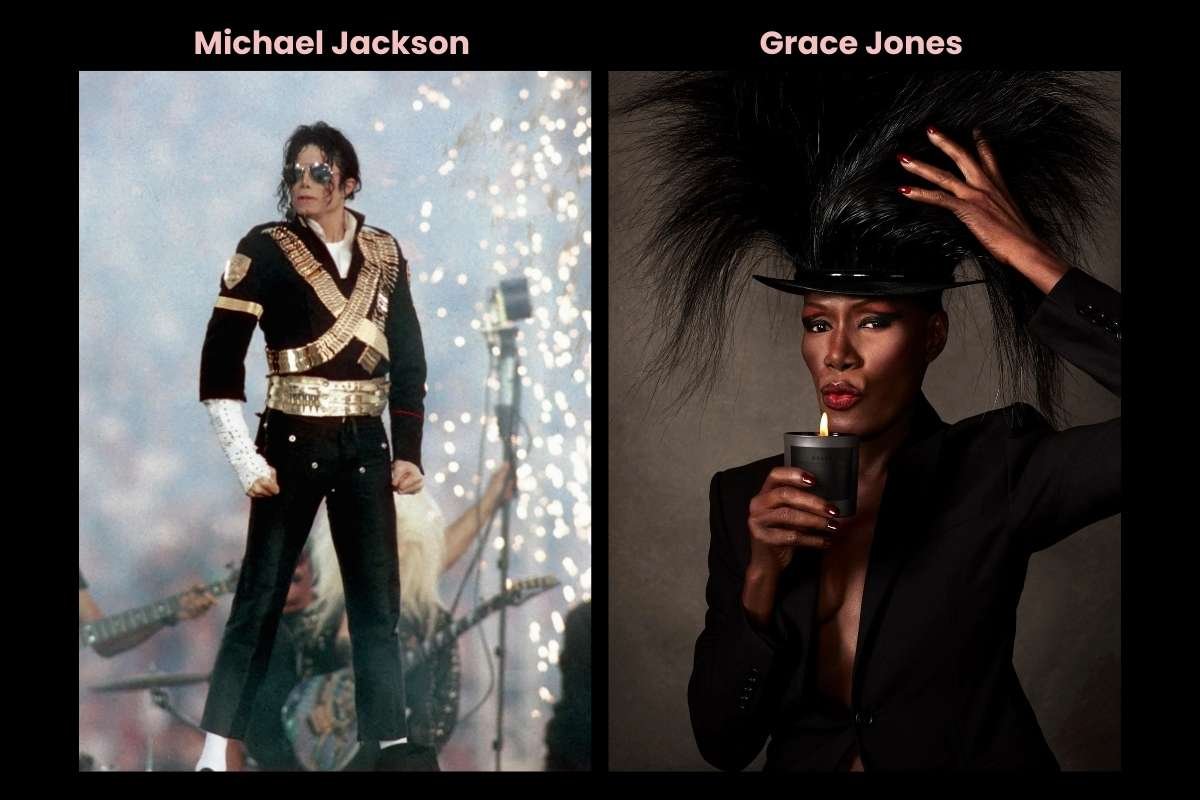
4. Grace Jones — High Art, High Fashion, and High Voltage Power Dressing
Grace Jones wasn’t just an ‘80s style icon — she was a movement. Her angular hats, bold shoulder pads, exposed cage dresses, and metallic finishes transformed her into a living sculpture that still defines some of the most Iconic ’80s Outfits ever seen. Working with visionaries like Azzedine Alaïa and Jean-Paul Goude, Jones used fashion as a weapon of disruption. She challenged beauty norms, gender binaries, and the very idea of what a performer could look like. Her aesthetic was confrontational, architectural, and wildly futuristic, perfect for a decade obsessed with excess and reinvention.
Key Highlights:
- Her geometric box-cut hair was designed using literal drafting tools by Goude’s team.
- Shoulder pads weren’t just big; they were built using sculpted foam used in runway couture.
- Her metallic bodysuits featured materials originally sourced from industrial safety gear.
- The “cage dress” debuted during a Paris nightclub performance, not a runway show, shocking the fashion press.
5. Princess Diana — The Royal Who Became an Accidental Fashion Influencer
Princess Diana’s ‘80s style defined an era of royal maximalism. Her pastel pie-crust blouses, oversized sunglasses, Sloane Ranger belts, and big-sleeved dresses became the blueprint for polished feminine fashion. What made Diana unique was her ability to soften royal expectations through approachable styling. Her looks blended aristocratic tradition with quiet modernity, and women copied her globally, from London to Sydney. Diana didn’t chase fashion; designers chased her.
Key Highlights:
- Her pie-crust collars caused a 300% surge in high-street versions between 1981–84 (British retail data).
- Many early blouses were altered personally by Diana to achieve a “shy” neckline curve.
- Oversized sunglasses were chosen to avoid flash photography during public outings.
- “Sloane Ranger” belts were sourced from local Chelsea boutiques, not couture designers.
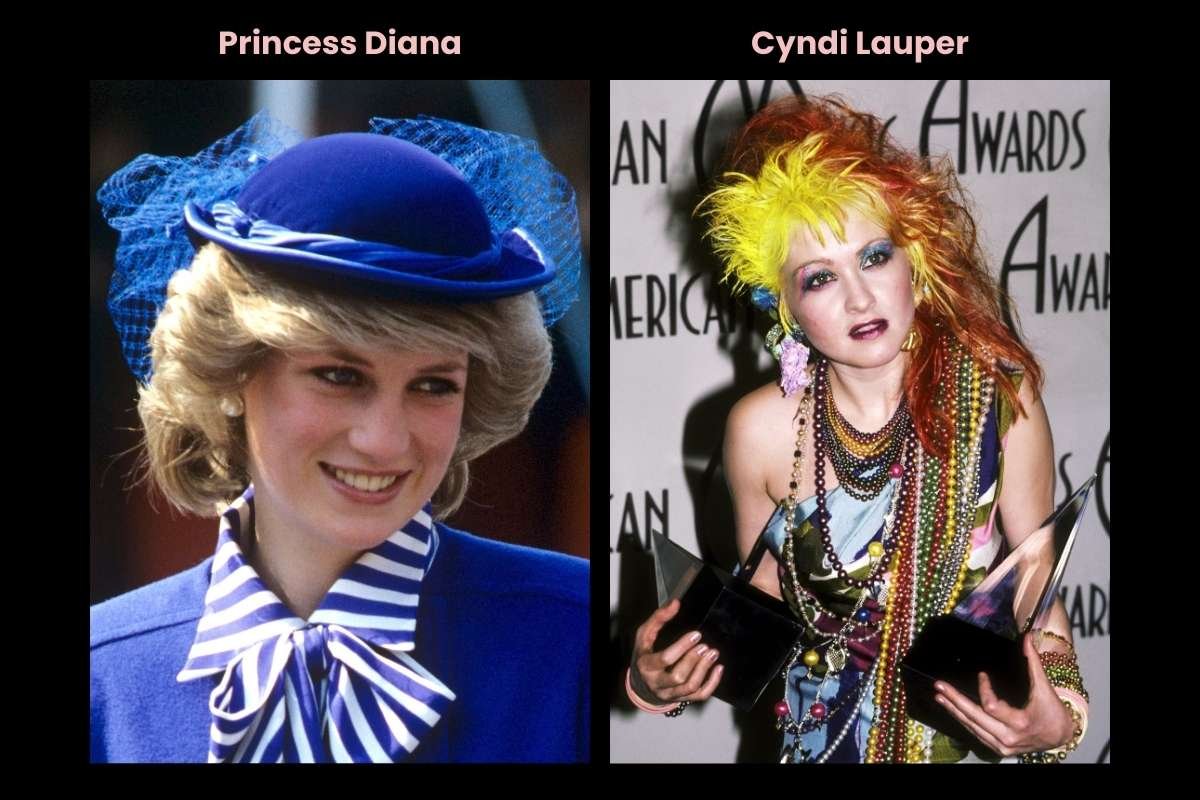
6. Cyndi Lauper — The Color Explosion That Defined ‘80s Pop Rebellion
Cyndi Lauper brought punk spirit into MTV pop with neon hair, tulle skirts, mismatched prints, and chaotic layers of jewelry. Her look embodied the anti-polish attitude of ‘80s youth culture — thrift-store meets club kid, with a dash of cartoonish anarchy. Lauper proved that style didn’t need to match to be iconic; it needed personality. Her fashion sense became a visual rallying cry for girls who didn’t want perfection — they wanted fun.
Key Highlights:
- Her signature tulle skirts were sourced from literal bridal shop leftovers.
- Neon hair dyes used by Lauper were semi-permanent pigments imported from Japan.
- Mismatched earrings became a trend after her 1983 MTV appearance — retail sales spiked significantly.
- Many outfits were handmade by designer Lisa Marie, who used thrifted fabrics from NYC’s East Village.
7. Jane Fonda — The Woman Who Turned Workout Clothes Into a Cultural Uniform
Jane Fonda didn’t simply champion aerobics; she built an entire fashion category around it. Her high-cut leotards, belted waists, leg warmers, and matching sweatbands created the visual identity of the 1980s fitness boom. Fonda’s VHS workout tapes became global best-sellers, and suddenly, spandex stopped being niche athletic gear and became everyday streetwear. She democratized fitness by bringing it into living rooms, and with it, she popularized a bright, energetic, body-conscious style that empowered women to feel strong rather than decorative.
Key Highlights:
- Fonda’s leotards were deliberately high-cut to lengthen the leg on the video broadcast.
- Her workout tapes sold 17+ million copies, making them the highest-selling home videos of the decade.
- Leg warmers became a fashion necessity, not a gym item — sales increased by 500% between 1982–84.
- Spandex suppliers reported shortages due to the “Fonda Effect.”
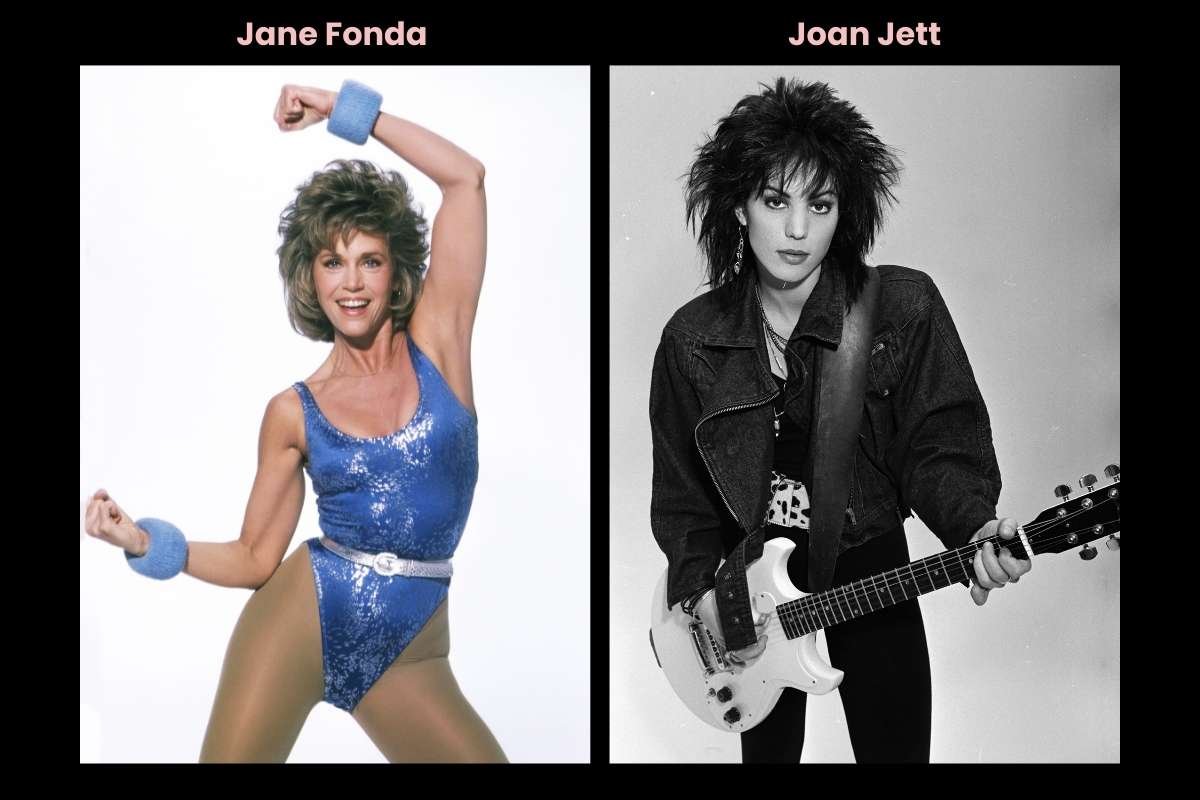
8. Joan Jett — The Blueprint of Female Punk Cool
Joan Jett’s leather biker jackets, loud graphic tees, spiked hair, and smudgy eyeliner defined a new rebellion for young women. She wasn’t styled to look edgy; she was the edge. Her look was raw, fast, and unapologetic, reflecting the authenticity of the punk movement. With the Runaways and during her “I Love Rock ‘n’ Roll” rise, Jett proved that women didn’t just belong in rock — they could dominate it. Her style set the stage for decades of girl bands that followed.
Key Highlights:
- Jett wore the same black Schott biker jacket for years until it molded to her shoulders.
- Her smudgy eyeliner came from literal emergency touch-ups backstage, shaping her signature look.
- Graphic tees came from thrift stores and DIY screen printing, now widely copied by punk-inspired brands.
- Record labels initially rejected her leather-heavy image — she self-funded her first record.
9. Brooke Shields — The Teen Who Made Denim Sexy and Sophisticated
Brooke Shields’ Calvin Klein era changed denim forever. At just 15, her high-waisted jeans, tucked shirts, untouched brows, and minimal makeup made natural beauty aspirational again. Shields made jeans feel luxurious, a radical shift for a garment previously tied to workwear. Her confidence and cool-girl nonchalance made the Calvin Klein campaign one of the most discussed ads of the decade and cemented her as a high-fashion icon who didn’t need sequins or excess to stand out.
Key Highlights:
- The “nothing comes between my Calvins and me” line boosted Calvin Klein jeans sales by nearly 300%.
- Her power brows ushered in the end of over-plucked ‘70s arches.
- Tucked shirts and denim became a global uniform for teens and models alike.
- The campaign pushed jeans into the designer pricing tier for the first time.
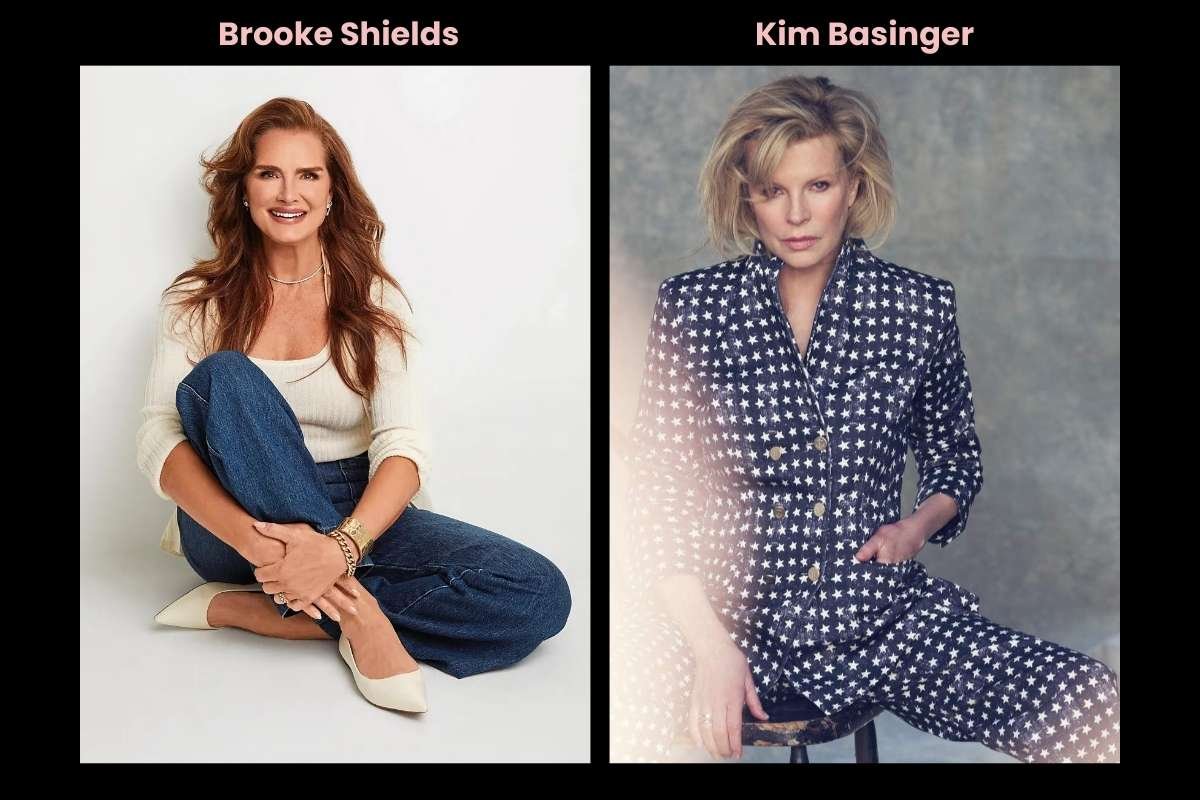
10. Kim Basinger — The Androgynous Siren Who Made Menswear Seductive
Kim Basinger’s crisp white shirts, skinny black ties, oversized blazers, and tousled blonde waves redefined androgynous glamour, becoming a subtle blueprint for some of the most Iconic ‘80s Outfits of the decade. She brought Wall Street power dressing into the realm of seduction — not through overt sexuality but through cool confidence and tailored silhouettes. Her looks at Deauville and in 9½ Weeks popularized the “borrowed-from-the-boys” aesthetic for women seeking something sleek, elegant, and quietly provocative.
Key Highlights:
- Her black tie look became a blueprint for minimalist ‘80s red-carpet fashion.
- Oversized blazers were tailored with shoulder pads removed to soften lines.
- Her undone white shirt styling inspired countless editorial shoots in Vogue and Elle.
- The Deauville outfit sparked a surge in women buying men’s ties.
11. Janet Jackson — The Strong, Glam, Rhythm Nation Style Icon
Janet Jackson’s fashion in the mid-’80s combined strength, glamour, and street style. Her studded red leather gloves, shoulder-padded jackets, ripped denim, and large hoop earrings introduced a bold aesthetic for Black women in pop and R&B. Her style during Dream Street and early Control foreshadowed the militaristic, structured look that later defined her Rhythm Nation era. She projected power and independence — something young women deeply resonated with.
Key Highlights:
- Her red leather pieces were custom-studded to match the stage choreography and lighting.
- Hoop earrings became part of her signature look, symbolizing strength in Black fashion.
- Jackets were padded for sharp silhouettes that reflected ‘80s architecture.
- Alaïa created performance-ready pieces that allowed flexibility for dance-heavy tours.
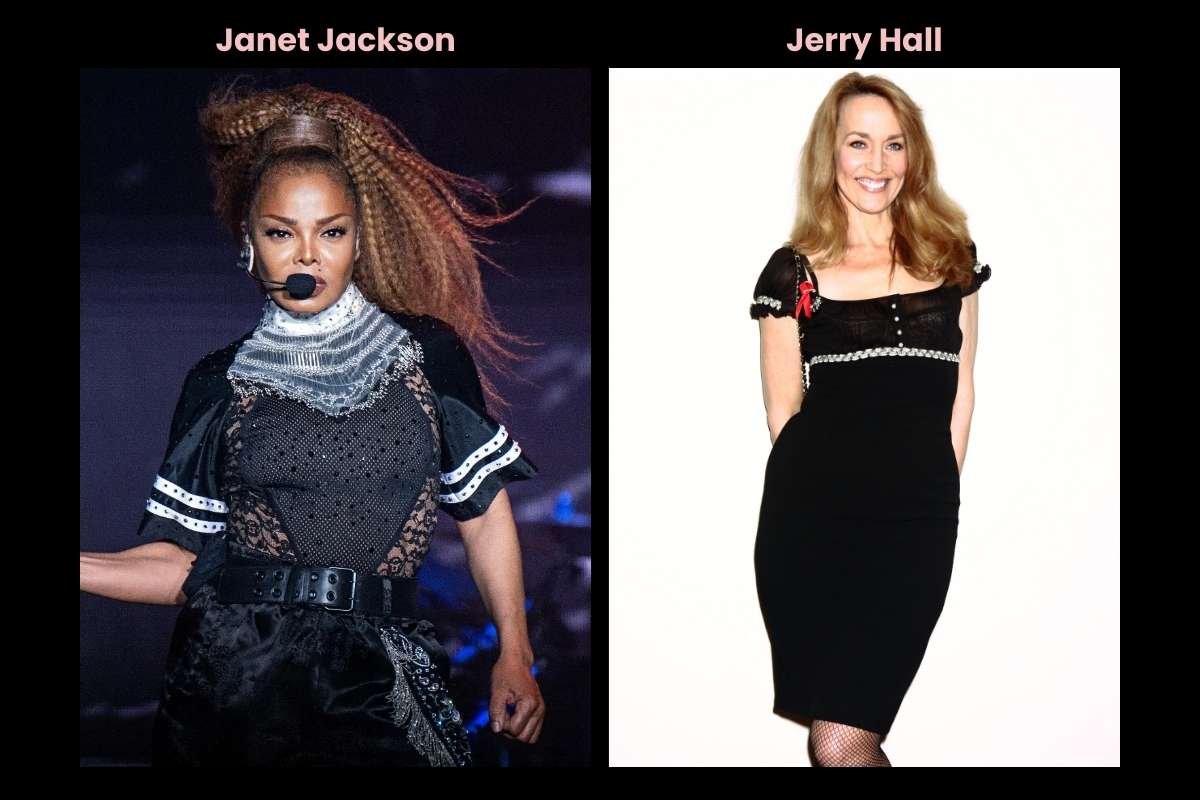
12. Jerry Hall — The Glam Amazon Who Embodied ‘80s Couture Extravagance
Jerry Hall’s Chanel red skirt suit with chunky gold buttons and chains became one of the decade’s defining couture images. As one of fashion’s original supermodels, Hall embodied powerful European glamour — tall, sculptural, and unapologetically opulent. Her accessories weren’t complementary; they were statements. With a sculpted clutch and signature blonde waves, she personified the luxurious, maximalist spirit of Karl Lagerfeld’s 1980s Chanel revival.
Key Highlights:
- The gold chain belt she wore became a top-selling Chanel accessory in 1985.
- Her suits were altered to exaggerate the waist-to-hip ratio for runway drama.
- Her height (6 feet-plus in heels) made her the visual anchor of Paris runways.
- Photos of her red suit ran in more than 50 international fashion magazines.
13. Whitney Houston — Sequins, Soft Curls, and Pop Star Radiance
Whitney Houston’s shimmering sequin mini-dresses, oversized blazers, and soft curls defined aspirational pop glamour. Her I Wanna Dance With Somebody era style brought nightclub sparkle into living rooms across America through MTV. Whitney’s elegance lay in her ability to make glitz look effortless — she was radiant, joyful, and magnetic. Her fashion bridged Motown tradition with modern pop spectacle, making her one of the most visually influential artists of the ‘80s.
Key Highlights:
- Many of Whitney’s sequin dresses were custom-made using lightweight stretch mesh for stage movement.
- Her soft curls became one of the most requested salon styles for Black women in 1987–89.
- Oversized blazers were used to contrast her high-energy dance performances.
- Armani designed several pieces specifically for her TV appearances.
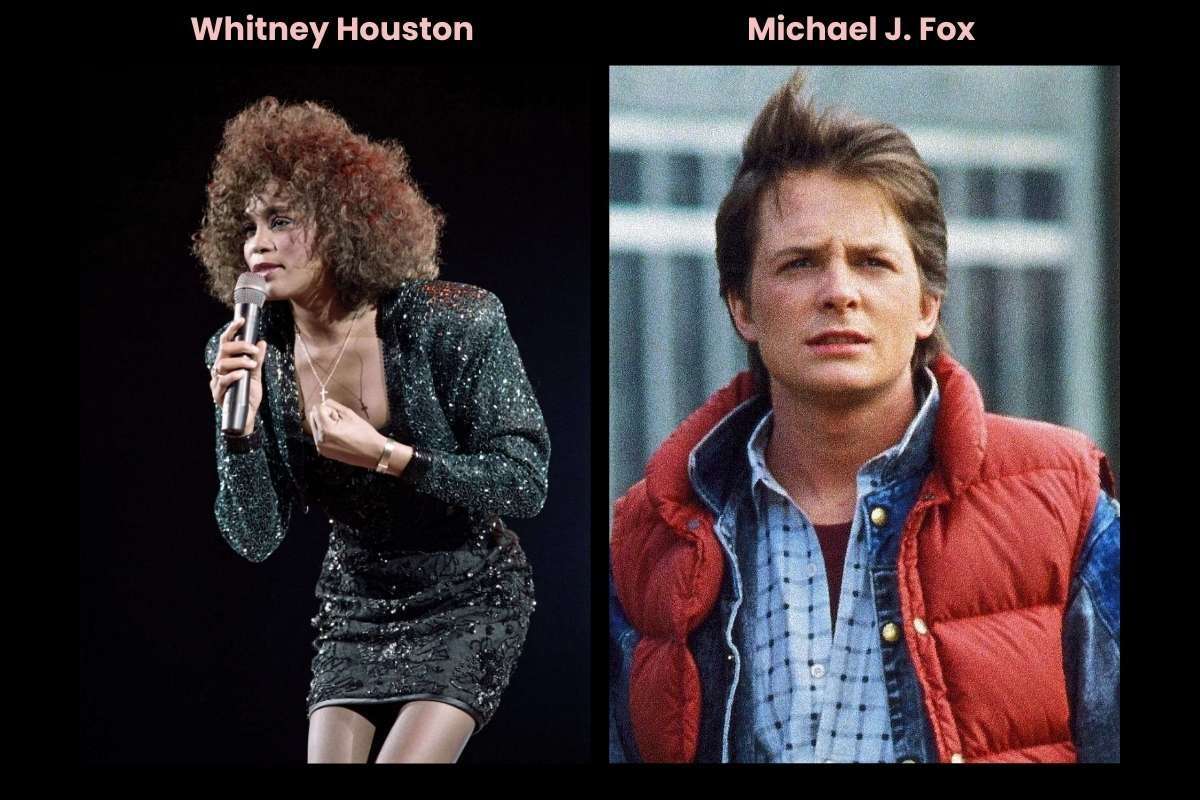
14. Michael J. Fox (Back to the Future) — The Everyman Style That Defined ‘80s Youth
Michael J. Fox’s Marty McFly look — puffy red vest, denim jacket, plaid shirt, and white Nikes — became the ultimate teen uniform of the ‘80s. It wasn’t couture; it was relatable, wearable, and instantly Iconic 80s outfits. This layered “mall style” reflected suburban America and made Fox the blueprint for the approachable, cool boy. The red vest alone became a cultural touchstone, symbolizing youthful adventure and time-travel magic.
Key Highlights:
- The “life preserver” vest was from the brand Class-5, rarely seen outside outdoor shops before the film.
- Fox’s denim jacket was tailored shorter to accommodate his rapid movement during chase scenes.
- The Nike Bruins worn in the film became a collector’s staple for sneaker fans.
- Costume designers built a wardrobe that could layer comfortably during multiple stunt takes.
15. Molly Ringwald (“The Breakfast Club”) — The Soft, Sensitive Teen Style That Defined a Generation
Molly Ringwald’s look in The Breakfast Club became the unofficial uniform for thoughtful, expressive ‘80s teens. Her pink layered cardigan, wool skirt, subtle pearls, and vintage boots created a style that felt accessible yet intentional — the early blueprint of “thrift chic.” Unlike the flashier ‘80s fashion, her aesthetic favored softness over spectacle, mirroring her character’s emotional complexity. Through John Hughes’ films, Ringwald introduced an entire generation to the power of understated individuality.
Key Highlights:
- The pastel cardigan was intentionally chosen to highlight her character’s vulnerability and privilege.
- Many fans recreated the look using actual thrift-store finds — one of the earliest examples of mainstream “thrifting.”
- Her simple pearls broke away from maximalist ‘80s accessorizing.
- After the film, mall brands reported an uptick in muted pink clothing sales.
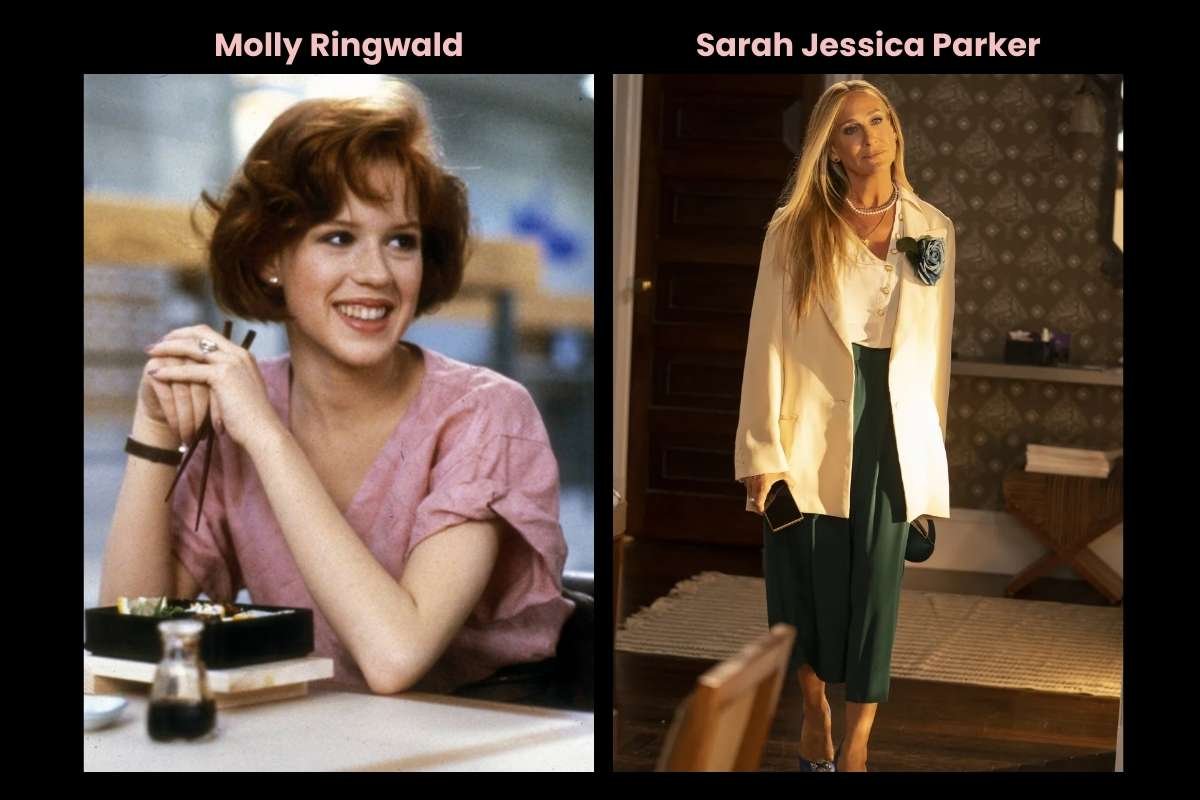
16. Sarah Jessica Parker — Downtown NYC’s Mix-and-Match Street-Style Prodigy
Before she became Carrie Bradshaw, Sarah Jessica Parker was already a fashion muse in ‘80s New York, long before anyone realized her everyday looks would influence some of the most Iconic ‘80s Outfits seen in street-style history. Her oversized blazers, knotted hair scarves, faded jeans, and slouchy socks with plimsolls captured the effortless, eclectic charm of downtown style. She layered pieces like someone who lived in vintage shops and creative studios, not designer showrooms — making her a real-life prototype of the “I just threw this on” fashion girl. Her look embodied the grit and creativity of pre-gentrified Manhattan.
Key Highlights:
- She often wore men’s blazers from NYC thrift stores on purpose for an oversized effect.
- Hair scarves were styled to hold up curls during long days of filming and auditions.
- Plimsolls (canvas sneakers) were her go-to for long city walks.
- Her layered, casual-business mix inspired early Seventeen magazine editorials.
17. Christy Turlington — The Supermodel Who Made Officewear Irresistibly Chic
Christy Turlington ushered in the age of minimal, business-inspired glamour. Her slope-shouldered blazers, straight-leg trousers, slicked-back hair, and bold gold jewelry made her the face of late-’80s “career woman chic.” Turlington represented polished confidence — the woman who could walk into a meeting and command the room without raising her voice. Through Vogue spreads and designer campaigns, she transformed workwear into a stylish, aspirational fashion statement.
Key Highlights:
- Slope-shouldered blazers were tailored specifically for her long, lean frame.
- Her slicked-hair look stemmed from backstage necessity but became a signature style in editorials.
- Gold jewelry was oversized but kept geometric to maintain a clean, modern silhouette.
- She often modeled looks created to mimic the era’s most coveted corporate jobs.
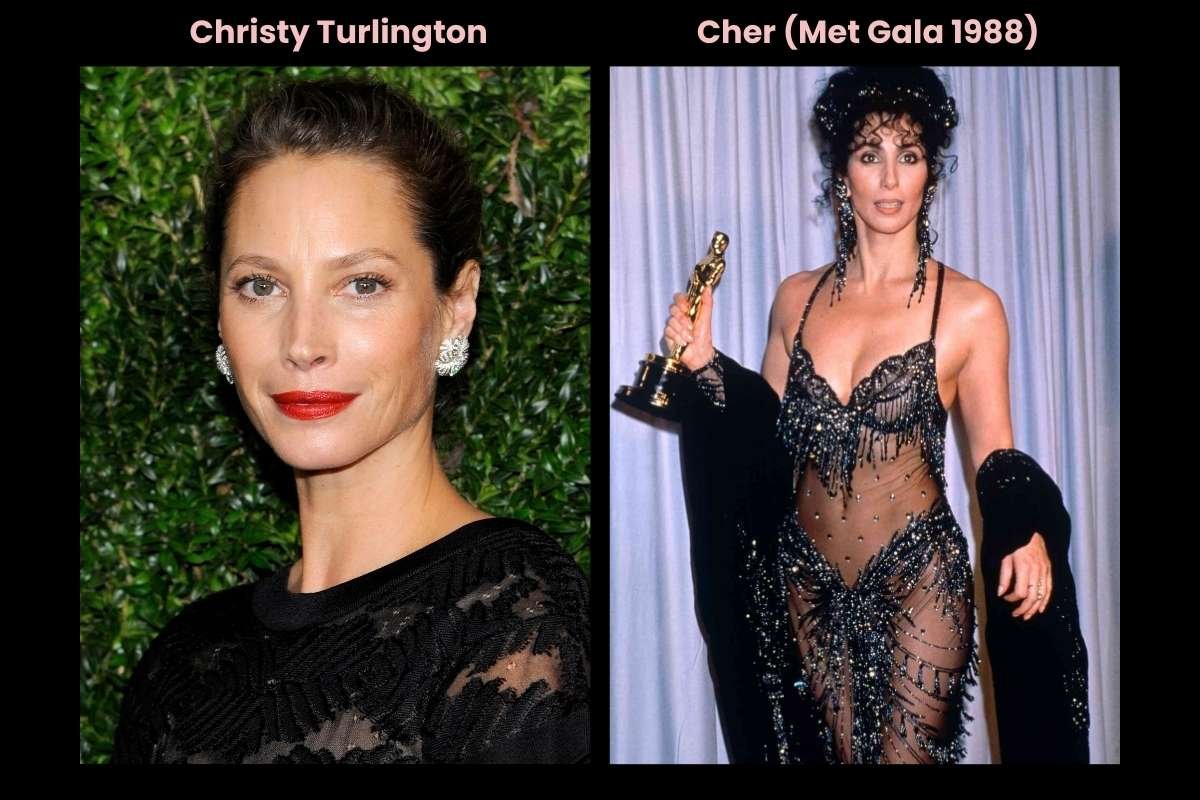
18. Cher (Met Gala 1988) — The Original “Naked Dress” Trailblazer
Cher’s 1988 Met Gala ensemble — a beaded, nearly see-through bodysuit paired with a dramatic faux-fur maxi coat — remains one of the most daring red-carpet looks of the century. Designed by Bob Mackie, it pushed past all boundaries of glamour, confidence, and risk-taking. Long before social media or viral fashion moments, Cher made headlines by redefining what celebrities could wear in public. Her boldness paved the way for modern red-carpet statements.
Key Highlights:
- Over 2,500 hand-sewn beads were used to create the translucent bodysuit.
- Mackie designed the bodysuit using illusions inspired by showgirl costuming.
- Cher’s purple eyeshadow was custom-blended to show up under ‘80s flash photography.
- The look is referenced repeatedly as the first true contemporary “naked dress.”
19. Demi Moore — Big Hair, Bigger Glamour
Demi Moore’s late-’80s fashion was a masterclass in bold glamour. With crimped fringe, glittery sequin blazers, oversized bow earrings, and layered beads, she embodied the decade’s love for eye-catching excess. What set Moore apart was her approachable charm — she blended Hollywood glam with relatable elements, making bold looks feel wearable. Her red-carpet moments from 1987–89 contributed to the era’s fascination with big hair and statement accessories.
Key Highlights:
- Her crimped bangs were often styled with mini-crimping irons, newly popular in drugstores.
- Sequin blazers were custom-fitted to keep their structure during movement.
- Bow earrings mirrored the decade’s obsession with over-the-top femininity.
- Her accessories often mixed high fashion with mass-market pieces.
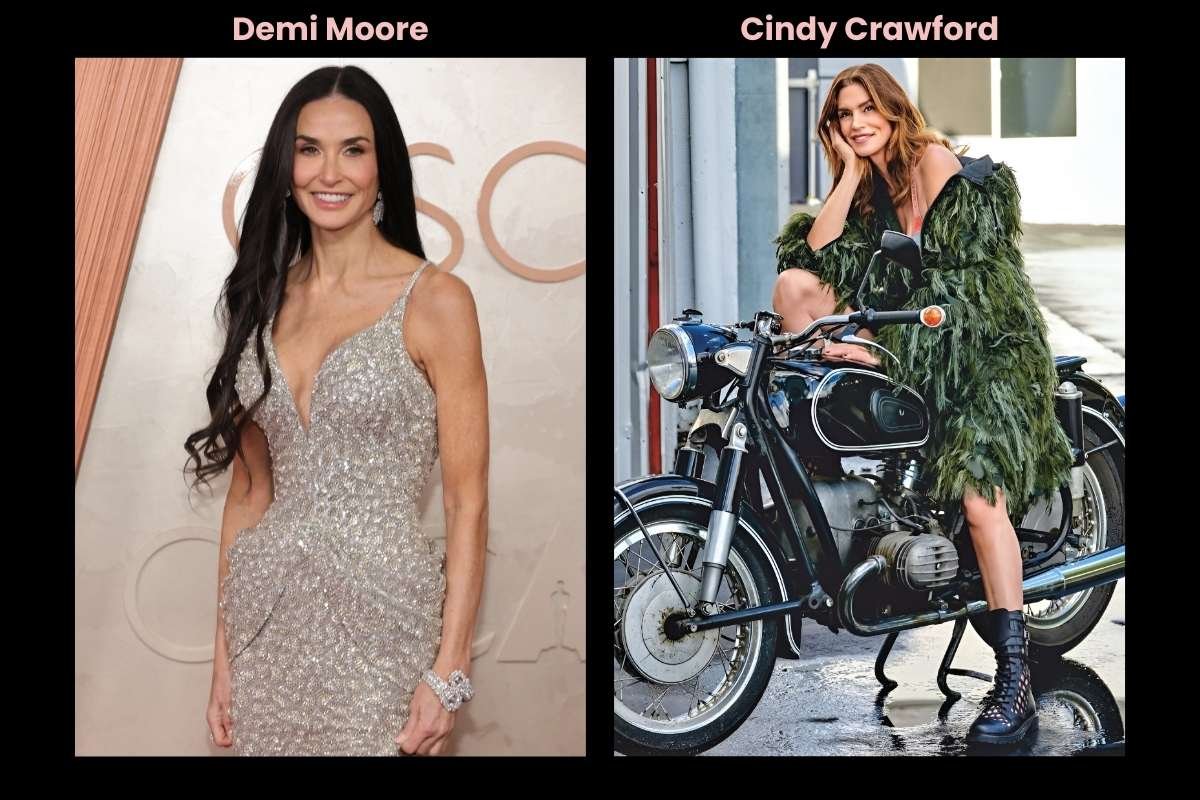
20. Cindy Crawford — The Accessible Bombshell Who Mainstreamed Biker Chic
Cindy Crawford’s cropped black biker jackets, mini skirts, vampy lips, and windblown hair made her the poster girl for modern rebellion. Whether in Pepsi ads or Vogue editorials, Crawford’s look combined sex appeal with a striking sense of empowerment. She made biker fashion feel chic — not gritty — and her timeless features balanced the edgy outfits beautifully. Her “retro vamp” aesthetics still influence runway and streetwear.
Key Highlights:
- Her signature windblown hair was created with industrial-strength fans.
- Crawford’s biker jackets were often softened inside with satin to photograph better.
- She introduced deep burgundy lipstick as a mainstream shade for teens and women.
- Pepsi commercials boosted the popularity of cropped leather jackets dramatically.
21. Sade Adu — The Calm, Clean, Timeless Alternative to ‘80s Excess
Sade Adu didn’t need sequins or shoulder pads to be iconic. Her minimalist turtlenecks, big gold hoops, slicked-back ponytail, and classic denim created a kind of purity that set her apart from nearly all the Iconic ‘80s Outfits swirling around her. Her style was decades ahead of its time — essentially an early capsule wardrobe defined by calm confidence instead of excess. She became the decade’s quiet disruptor, proving that restraint could be just as powerful as glamour. Even today, her look feels as modern as it did in 1984.
Key Highlights:
- Her red lipstick shade was chosen to complement stage lighting rather than trends.
- Turtlenecks were used to elongate her silhouette on music-video cameras.
- The slick ponytail was both aesthetic and functional for performing.
- Her look pioneered “quiet luxury” long before the term existed.
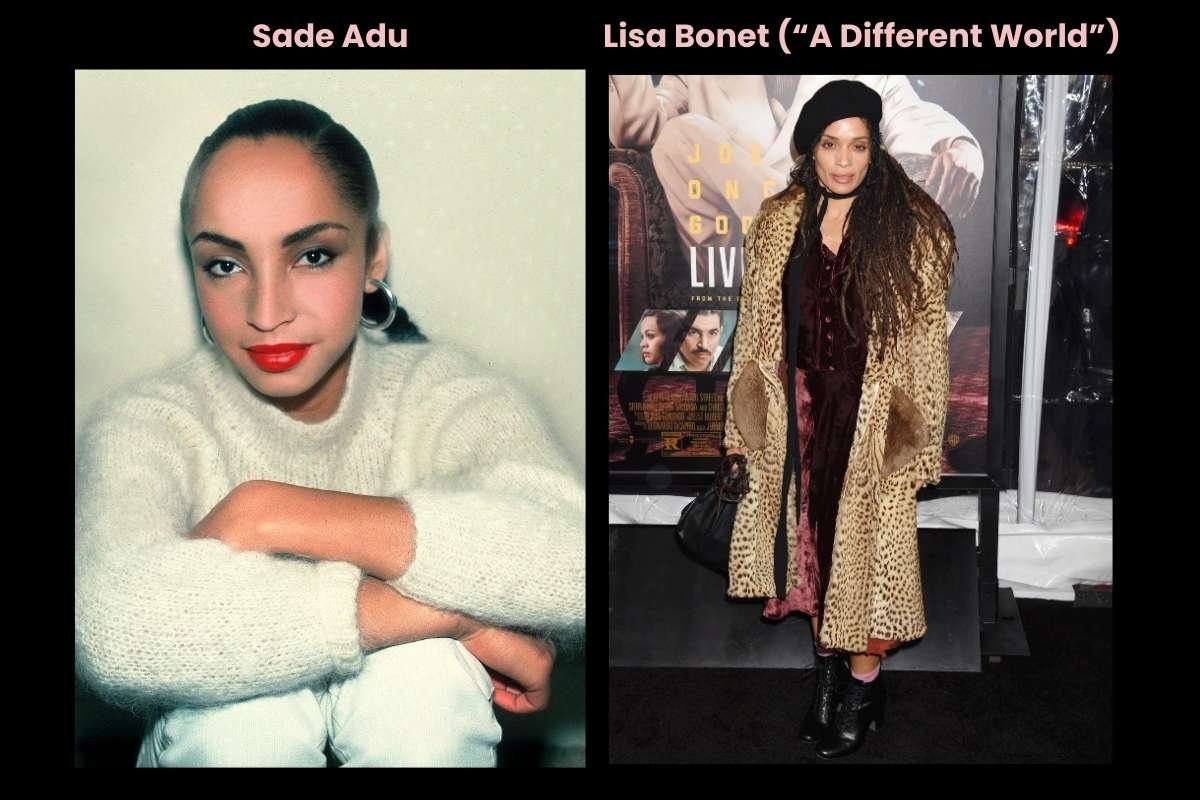
22. Lisa Bonet (“A Different World”) — The Bohemian Innovator of Afrocentric Cool
Lisa Bonet’s style mixed boho knits, layered beads, combat boots, and colorful hair wraps, creating a look that felt artistic, grounded, and deeply rooted in cultural expression. Her fashion in A Different World represented a blend of Black bohemianism and downtown New York flair. She brought Afrocentric influence into mainstream homes, setting the stage for the ‘90s wave of cultural expression through clothing.
Key Highlights:
- Her hair wraps are often made from West African textiles sourced from NYC street markets.
- Combat boots highlighted the show’s shift toward practical, lived-in style.
- Knits were oversized to represent a nomadic, free-spirited persona.
- Bonet inspired a rise in handmade bead jewelry among college-aged women.
23. Pat Benatar — The Original Tough-Girl Rocker Chic Blueprint
Pat Benatar didn’t just sing empowerment; she wore it. Her spandex leggings, karate-style headbands, muscle tees, and studded belts became the uniform of millions of girls who embraced strength as style. On MTV, Benatar’s look hit like a cultural reset: bold, athletic, sharp-edged, and undeniably feminine. She blurred the lines between gym wear, stage wear, and street fashion, planting the seed for today’s athleisure revolution.
Key Highlights:
- Her spandex leggings were inspired by rehearsal clothing but turned into stage staples.
- Headbands were added to control sweat under stage lights, but became a signature look.
- Studded belts were custom-shortened to sit high on the waist for a boxier silhouette.
- MTV viewership reports show her videos boosted sales of colored spandex in the early ‘80s.
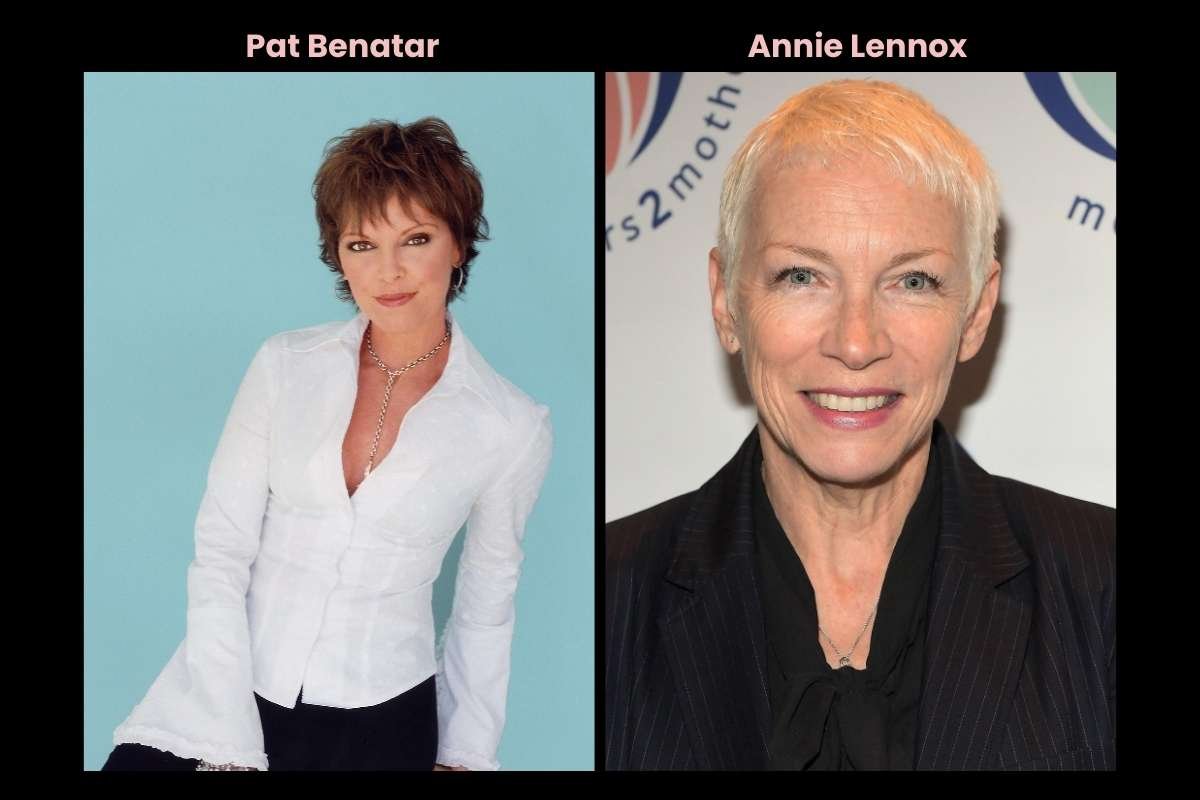
24. Annie Lennox — Androgyny’s Sharpest, Coolest Face
Annie Lennox’s style was a masterclass in gender-fluid expression at a time when the concept wasn’t openly discussed. Her sharp men’s suits, slicked-back short hair, and dramatic eye makeup created one of the most iconic contrasts in music history. Lennox challenged softness and femininity by embracing power tailoring, creating a persona that blended strength, mystery, and avant-garde artistry. She wasn’t just ahead of the curve; she was the curve.
Key Highlights:
- She often wore Armani suits tailored identically to men’s cuts—not the softened women’s versions.
- Slicked hair required a combination of gel and pomade designed for male models.
- Her makeup emphasized straight, severe lines to contrast the suit’s structure.
- Lennox’s look is credited with increasing the visibility of androgynous fashion on MTV.
25. Debbie Harry (Blondie) — The Queen of Punk-Meets-Pop NYC Glamour
Debbie Harry’s ‘80s aesthetic captured a gritty yet magnetic blend of CBGB punk and high-fashion glam. Leopard-print coats, ripped tees, pink-tinted hair, and mini skirts defined her as New York City’s coolest rebel. She brought art-school nonchalance to mainstream music, proving that punk could be playful, stylish, and unabashedly feminine. Her look wasn’t “styled”—it was lived-in, authentic, and born from the streets she performed on.
Key Highlights:
- Her leopard coat became symbolic of the East Village underground.
- Pink hair tint was achieved with temporary dyes favored by punk musicians.
- Graphic tees were often sourced from local artists or handmade by friends.
- Her Rapture era solidified the blending of punk aesthetics with pop stardom.
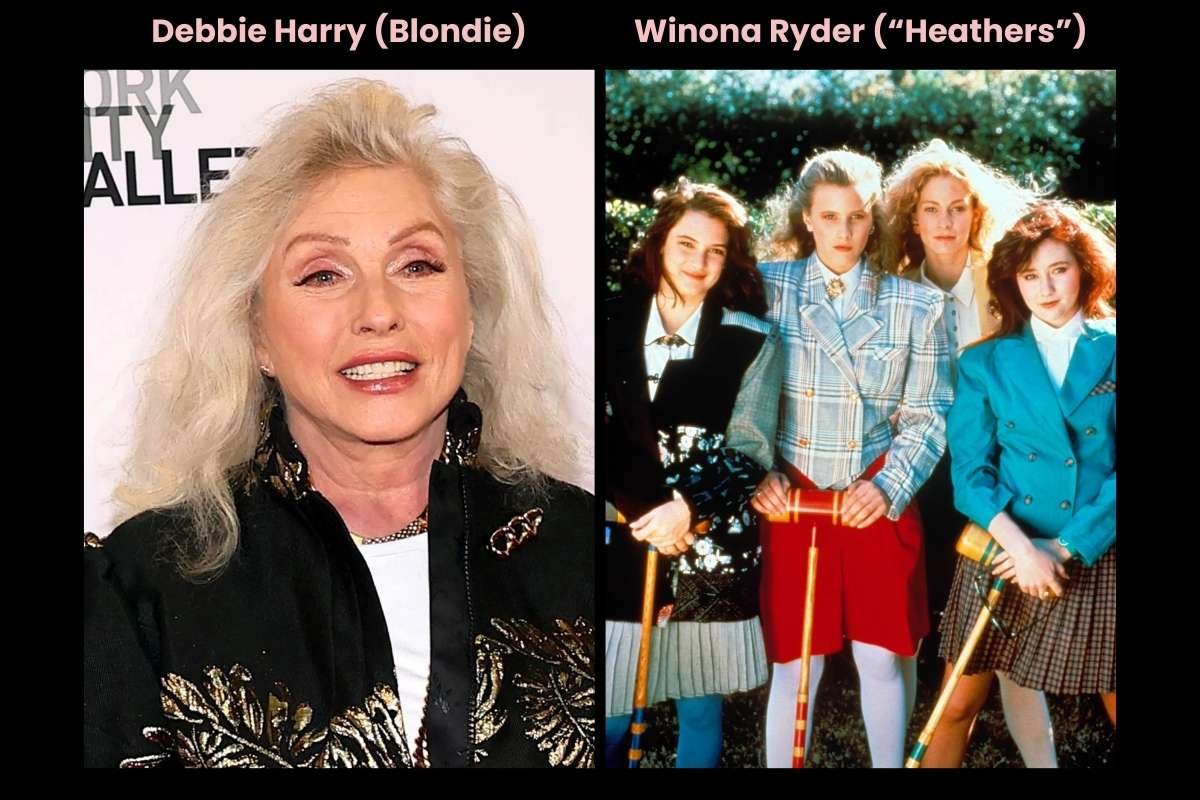
26. Winona Ryder (“Heathers”) — The Subversive Queen of High School Power Dressing
Winona Ryder’s Veronica Sawyer in Heathers gave teen fashion a dangerously smart twist. Iconic ‘80s Outfits like shoulder-padded blazers, tartan skirt suits, and inky black hair created a sharp, intellectual look that undercut the bubblegum brightness of typical ‘80s high school style. This was “power suiting” reimagined for teenagers—dark, ironic, and a little bit rebellious. Ryder’s aesthetic captured the angst and intelligence of a generation questioning conformity.
Key Highlights:
- Blazers were intentionally oversized to mimic adult corporate wear.
- Tartan suits symbolized academic seriousness but with a sinister twist.
- Her blunt black hair contrasted sharply with the film’s pastel palette.
- Heathers directly influenced the ‘90s rise of dark-academic fashion.
27. Glenn Close (“Fatal Attraction”) — The Softened Power Suit of the Corporate Woman
In Fatal Attraction, Glenn Close displayed a refined, emotionally complex version of ‘80s working-woman fashion. Her high-waisted padded skirt, sheer white blouse, and striking red lip combined professionalism with unmistakable sensuality. It was corporate chic without the hardness—an elegant twist that helped redefine the cinematic portrayal of ambitious women. Close’s look made softness powerful, demonstrating that control and vulnerability could coexist visually.
Key Highlights:
- The sheer blouse was chosen to contrast the severity of the shoulder pads.
- High-waisted skirts elongated the torso for strong yet elegant proportions.
- Her red lipstick was a custom shade mixed to intensify under cool-toned lighting.
- The film’s wardrobe helped shift power dressing away from harsh lines to fluid silhouettes.
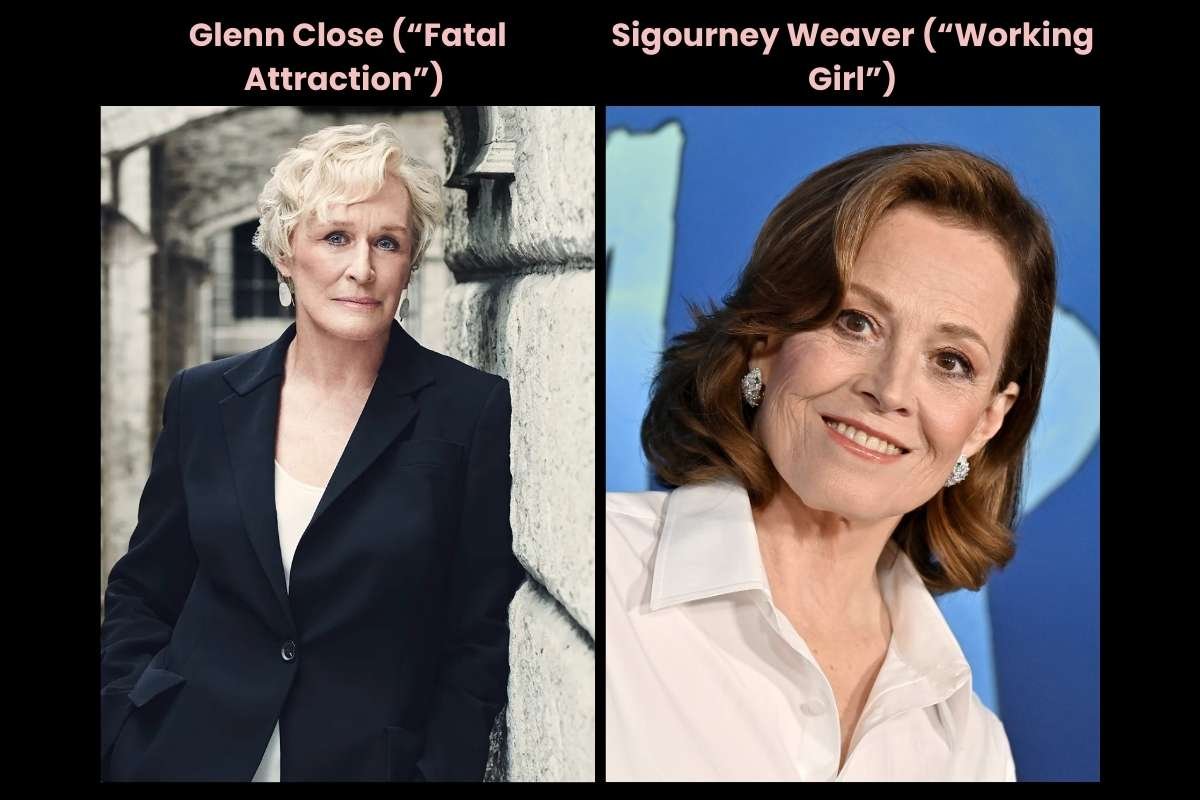
28. Sigourney Weaver (“Working Girl”) — The Blueprint for the Ambitious ‘80s Executive
Sigourney Weaver’s Working Girl wardrobe defined the polished, power-driven aesthetic of late-’80s career women. With tiny-waist blazers, sharply tailored pencil skirts, and oversized glasses, she represented the new “executive woman” willing to claim space in male-dominated offices. Weaver’s clothing reflected ambition without sacrificing femininity. The look was aspirational and intimidating—precisely the image ambitious young professionals adopted as they entered the workforce during the booming corporate era.
Key Highlights:
- Blazers were tailored with extreme waist nipping to exaggerate authority.
- Oversized glasses softened the power look with an intellectual appeal.
- Pencil skirts were hemmed just below the knee for boardroom legitimacy.
- Office-wear sales reportedly spiked after Working Girl became a cultural hit.
29. Bananarama — The Chaos-Cool Girl Crew Aesthetic
Bananarama’s style was pure ‘80s street spirit: biker jackets thrown over overalls, oversized tees knotted at the waist, and bandanas worn like a badge of girl-gang identity. Their mismatched outfits created a unified aesthetic—effortless, tomboyish, and proudly unpolished. They proved girl groups didn’t need glamour to be iconic. Their look helped define “shabby cool,” influencing the rise of casual, unfussy pop fashion throughout Europe.
Key Highlights:
- Clothing was intentionally thrifted to maintain their “real London girl” image.
- Bandanas were chosen to give each member a recognizable silhouette in group photos.
- Overalls symbolized their anti-glam, DIY attitude.
- Fans copied their “uniform” in youth clubs, creating early group-style fandom.
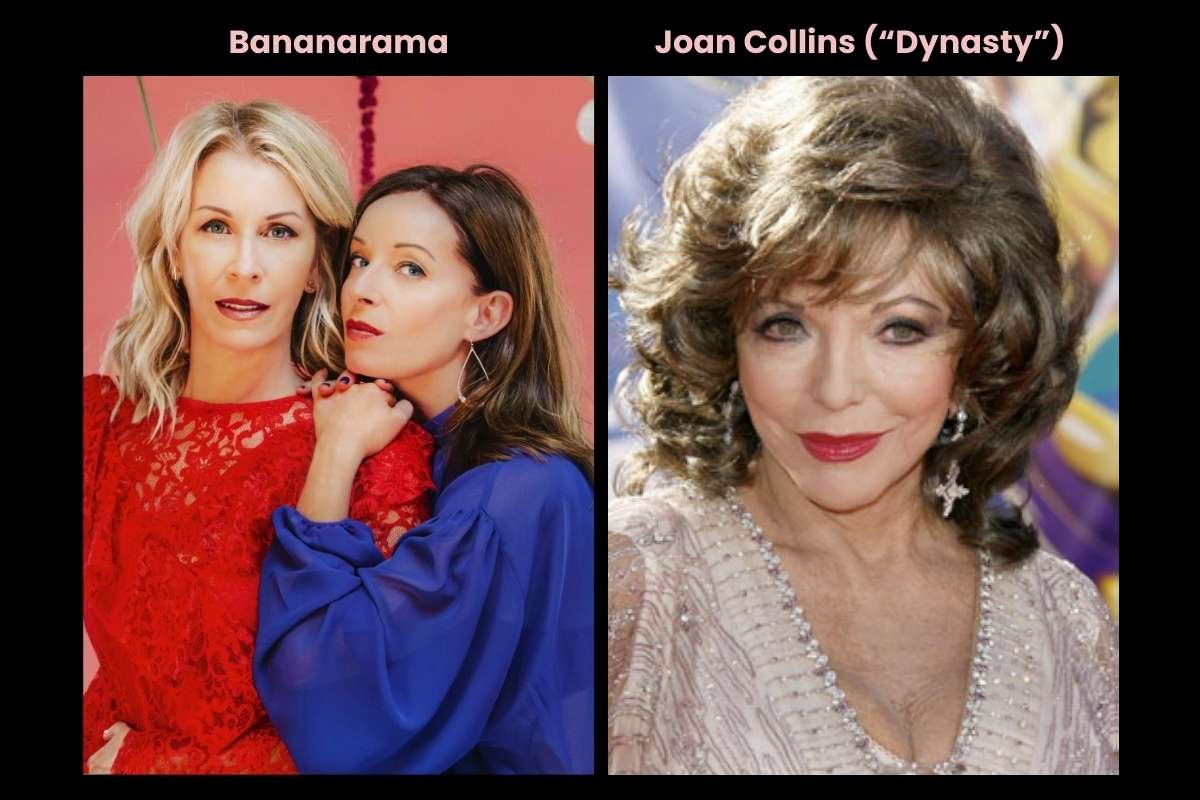
30. Joan Collins (“Dynasty”) — The Reigning Monarch of ‘80s Maximalism
As Alexis Carrington on Dynasty, Joan Collins embodied peak ‘80s excess. Her glittering beaded gowns, skyscraper shoulder pads, sculptural jewelry, and impossible glamour set a new standard for televised opulence. She transformed eveningwear into a weapon—one dripping in sequins and social power. Collins’ wardrobe helped ignite the global “power party” trend, where women embraced size, sparkle, and spectacle with unapologetic confidence.
Key Highlights:
- Shoulder pads were custom-built to dramatic proportions unseen in real fashion.
- Gowns used hand-beaded fabrics typically reserved for couture runways.
- Jewelry pieces were oversized replicas designed to catch TV lighting.
- Dynasty influenced a surge in cocktail dress sales throughout the mid-’80s.
31. Pat Cleveland — The Disco Goddess Who Brought Runway Glam Into the ‘80s
Pat Cleveland carried disco’s glamour straight into the era of supermodels. Her sequined gowns, wide-legged pants, and stacked jewelry celebrated movement, sensuality, and high-fashion exuberance. She epitomized nightlife elegance at Studio 54 and commanded runways with the same magnetic intensity. Cleveland’s fluid, expressive styling bridged the gap between disco culture and the polished catwalk, making her a living symbol of glamour through transition.
Key Highlights:
- Sequined gowns were selected to reflect the shifting lights of Studio 54.
- Wide pants enhanced her famously theatrical runway walk.
- Jewelry stacking was her signature—often mixing golds, beads, and metals.
- Designers like Halston and Saint Laurent frequently cited her as a muse.
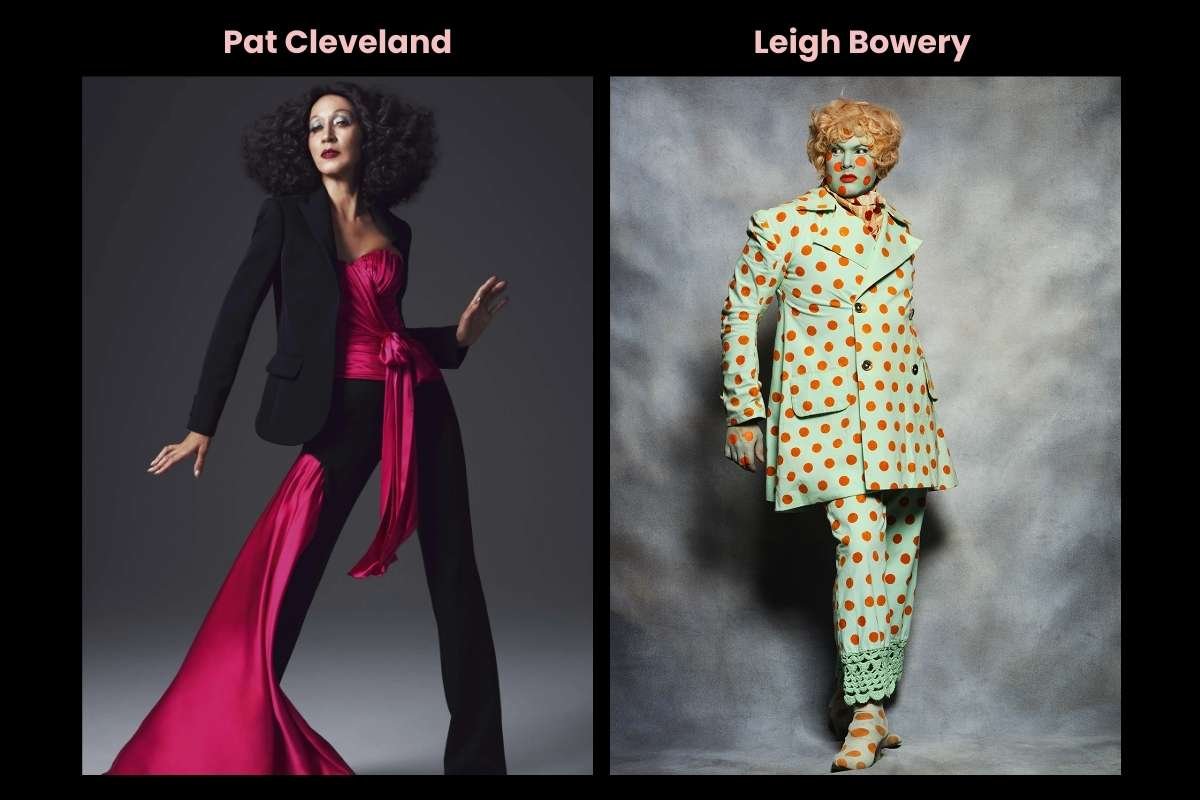
32. Leigh Bowery — Fashion as Performance, Identity, and Rebellion
Leigh Bowery was not just a style icon—he was a cultural rupture. His DIY hairgrip-covered denim, towering platform boots, neon-painted face, and living-sculpture outfits redefined fashion as performance art, earning him a spot in the pantheon of Iconic ‘80s Outfits. Bowery’s looks rejected symmetry, beauty standards, and gender rules. Today, designers, drag performers, and artists still draw inspiration from the chaotic brilliance, proving his influence stretches far beyond club nights.
Key Highlights:
- Hairgrips were applied one by one, turning everyday objects into couture armor.
- Platform boots often exceeded 10 inches in height to distort proportion.
- Neon makeup and body paint were layered to create a glowing stage presence.
- His London performances became the blueprint for avant-garde runway theatrics.
33. George Michael (Wham!) — The Soundtrack and Style of Fun-Loving ‘80s Youth
George Michael’s Wham! Era look—rolled-up sleeves, crisp white shorts, fingerless gloves, and mousse-styled hair—became the visual identity of carefree ‘80s pop. His style blended athletic casual with a polished music-video aesthetic, creating an image that was energetic but impeccably put together. In “Wake Me Up Before You Go-Go,” his bright, movement-friendly outfits helped define the era’s upbeat optimism. George mastered the balance between sporty ease and pop glamour, making his look one of the decade’s most imitated.
Key Highlights:
- White shorts were intentionally chosen to highlight choreography and leg movement.
- Fingerless gloves symbolized dance culture and hands-on microphone performance.
- His voluminous, mousse-heavy hair framed the face for maximum MTV appeal.
- Neon tees and slogan tops fueled the “choose life” trend among youth clubs.
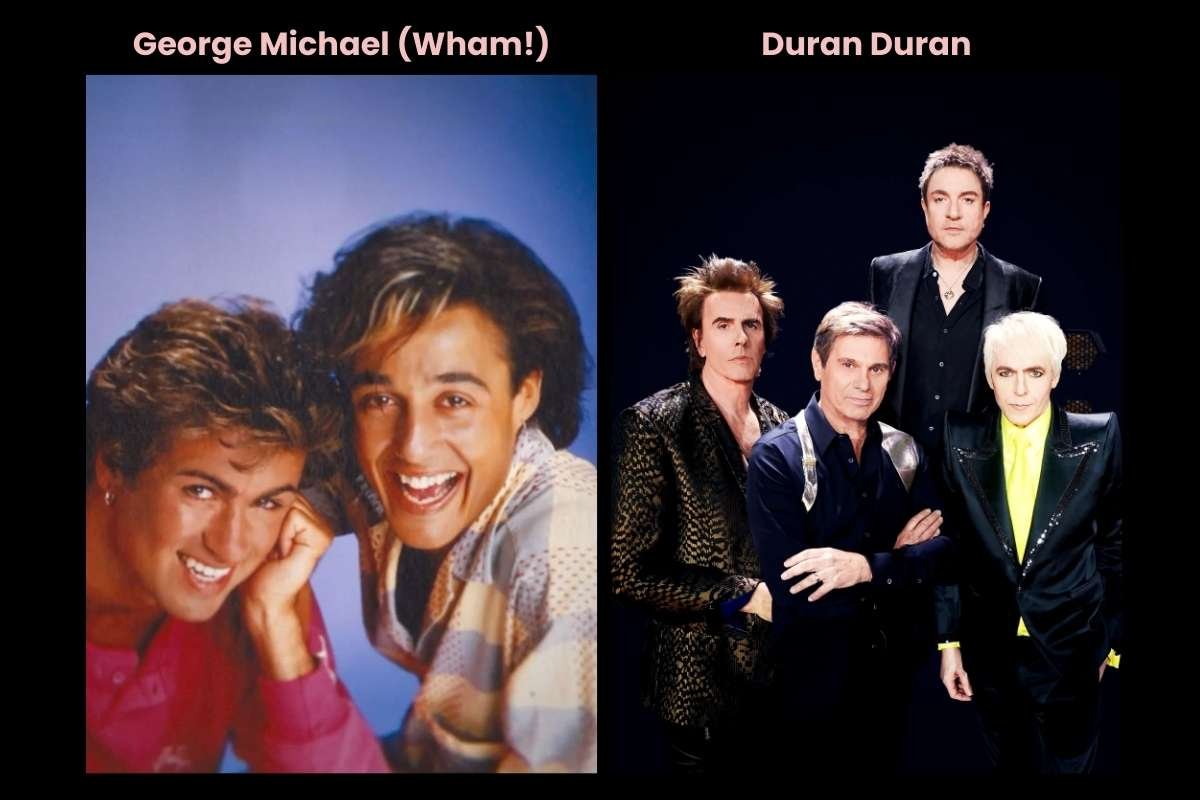
34. Duran Duran — The High-Gloss, High-Glam Kings of the New Romantic Movement
Duran Duran brought couture-level polish to men’s fashion during the MTV explosion. Their graphic print shirts, leather pants, and sculpted mullets turned the boy band aesthetic into high-glam performance art. The group blended new-wave rebelliousness with old-world tailoring, borrowing elements from glam rock, European couture, and Tokyo street style. They didn’t just dress for the stage—they created a fashion fantasy that matched their cinematic music videos.
Key Highlights:
- Leather pants were custom-fitted to maintain sleek silhouettes under stage lighting.
- Graphic shirts leaned heavily on geometric prints from London’s Soho boutiques.
- Mullets were precision-layered to photograph well during high-motion video shoots.
- Their influence spiked menswear sales in satin, glossed fabric, and bold color palettes.
35. Paula Abdul — The Dance-Pop Blueprint for MTV Street Style
Paula Abdul fused dance studio practicality with MTV performance flair. Her tie-dye pants, bomber jackets, gold hoops, and Reeboks created the perfect hybrid of movement, color, and attitude. She brought choreography-friendly fashion into pop culture, normalizing streetwear in music videos years before the ‘90s mainstreamed it. Abdul’s look spoke to dancers, dreamers, and teens trying to emulate her rhythm and star power.
Key Highlights:
- Tie-dye pants allowed full leg extension without losing visual detail in motion.
- Bomber jackets were oversized for dramatic shoulder movement during choreography.
- She frequently wore Reeboks to subtly promote her professional dance roots.
- Hoop earrings framed her face for close-up dance shots on MTV.
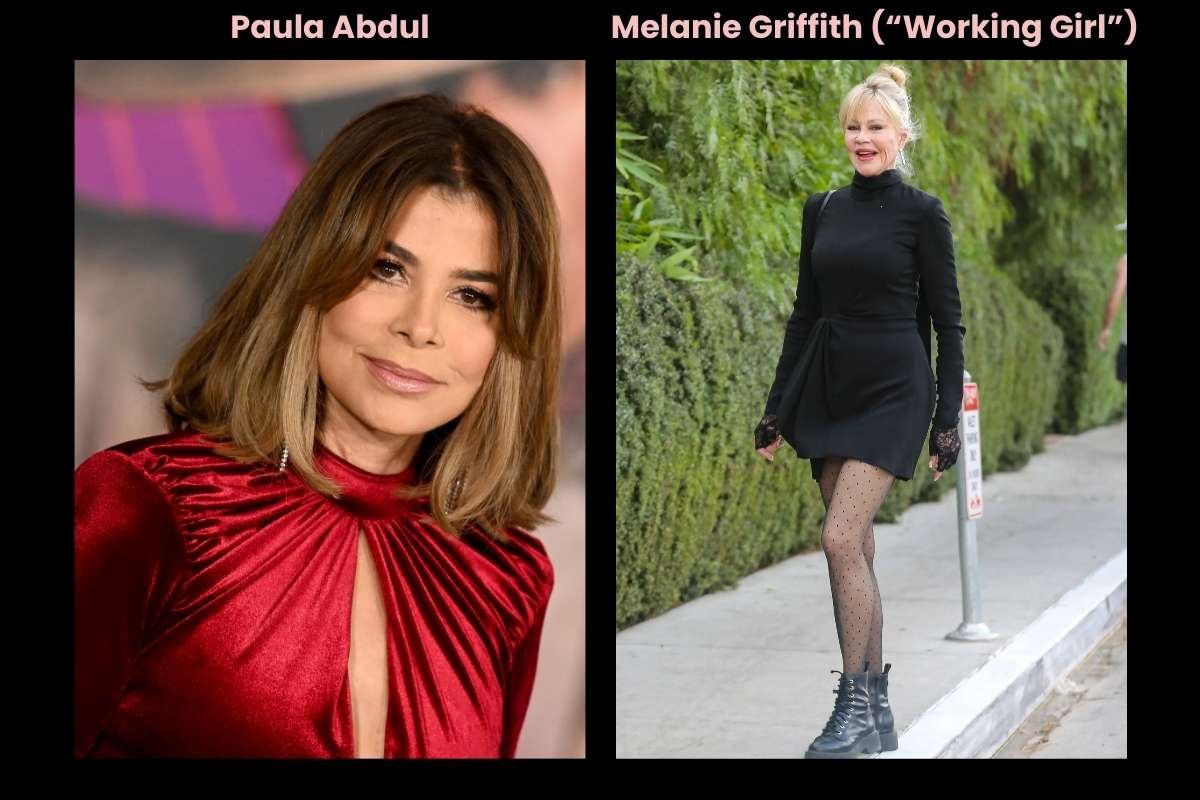
36. Melanie Griffith (“Working Girl”) — The Neon-Powered Corporate Rebel
In Working Girl, Melanie Griffith embodied the fearless, neon-bright businesswoman of the late ‘80s. Her power pumps, bow blouses, padded blazers, and frilled suits celebrated ambition with a splash of rebellion. Griffith’s wardrobe portrayed a woman fighting her way up corporate America’s ladders—not by shrinking herself, but by dressing loud, sharp, and confident. Her “boardroom bombshell” style became aspirational for career-driven women nationwide.
Key Highlights:
- Neon suits symbolized confidence and contrasted heavily with corporate greys.
- Bow blouses softened the look while maintaining professional polish.
- Power pumps elongated the silhouette in scenes, emphasizing her transformation.
- Sales of pastel and neon office-wear surged after the film’s release.
37. Boy George — The Colorful, Gender-Defying Visionary of Pop
Boy George transformed global fashion by fearlessly merging cultures, genders, and aesthetics. Oversized hats, ropes of beads, long braids, neon makeup, and loose tailoring gave him a look that transcended boundaries. He represented inclusivity, eccentricity, and self-expression at a time when fashion was becoming more homogenized. His style made androgyny accessible, joyful, and mainstream—especially as Culture Club dominated international charts.
Key Highlights:
- Hats were often custom-made, designed to exaggerate his silhouette from afar.
- Bead layering drew inspiration from Caribbean and South Asian accessory culture.
- Slouchy suits allowed his movements to appear fluid and expressive onstage.
- His neon makeup sparked early global conversations about gender fluidity in fashion.
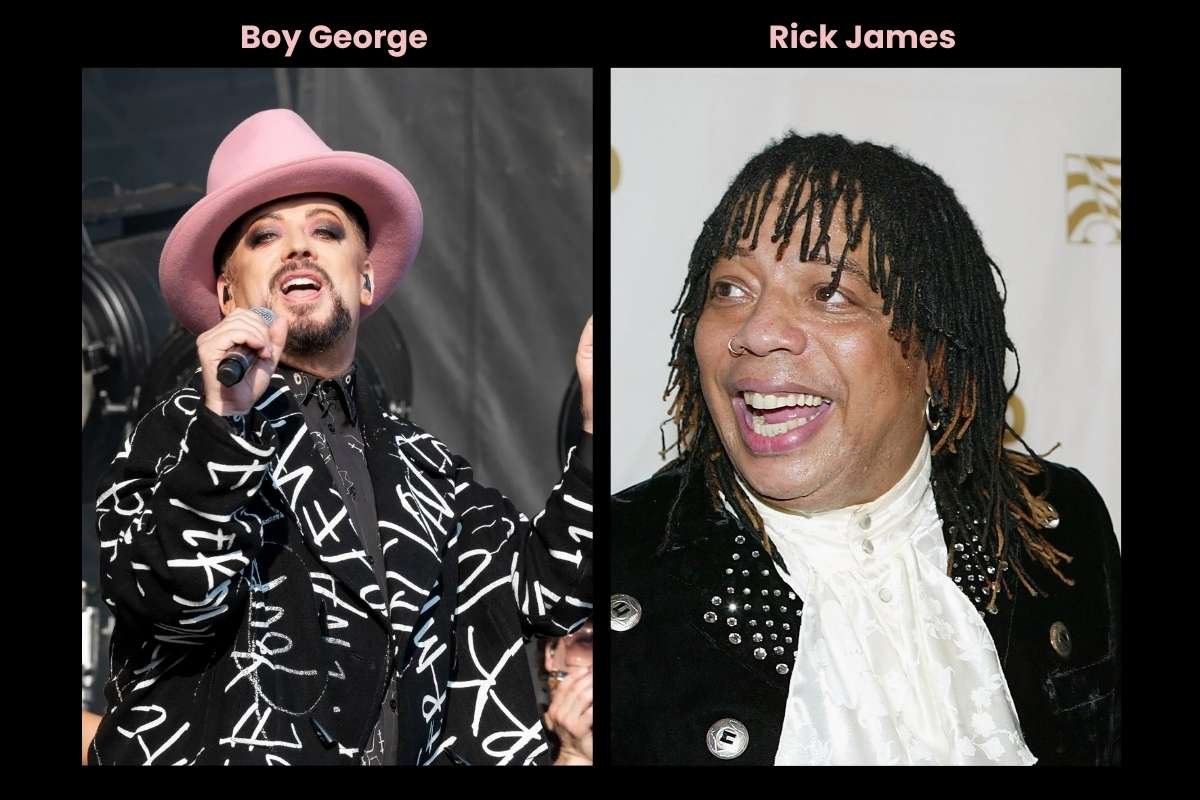
38. Rick James — The Sparkling Rebel Who Brought Glam to Funk
Rick James’ sequined suits, thigh-high boots, and shaggy mullet made him a walking spectacle of glam-funk. His style blended rock star flamboyance with Motown swagger, influencing a wide spectrum of fashion from Prince to early ‘80s drag culture. Rick understood the power of spectacle, using clothing to create a persona that was wild, sexual, and unapologetically bold. “Super Freak” wasn’t just a song—it was a fashion manifesto.
Key Highlights:
- Sequins were chosen to reflect stage lights during his high-energy performances.
- Thigh-high boots challenged gendered expectations in R&B styling.
- His mullet incorporated both curl and shag to create signature bounce onstage.
- His look boosted the popularity of stretch-leather menswear in the early ‘80s.
39. Jennifer Beals (“Flashdance”) — The Accidental Fashion Revolution
Jennifer Beals sparked a global trend with her off-the-shoulder sweatshirt, legwarmers, and permed hair in Flashdance, creating one of the most iconic outfits. The look, originally improvised, became the template for gym-to-street style. It captured the fantasy of a blue-collar woman with dreams and rhythm—raw, energetic, and effortlessly sexy. Suddenly, everyday wardrobes were infused with pieces from Iconic ‘80s Outfits, proving Beals didn’t just star in a film; she started a movement.
Key Highlights:
- The iconic sweatshirt was deliberately cut for a slouchy, sensual neckline.
- Legwarmers echoed real dancer warm-up routines of the era.
- Her perm added a “lived-in” working-class authenticity.
- Dance studios reported a surge in off-shoulder tops after the film’s debut.
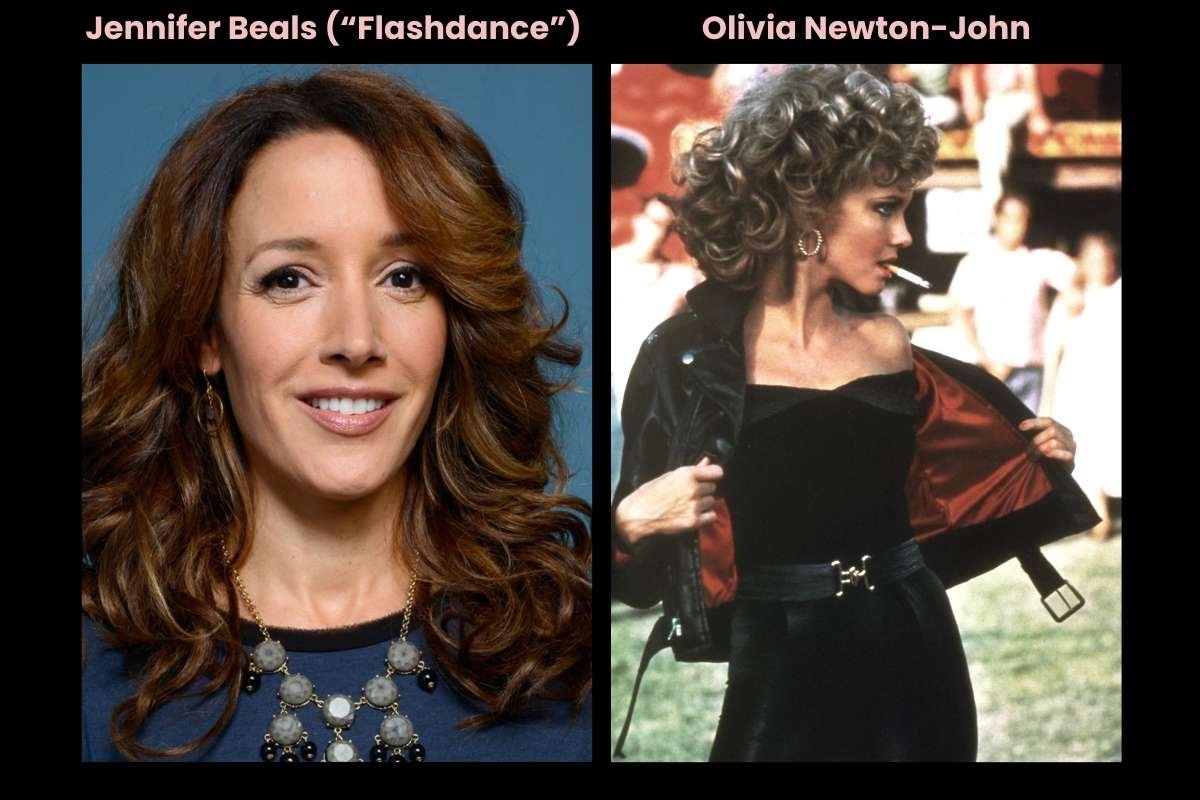
40. Olivia Newton-John — The Global Ambassador of ‘80s Fitness Glam
Olivia Newton-John in “Physical” created the most definitive fitness aesthetic of the decade. Bright leotards, headbands, glossy blush, and a high pony made workouts look glamorous and fun. Her image transformed the fitness industry, selling millions of pieces of workout gear worldwide. She embodied the era’s enthusiasm for aerobics—an energetic, feminine, and colorful workout culture everyone wanted to be part of.
Key Highlights:
- Neon leotards ensured high visibility during fast aerobics movements.
- Headbands prevented sweat streaking under harsh studio lights.
- Makeup emphasized a “healthy glow” that TV audiences loved.
- Aerobic studios saw attendance spikes after the song’s release.
41. Tiffani Thiessen (“Saved by the Bell”) — The Bridge Between ‘80s Color and ‘90s Cool
Tiffani Thiessen’s Kelly Kapowski look—acid-wash jacket, neon bike shorts, and scrunchie—captured the exact moment when late ‘80s fashion slid into early ‘90s pop culture. Her outfits blended California teen optimism with mall-culture accessibility, making her the visual blueprint for school-hallway style. She made sporty, colorful, mix-and-match outfits feel glamorous without losing approachability. This era-defining style spoke directly to suburban teens who saw her as both aspirational and relatable.
Key Highlights:
- Acid-wash jackets symbolized surf culture meets mall fashion, a core late-’80s identity.
- Neon bike shorts aligned with aerobics trends and emphasized athletic silhouettes.
- Scrunchies became a teen essential thanks to her pastel, match-your-outfit approach.
- Her looks influenced teen retail stores like Contempo Casuals and Wet Seal.
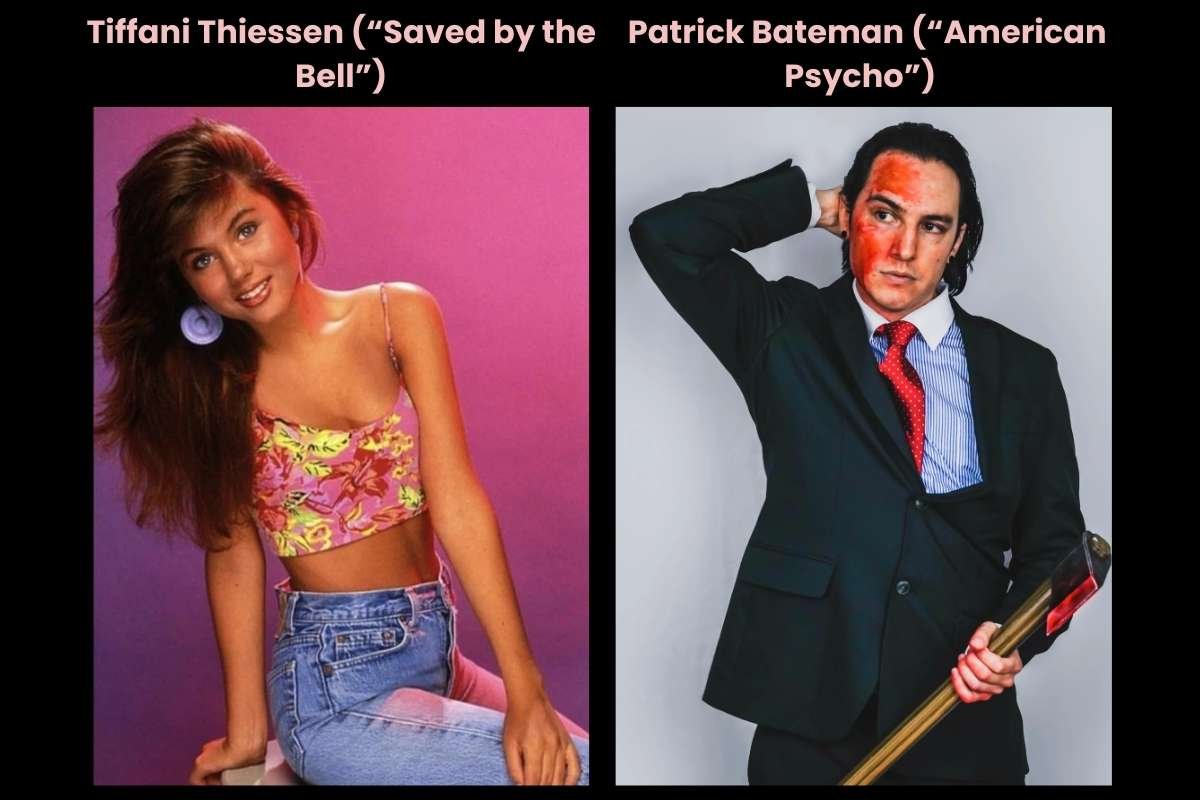
42. Patrick Bateman (“American Psycho”) — The Sinister Perfection of 1980s Yuppie Style
Though fictional, Patrick Bateman embodies the extreme precision of late ‘80s Wall Street fashion: pinstripe suits, slicked hair, suspenders, and a power-red tie. His wardrobe reflects the decade’s obsession with wealth, image, and status. The look is intentionally immaculate—almost sterile—representing excess, ego, and performative masculinity. Bateman’s visual identity became a pop-culture shorthand for corporate greed, perfectionism, and the darker side of consumerism.
Key Highlights:
- Pinstripes were razor-thin to emphasize “lean, powerful” silhouettes.
- Gelled hair represented control, discipline, and Wall Street grooming codes.
- The red tie symbolized aggression, dominance, and yuppie authority.
- His style inspired Halloween costumes, runway parodies, and finance memes.
Also Read:
- 90’s Style Fashion: The Era That Redefined Cool Forever
- Hottest Actresses of All Time Who Made Beauty Part of Their Legacy
Conclusion:
When you look back at these Iconic ‘80s Outfits, you begin to understand why the decade still feels so alive. The ‘80s weren’t simply a fashion era; it was a cultural rebellion stitched into fabric. Every ripped tee, every sequined mini-dress, every bold suit, and every outrageous accessory told a story about someone who refused to fit neatly into a box.
From music icons rewriting gender norms to supermodels reshaping elegance, from cinematic teens expressing vulnerability through thrifted layers to performers turning clothes into art, the ‘80s proved something timeless: style becomes iconic when it comes from the courage to be unmistakably yourself.
The decade gave us more than trends; it gave us characters. Archetypes. Attitudes. It reminded us that fashion is most powerful when it challenges, disrupts, and dares. And even today, modern designers, celebrities, and street-style creators continue to borrow from the audacity born in that neon-lit era.
The story of the ‘80s isn’t over. It lives every time a blazer gets bigger, a neckline gets bolder, or a teenager raids a thrift store searching for something that doesn’t play by the rules.
Because the truth is simple:
The world keeps changing, but the energy of the ‘80s — and its iconic outfits — never stops inspiring the ones bold enough to wear their story loudly.