
Key Points:
- Sunita Williams’ retirement ends a 27-year NASA career marked by 608 days in space and record-setting spacewalks.
- She commanded the ISS and played a key role in advancing long-duration human spaceflight.
- Her final Starliner mission showcased her leadership and adaptability during an extended stay in orbit.
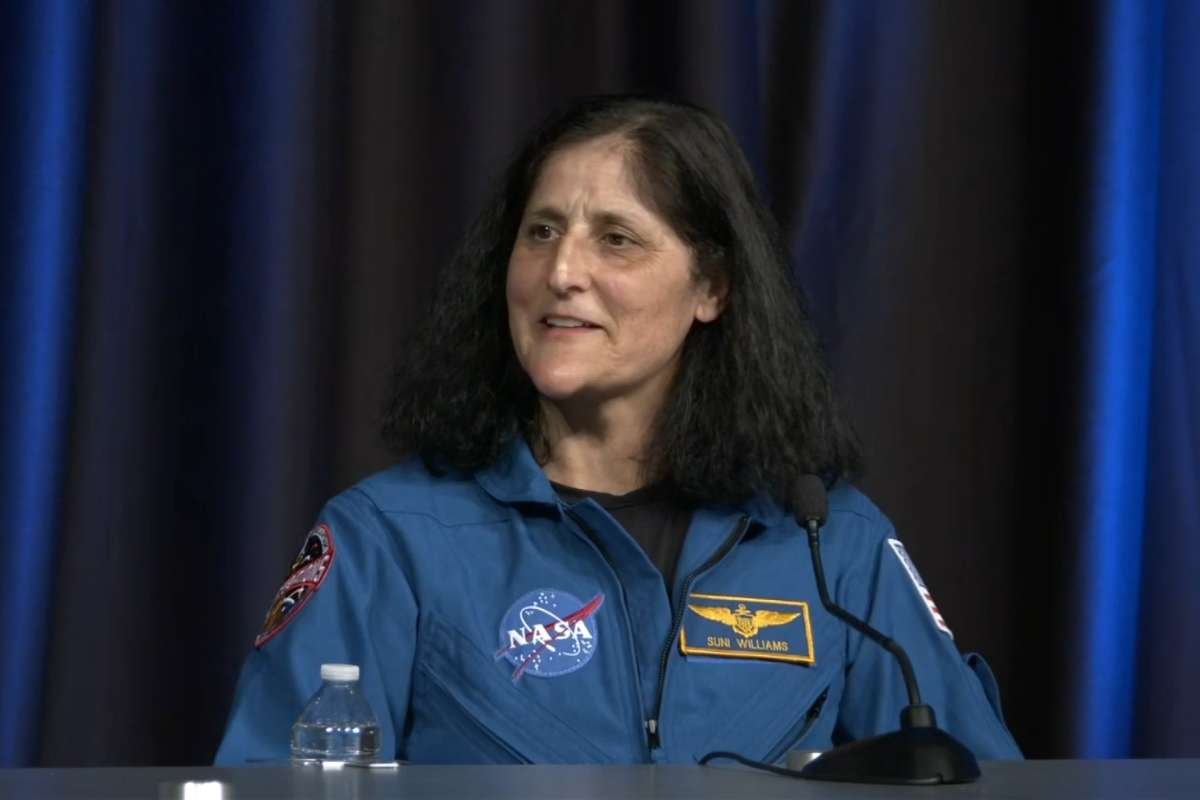
NASA astronaut Sunita “Suni” Williams has officially retired, marking the Sunita Williams retirement as the close a remarkable career that spanned nearly three decades and helped shape modern human spaceflight. Williams’ retirement became effective in late December 2025, marking the end of 27 years of service with the U.S. space agency. Over the course of her career, she emerged as one of NASA’s most accomplished astronauts, known for her resilience, leadership, and record-setting missions aboard the International Space Station (ISS).
Williams logged an extraordinary 608 days in space, placing her among the most experienced astronauts in NASA history. She also completed nine spacewalks, accumulating more than 62 hours outside the ISS, the highest total ever recorded by a female astronaut. NASA officials credited her work with strengthening the agency’s long-duration spaceflight capabilities and advancing preparations for future missions beyond low Earth orbit.
From Shuttle Missions to the Starliner Test Flight
Williams first flew into space in 2006, serving as a flight engineer during Expeditions 14 and 15 aboard the ISS after launching on the Space Shuttle Discovery. She returned to orbit several years later, playing a key role in station maintenance, scientific research, and complex spacewalk operations. In 2012, she commanded Expedition 33, becoming only the second woman to lead the ISS at the time, another milestone highlighted as part of the legacy surrounding Sunita Williams’ retirement.
Her final mission placed her once again at the center of global attention. In June 2024, Williams launched aboard Boeing’s Starliner spacecraft alongside fellow astronaut Butch Wilmore for the vehicle’s first crewed test flight. The mission, initially planned to last just over a week, was extended dramatically after technical issues were identified in the spacecraft’s propulsion system. NASA ultimately decided it was safer for the astronauts to remain aboard the ISS while alternative return options were evaluated.
After spending more than nine months in orbit, Williams returned safely to Earth in March 2025 aboard a SpaceX Crew Dragon capsule. The mission highlighted both the challenges of introducing new commercial spacecraft and the adaptability of astronauts operating in uncertain conditions. Throughout the extended stay, Williams continued to support station operations and scientific experiments, reinforcing her reputation for calm leadership under pressure.
A Lasting Legacy for Future Generations
Sunita Williams retirement represents more than the conclusion of an individual career; it marks the passing of a generation that bridged NASA’s shuttle era and its current reliance on commercial partners. Widely admired for her technical skill and approachability, she became a role model for aspiring astronauts, particularly women and students from diverse backgrounds who saw her achievements as proof that space exploration is open to all.
Reflecting on her time with NASA, Williams has often described space as her “favorite place,” emphasizing the sense of perspective it offers on Earth and humanity. Her legacy now lives on through the astronauts she mentored, the missions she helped enable, and the records she set.
As NASA prepares for future lunar and deep-space missions, the impact of Sunita Williams’ retirement leaves behind a standard of excellence that will continue to influence human spaceflight for years to come.
Visit more of our news! CIO Women Magazine