
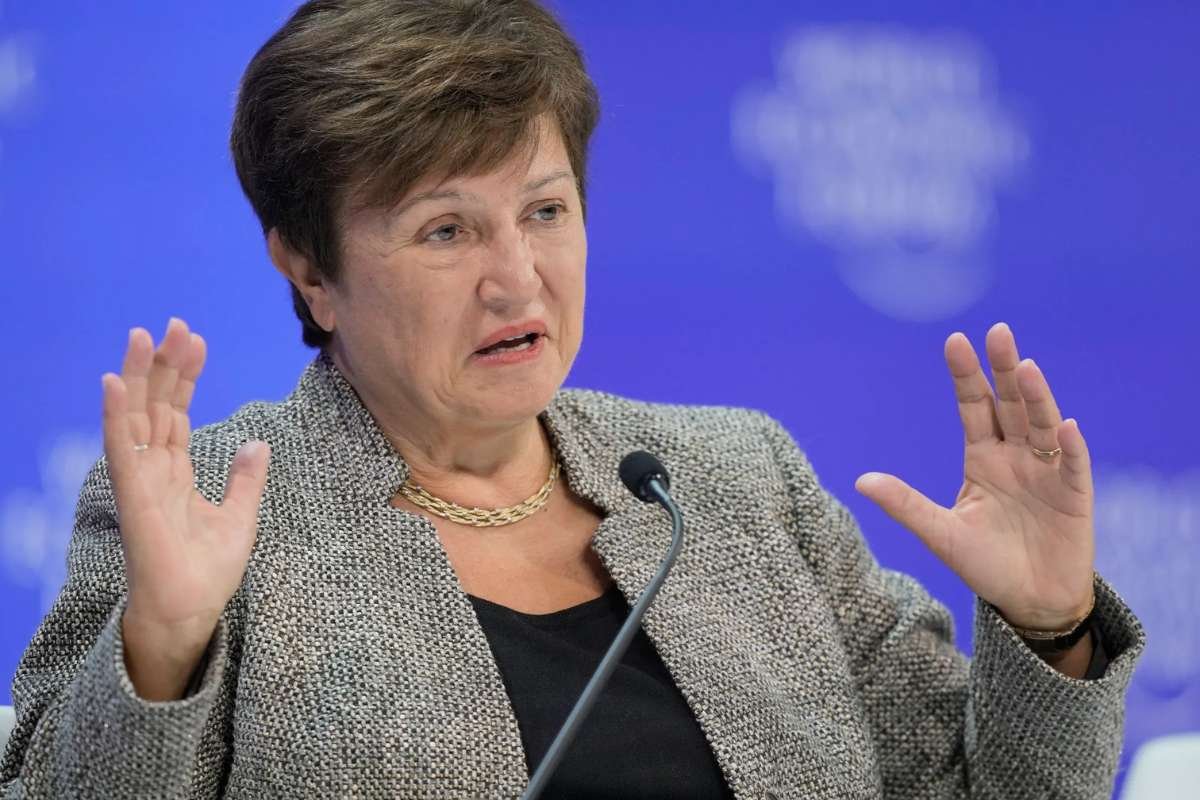
Kristalina Georgieva has emphasized that the global economy is showing unexpected resilience in 2026, sustaining steady growth despite geopolitical tensions, trade realignments, and persistent financial pressures. According to the International Monetary Fund’s latest outlook, global growth is projected to remain around 3.3% through 2026 and into 2027—a pace that has surprised many policymakers given the scale of recent global disruptions.
IMF Managing Director Kristalina Georgieva described the outlook as a positive surprise, noting that the world economy has adapted more effectively than anticipated to higher interest rates, tighter financial conditions, and ongoing uncertainty. While growth remains uneven across regions, the overall trajectory suggests that fears of a sharp global slowdown have, for now, failed to materialize.
However, Georgieva cautioned that resilience should not be confused with long-term stability. She emphasized that while headline growth numbers appear solid, underlying vulnerabilities continue to pose significant risks, requiring careful policy coordination and structural reforms.
Four Key Drivers Supporting Resilience
Kristalina Georgieva has pointed out that several factors have contributed to the global economy’s ability to withstand recent shocks. One of the most important, she noted, has been the adaptability of the private sector. As governments reduced extraordinary post-crisis interventions, businesses stepped in as primary growth drivers—adjusting supply chains, investing strategically, and responding quickly to changing market conditions.
Another stabilizing force has been the limited impact of trade disruptions. Although protectionist measures and tariff announcements raised concerns, their broader economic effects were partially offset through negotiated exemptions, alternative trade routes, and diversification of suppliers. This helped prevent a deeper fragmentation of global trade flows.
Technology investment has also played a central role. Rapid expansion in artificial intelligence, digital infrastructure, and data-driven industries has supported capital spending and productivity expectations, particularly in advanced economies. According to IMF leadership, this investment wave has become a critical engine of near-term growth, boosting corporate confidence and labor market resilience.
Additionally, supportive fiscal and monetary policy frameworks in major economies have helped sustain demand. While central banks remain vigilant about inflation, a more balanced approach to policy tightening has reduced the risk of stalling economic activity, allowing consumption and investment to continue at moderate levels.
Risks Remain Beneath the Surface
Despite the positive outlook, Kristalina Georgieva has cautioned that the global economy remains exposed to several downside risks. One major concern she highlighted is the concentration of growth in a narrow set of sectors, particularly technology. Georgieva noted that if productivity gains from artificial intelligence fail to meet expectations, investment momentum could weaken, potentially triggering market corrections.
Geopolitical risks also loom large. Escalating conflicts, renewed trade tensions, or abrupt shifts in policy could disrupt supply chains and financial markets. High public debt levels in many countries further constrain governments’ ability to respond effectively to future economic shocks.
Kristalina Georgieva stressed that sustaining resilience will require disciplined policymaking, broader participation in growth, and continued international cooperation. While the global economy has shown an impressive capacity to absorb shocks so far, she warned that complacency could undermine progress in an increasingly complex global environment.
The IMF’s message for 2026 remains one of cautious optimism: the global economy is holding firm, but the balance between resilience and risk remains fragile.