Think about the last time you saw an ad that felt like it was made just for you. Maybe it spoke your language, matched your needs, or showed exactly what you were looking for. That kind of connection rarely happens by chance. Businesses carefully decide who they want to reach and how they want to reach them.
That is where market segmentation and targeting come into play. Instead of trying to sell to everyone, companies segment a large market into smaller groups based on shared traits such as age, interests, or buying behavior. Then they select the specific group they want to focus on and tailor their message to that audience. This approach helps businesses communicate more effectively, build stronger connections, and increase the chances of turning interest into actual sales.
In this article, you will see what role market segmentation and targeting play in the overall marketing strategy of the company.
What is Market Segmentation?
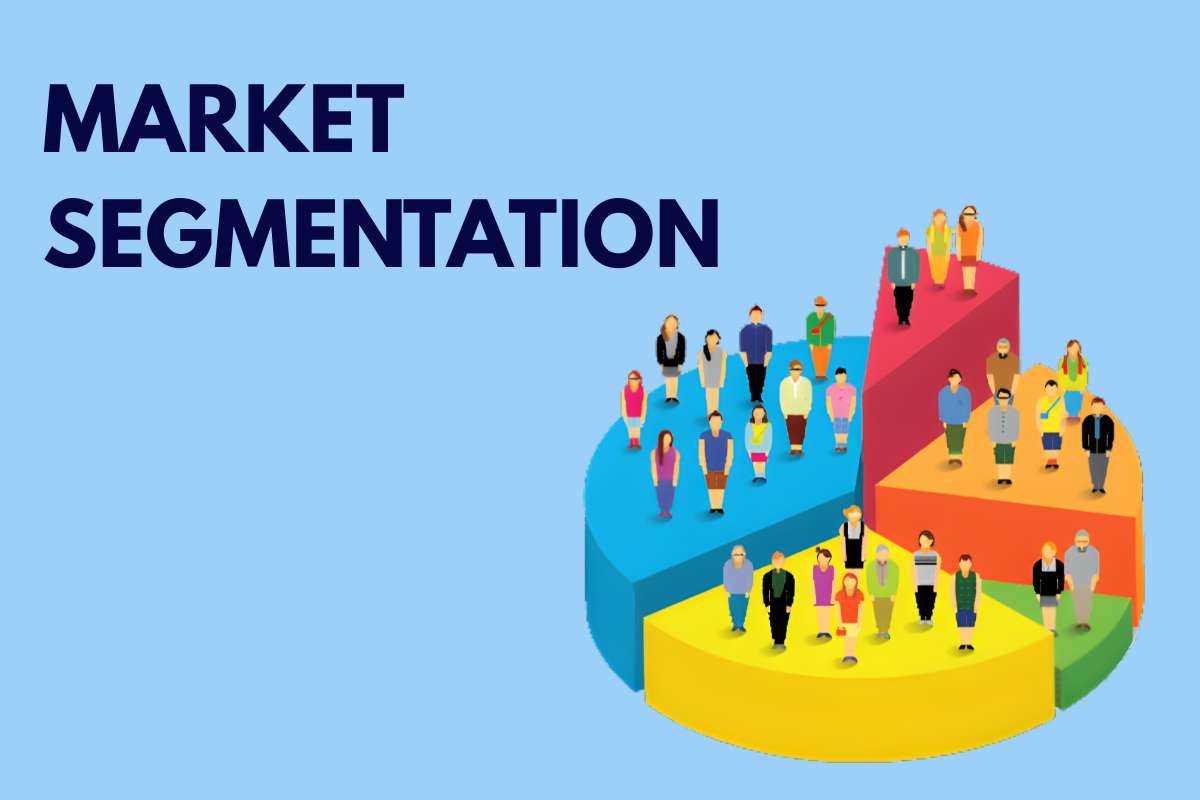
Market segmentation is the process of dividing a broad market into smaller groups. Each group shares similar needs, interests, or behaviors. This helps businesses focus their marketing and create messages that match each group. Instead of using a single approach for everyone, segmentation allows brands to speak directly to the people who matter most. There are various types of market segmentations, like:
1. Demographic Segmentation: This groups people based on age, gender, income, education, or occupation. It is simple and easy to measure. This approach is a key component of market segmentation and targeting, helping brands prioritize who to reach first.
2. Geographic Segmentation: People are divided by location, such as city, region, or climate. Businesses use this to adjust products and messages to local needs.
3. Psychographic Segmentation: This focuses on values, lifestyle, and interests. People with similar attitudes often respond to similar marketing.
4. Behavioral Segmentation: This looks at actions like buying habits, product use, or loyalty. It helps brands target customers based on what they actually do.
5. Firmographic Segmentation (for B2B): Companies are grouped by industry, size, or structure. It helps businesses target other businesses more precisely.
How is Market Segmentation Done?
Market segmentation follows clear steps to identify and group customers. Each step helps build a better understanding of the audience.
- Step 1: Define the market by deciding who could buy your product. Keep it broad at first to create a foundation.
- Step 2: Gather information about customers using surveys, website analytics, or past sales records. Look for patterns in age, behavior, location, and interests.
- Step 3: Analyze the data and find similarities. Group customers who share traits or needs. These groups become your market segments.
- Step 4: Describe each segment in simple terms. Include their needs, challenges, and buying habits. This helps the team understand who to target.
- Step 5: Check if each group is profitable and reachable. Focus on segments that are large enough to justify marketing efforts.
7 Key Benefits of Market Segmentation
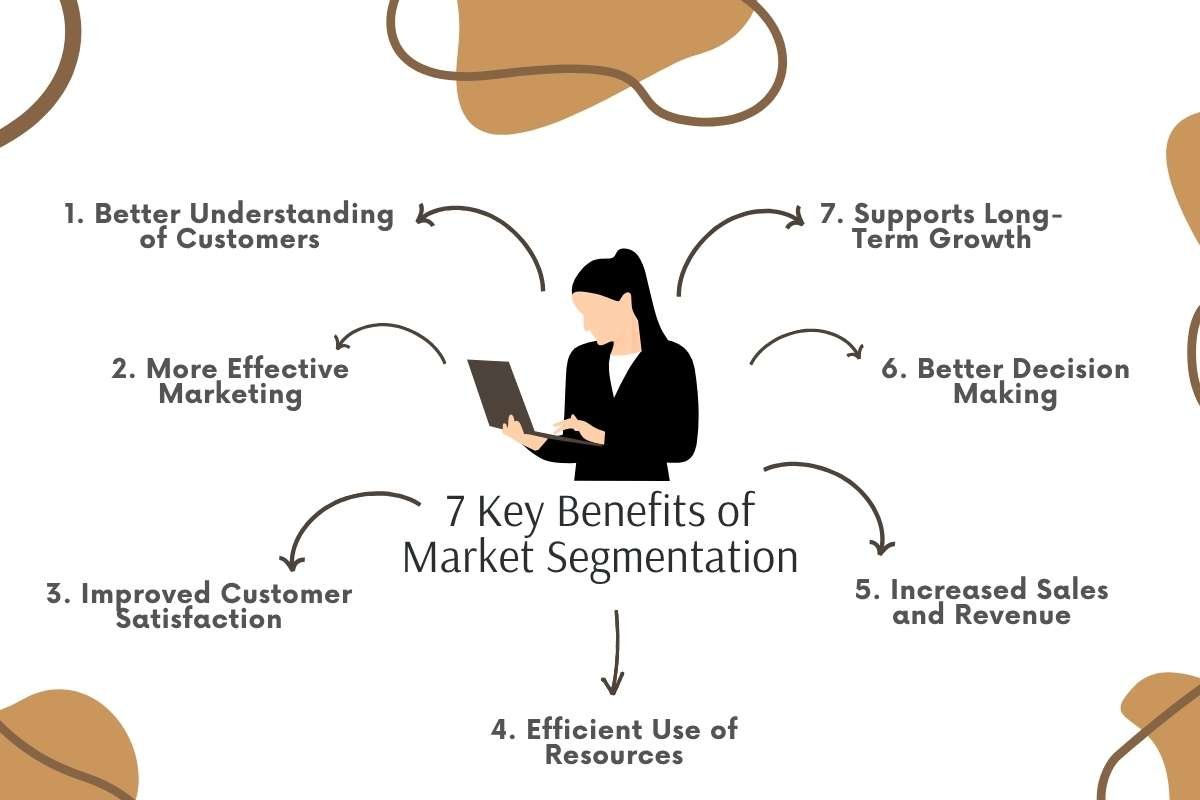
By dividing the market into clear groups, businesses can make smarter decisions. By dividing the market into clear groups, businesses can make smarter decisions. Using market segmentation and targeting, companies can decide which customers to focus on and how to communicate effectively.
This understanding helps brands design better products, set the right prices, and create marketing campaigns that work. The benefits that follow explain why segmentation is so valuable.
1. Better Understanding of Customers: Segmentation helps businesses understand the needs, preferences, and behaviors of each group. This allows brands to create products and services that match what customers want.
2. More Effective Marketing: By targeting specific groups, businesses can deliver messages that resonate. Customers are more likely to respond when marketing feels personal and relevant.
3. Improved Customer Satisfaction: When products, services, and messages match a segment’s needs, customers feel understood. This builds trust and strengthens loyalty over time.
4. Efficient Use of Resources: Focusing on the most promising segments saves time and money. Marketing efforts are directed at people who are most likely to buy, reducing waste.
5. Increased Sales and Revenue: Targeted strategies often lead to higher conversion rates. Businesses can optimize pricing, promotions, and product offerings for each segment, boosting overall revenue.
6. Better Decision Making: Segmentation provides clear insights into market trends and customer behavior. Teams can plan campaigns, allocate budgets, and forecast demand more accurately.
7. Supports Long-Term Growth: By nurturing the most valuable segments, companies build lasting relationships. Repeat business and customer loyalty help the brand grow sustainably.
What is Target Marketing?
Target marketing is the process of selecting specific market segments to focus on. Not every group is the right fit for a product or service. By choosing the most suitable segments, businesses can create campaigns that speak directly to their audience. This makes marketing more efficient, relevant, and effective. There are different ways in which companies use target marketing. They are:
1. Undifferentiated Marketing: This approach treats the entire market as one group. The same product and message are offered to everyone. It works best for products with broad appeal and minimal variation.
2. Differentiated Marketing: Here, a business targets multiple segments. Each segment receives a tailored message or product. This approach improves engagement but requires more resources to manage multiple campaigns.
3. Concentrated (or Niche) Marketing: This strategy focuses on a single, well-defined segment. Businesses build deep connections with a specific audience. It works well for niche products and smaller companies.
4. Micromarketing (or Local/Individual Marketing): Marketing is customized for very small groups or even individuals. Examples include personalized emails or location-specific offers. This approach creates highly personal experiences but can be resource-intensive.
How is Target Marketing Done?
Target marketing involves a clear process to reach the right audience effectively. Each step ensures marketing efforts focus on the most valuable segments.
- Step 1: Review your market segments and decide which ones fit your product or service best. Not every segment is worth targeting.
- Step 2: Study the chosen segments carefully. Learn about their needs, preferences, behaviors, and challenges. The more you know, the better your marketing.
- Step 3: Develop messages and campaigns tailored to each selected segment. Ensure the content, tone, and channels match the audience’s expectations.
- Step 4: Allocate resources efficiently. Decide how much budget, time, and effort to spend on each segment based on potential returns.
- Step 5: Monitor results and adjust strategies. Track engagement, conversions, and feedback to improve targeting over time.
7 Key Benefits of Target Marketing
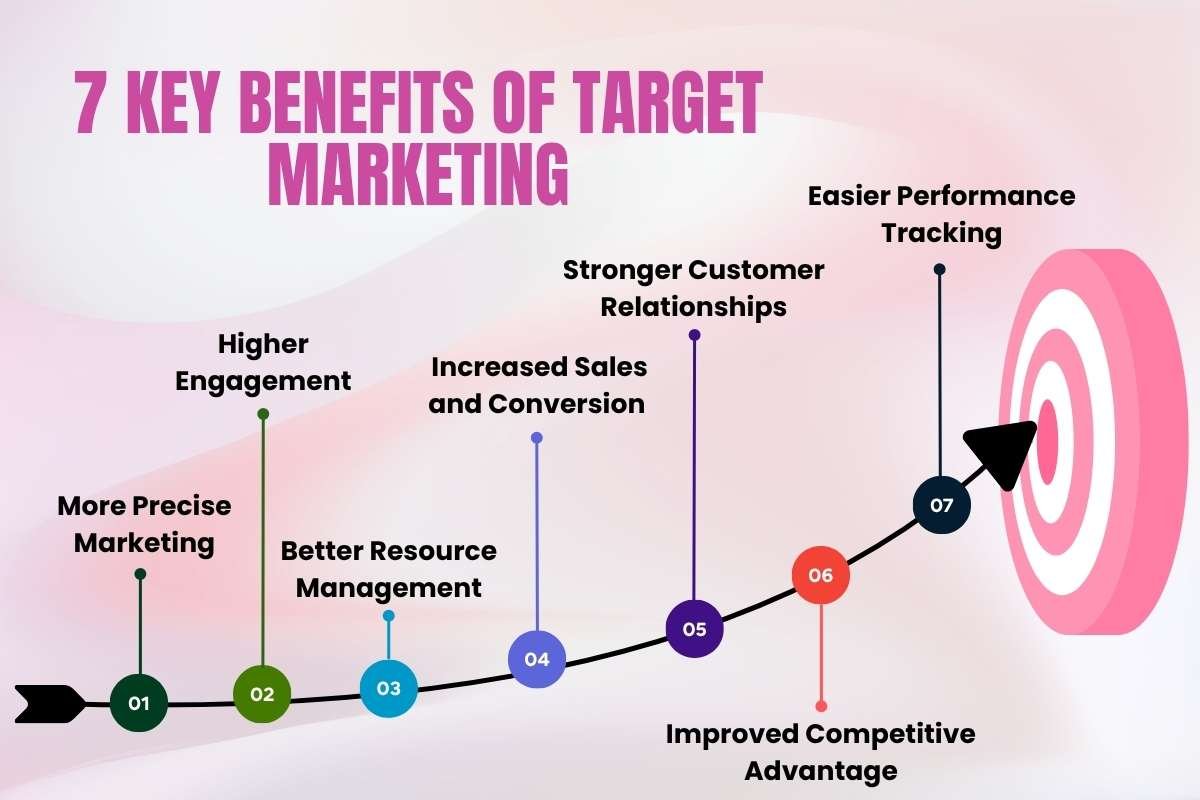
Once the right groups are chosen, businesses can focus their efforts more effectively. Target marketing allows companies to speak directly to the audience that matters most.
This focus improves engagement, saves resources, and increases the chance of sales. The benefits listed next show how targeting turns insights into results.
1. More Precise Marketing: Target marketing ensures messages reach the right people. This makes campaigns more relevant and increases the chance of a positive response.
2. Higher Engagement: Customers are more likely to notice and interact with messages tailored to their needs. Engagement improves when marketing feels personal.
3. Better Resource Management: Focusing on the most promising segments saves time, money, and effort. Businesses avoid wasting resources on audiences unlikely to buy.
4. Increased Sales and Conversion: Targeting the right audience improves conversion rates. Customers who feel understood are more likely to purchase products or services.
5. Stronger Customer Relationships: When marketing matches a customer’s needs, it builds trust. Stronger relationships lead to repeat business and loyalty over time.
6. Improved Competitive Advantage: Businesses that target effectively can differentiate themselves from competitors. Tailored campaigns create a stronger brand presence in chosen segments.
7. Easier Performance Tracking: With clear segments, it is easier to measure results. Businesses can see which messages or channels work best and optimize strategies accordingly.
Market Segmentation and Targeting: What is the Difference?
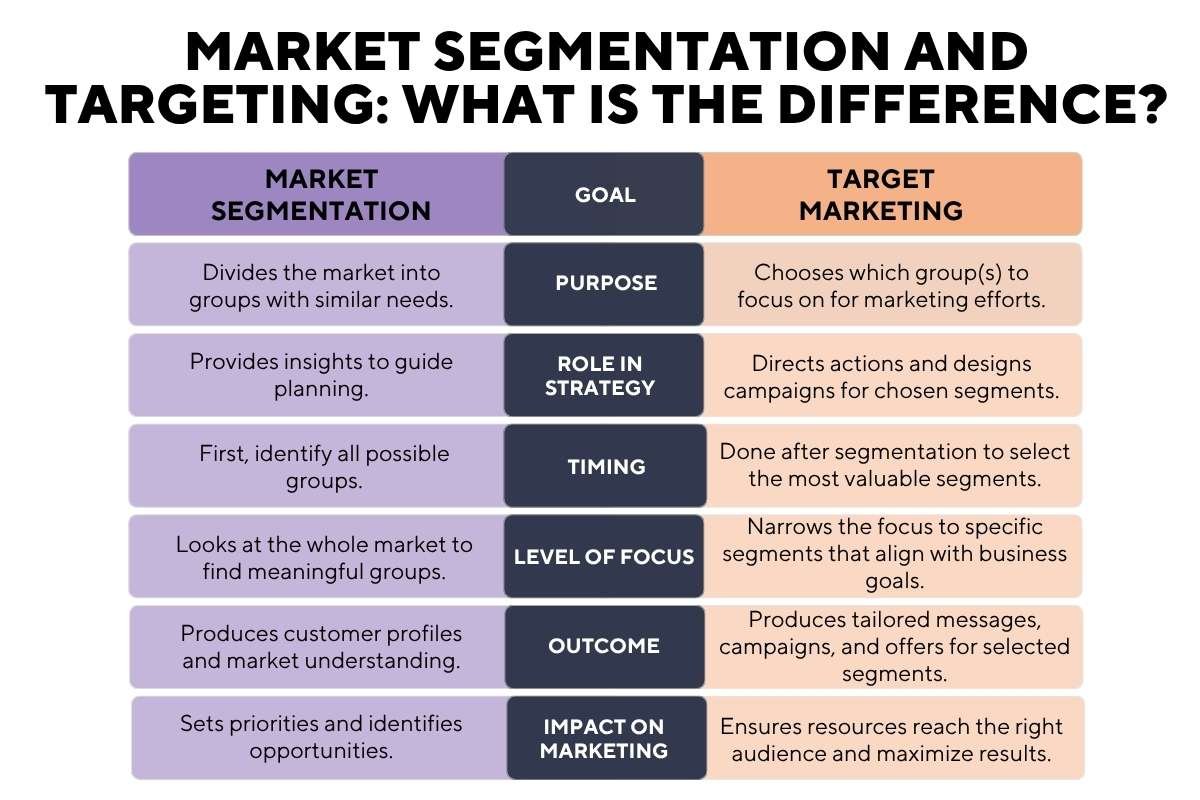
Understanding how market segmentation and targeting differ is key to building a strong marketing strategy. The table below highlights the main differences and how each contributes to the overall strategy.
| Market Segmentation | Difference | Target Marketing |
| Divides the market into groups with similar needs. | Purpose | Chooses which group(s) to focus on for marketing efforts. |
| Provides insights to guide planning. | Role in Strategy | Directs actions and designs campaigns for chosen segments. |
| First, identify all possible groups. | Timing | Done after segmentation to select the most valuable segments. |
| Looks at the whole market to find meaningful groups. | Level of Focus | Narrows the focus to specific segments that align with business goals. |
| Produces customer profiles and market understanding. | Outcome | Produces tailored messages, campaigns, and offers for selected segments. |
| Sets priorities and identifies opportunities. | Impact on Marketing | Ensures resources reach the right audience and maximize results. |
What is the Business Life Cycle?
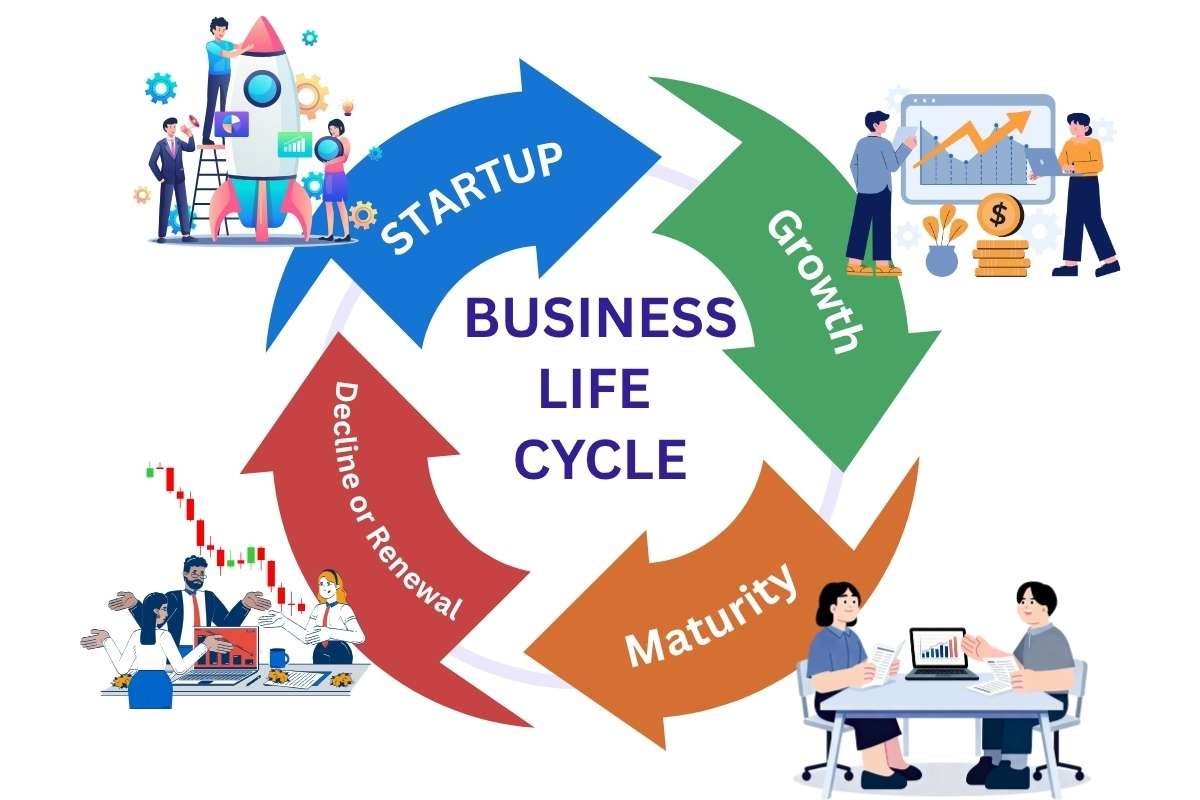
The business life cycle shows the stages a company goes through from start to growth and later maturity. Knowing these stages helps businesses plan better and make smart decisions.
Most businesses pass through four main stages. A startup is when a company launches its product or service and starts finding customers. Growth comes next, with rising sales, more employees, and new markets. Maturity follows when growth slows and competition increases. Finally, there is Decline or Renewal, where companies must change or innovate to survive.
Each stage needs different approaches to marketing, products, and customers. Knowing the stage helps leaders act quickly and wisely.
How Does the STP Framework Fit in the Business Life Cycle?
The STP (Segmentation, Targeting, Positioning) framework helps at every stage of the business life cycle.
In the Startup stage, segmentation finds the right customer groups. Targeting focuses resources on the most promising audience. Positioning shows the value clearly to attract early buyers.
During Growth, STP refines marketing. Companies may add new segments and adjust messages for each group. Positioning strengthens the brand as competition rises.
In Maturity and Decline, STP is still useful. Segmentation finds new opportunities or niche markets. Targeting uses marketing money efficiently. Positioning refreshes the brand to stay relevant.
Starbucks: Market Segmentation and Targeting
Starbucks used market segmentation to grow around the world. The company divided its market into groups based on age, income, lifestyle, location, and behavior.
It focuses on people in cities and towns, mainly middle to upper-income adults, young professionals, and students. These customers care about good coffee, convenience, and a premium experience. Starbucks also changes products and stores to fit local tastes in different regions.
After finding these groups, Starbucks applies market segmentation and targeting to tailor products and store experience to each audience. It offers special drinks, seasonal items, and a loyalty program to keep loyal customers. Stores and apps are built for each group. Mobile ordering helps busy people. Premium seating attracts those who want to work or meet friends.
This approach makes Starbucks marketing clear and effective. The company reaches customers who will pay more for quality and experience. It can also grow into new markets by matching products and campaigns to local needs.
Conclusion:
Market segmentation and targeting are at the heart of smart marketing. By breaking down a broad audience into specific groups and focusing on the most relevant segments, businesses can deliver messages that truly resonate. This approach not only improves customer engagement but also maximizes the efficiency of marketing resources.
When done well, they help brands understand their customers better and offer products or services that fit perfectly. It turns marketing from a broad guessing game into a focused strategy that drives growth, loyalty, and measurable results.
FAQs
1. What is market segmentation and targeting?
Market segmentation is the process of dividing a large market into smaller groups. Market targeting is where a business selects one or more segments to focus its marketing efforts on.
2. Can targeting the wrong segment affect a business?
Yes. Targeting the wrong audience can lead to wasted marketing efforts, low engagement, and reduced sales.
3. How does market segmentation and targeting benefit customers?
Customers receive more relevant products, services, and messages that match their needs, making their experience more personalized and satisfying.