
Key Points:
- Middle East conflict disrupts energy supplies and growth.
- Rising energy costs drive global inflation.
- Central banks struggle to balance inflation and recovery.
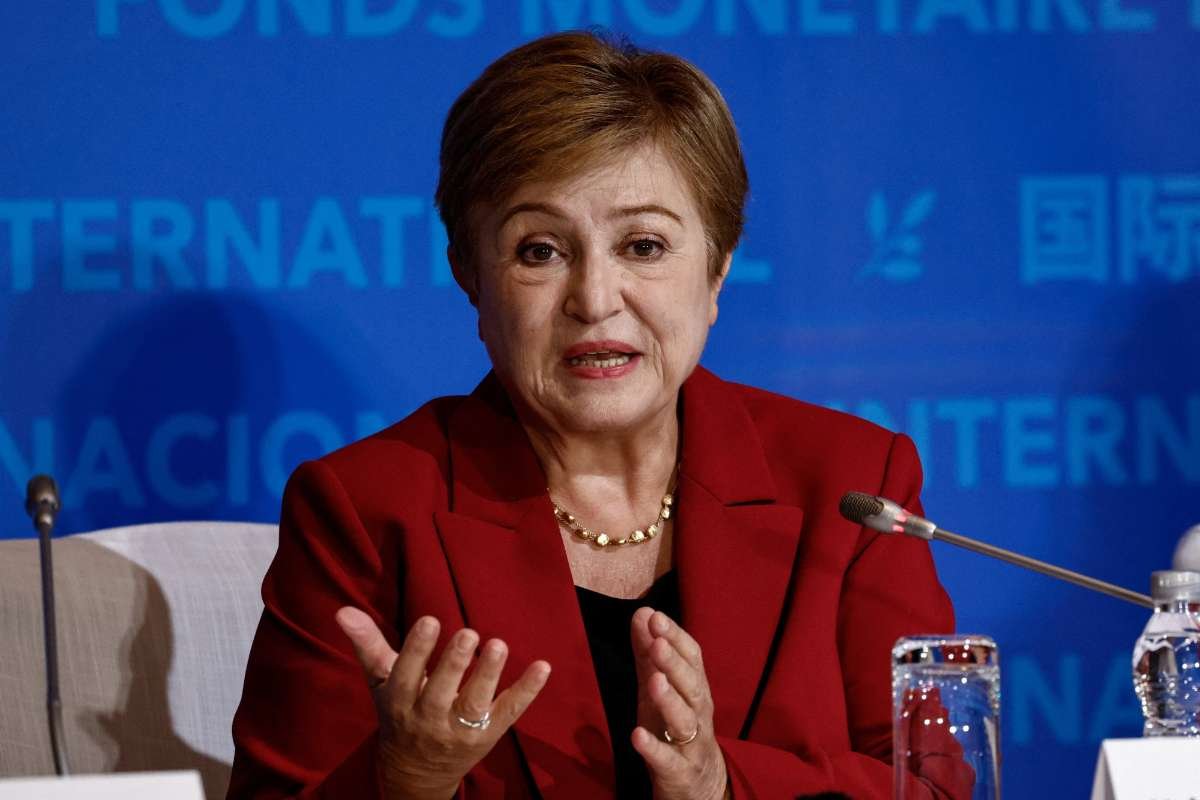
The ongoing conflict in the Middle East is increasingly being seen as a major risk to the global economy, with the International Monetary Fund (IMF) warning of slower growth and rising inflation in the near term. IMF Managing Director Kristalina Georgieva highlighted that the war has significantly disrupted global energy markets, creating widespread uncertainty across industries and financial systems.
At the center of the crisis lies the disruption of key energy supply routes, particularly the Strait of Hormuz, a vital passage for global oil shipments. Kristalina Georgieva Any disturbance in this corridor has immediate consequences for energy availability and pricing worldwide. As supply tightens, oil prices have surged, putting pressure on economies already navigating fragile recoveries.
The impact is not limited to fuel markets alone. Energy-linked sectors such as fertilizers, chemicals, and industrial gases are also experiencing supply constraints, leading to higher production costs. These disruptions are cascading across global supply chains, affecting manufacturing, transportation, and trade. Economists warn that even if the conflict subsides soon, the aftereffects on supply chains and pricing structures could persist, forcing global growth projections to be revised downward.
Rising Inflation Deepens Economic Vulnerabilities
As energy prices climb, inflationary pressures are intensifying across the world. Higher fuel costs are feeding into transportation and logistics expenses, which in turn are driving up the prices of goods and services. From manufacturing to food production, the ripple effects of rising energy costs are being felt across nearly every sector of the economy.
Kristalina Georgieva: Developing and emerging economies are particularly vulnerable to these shocks. Countries that rely heavily on energy imports are facing rising import bills, which strain government finances and limit their ability to provide subsidies or economic support. This growing pressure could lead to increased fiscal deficits and economic instability in already fragile regions.
Food security is also becoming a critical concern. The cost of fertilizers, closely tied to energy prices, has risen sharply, which could reduce agricultural output and push global food prices higher. This creates a compounding effect, where both food and fuel inflation hit households simultaneously, disproportionately affecting lower-income populations.
Even countries that export energy are not entirely shielded from the crisis. While higher oil prices would typically boost revenues, logistical disruptions and trade constraints linked to the conflict are limiting their ability to fully benefit. At the same time, global financial markets are showing signs of stress, with investors growing increasingly concerned about a potential period of stagflation, a combination of slow economic growth and persistent inflation.
Uncertainty Challenges Global Policy Response
The overall economic outlook now hinges on the duration and intensity of the conflict. While the global economy has demonstrated resilience in the face of past disruptions, the current situation presents a complex challenge with far-reaching implications.
Central banks across the world are facing a difficult policy dilemma. On one hand, rising inflation may require tighter monetary policies, including higher interest rates. On the other hand, such measures risk slowing economic growth further, especially at a time when recovery remains uneven. This delicate balancing act is becoming more complicated as uncertainty continues to weigh on investor confidence and market stability.
Global institutions are closely monitoring the situation and preparing coordinated responses to mitigate the impact. Efforts are likely to focus on stabilizing energy markets, ensuring supply chain continuity, and supporting vulnerable economies through financial and policy interventions. However, the effectiveness of these measures will depend largely on how the geopolitical situation evolves.
Even in the event of a swift resolution, Kristalina Georgieva, economists caution that the structural effects of the conflict, particularly in energy and food markets, could linger well into the coming year. As a result, the Middle East crisis is rapidly emerging as one of the most significant economic risks of 2026, with lasting consequences for global growth, inflation, and financial stability.
For the latest insights, visit CIO Women Magazine.