
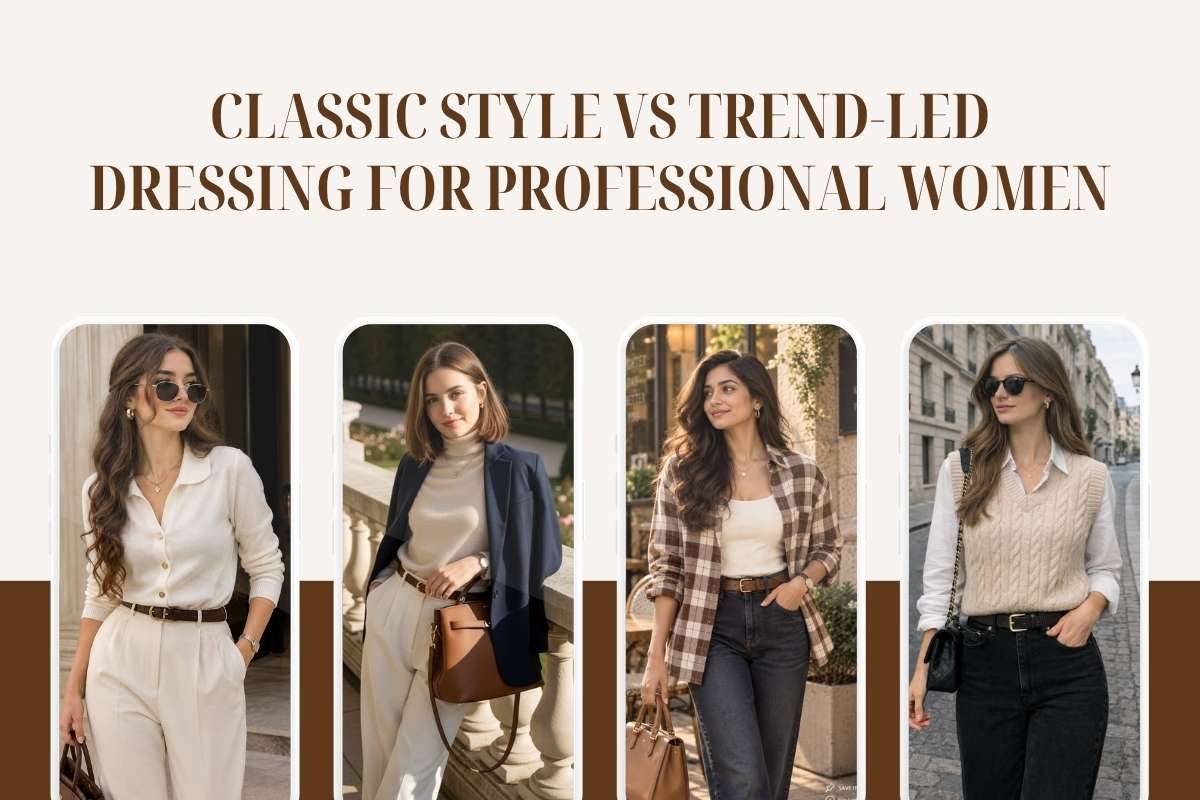
Professional dressing allows women to balance personal expression with workplace expectations. While classic outfits offer versatility, trend-led clothing introduces contemporary colors, silhouettes, and accessories. Understanding classic style vs. trend-led dressing for professional women helps women build wardrobes that suit their careers, budgets, and individual preferences.
According to The Fold’s 2025 Workwear Report, 88% of surveyed women said workwear boosts their confidence and creates a work-mode mindset. This highlights the value many women place on professional clothing. The best approach combines timeless essentials with carefully selected trends rather than constantly replacing an entire wardrobe.
What is classic style in professional dressing?
Classic style emphasizes timeless silhouettes, versatile colors, and clothing that remains wearable across seasons.
Essential pieces include:
- Tailored trousers and structured blazers
- White, ivory, and light-blue shirts
- Midi dresses and tailored skirts
- Loafers, ballet flats, and classic pumps
These pieces work across different occasions. A navy blazer, for example, can complement tailored trousers for a formal meeting or a dress for a business event.
For women balancing workwear expenses, classic clothing offers versatility and repeat wear. It provides a reliable foundation when comparing classic style vs. trend-led dressing for professional women.
What is trend-led dressing for professional women?
Trend-led dressing incorporates current fashion influences, including contemporary cuts, statement accessories, textures, and seasonal colors.
In 2026, professional women can update their wardrobes with relaxed tailoring, modern waistcoats, textured jackets, and statement accessories. Pairing a contemporary waistcoat with classic trousers, for example, adds personality without compromising a polished appearance.
Trend-led dressing can suit creative industries, media, marketing, and workplaces that encourage individual expression. However, every trend should be adapted to the workplace dress code.
Classic style vs trend-led dressing: key differences
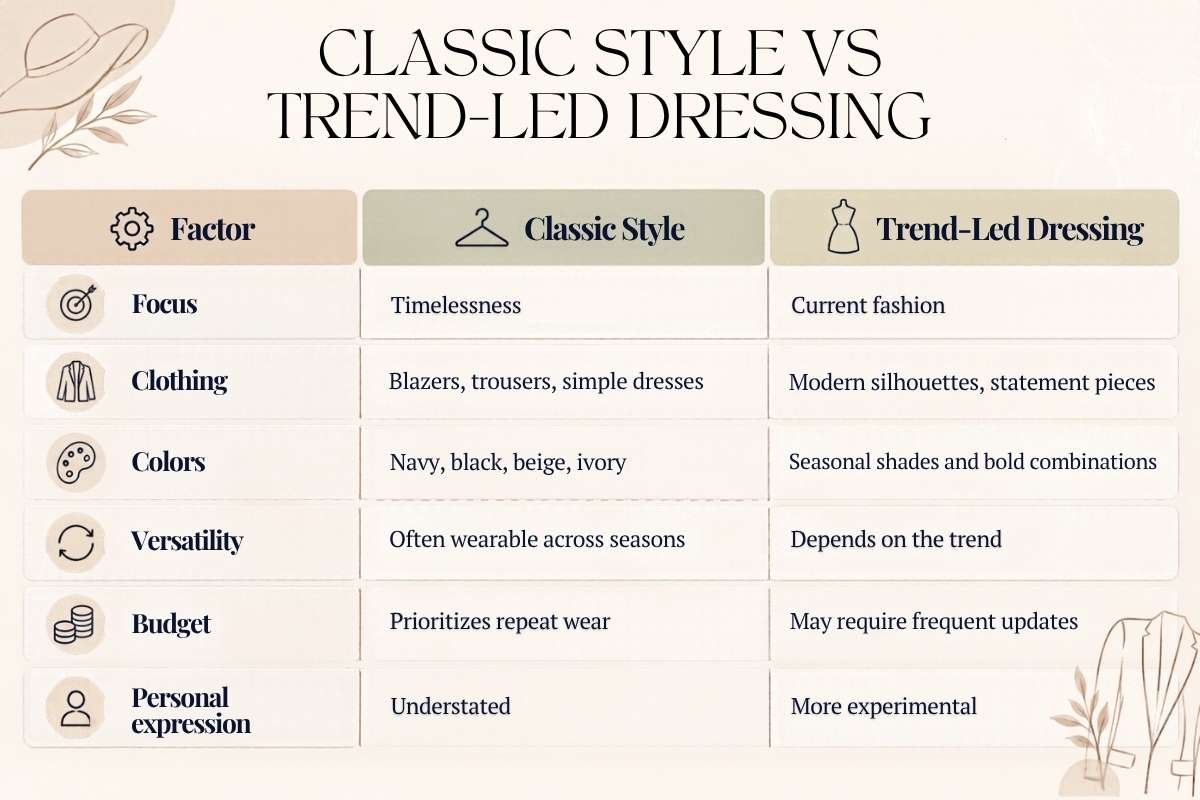
| Factor | Classic Style | Trend-Led Dressing |
| Focus | Timelessness | Current fashion |
| Clothing | Blazers, trousers, simple dresses | Modern silhouettes, statement pieces |
| Colors | Navy, black, beige, ivory | Seasonal shades and bold combinations |
| Versatility | Often wearable across seasons | Depends on the trend |
| Budget | Prioritizes repeat wear | May require frequent updates |
| Personal expression | Understated | More experimental |
Neither approach is universally better. Classic clothing creates consistency, while trend-led pieces refresh a wardrobe. The most practical approach to classic style vs trend-led dressing for professional women combines both.
What professional dressing styles can women try in 2026?
Women can adapt professional dressing to their industries and personal preferences.
- Classic corporate: Tailored suits, structured blazers, and formal dresses.
- Modern business casual: Knit tops, straight-leg trousers, midi skirts, and polished flats.
- Minimalist: Coordinated separates, neutral colors, and simple accessories.
- Trend-led: Modern waistcoats, statement belts, and contemporary silhouettes.
- Indian professional wear: Tailored kurtas, coordinated ethnic sets, sarees, and structured trousers.
These options show how women can maintain a professional appearance without following a single fashion aesthetic.
How can women use the 3-3-3 rule and 70/30 rule?
The 3-3-3 rule is a flexible wardrobe-planning method involving three tops, three bottoms, and three pairs of shoes. For example, a woman could combine a white shirt, a printed blouse, and a knit top with black trousers, beige trousers, and a midi skirt. Three pairs of shoes provide additional combinations.
The 70/30 rule suggests building a wardrobe around approximately 70% versatile essentials and 30% statement or trend-led pieces. It is a styling guideline, not a scientifically established formula.
Both methods can help women manage budgets and create more outfits from fewer items. A minimalist wardrobe guide for busy professional women can offer further ideas for choosing versatile pieces that simplify everyday outfit planning.
Which colors and shoes create a polished professional look?
Navy, charcoal, black, beige, and ivory provide versatile foundations for workwear.
Burgundy, deep green, and red can introduce color through blouses, bags, or accessories.
There are no universal rules about colors that should never be worn together. Successful combinations depend on shades, proportions, textures, and personal preference.
For footwear, loafers, ballet flats, block heels, and classic pumps suit different professional settings. Comfort is particularly important for women who commute or spend long hours on their feet.
An expensive-looking outfit does not require designer labels. Well-fitting clothes, clean shoes, and coordinated accessories can create a polished appearance at different price points.
What are five common professional dressing mistakes?
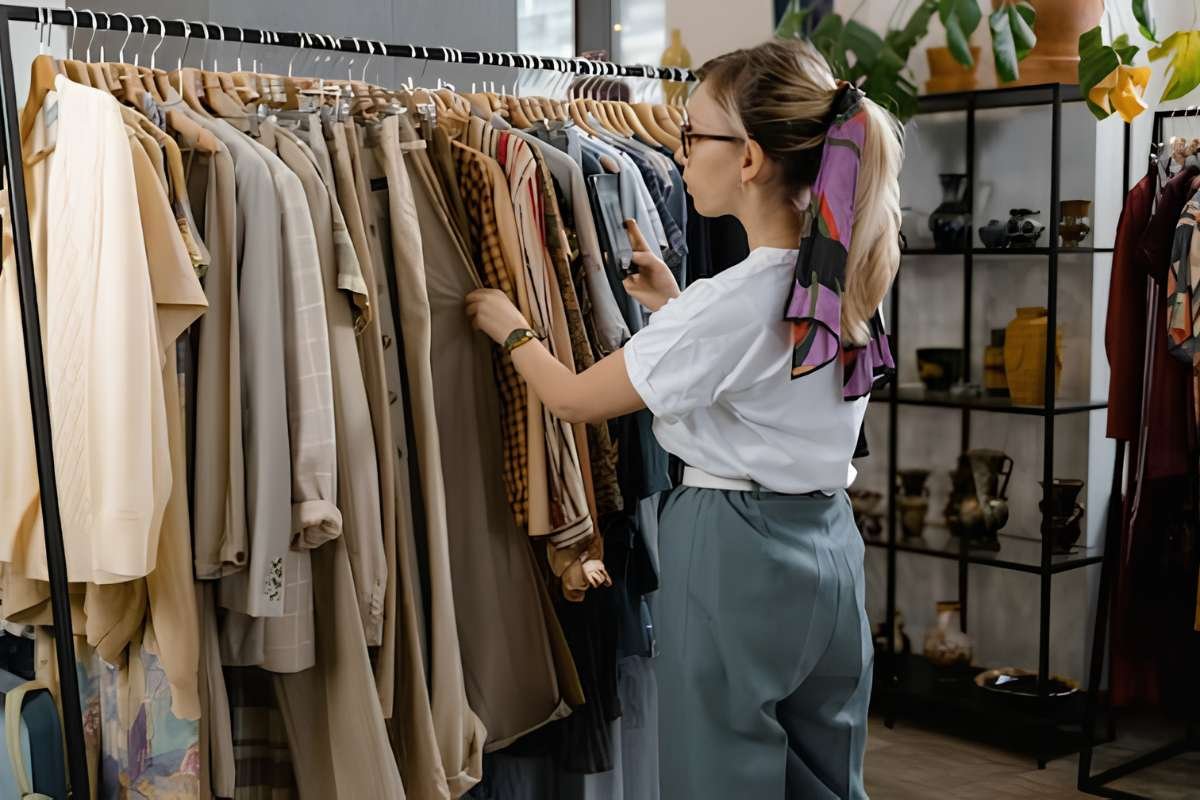
Avoiding common office fashion mistakes women make, such as buying clothes that do not coordinate with existing pieces or following trends that do not suit their workplace, can make professional dressing more practical.
- Following every trend: Choose styles that suit your workplace and lifestyle.
- Ignoring fit: Prioritize comfort and appropriate tailoring.
- Buying uncoordinated pieces: Select clothing that works with existing items.
- Choosing uncomfortable shoes: Consider the demands of your working day.
- Overcomplicating outfits: Balance statement pieces with simpler essentials.
The right balance between classic and trend-led dressing should support women’s work rather than create unnecessary expense or discomfort.
How can women build a polished wardrobe on a budget?
Start by reviewing existing clothes and identifying essential gaps. Invest in versatile trousers, a well-fitting blazer, comfortable shoes, and tops that coordinate with multiple outfits. Introduce trends through affordable additions, such as a statement belt, colorful handbag, or contemporary blouse, to look polished on a tight budget without replacing your entire wardrobe.
Women can build a wardrobe that works for their current roles and future ambitions by choosing versatile pieces that adapt as their careers progress. How to dress for success at every career stage offers more practical advice on making these wardrobe choices.
Conclusion:
Classic style vs trend-led dressing for professional women is not about choosing timeless clothing over modern fashion. Classic essentials provide versatility, while selected trends help women express their individuality.
By combining tailored basics, comfortable footwear, suitable colors, and contemporary accents, women can build professional wardrobes that reflect their preferences, budgets, and workplace needs.
FAQs
1. What is the difference between classic style and trend-led dressing?
Classic style focuses on timeless clothing and versatility, while trend-led dressing incorporates current colors, cuts, and accessories. Understanding **classic style vs trend-led dressing for professional women** helps create a wardrobe that balances lasting essentials with modern trends.
2. What is the 3-3-3 rule for outfits?
It involves selecting three tops, three bottoms, and three pairs of shoes to create multiple outfit combinations. This approach supports classic style vs. trend-led dressing for professional women by making everyday styling more versatile and budget-friendly.
3. What is business professional attire for women in 2026?
It generally includes tailored suits, structured blazers, formal trousers, appropriate skirts or dresses, and polished footwear.
4. Which colors look classy for professional women?
Navy, black, charcoal, ivory, beige, burgundy, and deep green can work well in professional wardrobes.
5. How can women follow trends without overspending?
Invest in versatile essentials first, then introduce trends through affordable accessories, contemporary tops, and seasonal colors.