
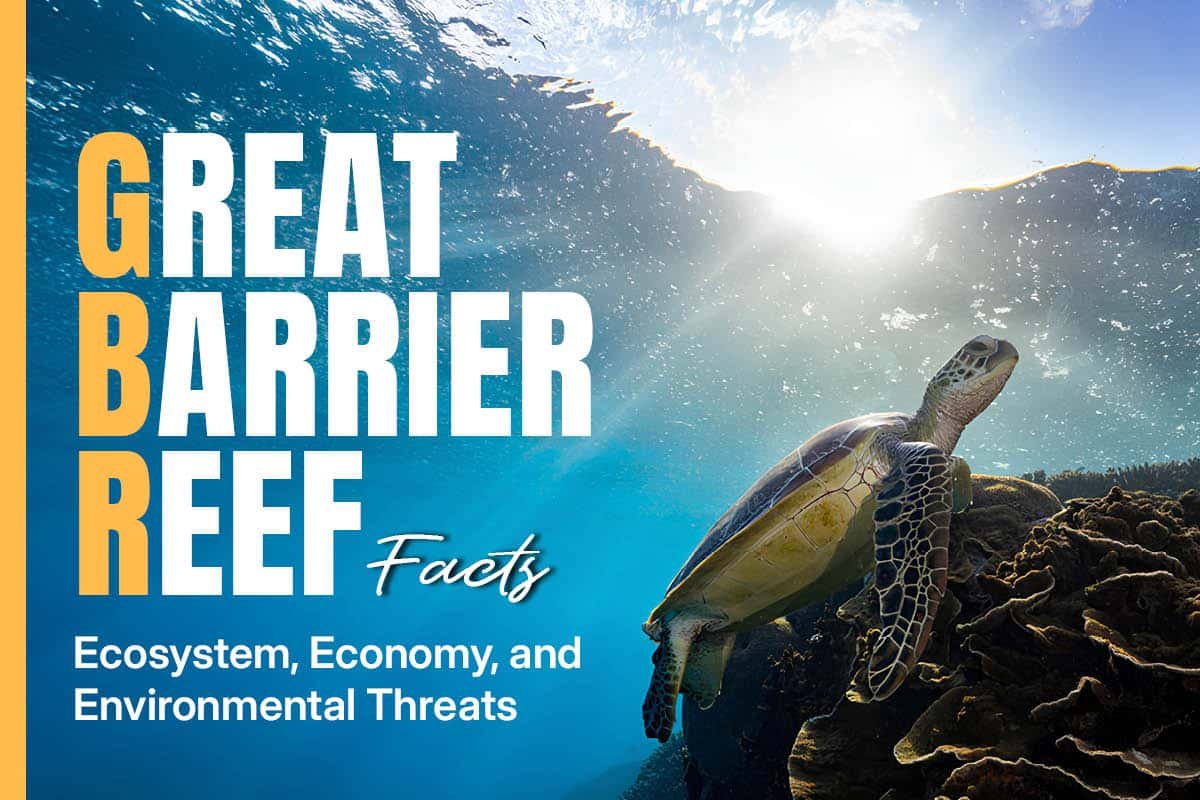
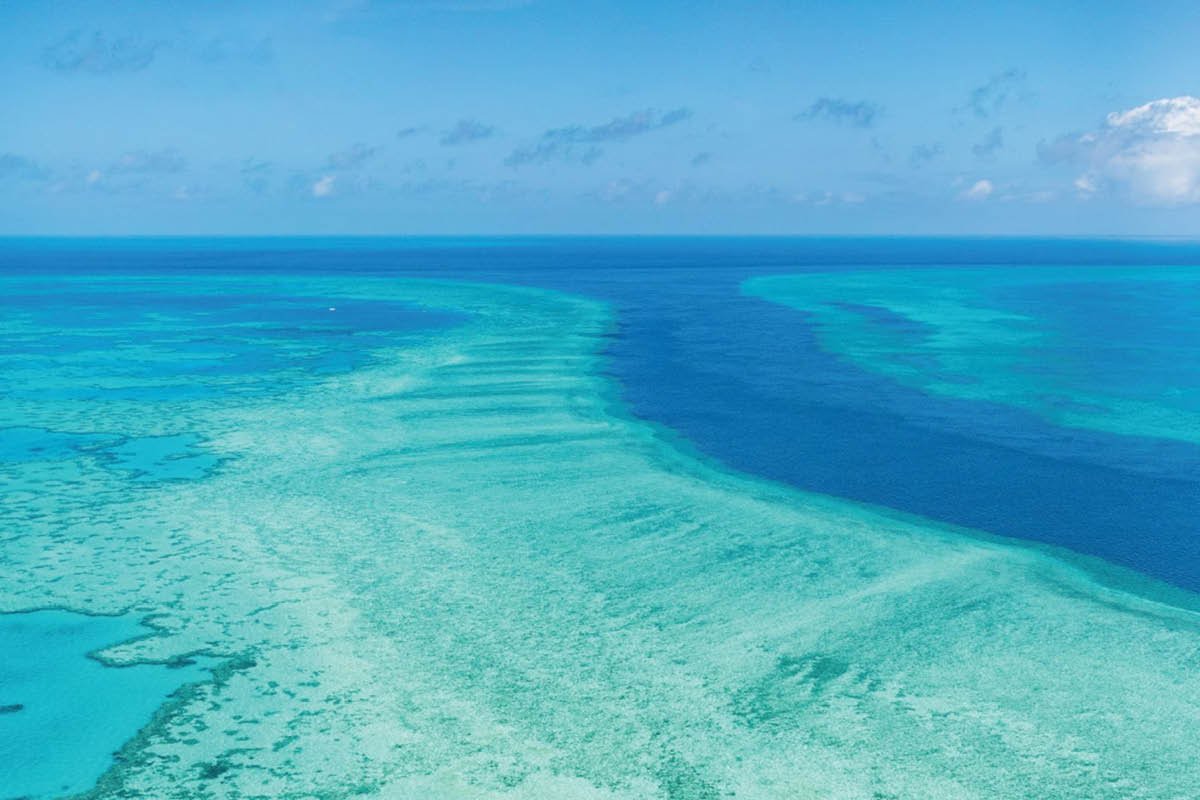
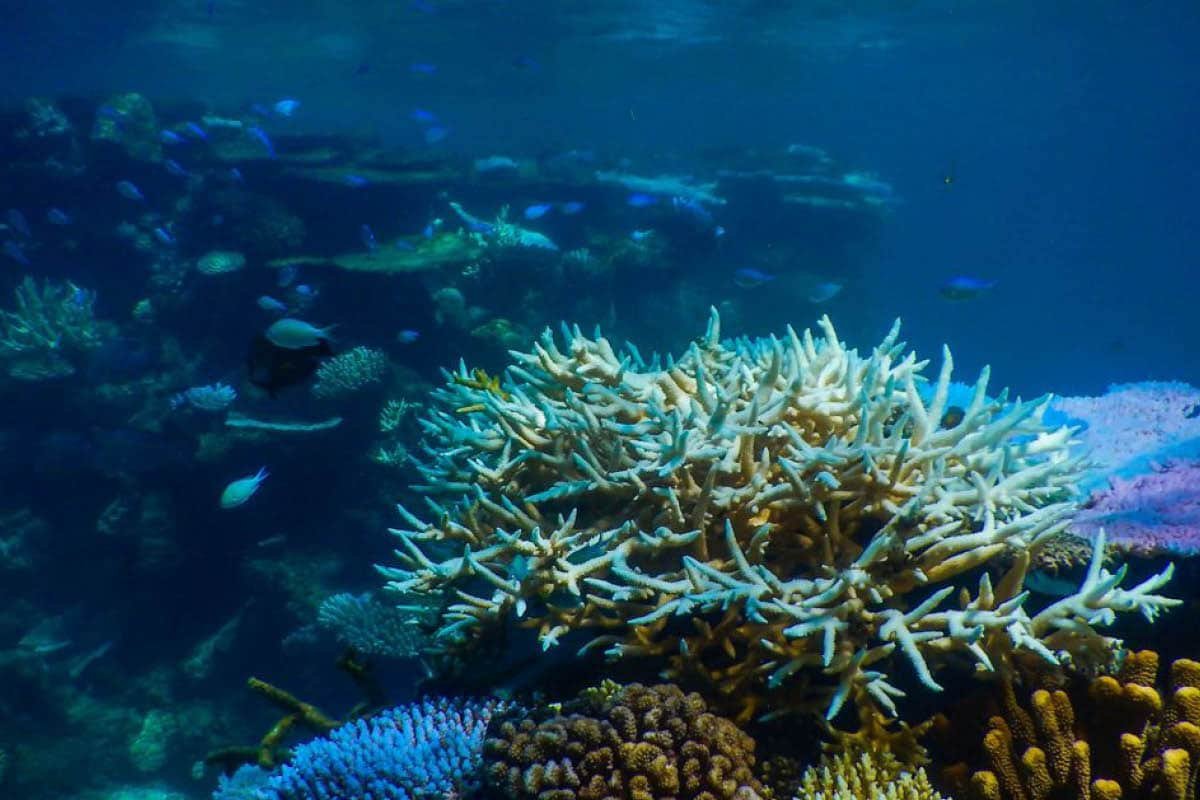
Off Queensland’s northeastern coast, a living maze of coral, islands, and turquoise channels spreads across the Coral Sea. Branching corals glow in pink and gold while turtles, rays, and reef fish glide through the shallows. UNESCO granted this marine wonder World Heritage status in 1981.
Great Barrier Reef facts reveal a system of thousands of reefs and islands that shapes marine science, tourism, and coastal life in Queensland. Geography, ecological value, financial contribution, and protection efforts each tell part of its story, and the sections ahead trace them in turn.
Eighteen Million Years in the Making
These Great Barrier Reef facts begin with location. The system lies off Queensland’s coast in northeastern Australia and runs about 2,300 kilometres along it.
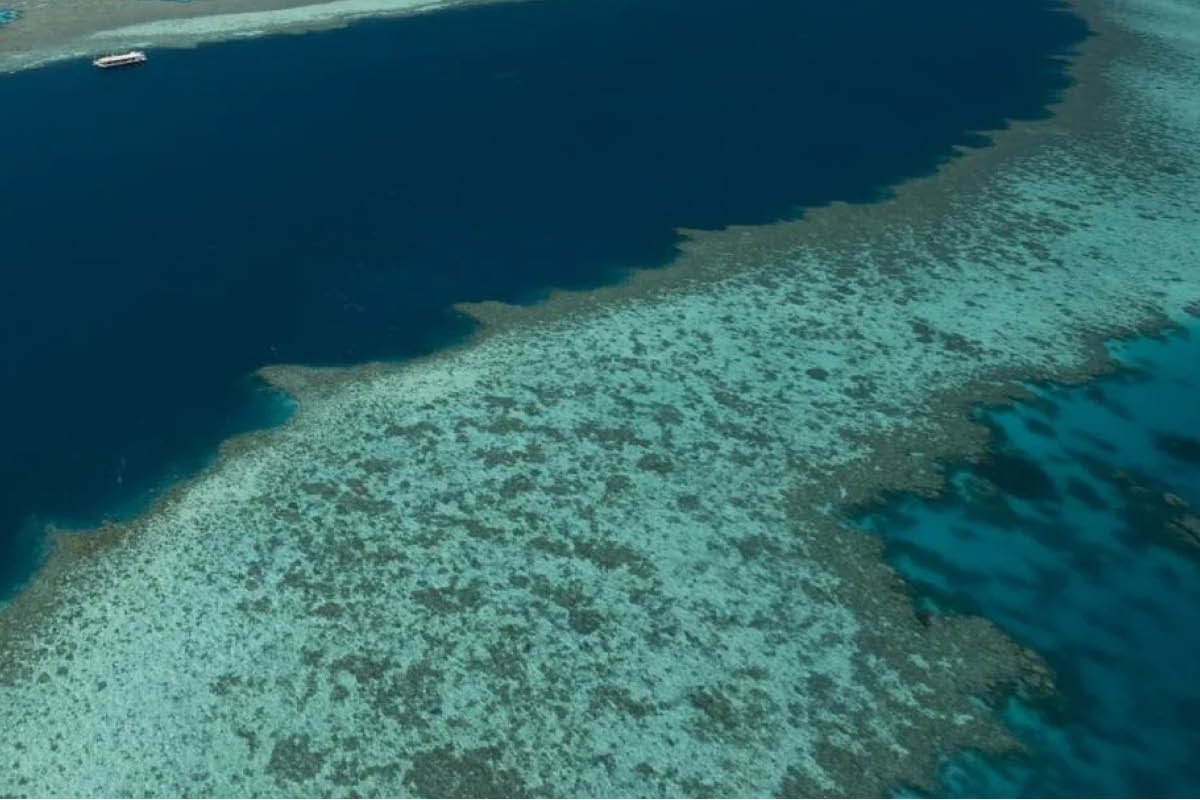
The Marine Park and its coral formations are different things. The park is the protected zone, which includes open water, seagrass beds, and islands. Its 344,400 square kilometres measure that whole zone, not the coral alone. The reefs are the living structures inside it.
Growth began about 18 million years ago. The formations seen today built up over the last 8,000 years on top of older reef platforms. Continental islands are former mainland hilltops, and cays are sandy islands built from coral debris.
Quick Facts
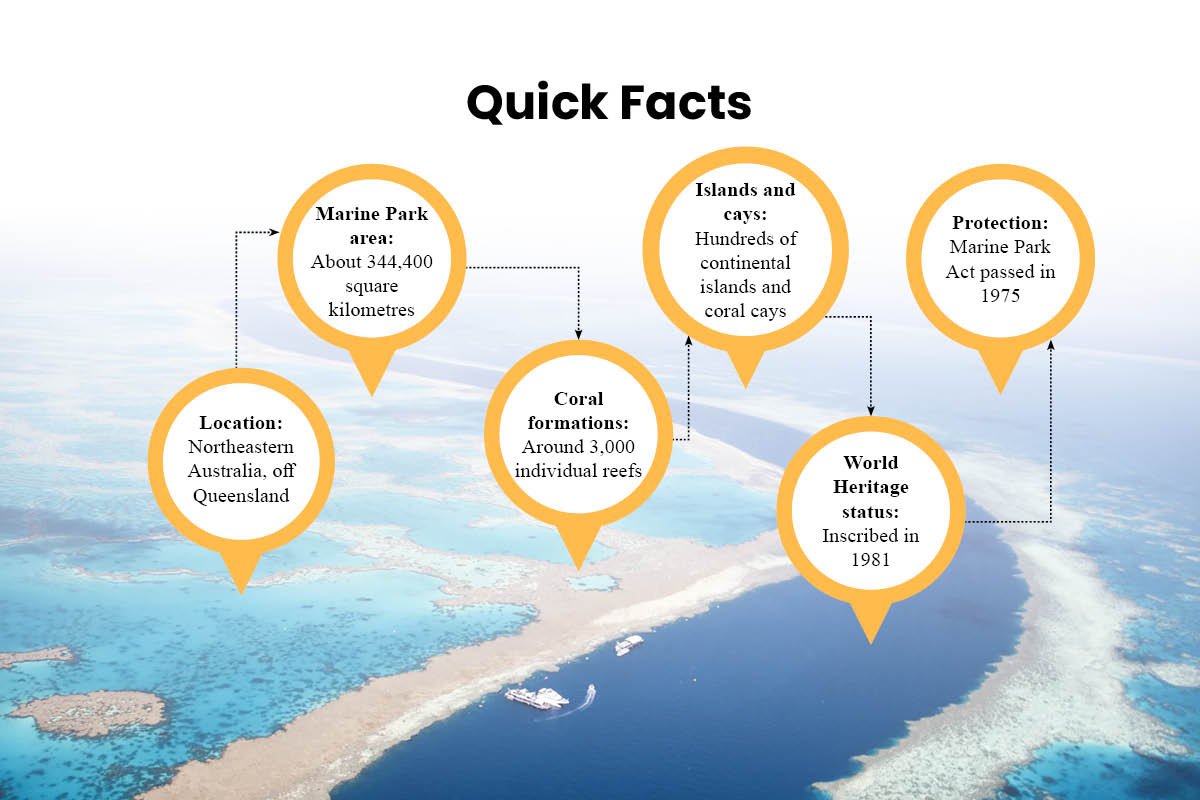
- Location: Northeastern Australia, off Queensland
- Marine Park area: About 344,400 square kilometres
- Coral formations: Around 3,000 individual reefs
- Islands and cays: Hundreds of continental islands and coral cays
- World Heritage status: Inscribed in 1981
- Protection: Marine Park Act passed in 1975
Marine Species and Habitat Diversity
Great Barrier Reef biodiversity spans reef-building corals, fish, turtles, seabirds, molluscs, and marine mammals. Each group relies on a different habitat, including coral structures, mangroves, seagrass beds, and open water.
- Corals: About 400 hard coral species build the framework, while soft corals add hiding places and varied texture.
- Fish and invertebrates: Over 1,500 fish species share space with crustaceans, sponges, starfish, and roughly 4,000 mollusc species.
- Marine reptiles: Green and hawksbill turtles feed in warm shallows, and several species nest on sandy cays.
- Marine mammals: Dugongs and about 30 whale and dolphin species use these protected waters.
- Coastal habitats: Mangroves give young fish safe shelter, and seagrass meadows supply feeding grounds.
These Great Barrier Reef facts also include 41 shorebird species and 20 seabird species that nest on its islands. Birds add a third layer of life above the waterline.
Why This Ecosystem Is Important
Great Barrier Reef importance rests on three separate foundations: living systems, knowledge, and culture. UNESCO recognised these values when it listed the site as World Heritage in 1981.
- Ecological balance: Linked habitats such as seagrass beds, mangroves, and coral give marine life food, shelter, and breeding grounds. Turtles, fish, and seabirds rely on this shared network.
- Scientific value: Studies of coral health, species interactions, and changing ocean conditions help researchers understand how marine systems respond to pressure. Long-term monitoring shows how recovery unfolds after bleaching.
- Cultural heritage: Aboriginal and Torres Strait Islander Traditional Owners hold enduring connections with Sea Country, including cultural knowledge, responsibilities, and custodianship passed down through generations.
These Great Barrier Reef facts explain why protection matters to scientists, local communities, and everyone who depends on healthy oceans.
Economic Contribution and Community Benefits
Great Barrier Reef economic value reaches tour operators, dive shops, hotels, cafés, and the suppliers that serve them. Tourism leads, while recreation, commercial fishing, and research add regular revenue. Coastal Queensland communities rely on this work, and the wider national economy benefits too.
Each industry lasts only while the marine environment stays healthy, so clean water and living coral protect long-term income.
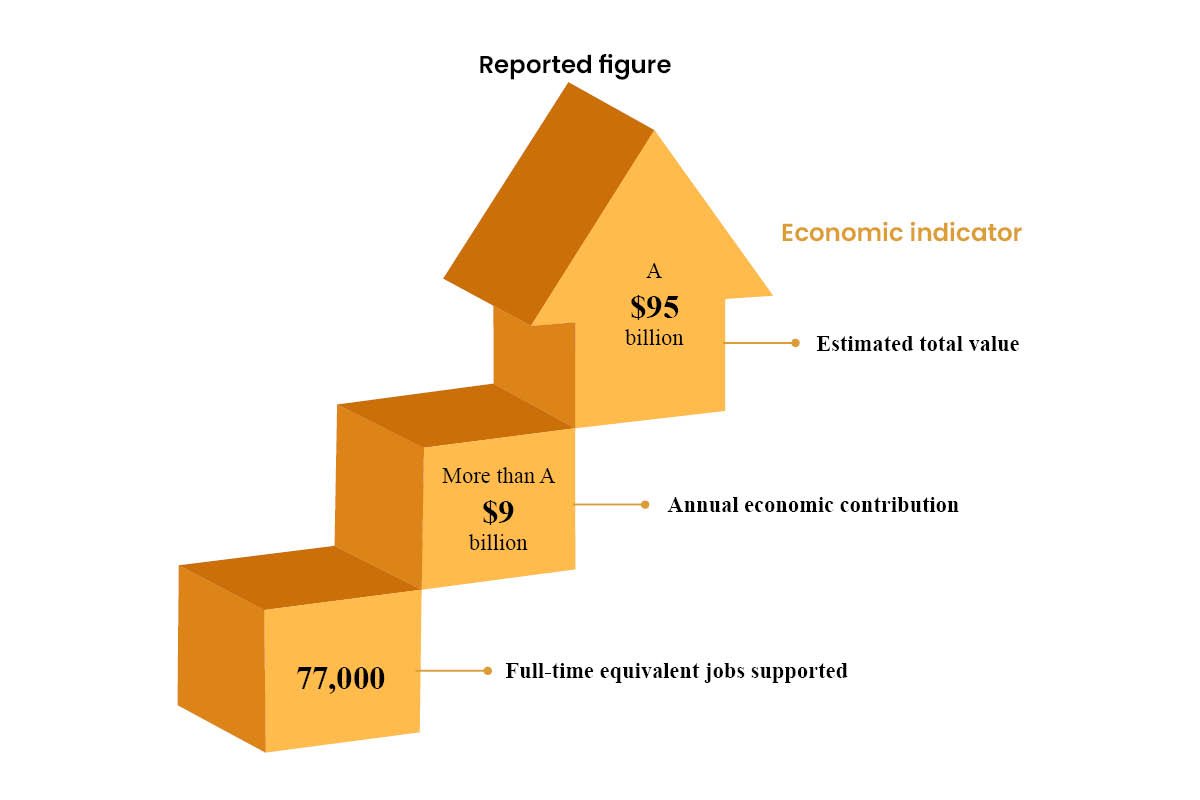
| Economic indicator | Reported figure |
| Estimated total value | A$95 billion |
| Annual economic contribution | More than A$9 billion |
| Full-time equivalent jobs supported | 77,000 |
Research released by the Great Barrier Reef Foundation in October 2025 supplies these figures; the 9 billion figure reflects annual financial output, though neither statistic offers assurances regarding prospective revenue.
Major Environmental Threats and Conservation Challenges
Picture the reef as a patient. Among the Great Barrier Reef facts, four conditions stand out, each with a treatment plan.
Patient Chart
Condition 1: Bleaching
- Cause: Heat stress, which now repeats before corals can recover.
- Treatment: Emission reduction.
Condition 2: Cloudy water
- Cause: Land-based runoff carrying sediment and pesticides from farms, towns, and industry.
- Treatment: Better farming practices.
Condition 3: Starfish outbreaks
- Cause: Excess nutrients help crown-of-thorns starfish multiply.
- Treatment: Targeted control by the Reef Authority.
Condition 4: Shoreline stress
- Cause: Coastal development.
- Treatment: Marine Park management with government, industry, and community partners.
Check-Up
AIMS surveys track coral health, and Foundation-funded projects restore damaged sections. WWF-Australia says climate change, the biggest threat, needs urgent global action.
How Visitors and Communities Can Help
Small, responsible choices can help protect the reef system. These Great Barrier Reef Facts highlight how visitors can support its future.
Your Reef-Friendly Action Checklist
- Choose wisely: Book responsible tours that follow marine protection rules.
- Protect wildlife: Never touch, stand on, or collect coral.
- Reduce pollution: Prevent litter and follow local guidance on suitable products.
- Respect habitats: Follow instructions when snorkelling, diving, or visiting nesting areas.
- Give back: Support credible conservation groups and respect Traditional Owners’ Sea Country.
Beyond individual actions: Governments, industries, and communities must work together to protect marine life and local livelihoods.
Conclusion
These Great Barrier Reef facts reveal why this natural wonder deserves lasting care. Its rich marine life, cultural heritage, and economic contributions make its future important to Australia and the wider world. Although conservation programs offer hope, rising ocean temperatures and other environmental pressures remain serious concerns.
Responsible tourism, informed choices, and sustained cooperation can help protect this remarkable ecosystem. Preserving this underwater treasure today gives future generations a better chance to experience its beauty and understand its value.
Read More: What Neuschwanstein Castle, Bavaria, Reveals About the Economics of a Fairytale