

Hagia Sophia, once the crown jewel of Constantinople, has stood for more than 1,500 years, witnessing the rise and fall of empires and the flow of different faiths. Its massive dome first echoed with the prayers of Byzantine Christians, later rang with the calls to prayer of Ottoman worshippers, and today, in 2025, serves both as an active mosque and a world-famous heritage site.
Every stone, mosaic, and arch tells a story of creativity, ambition, and resilience, showing how a building can capture the spirit of a city. This article follows Hagia Sophia’s journey through time, looking at the genius behind its architecture, the historical and cultural challenges it has faced, and the meaning it holds for the millions who visit its sacred halls today. Its story is one of change, endurance, and timeless wonder.
The Story Carved in Stone: Hagia Sophia Across Centuries
In 537 CE, Emperor Justinian I built a spectacular building called Hagia Sophia, which means “Holy Wisdom.” It became the biggest and most important church in Eastern Christianity. Its giant dome seemed to touch the sky, and for almost a thousand years, people came from far and wide to pray and admire its beauty.
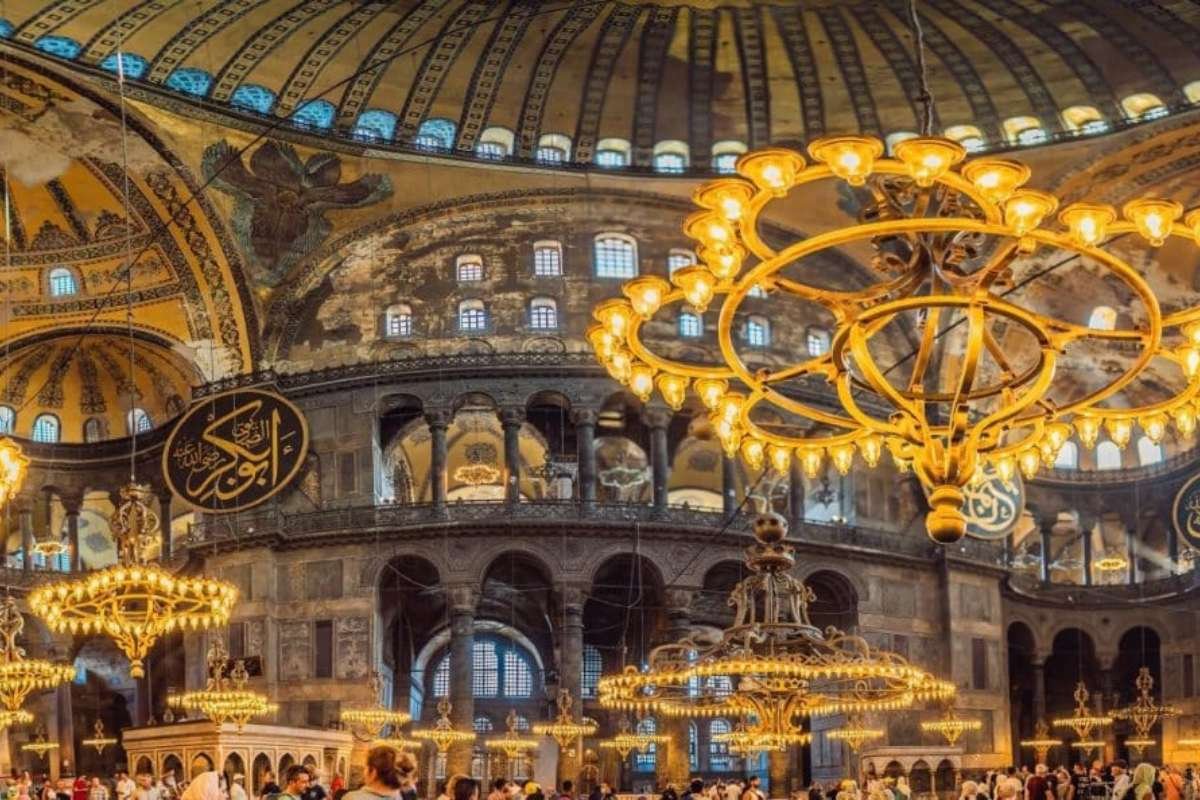
Everything changed in 1453, when Sultan Mehmed II captured Constantinople. He turned Hagia Sophia into a mosque, adding tall minarets and beautiful Islamic decorations. The building now showed a mix of Byzantine and Ottoman styles, telling the story of two great empires.
- In 1934, Turkey’s leader, Mustafa Kemal Atatürk, made Hagia Sophia a museum. People from all over the world could visit and learn about its long history, filled with art, religion, and culture.
- In 2020, Hagia Sophia became a mosque again. This decision drew attention and discussion around the world, showing how important the building is to many different people.
Today, Hagia Sophia still stands proudly in Istanbul. Owned by the Fatih Sultan Mehmed Foundation, it is a symbol of change, faith, and history, a place that continues to inspire everyone who visits.
At the Heart of Historic Istanbul
Hagia Sophia stands proudly in Istanbul’s Sultanahmet district, right in the heart of the city. It faces the Blue Mosque across the square and is just a short walk from the Topkapi Palace. This area is packed with history, like the ancient Hippodrome and the Basilica Cistern. From its spot, you can see the Bosporus Strait and the Golden Horn, places where East and West meet. All of this is part of the Historic Areas of Istanbul, a UNESCO World Heritage Site, making Hagia Sophia not just a building, but a bridge between cultures and times.
“Through centuries of change, Hagia Sophia has not only witnessed history but also absorbed it into its walls. Now, its remarkable architecture and art reveal the story of two faiths coming together under one magnificent dome.”
A Palace of Two Faiths: Art and Architecture Through Time
Imagine stepping into a huge hall where the ceiling seems to float above you. This is Hagia Sophia, built in 537 CE by Emperor Justinian I. Its massive dome rests on special curved triangles called pendentives, which make the roof look almost weightless. The walls shine with colorful marble and golden mosaics, showing Jesus, the Virgin Mary, and other saints.
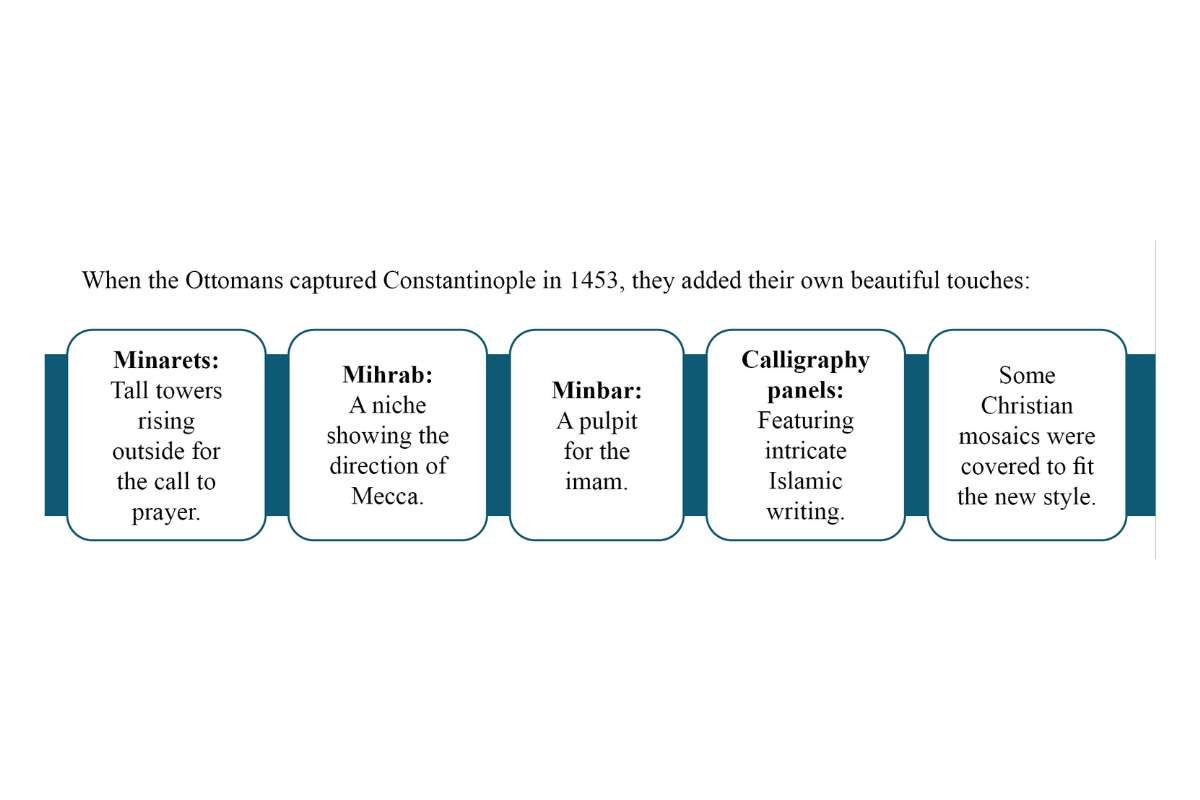
When the Ottomans captured Constantinople in 1453, they added their own beautiful touches:
- Minarets: Tall towers rising outside for the call to prayer.
- Mihrab: A niche showing the direction of Mecca.
- Minbar: A pulpit for the imam.
- Calligraphy panels: Featuring intricate Islamic writing. Some Christian mosaics were covered to fit the new style.
“Today, restorers are carefully uncovering these ancient mosaics, letting visitors see Christian and Islamic art together. Hagia Sophia is like a giant storybook, with walls that tell the tale of two faiths sharing one space. Its architecture and artistry show how cultures can meet, mix, and create something truly unforgettable.”
12 Oldest Countries in the World That Still Carry Their Ancient Roots
Some nations were already ancient when Rome was young. Meet the Oldest Countries in the World and learn how their traditions continue to influence life in 2025.
Saving a Timeless Treasure: Hagia Sophia’s Modern Makeover
In 2025, Hagia Sophia began its most extensive restoration in over a century:
- Dome and half-dome reinforcement to withstand earthquakes, following damage highlighted by the 2023 Turkey earthquake.
- Lead roof replacement and steel framework upgrades, maintaining the mosque’s function and public access.
Visitor safety and site preservation are enhanced with:
- AI-powered visitor management system to separate worshippers from tourists and protect sensitive areas like Byzantine mosaics and Hellenistic columns.
International monitoring:
- UNESCO oversight emphasizes preserving Hagia Sophia’s cultural and architectural value while noting concerns over limited consultation regarding status changes.
These efforts reflect a balance between protecting history and adapting to modern challenges, ensuring Hagia Sophia’s legacy endures for future generations.
“Through careful restoration and modern technology, Hagia Sophia preserves its beauty and strength for future generations. Yet, its long history shows that surviving natural and human challenges has always been part of its story.”
Weathering Time and Turmoil
Hagia Sophia has faced countless challenges throughout history, from natural disasters to human conflicts. It continues to endure and inspire, navigating modern pressures while standing as a symbol of resilience.
| Era | Challenges Faced | Responses / Impact |
| 6th Century | Strong earthquakes | Dome collapses; major reconstructions by architects like Isidore of Miletus and Anthemius of Tralles |
| 1204 (Fourth Crusade) | Plundering and damage | Loss of treasures, mosaics damaged, structural repairs needed |
| 1453 (Ottoman Conquest) | Conversion to mosque | Adaptation of sacred spaces, addition of minarets, calligraphy panels; some mosaics covered |
| 20th Century (1935 Museum) | Preservation and public access | Secularization allowed worldwide visitors; conservation of mosaics and marble |
| 21st Century (2020–Present) | Modern engineering reinforcements, AI visitor management, and careful restoration projects | Modern engineering reinforcements, AI visitor management, careful restoration projects |
| Ongoing / UNESCO Concerns | Long-term preservation and international heritage oversight | Monitoring of conservation work, ensuring cultural and architectural value is maintained |
Hagia Sophia: A Treasure of Wonders

Discover Hagia Sophia’s record-breaking dome, symbolic design, and rich blend of art, history, and culture that continues to inspire visitors.
- UNESCO World Heritage Site (1985): Recognized for its global cultural and architectural significance.
- World’s Largest Dome (for centuries): The central dome, with a diameter of 32.6 meters, was the largest in the world until the completion of St. Peter’s Basilica in Rome.
- Whispering Gallery: A unique acoustic feature where whispers can be heard across the dome, showcasing the building’s exceptional sound design.
- Marble Columns from Ancient Temples: Columns made of Verde Antique marble were sourced from ancient quarries, adding historical depth to the structure.
- Symbolism in Dome Windows: The forty windows at the base of the dome create a luminous effect, symbolizing the divine light illuminating the sacred space.
- Endowment Status Since the 15th Century: Established as a public trust by Sultan Mehmed II, ensuring its maintenance and preservation for future generations.
Conclusion
Hagia Sophia stands as a living testament to human creativity, faith, and resilience. From its origins as a Byzantine cathedral to its transformations under Ottoman rule and modern restorations, it has endured earthquakes, wars, and centuries of change. Its soaring dome, intricate mosaics, and symbolic architecture tell stories of cultural blending and artistic genius.
Today, as both a mosque and a heritage site, Hagia Sophia continues to inspire millions, bridging the past and present. It reminds us that while buildings can be shaped by history, they also shape the hearts and minds of those who encounter them.