
Many professionals in leadership roles inherit systems that once worked well enough. Over time, those tools begin to slow progress, strain teams, and blur visibility. The decision to delay a system change often feels cautious. Staying put can quietly drain time, money, and momentum in ways that are easy to miss.
Productivity Loss Hides in Plain Sight
The cost of outdated systems rarely fails all at once. Instead, they chip away at productivity through extra steps, manual workarounds, and repeated data entry. Employees spend hours reconciling information, correcting errors, or searching for updates that should be easy to find.
These lost hours rarely appear on financial statements. When teams are forced to work around technology instead of with it, creativity and focus suffer. Over time, even high performers begin to disengage as frustration builds.
Decision Making Slows as Data Fragments
Modern business decisions rely on timely, accurate information. Legacy systems often store data in silos that do not communicate well with each other. Leaders then rely on partial views or delayed reports to guide strategy.
This lag can affect pricing, staffing, inventory, and investment choices. Decisions made with incomplete data carry a higher risk. The cost shows up later through missed opportunities or reactive adjustments that could have been avoided.
Hidden Financial Drain From Maintenance

Older systems often require specialized support, frequent fixes, or custom patches to remain functional. These expenses add up quietly. Maintenance contracts, extended support fees, and consultant hours can rival the cost of upgrading, yet they do not improve performance.
There is also the cost of outdated systems’ inefficiency baked into every transaction. Slow processing, duplicate records, and reporting delays affect cash flow and forecasting. Over time, the organization pays repeatedly for the same limitations.
Talent Retention Takes a Hit
Workplace expectations have shifted. Skilled professionals expect tools that support collaboration, flexibility, and efficiency. When systems feel outdated, employees may interpret that as a lack of investment in their success.
This is especially relevant for women-led organizations focused on equity and growth. Talented employees want environments where their time and expertise are respected. If technology becomes a barrier, retention suffers. Replacing experienced staff costs far more than upgrading systems, both financially and culturally.
Customer Experience Suffers Quietly

Customers often feel the effects of outdated systems before leadership does. Slow responses, inconsistent information, and billing errors erode trust. Even loyal clients may begin to explore alternatives when interactions feel cumbersome.
In service-based industries, this can mean longer resolution times or misaligned communication. In product-driven businesses, it may show up as delays or inaccuracies. These issues rarely cause immediate churn, but they weaken relationships over time.
Security and Compliance Risks Increase
Outdated systems may lack modern security updates or compliance features. This creates exposure that grows as regulations evolve and threats become more sophisticated. Addressing breaches or compliance failures after the fact is far more expensive than preventing them.
Opportunity Cost Is the Largest Expense

The highest cost of outdated systems staying with old systems is what never happens. Automation, real-time insights, and scalable workflows remain out of reach. Growth initiatives stall because the foundation cannot support them.
New markets, partnerships, or services often require data visibility and system flexibility. Without that, leaders may hesitate to pursue opportunities they are fully capable of handling. This hesitation compounds year after year.
Access to integrated tools such as brokerage data solutions can change how leaders evaluate performance and plan expansion. Without comparable capabilities, businesses operate at a disadvantage even when demand exists.
Why System Change Feels Risky?
Change introduces uncertainty. Training, migration, and short-term disruption feel uncomfortable, especially for teams already stretched thin. Women leaders often balance risk carefully, weighing team well-being alongside financial outcomes.
That caution is valid. However, risk also exists in staying put. The difference is visibility. The cost of change is clear and immediate. The cost of stagnation spreads quietly across months and years.
Reframing the Investment Conversation
System upgrades are often framed as technical projects. A more accurate view sees them as strategic investments in people, clarity, and growth. When technology supports how teams work, energy shifts from maintenance to progress.
Leaders who involve teams early, communicate purpose clearly, and plan thoughtfully can reduce disruption while gaining long-term benefits. The focus moves from replacement to enablement.
Moving Forward With Intention
The decision to switch systems does not require urgency driven by a crisis. It benefits from intention driven by vision. Evaluating current tools honestly can reveal whether they support where the business is going or anchor it to past needs.
Standing still feels safe, but it carries a price that grows quietly. By recognizing the hidden cost of outdated systems, women leaders can make informed choices that protect their teams, serve their customers, and support sustainable growth.
Progress rarely announces itself loudly. It begins with seeing what no longer serves and choosing to move forward anyway.
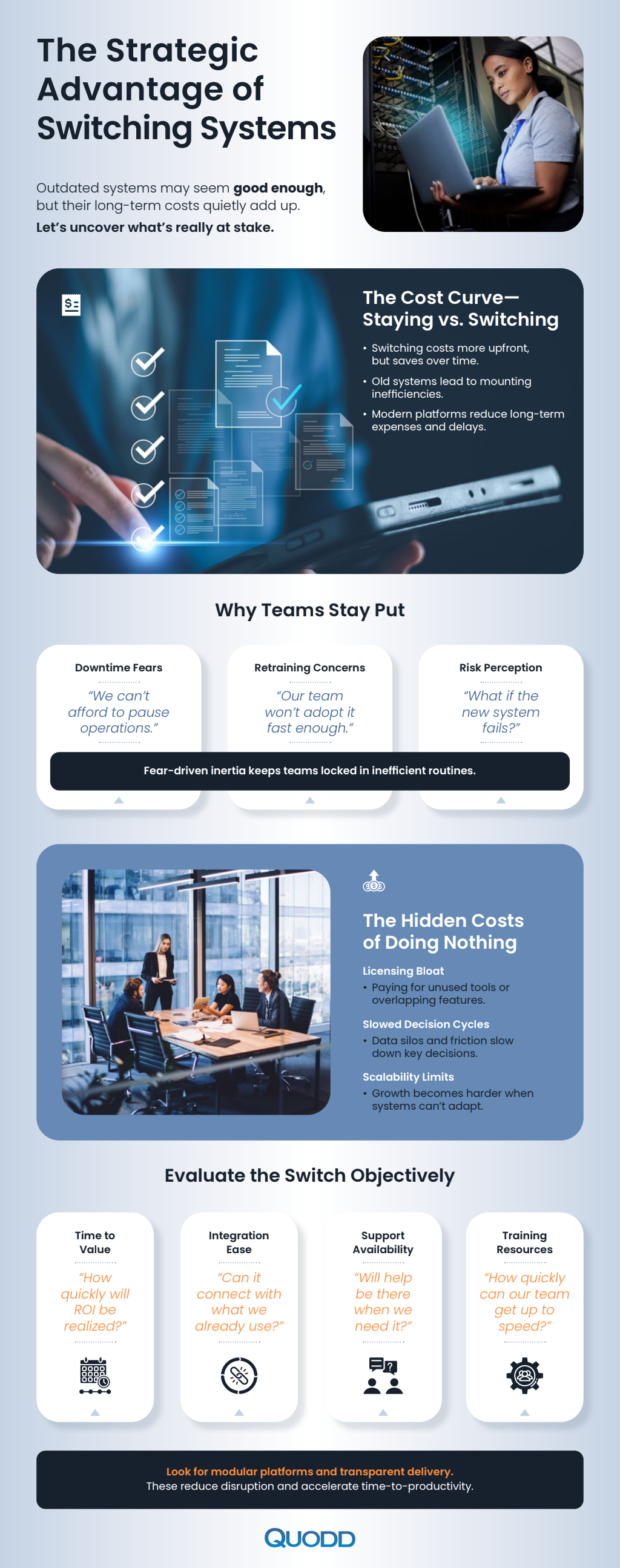
Look over the infographic below to learn more.