
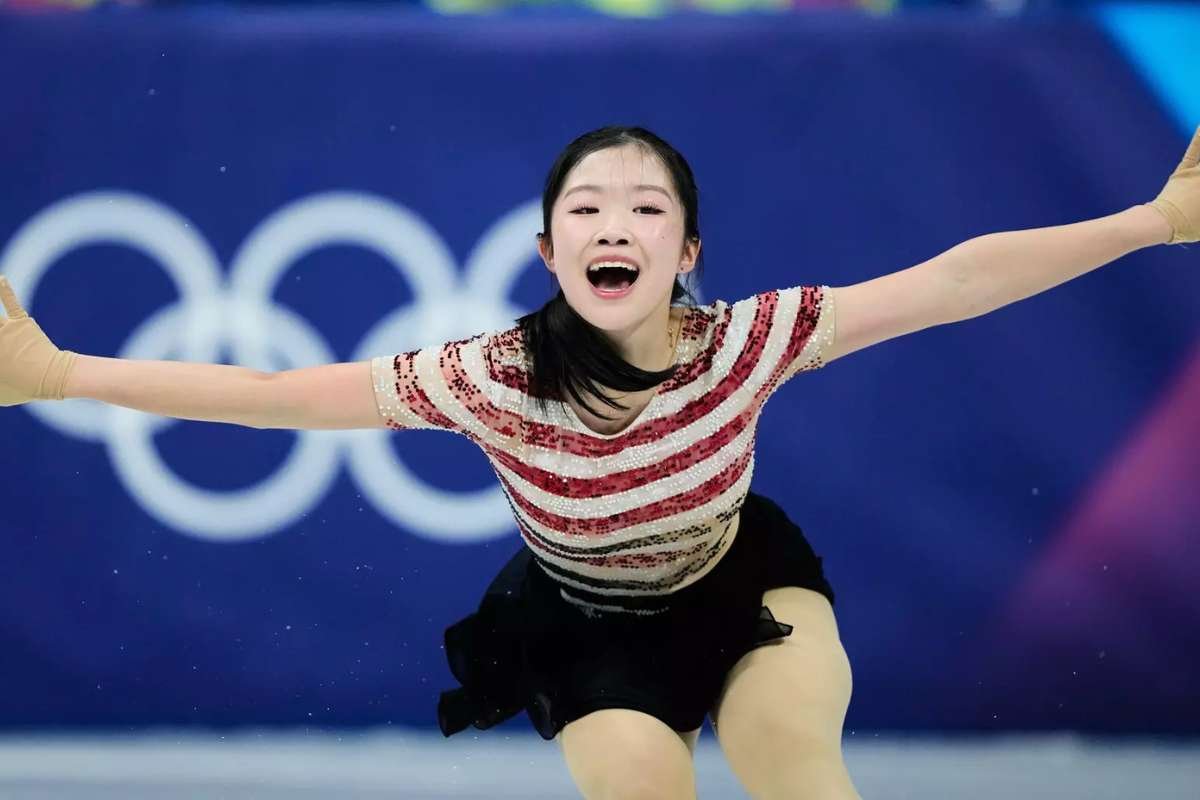
Key Points:
- Ami Nakai leads with 78.71 after the short program.
- Japan dominates the standings with Sakamoto and Chiba close behind.
- The free skate on Feb 19 will decide medals with tight score gaps.
The women’s figure skating event at the 2026 Winter Olympics in Milan delivered high drama and elite technical brilliance as Japan’s 17-year-old rising star Ami Nakai claimed the top spot after the short program. Skating with remarkable composure, Ami Nakai earned a personal-best score of 78.71, highlighted by a cleanly executed triple Axel and precise jump combinations that electrified the arena.
Her performance placed her narrowly ahead of compatriot and three-time world champion Kaori Sakamoto, who secured second place with 77.23 points. Sakamoto’s fluid choreography and powerful skating skills reinforced Japan’s dominance in the discipline, positioning the nation strongly heading into the free skate.
Close behind the Japanese duo, reigning world champion Alysa Liu of the United States delivered a confident routine that earned 76.59 points and third place overall. Liu, who returned to competition after a brief retirement, demonstrated poise under Olympic pressure and remains firmly in medal contention.
Japan’s depth was further evident as Mone Chiba landed in fourth place, raising the possibility of a historic multi-medal finish for the country. Meanwhile, Adeliia Petrosian, competing as a neutral athlete, also impressed with her technical precision and currently sits within striking distance of the podium.
Team USA Faces High Stakes and Mixed Outcomes
For the United States, the short program produced both optimism and heartbreak. Alysa Liu’s strong showing solidified her position as the leading American contender for an Olympic medal in the women’s event, a feat the country has not achieved in two decades.
However, Amber Glenn’s performance underscored the unforgiving nature of Olympic competition. Glenn successfully opened with a triple Axel but faltered on a required triple loop, resulting in an invalidated element that significantly lowered her score. She finished 13th with 67.39 points, leaving her with a steep climb in the free skate. Despite the setback, Glenn later expressed resilience and determination, reflecting the emotional intensity of the Games.
Isabeau Levito, another American hopeful, delivered a steady skate and currently stands eighth overall. While not in immediate podium position, Levito remains within range should she deliver a standout performance in the final round.
The short program overall revealed just how tight the margins are in Olympic figure skating, where fractions of a point can determine medal hopes. With several skaters separated by minimal score differences, the competition remains far from decided.
Free Skate Showdown Awaits
Attention now turns to the women’s free skate, scheduled for Thursday, February 19, which will determine the Olympic medalists. The free skate allows athletes to showcase more complex technical elements alongside artistic expression, often reshuffling the leaderboard dramatically.
Japan enters the decisive round in a commanding position with two skaters occupying the top spots and another close behind. Yet, the narrow score gaps ensure that no medal is secure. Alysa Liu’s consistency and competitive experience could prove pivotal, while contenders like Sakamoto and Petrosian remain formidable threats.
As the Milano Cortina 2026 Winter Olympics continue, anticipation builds for what promises to be one of the most compelling figure skating finals in recent Olympic history. With youth, experience, and national pride on display, the women’s free skate is poised to deliver a dramatic conclusion to an already captivating event.
Visit CIO Women Magazine for the latest information.