
Key Points:
- Historic Appointment: Meg O’Neill becomes BP’s first female and rare external CEO to ensure leadership stability.
- Core Reversion: BP is pivoting back to traditional oil and gas to manage global energy complexity and volatility.
- Fiscal Focus: The company is prioritizing debt reduction and simplified operations to maximize shareholder returns.
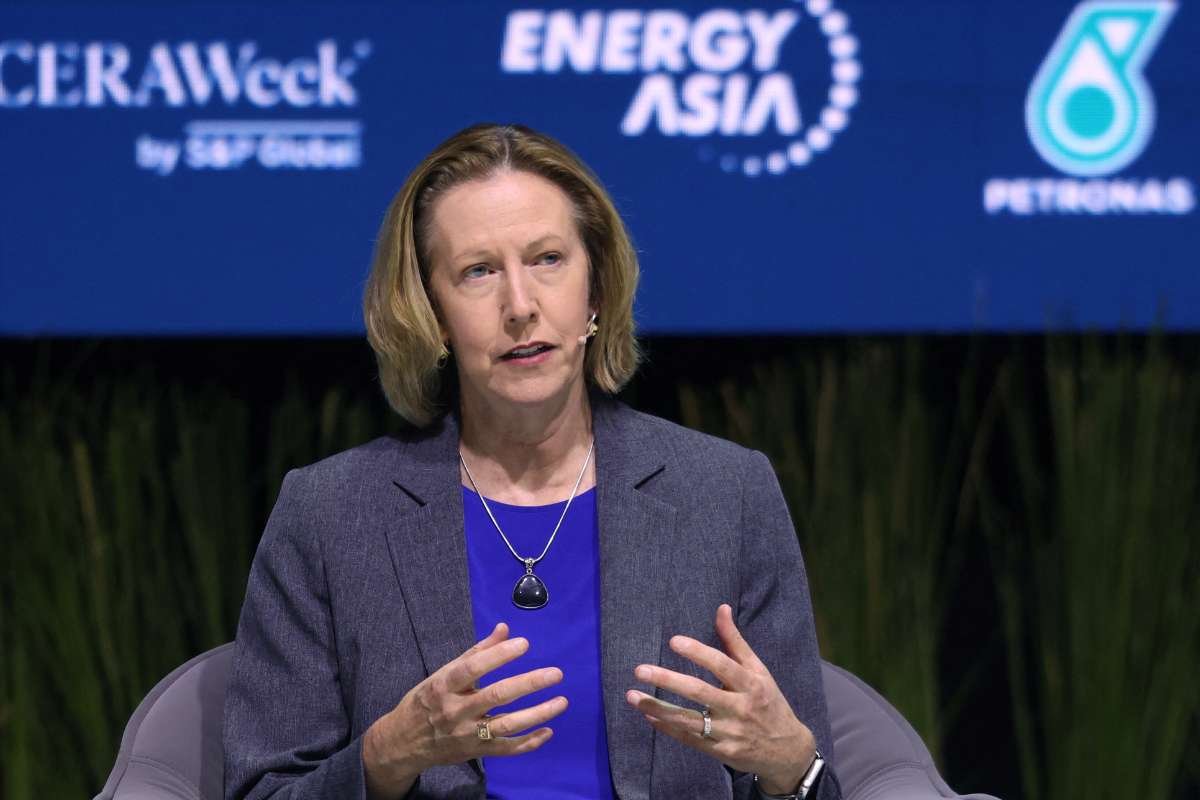
BP has officially entered a new era following the appointment of Meg O’Neill as its chief executive, marking one of the most significant leadership transitions in the company’s long history. Her appointment stands out not only because she becomes the first woman to lead the British energy major, but also because she is one of the few external candidates ever chosen for the top role in more than a century.
Meg O’Neill’s elevation comes after a prolonged phase of instability in BP’s leadership structure, with the company cycling through multiple chief executives in just over six years. This rapid turnover has reflected deeper uncertainty about BP’s long-term strategic identity as it attempts to balance traditional oil and gas operations with evolving expectations around the cleaner energy transition.
In her first address to employees, O’Neill underscored the need for stability and focus. She emphasized that the company requires clear priorities, disciplined execution, and a consistent approach to navigating an increasingly volatile global energy landscape. Her message signals an intention to steady the organization after years of shifting strategies and internal recalibration.
The leadership change also comes at a time when BP is under pressure from investors to improve performance, simplify its business structure, and restore confidence in its long-term direction. The company’s new chief executive now faces the challenge of aligning internal operations with external market expectations while managing ongoing restructuring efforts.
Operating in a “World of Significant Complexity”
Meg O’Neill has described the current global energy environment as a “world of significant complexity,” reflecting the multiple forces shaping the industry today. These include geopolitical tensions, unpredictable energy demand patterns, supply disruptions, and heightened volatility in global oil markets.
Energy markets have been particularly sensitive in recent periods due to supply risks stemming from conflicts in key oil-producing regions. These disruptions have led to fluctuations in crude prices and increased uncertainty for global energy companies, which must now operate in a more unstable and reactive environment than in previous years.
Against this backdrop, BP is reinforcing its role as a reliable global energy supplier. The company is placing renewed emphasis on operational stability, ensuring consistent energy output, and maintaining supply security across its international portfolio. This marks a shift toward a more pragmatic approach focused on immediate performance and resilience.
At the same time, BP is reassessing the pace and scale of its transition toward renewable energy. While the company previously made ambitious commitments to expand its low-carbon portfolio, recent strategic adjustments indicate a stronger focus on core hydrocarbons. This recalibration reflects broader industry sentiment, where many major oil companies are re-evaluating the balance between energy transition goals and shareholder expectations for returns.
Industry analysts view this shift as part of a wider realignment across the energy sector, where companies are increasingly prioritizing financial stability and operational efficiency amid global uncertainty.
Strategic Reset, Financial Discipline, and Future Outlook
BP is currently undertaking a significant strategic reset aimed at simplifying its global operations and strengthening its financial foundation. Central to this effort is a focus on reducing debt, improving cash flow, and streamlining assets that are considered non-core to its long-term strategy.
The company is also exploring divestments across several business segments as part of its effort to reduce complexity and concentrate on higher-performing oil and gas assets. This restructuring is intended to enhance profitability while improving the company’s ability to respond to market volatility.
Investor pressure has been a major driving force behind these decisions. Shareholders have increasingly demanded stronger financial discipline, higher returns, and a more focused business model. In response, BP has begun shifting capital allocation away from large-scale diversification efforts and toward strengthening its traditional energy operations.
This repositioning also reflects broader macroeconomic and geopolitical realities. Rising energy security concerns, fluctuating commodity prices, and ongoing global instability have prompted many energy companies to rethink aggressive expansion strategies in favor of more conservative and resilient business models.
Meg O’Neill’s background in managing large-scale energy operations and overseeing complex corporate structures is seen as a key advantage in guiding BP through this transformation. Her experience is expected to play a central role in executing the company’s restructuring plan while maintaining operational continuity across its global footprint.
Despite the challenges, BP’s leadership remains cautiously optimistic. The company believes its diversified asset base, global reach, and integrated supply chain provide a strong foundation to navigate the current environment. However, success will depend heavily on execution, strategic clarity, and the ability to adapt quickly to changing market conditions.
Access the latest insights at CIO Women Magazine.