Key Takeaways:
- Fed May Tighten Monetary Policy Faster
- AI Investment and Rising Costs Sustain Inflation
- October Fed Meeting Could Shape Rate Expectations
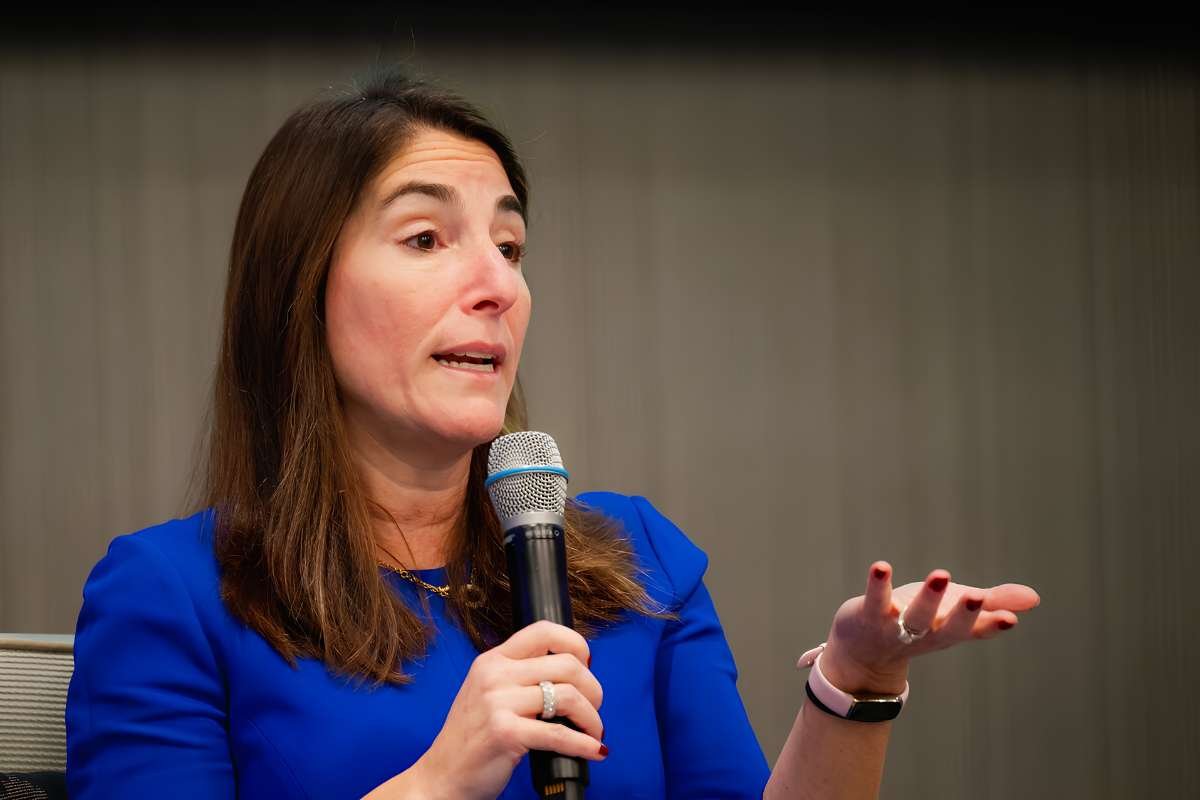
Cleveland Federal Reserve President Beth Hammack has called for a faster shift towards a more restrictive monetary policy, warning that persistent inflation could become harder to control if policymakers delay action.
Speaking at the National Association for Business Economics conference on October 12, Hammack said inflationary pressures were spreading across the US economy, extending beyond energy prices and influencing business pricing decisions. She favours timely adjustments to interest rates rather than waiting until inflation becomes entrenched and requires a more aggressive response.
Beth Hammack estimated that underlying inflation remained in the mid-to-high 2% range, above the Federal Reserve’s long-term target of 2%. She cautioned that returning inflation to the target would take time, even with an appropriate monetary policy response.
Her concerns are reinforced by reports from businesses in the Cleveland Fed’s district. Some companies have indicated plans to raise prices faster than their input costs are increasing, suggesting that inflationary pressures could persist even if certain costs begin to ease.
Hammack believes policymakers should act before elevated inflation becomes firmly embedded in consumer and business expectations. When companies and households anticipate continued price increases, inflation can become more difficult to bring down, potentially requiring tighter monetary conditions for longer.
AI Investment, Energy Prices and Tariffs Add to Inflation Pressures
Beth Hammack identified rising energy costs, tariffs and growing investment in artificial intelligence infrastructure as important factors shaping the inflation outlook.
Higher oil, petrol and diesel prices increase transportation and operating expenses for businesses while putting additional pressure on household budgets. Tariffs can also raise costs for companies that depend on imported goods, components and raw materials, potentially leading to higher prices for consumers.
Meanwhile, expanding investment in AI infrastructure is increasing demand for computer equipment, electronics and other high-technology components. These pressures extend beyond data centres to projects involving aviation, electricity generation and construction, where similar equipment is required.
Although some supply-related price increases may eventually ease, sustained demand for technology and infrastructure could keep costs elevated. This makes it more difficult for the Federal Reserve to distinguish temporary inflation from pressures that may require a longer-lasting policy response.
Hammack considers the US economy resilient enough to withstand tighter monetary conditions. She believes higher interest rates could moderate demand and help reduce inflation without necessarily causing a significant deterioration in employment or economic activity.
However, tighter monetary policy carries risks. Higher borrowing costs can discourage business investment, increase mortgage expenses and reduce consumer spending. The challenge for policymakers is to slow price increases without unnecessarily weakening economic growth or the labour market.
October Fed Meeting Puts Inflation Data in Focus
Beth Hammack’s comments come ahead of the Federal Reserve’s October 27–28 policy meeting, where officials will evaluate economic indicators before deciding whether further interest-rate increases are warranted.
The September Consumer Price Index report is among the key indicators being monitored. Stronger-than-expected inflation could strengthen the case for tighter policy, while evidence of easing price pressures could support keeping rates unchanged. The decision will also depend on employment conditions and the broader economic outlook.
Hammack has taken a relatively hawkish position on monetary policy, emphasising the need to address persistent inflation. However, her preference for a more restrictive stance does not automatically mean she will support an interest-rate increase at the October meeting.
She has also highlighted the importance of transparency in monetary policymaking. Hammack supports explaining how economic data influence the Federal Reserve’s decisions, while distinguishing that communication from promises about future interest-rate movements.
Her approach places emphasis on helping businesses, households and financial markets understand the reasoning behind policy decisions without creating expectations that rates will follow a predetermined path.
The Federal Reserve must now balance its commitment to price stability against the risks of weakening economic activity. Hammack’s remarks indicate that she sees persistent inflation as a concern requiring timely attention. The October meeting will provide further insight into how policymakers intend to respond as they assess whether inflation is easing sufficiently or remains a threat to the US economic outlook.