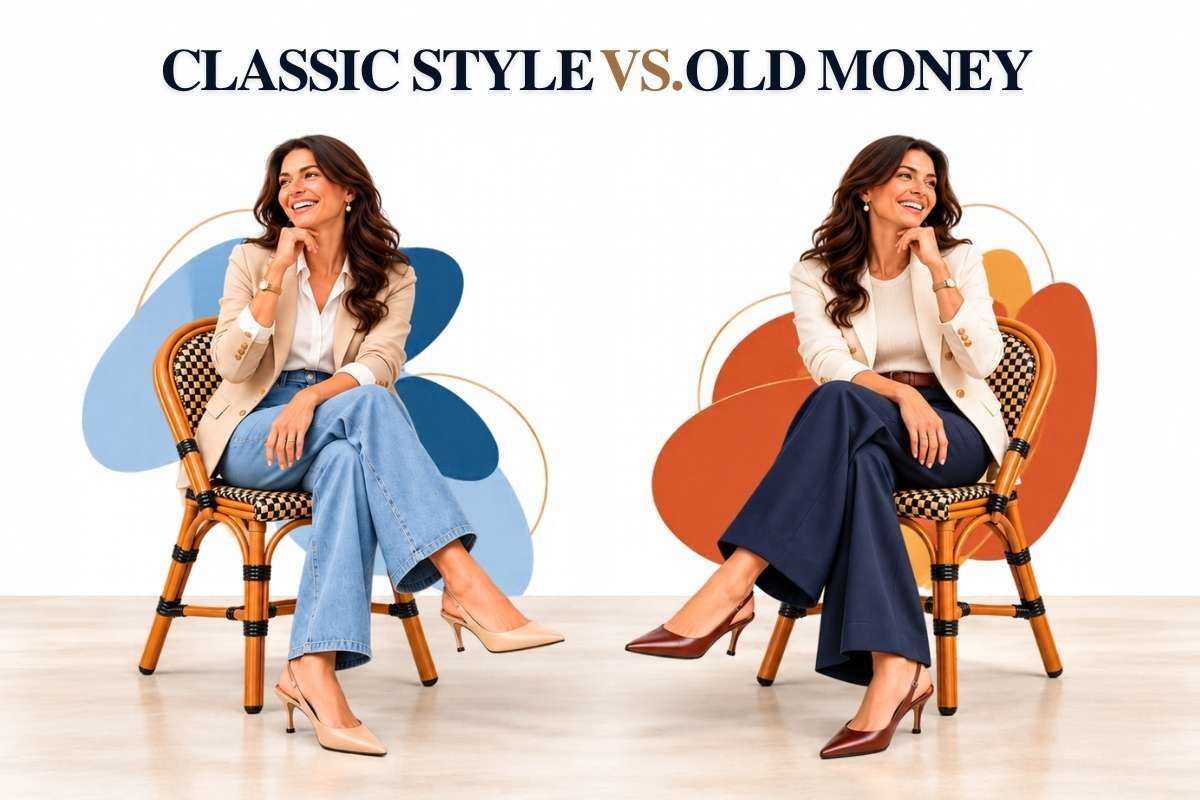
Timeless fashion is gaining attention among women who want polished outfits without constantly following new trends. From tailored blazers to elegant flats, versatile clothing can help create a wardrobe that works across professional and personal settings. This has made classic style vs. old money an increasingly relevant fashion comparison.
Although classic style vs. old money share similarities, the two aesthetics differ in their inspiration and styling. Classic style prioritises versatility and longevity, while old money style reflects traditional luxury, heritage-inspired silhouettes, and understated details. Understanding these differences can help women choose clothes that suit their personalities, budgets, and lifestyles.
Classic style vs. old money: what is the difference?
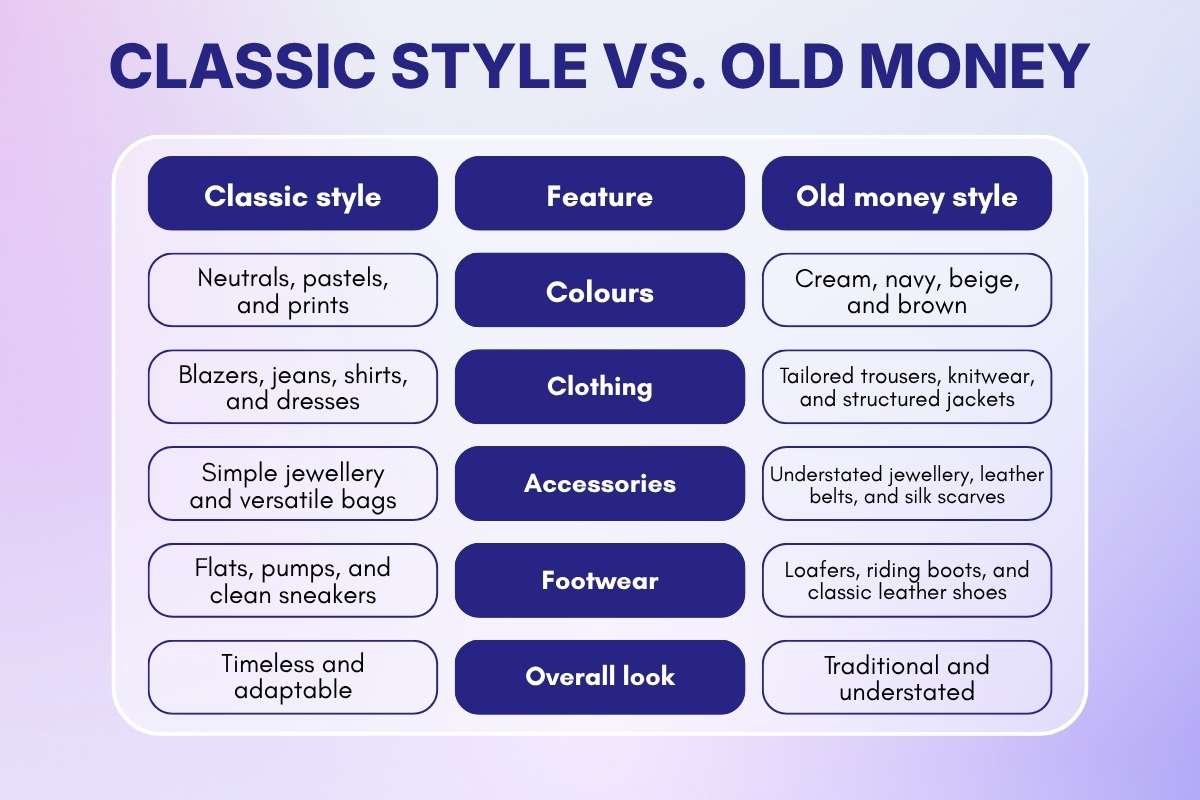
The main difference in classic style vs. old money is that classic fashion prioritises timelessness, whereas old money fashion follows a more specific heritage-inspired aesthetic.
| Feature | Classic style | Old money style |
| Colours | Neutrals, pastels, and prints | Cream, navy, beige, and brown |
| Clothing | Blazers, jeans, shirts, and dresses | Tailored trousers, knitwear, and structured jackets |
| Accessories | Simple jewellery and versatile bags | Understated jewellery, leather belts, and silk scarves |
| Footwear | Flats, pumps, and clean sneakers | Loafers, riding boots, and classic leather shoes |
| Overall look | Timeless and adaptable | Traditional and understated |
For example, straight-leg jeans, a white shirt, and ballet flats create a classic outfit. Adding a camel blazer, loafers, and a structured handbag gives the same combination an old money-inspired finish.
Both aesthetics overlap, so women can combine them without following strict fashion rules.
Why is Gen Z so interested in old money style?
Old money style appeals to fashion enthusiasts because it offers an alternative to rapidly changing microtrends. Its emphasis on coordinated outfits, traditional silhouettes, and repeatable wardrobe staples makes it easy to adapt for different occasions.
Social media has also popularised heritage-inspired styling, including cable-knit sweaters, polo shirts, tailored trousers, and loafers.
The broader Indian fashion market provides useful context. A January 2026 Euromonitor report identifies evolving consumer preferences, relaxed silhouettes, and growing interest in inclusivity as relevant developments in India’s womenswear market. Read the market report.
However, this does not establish that old money style is the main driver of women’s fashion purchases. It highlights the changing preferences within which different aesthetics compete for attention.
What makes a woman look polished without expensive brands?
Looking elegant does not require luxury labels. When comparing classic style vs. old money, the most useful principles are fit, coordination, and garment care. Women can also look polished on a tight budget by choosing versatile clothing, maintaining their existing wardrobe, and prioritising pieces that work across multiple outfits.
Avoiding office fashion mistakes women make, such as wearing poorly fitted clothing or overlooking garment care, can also help women maintain a polished appearance without spending more on clothes.
- Choose well-fitting clothes: Tailored trousers, comfortable shirts, and structured jackets can improve an outfit’s overall appearance.
- Coordinate colours: Navy, ivory, black, beige, and olive create versatile combinations.
- Keep accessories balanced: A watch, simple earrings, or a leather belt can complete an outfit without overwhelming it.
These principles make both aesthetics accessible without suggesting that clothing can reveal someone’s actual financial status.
Wardrobe essentials every woman can wear
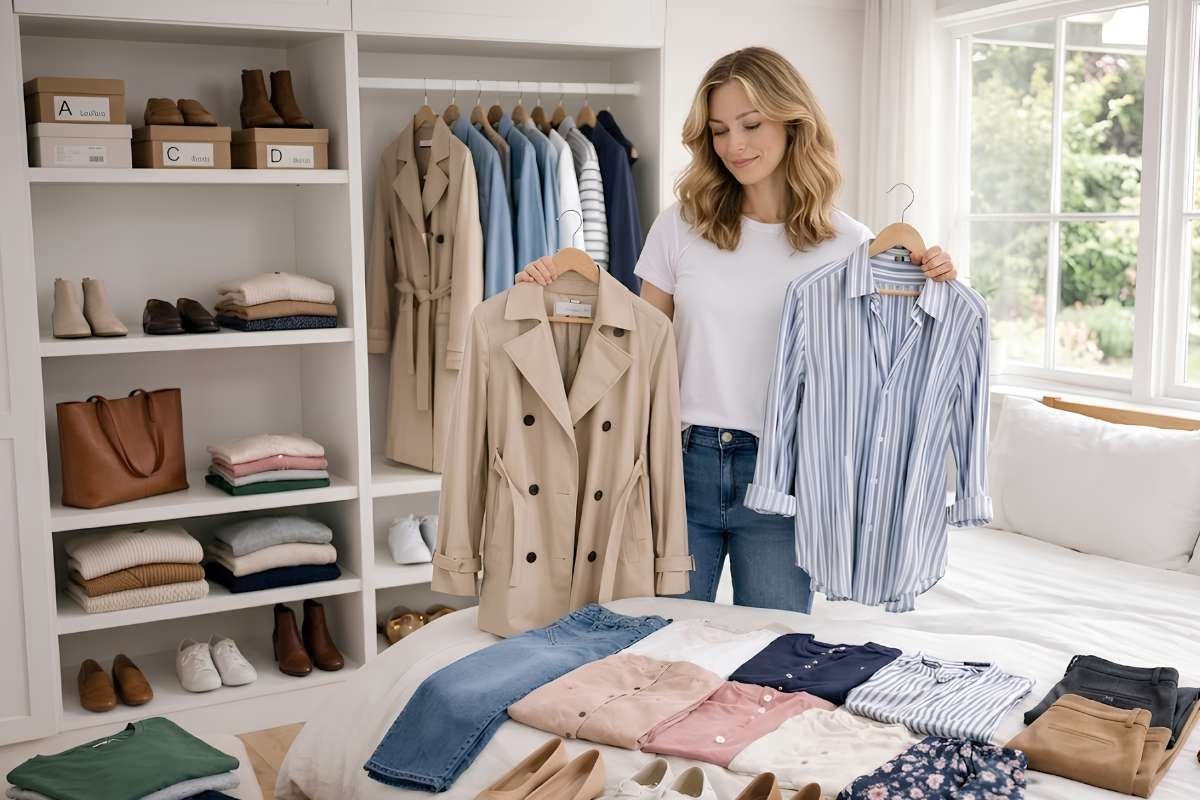
A practical wardrobe starts with pieces that can be styled in multiple ways. Women do not need to buy everything at once. A minimalist wardrobe guide for busy professional women can help readers select versatile essentials that work across different outfits and occasions. Starting with a few coordinated tops, bottoms, and layers makes it easier to create classic and old money-inspired looks without buying an entirely new wardrobe.
| Essential | Styling idea |
| White shirt | Pair with jeans or tailored trousers |
| Blazer | Wear over a dress or a simple top |
| Straight-leg jeans | Combine with ballet flats or sneakers |
| Knit cardigan | Layer over a shirt or midi dress |
| Tailored trousers | Style with loafers and a fine-knit top |
| Midi skirt | Pair with a fitted top and understated jewellery |
For Indian women, cotton kurtas, linen co-ord sets, tailored ethnic wear, and simple sarees can also support a timeless wardrobe.
The classic style vs. old money approach works best when clothing reflects individual preferences rather than copying a single aesthetic. Women can also refer to dress for success at every career stage for practical advice on adapting their wardrobes to changing professional responsibilities while maintaining personal style and comfort.
What shoes and styling rules work best?
Loafers, ballet flats, classic pumps, and clean sneakers suit both aesthetics. Loafers and riding boots add a heritage-inspired touch, while flats and sneakers create relaxed classic looks.
The 3-3-3 rule involves three tops, three bottoms, and three pairs of shoes to create multiple outfits. Another option is the three-piece styling method: pair a top and bottom with a blazer, cardigan, or sweater.
These styling tips make classic style vs. old money easier to recreate with versatile shoes, coordinated outfits, and affordable wardrobe essentials.
How can women recreate these looks on a budget?

Affordable styling is particularly relevant in a growing fashion market. A report released by the Clothing Manufacturers Association of India and Lattice in October 2026 projects that India’s womenswear market will grow at an annual rate of 8.9% between 2025 and 2029. The projection reflects changing demand and consumer preferences, not a specific rise in old money fashion.
Women can make more intentional wardrobe choices by:
- Reusing and restyling clothes they already own.
- Shopping second-hand for blazers, knitwear, and bags.
- Choosing durable, versatile pieces over impulse purchases.
- Altering garments for a better fit.
- Calculating cost per wear before buying expensive items.
For professional wardrobe advice, women can focus on versatile clothing, comfortable fits, and workplace-appropriate styles that balance personal expression with professional expectations.
Conclusion:
Choosing between classic style and old money depends on your lifestyle, personal taste, and wardrobe needs. If you prefer outfits that transition easily between work and casual settings, prioritise versatile staples. If you enjoy traditional silhouettes and coordinated, understated looks, incorporate heritage-inspired pieces.
You can also combine both aesthetics to create a wardrobe that feels polished, practical, and personal. Focus on what you will wear regularly rather than buying pieces simply to follow a trend.
FAQs
1. How can you tell whether an outfit is classic or old money-inspired?
Look at the overall styling. A classic outfit may include jeans, a crisp shirt, and ballet flats, while an old money-inspired outfit might feature tailored trousers, a fine-knit sweater, loafers, and a structured bag. Both can share timeless pieces.
2. Can women achieve old money style on a budget?
Yes. Well-fitted trousers, crisp shirts, knitwear, loafers, and second-hand finds can recreate the aesthetic affordably.
3. What shoes suit both aesthetics?
Loafers, ballet flats, classic pumps, and clean sneakers work across many classic and old money-inspired outfits.
4. Is old money style still relevant in 2026?
Heritage-inspired dressing remains a recognisable fashion aesthetic, but trends vary across audiences. Women can adapt to its elements without following every trend.
5. What is the easiest way to start a classic wardrobe?
Begin with a few versatile tops, well-fitting bottoms, comfortable shoes, and a jacket that coordinates with existing clothes.