
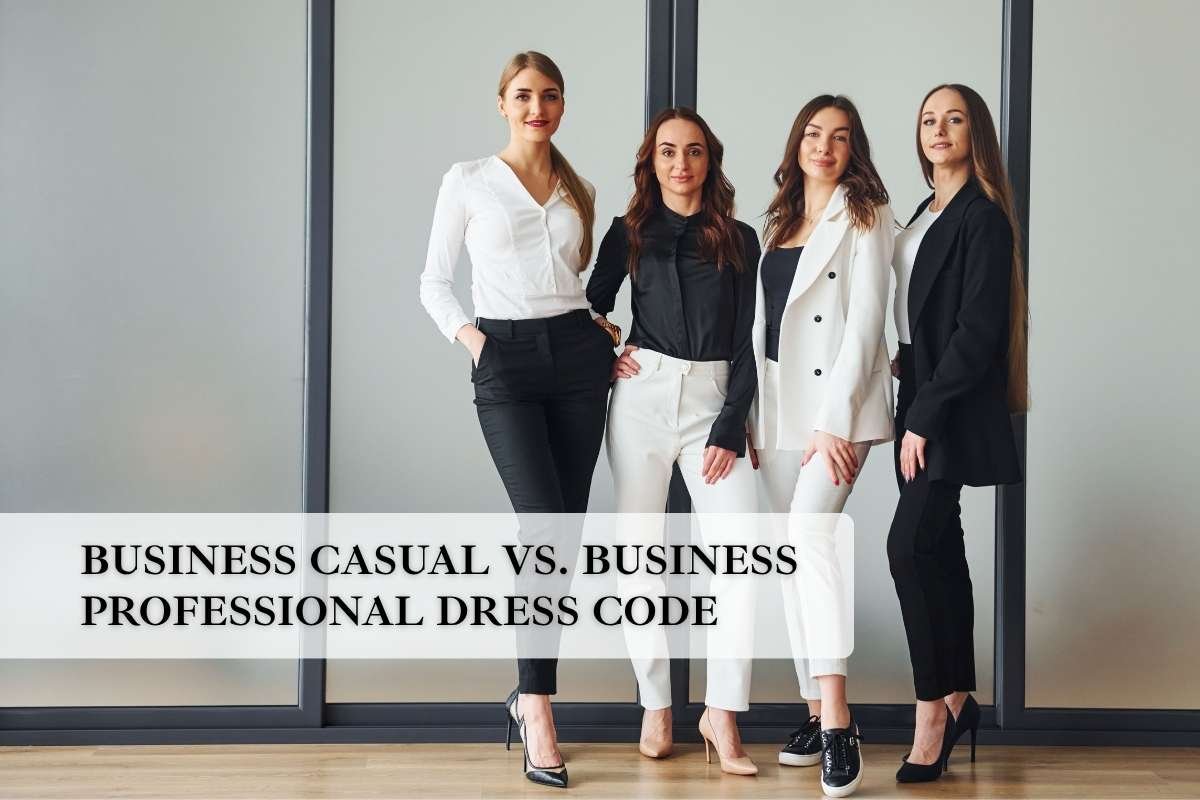
Understanding the business casual vs. business professional dress code helps women choose appropriate outfits for different workplace settings. While business casual allows polished yet relaxed clothing, business professional requires a more formal and structured appearance. Knowing the difference makes it easier to dress for everyday office hours, job interviews, client presentations, and executive meetings.
Workplace expectations vary across industries. Monster’s January 2025 survey found that 43% of surveyed workers had not worked in an office with a dress code during the previous year. Among workers whose workplaces had dress codes, 63% reported business casual attire. Although these figures reflect US workers, they highlight why understanding workplace clothing expectations matters.
Business casual vs. business professional dress code: key differences
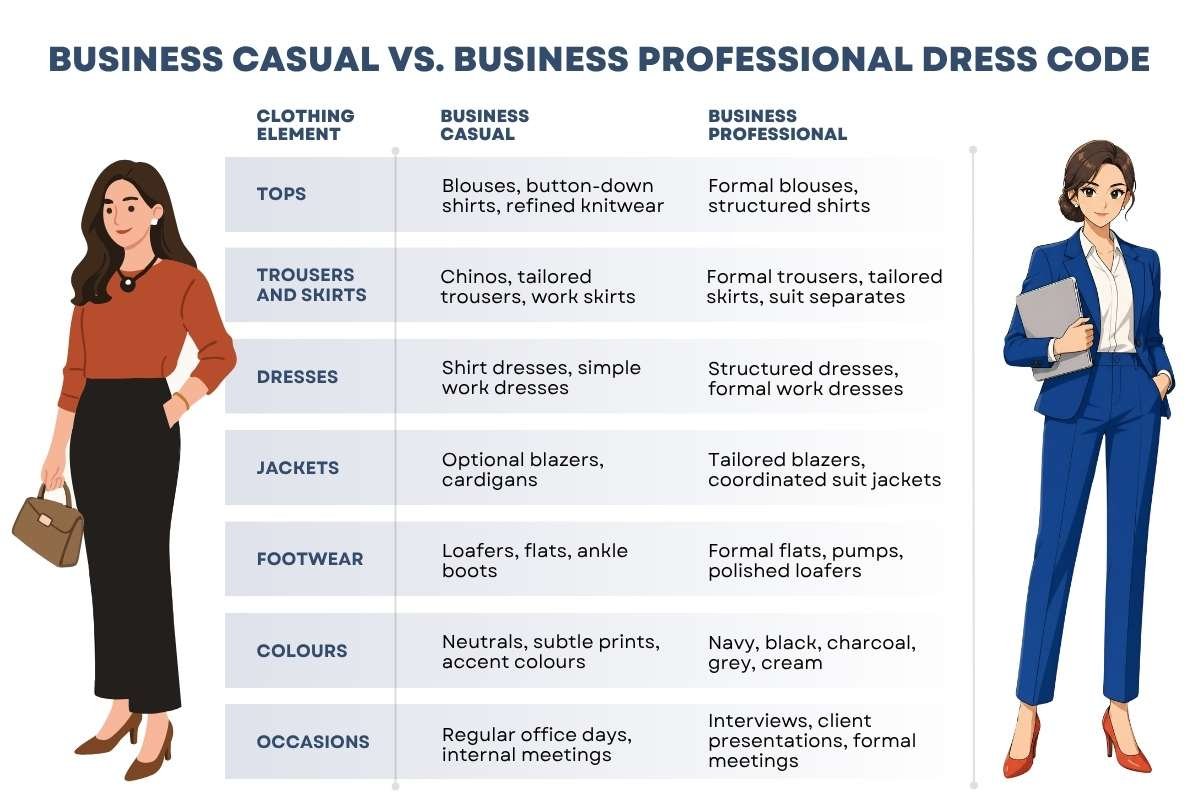
The main difference between business casual and business professional is formality. Business casual combines traditional workwear with relaxed pieces, while business professionals rely on tailored clothing and coordinated outfits.
| Clothing Element | Business Casual | Business Professional |
| Tops | Blouses, button-down shirts, refined knitwear | Formal blouses, structured shirts |
| Trousers and skirts | Chinos, tailored trousers, work skirts | Formal trousers, tailored skirts, suit separates |
| Dresses | Shirt dresses, simple work dresses | Structured dresses, formal work dresses |
| Jackets | Optional blazers, cardigans | Tailored blazers, coordinated suit jackets |
| Footwear | Loafers, flats, ankle boots | Formal flats, pumps, polished loafers |
| Colours | Neutrals, subtle prints, accent colours | Navy, black, charcoal, grey, cream |
| Occasions | Regular office days, internal meetings | Interviews, client presentations, formal meetings |
For example, a woman can wear tailored trousers, a blouse, and loafers in a business casual workplace. For a formal client presentation, a coordinated suit, structured blouse, and polished shoes may be more appropriate.
The business casual vs. business professional dress code distinction depends on the organization’s expectations and the occasion. Neither dress code determines a woman’s competence or professional ability.
What is a business casual dress code for women?

Business casual is a workplace dress code that combines professional clothing with a more relaxed style. It allows women to wear comfortable, versatile pieces while maintaining a neat and work-appropriate appearance.
Common business casual options include:
| Tops | Blouses, button-down shirts, and refined knit tops. |
| Bottoms | Tailored trousers, chinos, and appropriate skirts. |
| Dresses | Shirt dresses, wrap dresses, and simple midi dresses. |
| Layers | Blazers, cardigans, and lightweight jackets. |
| Footwear | Loafers, ballet flats, ankle boots, and suitable low heels. |
Women in Indian workplaces can also wear well-finished kurtas with straight trousers or coordinated ethnic sets when these suit the organization’s dress expectations.
Jeans may be acceptable in business casual workplaces if the employer permits them. Dark, clean denim without rips or excessive distressing is generally easier to style professionally. However, jeans may not be suitable for every office or client-facing occasion.
A simple business casual outfit could include black trousers, a blue blouse, and loafers. Adding a blazer creates a slightly more formal look without requiring a complete suit. Women can also look polished on a tight budget by choosing versatile basics that can be mixed and matched to create multiple work-appropriate outfits.
What is a business professional dress code for women?
Business professional is a formal workplace dress code commonly associated with job interviews, client meetings, financial presentations, and executive settings. It emphasizes tailored clothing, coordinated pieces, and polished footwear.
Women can create business professional outfits using:
| Matching suits | Coordinated blazers and trousers or skirts in navy, black, or charcoal. |
| Tailored separates | Formal trousers paired with a structured blazer and blouse. |
| Professional dresses | Structured dresses with clean lines and an appropriate fit. |
| Formal footwear | Polished flats, pumps, low heels, or formal loafers. |
| Accessories | A structured work bag, simple watch, and understated jewellery. |
Does business professional mean women must wear a suit? Not necessarily. Coordinated separates or a structured dress with a formal jacket may also meet workplace expectations. The employer’s dress policy and the occasion should guide the final choice.
For women working in India, formal Indian wear may also be appropriate when it aligns with the organization’s professional standards.
Business casual vs. business professional dress code: what should women avoid?
Understanding what not to wear is just as important as knowing which clothes are suitable. Women should also be aware of common office fashion mistakes women make, such as wearing poorly fitted clothing, choosing inappropriate footwear, or overlooking workplace dress-code expectations. However, restrictions depend on the employer, industry, and occasion.
| Business Casual: Items to Check | Business Professional: Items to Avoid |
| Ripped or heavily distressed jeans | Distressed denim |
| Gym leggings and workout clothes | Graphic T-shirts |
| Beachwear and flip-flops | Sweatshirts and athletic wear |
| Poorly maintained clothing | Informal footwear unsuitable for the occasion |
| Tops that do not meet workplace coverage expectations | Clothing that is too casual for a formal meeting |
These are general guidelines rather than universal rules. Some business casual workplaces allow clean sneakers or dark jeans, while others expect more traditional clothing.
The safest approach is to check the company’s dress policy and consider the formality of the meeting. When the dress code is unclear, women can choose a more structured outfit until they understand the workplace’s expectations.
Which colours work best for business casual and business professional attire?
Colour choices can help women coordinate workwear, but the dress code does not require a particular colour palette.
For business casual outfits, navy, beige, white, grey, and black provide versatile foundations. Burgundy, forest green, and muted blue can add colour while remaining easy to coordinate.
Business professional outfits often use navy, charcoal, black, grey, and cream because these shades work well in formal settings. Subtle patterns and accent colours can also be appropriate when the overall outfit remains coordinated.
There is no universal rule that two colours should never be worn together or that a particular colour should be avoided in 2026. Fit, garment condition, coordination, and suitability for the occasion are more useful considerations than rigid fashion rules.
How can women build a wardrobe for both dress codes?

A minimalist wardrobe guide for busy professional women can help women identify versatile essentials that work across different dress codes. Building a wardrobe around a few well-fitting trousers, neutral blouses, structured blazers, and comfortable shoes can simplify daily outfit choices without sacrificing variety.
Start with tailored trousers, neutral blouses, a structured blazer, a work-appropriate dress, and comfortable formal shoes. These basics can be combined differently depending on the occasion.
For instance, trousers and a blouse with loafers can work for business casual office hours. Adding a tailored blazer and formal footwear can make the outfit suitable for a more formal meeting.
This approach helps women manage clothing expenses while maintaining options for different professional situations. Women looking for practical advice on dress for success at every career stage can also learn how to adapt their wardrobes to changing responsibilities, workplace expectations, and personal style.
Conclusion:
Understanding the business casual vs. business professional dress code helps women choose appropriate outfits for different workplace situations. Business casual offers flexibility for everyday office wear, while business professional provides a more formal option for interviews, presentations, and important meetings.
By understanding workplace expectations and investing in versatile, well-fitting clothing, women can build a practical wardrobe that works across both dress codes without compromising comfort or personal style.
Frequently asked questions
1. Can women wear jeans for business casual?
Yes, if the workplace permits them. Dark, well-fitted jeans paired with a blouse or blazer suit many business casual settings. The business casual vs. business professional dress code helps determine when jeans are appropriate.
2. Is a suit compulsory for business professional attire?
No. Tailored separates or a structured dress with a formal jacket can also meet business professional standards.
3. What is the main difference between business casual and business professional?
Business casual allows more flexibility, while business professional requires a more formal, structured look. The business casual vs. business professional dress code depends on workplace expectations and the occasion.
4. Can women wear flats for business professional attire?
Yes. Polished flats and formal loafers are suitable alternatives to heels in many professional settings.
5. When should women choose business professional over business casual?
Choose business professional for formal interviews, executive meetings, and important client presentations. Business casual is generally suitable for regular office days when permitted.