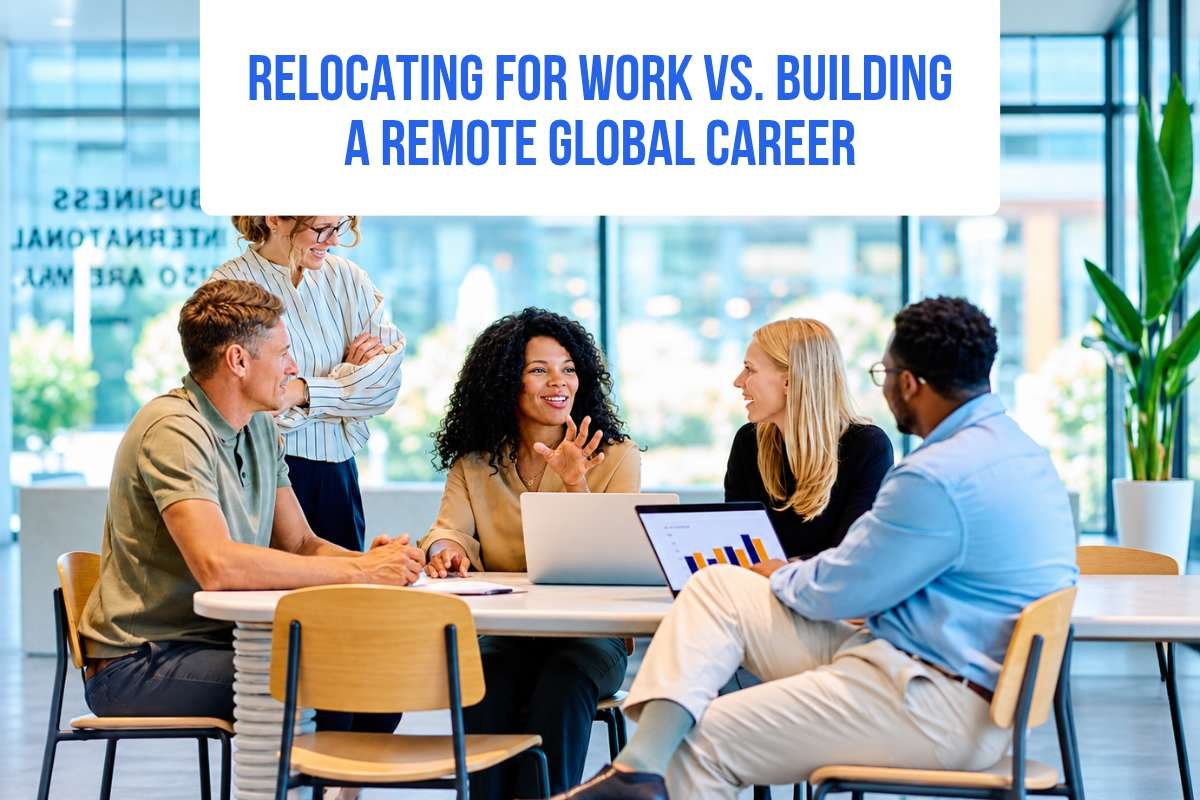
A global career no longer requires a woman to move abroad. With international employers embracing remote work, women can now pursue overseas opportunities without leaving their home country.
Still, Relocation vs. remote global career offers different trade-offs: relocation brings international exposure and leadership access, while remote work offers flexibility and continuity. LinkedIn’s 2024 Economic Graph research found that women in India made up 21.3% of remote role applications versus 18% for men, raising the question of which path better supports women’s growth, financial independence, and work-life balance.
Relocation vs. Remote Global Career: A Side-by-Side Comparison
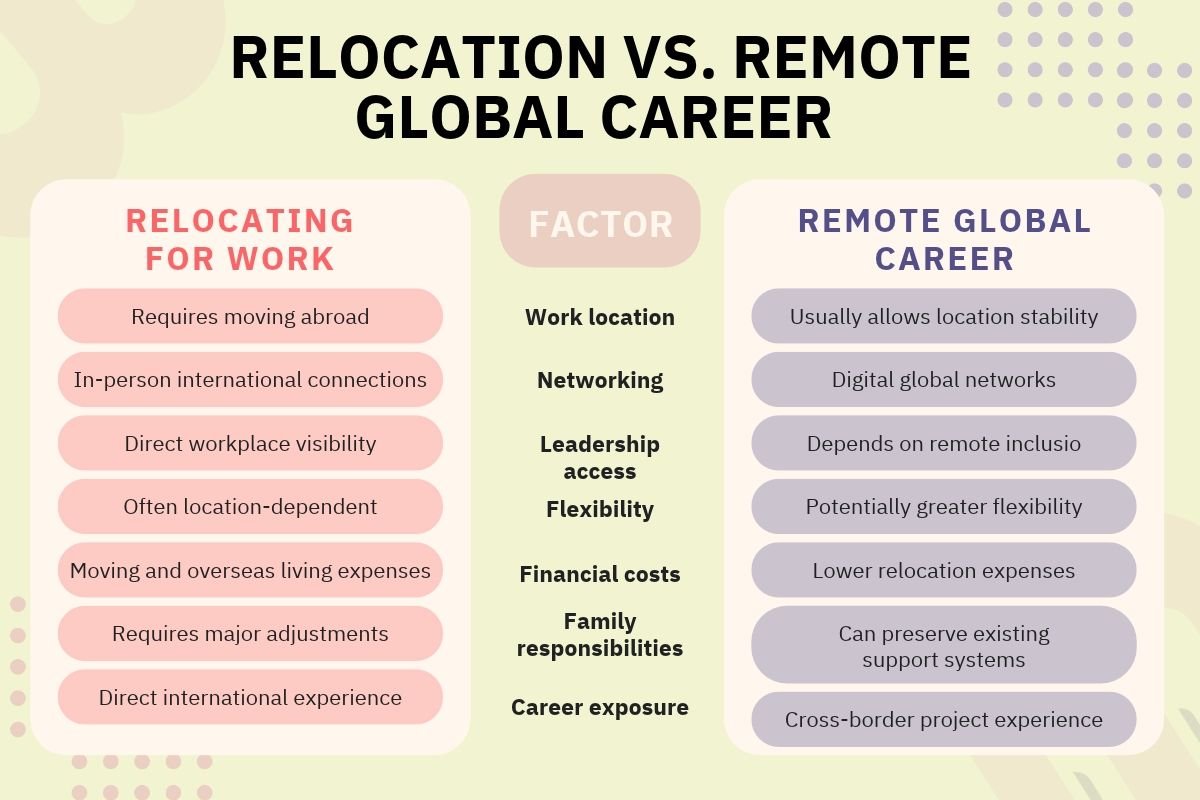
| Factor | Relocating for work | Remote global career |
| Work location | Requires moving abroad | Usually allows location stability |
| Networking | In-person international connections | Digital global networks |
| Leadership access | Direct workplace visibility | Depends on remote inclusion |
| Flexibility | Often location-dependent | Potentially greater flexibility |
| Financial costs | Moving and overseas living expenses | Lower relocation expenses |
| Family responsibilities | Requires major adjustments | Can preserve existing support systems |
| Career exposure | Direct international experience | Cross-border project experience |
Relocating for Work: Access to International Exposure and Leadership
International relocation creates global assignment opportunities for women to work directly within overseas offices, manage regional responsibilities, and develop cross-cultural leadership skills. Employer-sponsored assignments may also include relocation allowances, housing assistance, international health insurance, and tax support.
Key advantages include:
- Career Advancement: Physical presence can improve access to senior management, leadership programmes, and strategic decision-making opportunities.
- Professional Networking: Working abroad helps women build relationships with international colleagues, mentors, clients, and industry leaders.
- Cultural Exposure: Experiencing different business environments can strengthen communication, negotiation, and cross-cultural management skills.
- Financial Benefits: Some employers offer competitive overseas packages, accommodation allowances, and relocation assistance.
However, relocating for work and building a remote global career also involves considering the challenges associated with moving abroad.
Women may face visa restrictions, higher living expenses, unfamiliar employment regulations and difficulties rebuilding personal support systems. Relocation can also affect partners’ careers, childcare arrangements and family responsibilities.
Safety, healthcare access, maternity provisions and workplace harassment policies require particular attention before accepting an overseas assignment.
Building a Remote Global Career: International Opportunities Without Moving
Remote global employment allows women to work for international organizations, manage overseas clients and participate in cross-border projects without changing their country of residence.
The growing acceptance of remote and hybrid employment has also created new opportunities for women professionals.
LinkedIn Economic Graph research published in 2024 found that in India, 28% of applications submitted by women in February 2024 were for remote roles, compared with 10% of applications submitted by men. This indicates stronger interest in remote opportunities among women job seekers.
Key advantages include:
- Geographical Flexibility: Women can access international employment while remaining close to their families and existing support networks.
- Career Continuity: Remote employment can reduce career disruptions associated with relocation, particularly for women managing family responsibilities.
- Lower Relocation Expenses: Avoiding overseas moving costs, accommodation expenses, and other transition costs can support financial stability.
- International Exposure: Working with global teams helps women develop international expertise and professional connections.
- Flexible Work Arrangements: Asynchronous communication and flexible schedules can help women manage professional responsibilities alongside personal commitments.
However, relocating for work and building a remote global career both require evaluating the limitations of remote employment.
Remote women employees may experience reduced professional visibility, limited mentorship, and fewer opportunities for informal networking. Location-based salary structures can also mean that overseas employers pay employees differently according to their country of residence.
Additionally, international time-zone differences, cross-border taxation, and employment regulations can complicate remote arrangements.
Relocation vs. remote global career: What Women Should Consider

The choice between Relocation vs. remote global career becomes more complex when gender-related workplace inequalities and personal responsibilities enter the discussion.
1. Career Growth and Leadership Opportunities
Relocation can provide direct access to international leadership teams, executive mentorship, and regional management responsibilities. Remote employment offers access to global projects but may limit informal interactions and visibility during promotion decisions.
Women should evaluate whether employers provide equal opportunities for leadership development, regardless of work location.
2. Family Responsibilities and Work-Life Flexibility
Family responsibilities remain a major consideration in women’s employment decisions. According to the International Labour Organization’s 2024 estimates, approximately 708 million women worldwide were outside the labour force in 2023 because of unpaid care responsibilities.
Remote work can help women maintain professional continuity without moving away from existing support systems. However, flexibility does not automatically eliminate household responsibilities or unequal caregiving expectations.
For women, comparing Relocation vs. remote global careers, employer-provided childcare support, parental leave, and predictable working hours are important considerations.
3. Financial Independence and Employment Security
Relocation packages may include housing, healthcare, travel, and tax assistance, while remote employment can reduce relocation expenses.
However, women should compare complete compensation packages, including taxation, retirement contributions, insurance, paid leave, and social security benefits.
An international remote contract does not necessarily provide the same employment protections as a permanent overseas position.
4. Safety and Personal Autonomy
Relocating requires women to assess destination-specific safety, healthcare facilities, maternity services, and local employment protections.
Remote employment can avoid certain relocation-related risks, but women must still evaluate workplace discrimination policies, digital security, and legal protections.
Therefore, relocating for work vs. building a remote global career should be evaluated through both professional and personal considerations.
How Should Women Choose Between the Two Career Paths?
When weighing relocation against a remote global career, women should ask four key questions that shape their global mobility decisions:
1. What does your career stage require?
Early-career professionals may benefit from in-person mentorship, while experienced specialists may access international opportunities remotely. The right approach to International career moves for women depends on career stage, professional goals, and the level of international exposure required.
2. What does your industry demand?
Finance, consulting, and certain leadership positions may require physical presence, whereas technology, research, design, and digital marketing often offer remote opportunities.
3. Which option supports your financial goals?
Compare salary, living expenses, taxation, insurance, and long-term employment benefits.
4. Which arrangement supports your personal circumstances?
Consider caregiving responsibilities, family support, safety, healthcare, and preferred working environments.
Relocation may suit women seeking cultural immersion and location-dependent leadership roles. Remote employment may be more suitable for professionals prioritizing geographical stability and career continuity.
Conclusion:
Choosing between relocation vs. remote global careers is ultimately a choice between two paths to international growth. Relocation offers overseas exposure, leadership opportunities, and cultural experience, while remote work offers flexibility and continuity. Neither should limit a woman’s advancement or financial independence, and employers must ensure equal access to global assignments, fair pay, and workplace protection in both. The real measure of a global career is not how far a woman travels, but how far she progresses professionally.
FAQs
1. Is relocating for work better than building a remote global career for women?
Neither is universally better. Relocation offers international exposure and in-person networking, while remote careers offer flexibility and access to global employers without moving abroad.
2. Can women build successful international careers without relocating?
Yes. Remote jobs, consulting, and freelancing let women work with overseas employers and clients while staying in their home country.
3. What should women consider before choosing between international relocation and remote work?
Career growth, compensation, taxes, visas, healthcare, safety, and family responsibilities. Equal access to mentorship and promotions matters too.