
Key Points:
- The Barbara Rose Johns statue at the U.S. Capitol replaces Robert E. Lee, reflecting a shift toward inclusive national representation.
- At just 16, Johns led a student strike against school segregation, influencing the Brown v. Board of Education ruling.
- It highlights the lasting impact of youth-led courage in advancing civil rights.
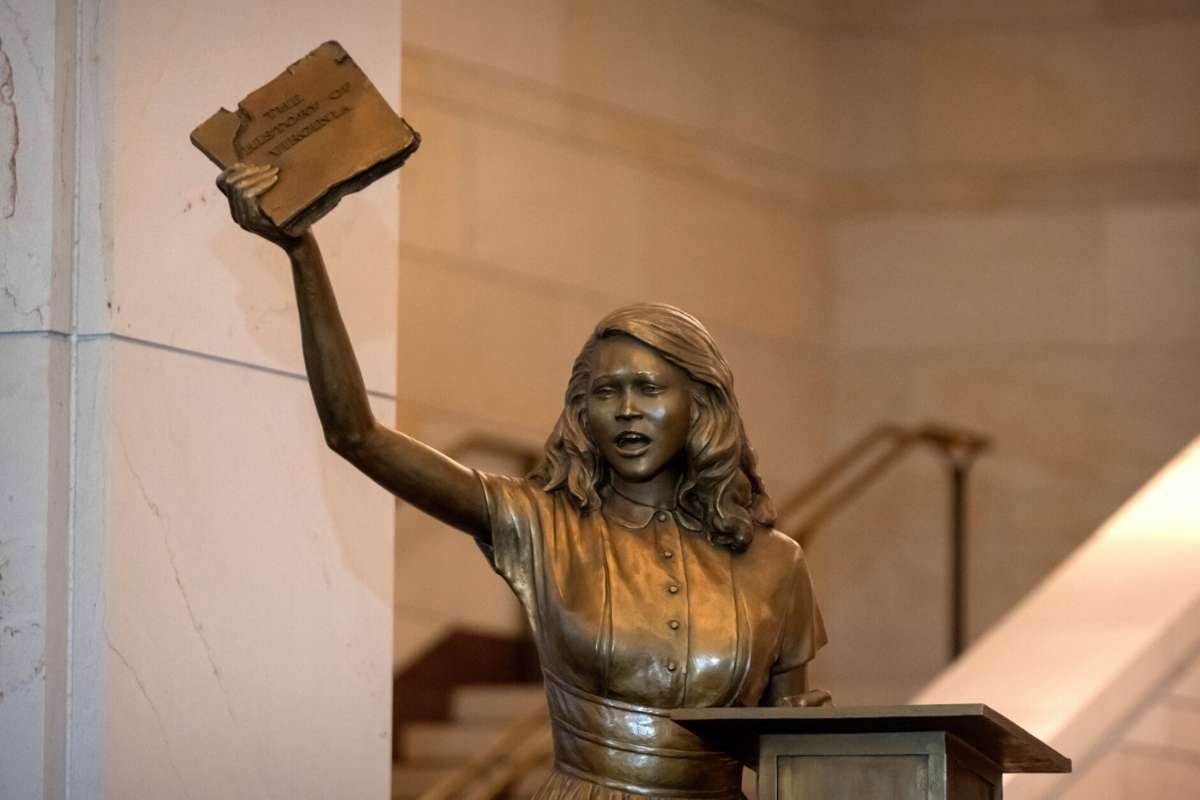
The U.S. Capitol marked a historic moment with the unveiling of a Barbara Rose Johns statue, honoring civil rights icon Barbara Rose Johns, symbolizing a significant shift in how the nation remembers its past. Installed in Emancipation Hall, the statue replaces the former monument to Confederate General Robert E. Lee, underscoring evolving efforts to present a more inclusive and representative national narrative.
The bronze sculpture depicts Johns as a determined teenager, holding a worn book beside a lectern, an artistic reflection of her role in challenging educational inequality. Inscriptions on the statue reference her words and ideals, including a biblical phrase emphasizing youth-led change. The statue represents Virginia in the National Statuary Hall Collection, joining figures who have shaped American history through leadership, courage, and conviction.
The unveiling ceremony drew lawmakers from both parties, civil rights advocates, and more than 200 members of Johns’ family. Speakers highlighted her bravery, emphasizing that her actions as a student reshaped the trajectory of civil rights in the United States. Leaders described the Barbara Rose Johns statue as a powerful reminder that lasting change can begin with ordinary individuals willing to challenge injustice.
The Courage of a Teenager Who Changed History
Barbara Rose Johns was only 16 years old in 1951 when she organized a student strike at R.R. Moton High School in Farmville, Virginia. The protest was sparked by deplorable conditions at the segregated school, where overcrowding and inadequate facilities contrasted sharply with those provided to white students.
John’s bold leadership brought national attention to the issue. The case that followed became part of the landmark Brown v. Board of Education decision, in which the U.S. Supreme Court ruled that racial segregation in public schools was unconstitutional. Although Johns did not live to see the full impact of her actions, her role proved foundational in dismantling legally sanctioned segregation.
After leaving Virginia, Barbara Rose Johns dedicated her life to education and public service, working as a librarian and raising a family. For decades, her contributions remained relatively unrecognized outside civil rights circles. The Barbara Rose Johns statue now elevates her legacy to a national stage, ensuring that future generations understand the role young voices played in advancing equality.
Redefining National Memory and Representation
The decision to replace Robert E. Lee’s statue with the Barbara Rose Johns statue reflects a broader national reckoning over whom America chooses to honor in its most prominent public spaces. Lee’s statue, which stood in the Capitol for more than a century, was removed amid growing scrutiny of Confederate symbols and their association with racial oppression.
Virginia’s choice to honor Johns signals a deliberate shift toward celebrating figures whose lives reflect democratic values, justice, and equal opportunity. The statue serves not only as recognition of past struggles but also as a statement about the principles the nation seeks to uphold today.
As visitors pass through Emancipation Hall, the presence of Barbara Rose Johns statue stands as a quiet yet powerful testament to youthful courage, moral clarity, and the enduring impact of standing up for what is right.
Visit CIO Women Magazine For The Most Recent Information.