
Key Takeaway:
- Artemis II took humans beyond low Earth orbit for the first time since Apollo.
- Earth from space reinforced unity, fragility, and shared responsibility.
- Orion and key systems performed successfully, paving the way for Artemis III.
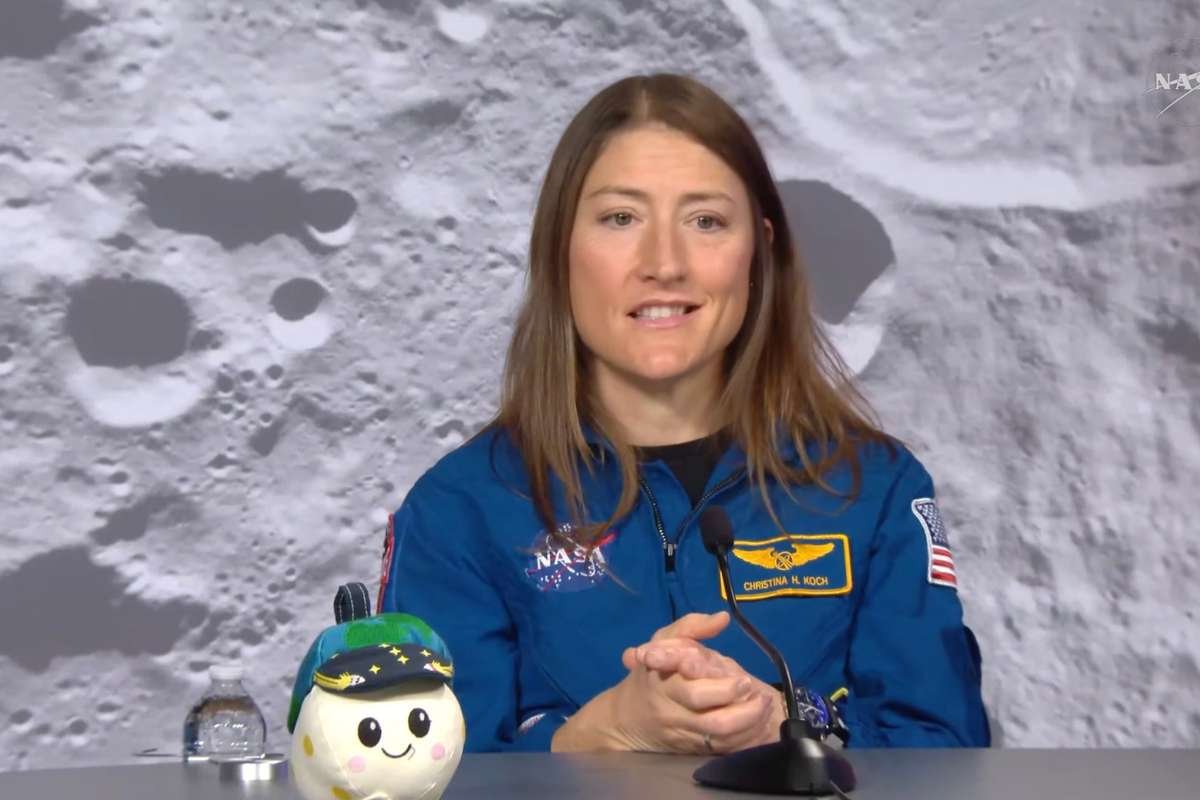
NASA’s Artemis II mission has been described by astronaut Christina Koch as a landmark moment in modern space exploration, marking the first crewed journey beyond low Earth orbit in more than five decades. The mission represents a critical step in NASA’s long-term plan to return humans to the Moon and eventually prepare for future missions to Mars.
The ten-day mission carried a four-member international crew consisting of Christina Koch, Commander Reid Wiseman, pilot Victor Glover, and Canadian Space Agency astronaut Jeremy Hansen. Together, they traveled farther from Earth than any humans have gone since the Apollo program, completing a lunar flyby that demonstrated the capabilities of NASA’s deep-space exploration systems.
Launched aboard NASA’s Space Launch System rocket and carried in the Orion spacecraft, the mission named Artemis II was designed as a comprehensive test of spacecraft performance, crew operations, and navigation systems in deep space. The spacecraft successfully executed its planned trajectory around the Moon before returning toward Earth, confirming key operational capabilities needed for future lunar landing missions.
NASA views Artemis II as a foundational mission in its broader Artemis program, which aims to establish a sustained human presence on the Moon as a stepping stone for deeper exploration of the solar system.
Christina Koch reflects on the emotional and human dimension of spaceflight
Beyond its technical success, Christina Koch has emphasized that Artemis II was an intensely personal and transformative experience. According to her reflections, the crew was largely isolated from the scale of global attention during the mission, allowing them to remain focused on operations while in deep space.
One of the most powerful aspects of the journey, Koch noted, was the perspective gained from viewing Earth from afar. Seeing the planet suspended in the darkness of space reinforced a profound sense of unity and fragility. The experience, she explained, shifted how the crew understood humanity’s shared existence and responsibility toward Earth.
Life aboard the Orion spacecraft also fostered a strong sense of connection among the crew members. Confined in a small environment for days at a time, the astronauts depended heavily on teamwork, trust, and communication to manage complex mission phases. This intense cooperation, Koch indicated, created a unique bond that extended beyond professional collaboration into a deeper emotional understanding among the crew.
The return journey to Earth was described as one of the most physically and psychologically demanding parts of the mission. The spacecraft re-entered Earth’s atmosphere at extremely high speeds before splashing down in the Pacific Ocean. After days in microgravity and isolation, the transition back to Earth’s gravity and environment was intense, marking a sharp contrast to the silence and stillness of space.
Koch reflected that the experience highlighted both human vulnerability and resilience, offering a perspective that will continue to shape her outlook on exploration and life on Earth.
Engineering achievements and the path toward future lunar missions
From a scientific and engineering standpoint, Artemis II provided NASA with essential data on spacecraft performance in deep-space conditions. The Orion spacecraft demonstrated strong operational capability throughout most phases of the mission, including navigation, life-support functionality, communication systems, and lunar flyby execution.
Engineers closely monitored how the spacecraft performed outside Earth’s protective environment, particularly during thermal exposure, propulsion maneuvers, and re-entry conditions. The data collected from these systems is now being analyzed to improve spacecraft design and ensure higher reliability for future missions.
While minor technical observations were recorded during the mission, overall performance has been considered a major success, reinforcing confidence in NASA’s deep-space architecture. The heat shield’s performance during re-entry and the spacecraft’s ability to maintain stable communication across vast distances were among the key areas of evaluation.
Artemis II also serves as a critical stepping stone toward Artemis III, which is expected to return humans to the lunar surface for the first time since 1972. That mission will be the first attempt under NASA’s Artemis program to land astronauts near the Moon’s South Pole, a region of significant scientific interest due to the potential presence of water ice.
For Christina Koch and her crewmates, Artemis II represents more than a successful test flight. It symbolizes a renewed era of human exploration, one defined by international collaboration, technological advancement, and a deeper understanding of Earth’s place in the universe.
For the latest insights, visit CIO Women Magazine.