
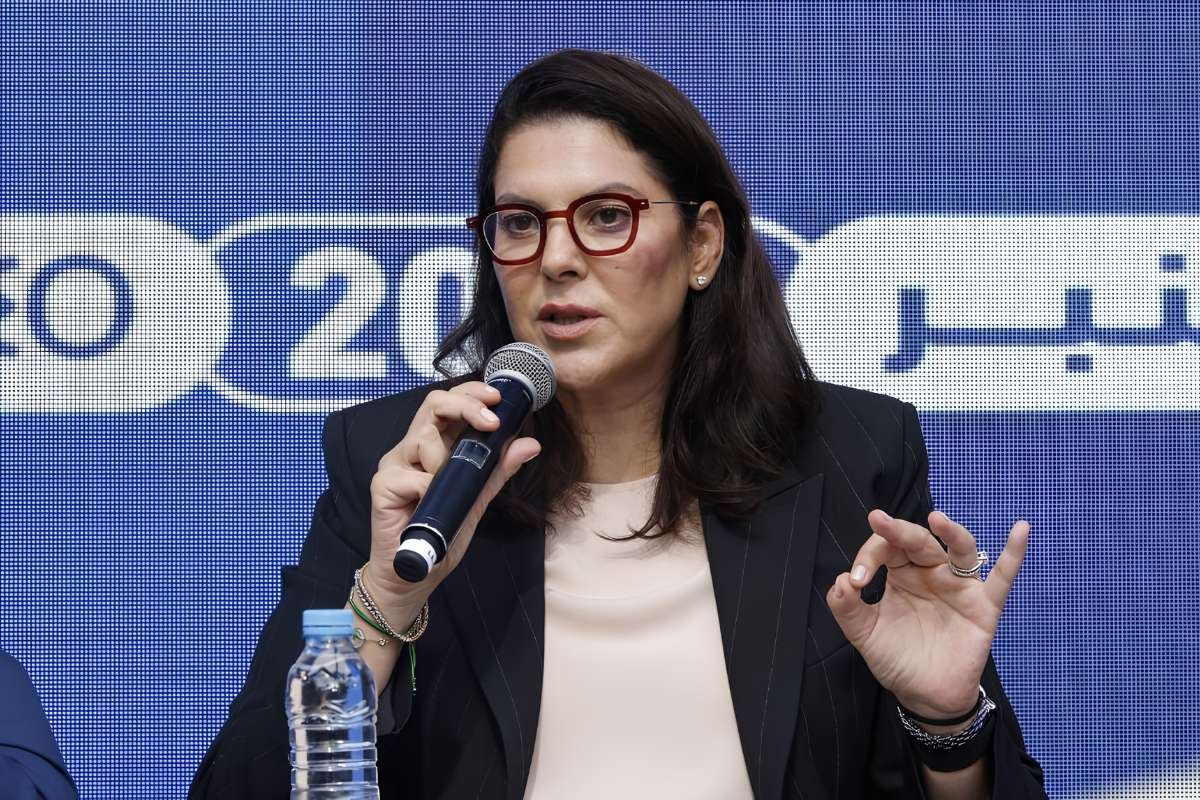
Key takeaways:
- Morocco appoints its first woman prime minister.
- Her political experience spans local and national leadership.
- Coalition building and economic priorities will shape her government.
Fatima Ezzahra El Mansouri first woman prime minister is now a historic milestone in Morocco’s political history, after King Mohammed VI appointed her on September 29, 2026, following parliamentary elections held on September 23.
The 50-year-old politician is a senior figure in Morocco’s Authenticity and Modernity Party (PAM), which emerged as the largest party in the latest parliamentary election. PAM secured 97 of the 395 seats in the House of Representatives, making it the leading political force in the new parliament. However, the party fell well short of the 198 seats required for a majority, meaning El Mansouri will need to negotiate with other political groups to form a governing coalition.
Fatima Ezzahra El Mansouri’s appointment as Morocco’s first woman prime minister represents a major development for women’s political representation in the country. Although women have held ministerial, parliamentary and local government positions in the country, no woman had previously led the Moroccan government. El Mansouri’s appointment also places Morocco among the Arab countries that have appointed women to the highest levels of government leadership.
The move comes as Morocco continues to navigate economic and social pressures while preparing for major international commitments. El Mansouri will now have to balance the symbolic importance of her appointment with the immediate demands of forming and leading a new government.
Fatima Ezzahra El Mansouri: from Marrakech mayor to national leadership
El Mansouri has built her political career through local government, parliament and national administration. Born in Marrakech in 1976, she studied law in France and initially worked in business law before entering politics.
In 2009, she became mayor of Marrakech, becoming the first woman to lead the major Moroccan city. She returned to the position following the 2021 local elections, giving her extensive experience in municipal administration and urban development.
Her political career later expanded to the national level. She entered the House of Representatives before being appointed Minister of National Spatial Planning, Urban Development, Housing and Urban Policy in October 2021.
Her ministerial responsibilities included housing policy, urban development and programmes connected with reconstruction and rehousing. She was also involved in efforts following the devastating Al Haouz earthquake in 2023, which killed more than 3,000 people and severely affected communities in the region south of Marrakech.
The experience added to her record in managing public infrastructure and development policies. Within PAM, El Mansouri has also held senior leadership positions, including a role in the party’s collective leadership.
Her rise from municipal politics to the country’s highest government office has made her one of Morocco’s most prominent political figures and a key representative of PAM’s leadership.
Coalition building and challenges ahead
As Morocco’s first woman prime minister, El Mansouri’s immediate challenge will be forming a government capable of securing parliamentary support. With PAM controlling 97 seats in the 395-member House of Representatives, coalition negotiations will be essential before the new administration can establish a stable parliamentary base.
Economic concerns will also be central to the government’s agenda. Employment, household purchasing power and public services remain important issues for Moroccan voters. Unemployment stood at 9.5% of the active population in the second quarter of 2026, highlighting the scale of the employment challenge facing the new administration.
PAM had campaigned on a commitment to create one million jobs, placing employment among the major expectations surrounding the incoming government. Creating opportunities for young people and supporting household incomes are likely to be closely watched as El Mansouri begins her term.
The government will also oversee preparations for the 2030 FIFA World Cup, which Morocco will co-host with Spain and Portugal. The tournament is expected to require continued investment in transport, infrastructure, tourism and urban development.
El Mansouri’s appointment therefore combines a historic change in Morocco’s political leadership with a demanding governing agenda. As she begins coalition negotiations and prepares to establish her cabinet, her leadership will be closely watched both for its significance as Morocco’s first government headed by a woman and for how the new administration responds to the country’s economic, social and infrastructure priorities.
Fatima Ezzahra El Mansouri’s appointment as Morocco’s first woman prime minister marks a historic change in the country’s political leadership, while her government faces significant economic, social and infrastructure priorities.