
Key Takeaways:
- The WNBA Is Becoming a Global Talent Hub
- Team USA Is Passing the Torch to a New Generation
- The Gap Between the U.S. and the Rest of the World Is Narrowing
The global spotlight shifts to Berlin as the 2026 FIBA Women’s Basketball World Cup gets underway on September 4, bringing together 16 national teams and some of the biggest names in women’s basketball. Running through September 13, the tournament represents another major moment in the rapid expansion of the women’s game, with the WNBA playing a central role in the competition.
A total of 51 current WNBA players are participating in the World Cup, representing 15 of the league’s 16 teams. Players from the WNBA will suit up for national teams including the United States, France, Australia, Spain, Belgium, Germany, China, Japan and Nigeria, demonstrating the league’s increasingly international talent base.
The tournament itself has also expanded. The 2026 edition features 16 teams, compared with 12 in previous editions, creating a broader competitive field and allowing more national programs to compete at the highest level.
For the WNBA, the international representation reflects the league’s growing influence beyond the United States. Its players have become central figures in national programs around the world, while the experience gained through international competition continues to feed into the league’s increasingly global identity.
The New York Liberty leads the league in World Cup representation, while teams across the WNBA have players competing for their respective countries. The Chicago Sky is the only WNBA team without a player at the tournament.
Team USA enters a new era
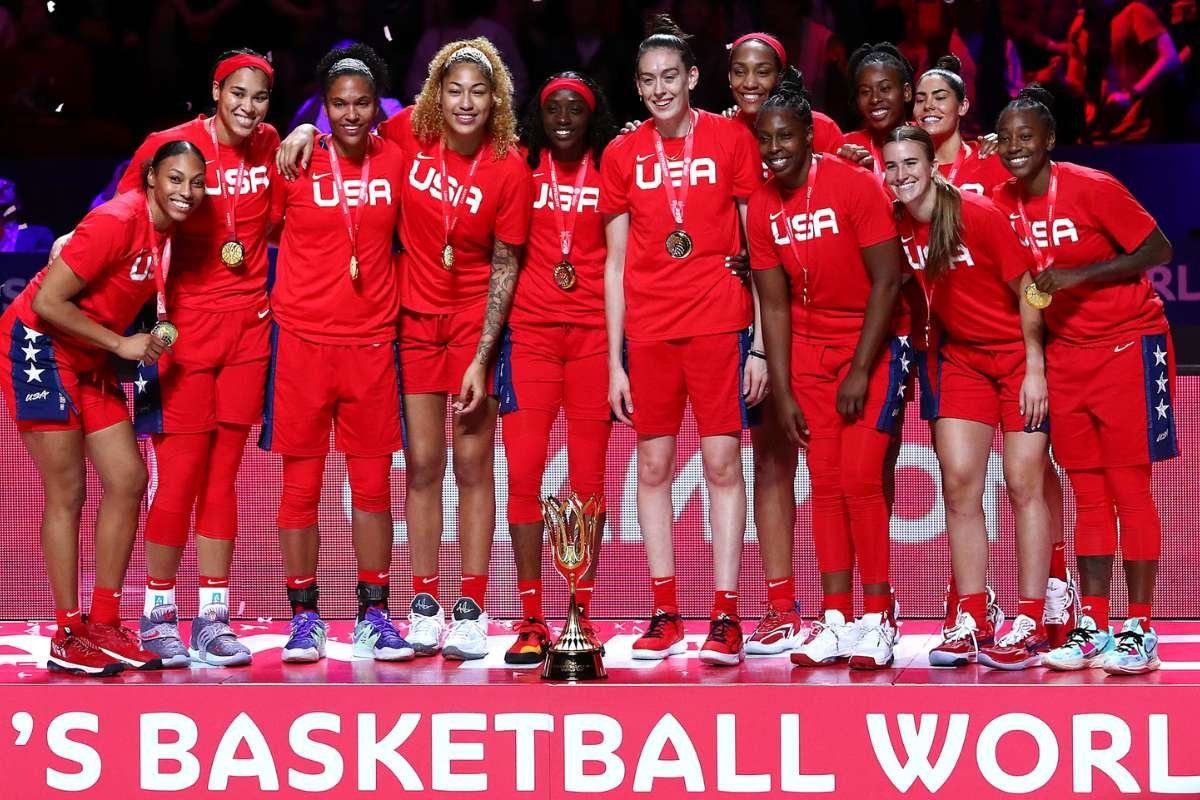
The United States arrives in Berlin with a familiar objective: winning another World Cup title. The Americans are seeking their fifth consecutive FIBA Women’s Basketball World Cup championship, extending a remarkable period of dominance in international basketball.
However, the team enters the tournament under very different circumstances from those originally expected. Four-time WNBA MVP A’ja Wilson and Kelsey Plum were forced to withdraw from the roster for health reasons. Plum is also set to miss the remainder of the WNBA season because of a lower-leg injury.
Their absence has significantly altered the balance of the American roster. Wilson has been one of the defining players of the modern women’s game, while Plum has extensive experience with Team USA and two previous World Cup gold medals.
The changes have opened the door for a younger generation of American stars. Sonia Citron and Kiki Iriafen were added to the roster following the withdrawals, joining a team that already includes Caitlin Clark, Paige Bueckers, Angel Reese and Aliyah Boston.
Clark and Bueckers are particularly notable additions. Both are making their senior World Cup debuts, placing two of the most recognizable young players in women’s basketball on one of the sport’s biggest international stages. They will share the roster with established veterans including Breanna Stewart, Napheesa Collier, Jackie Young, Kahleah Copper and Chelsea Gray.
The transition gives Team USA an unusual combination of championship experience and emerging talent. It also provides an early indication of how the program could evolve as it looks toward the next Olympic cycle.
2026 FIBA women’s basketball world cup
Despite the changes, Team USA remains the tournament favorite. But the gap between the United States and the rest of the world is narrowing, making the 2026 competition one of the more closely watched editions in recent years.
France, Belgium and Spain are among the leading challengers. France enters with additional motivation after its narrow defeat to the United States in the 2024 Olympic final, while Belgium brings veteran leadership through Emma Meesseman. Spain, meanwhile, is looking to return to the medal conversation. Australia also remains one of the established forces capable of challenging for the title.
The tournament format adds importance to the opening games. The 16 teams are divided into four groups of four. Group winners advance directly to the quarterfinals, while teams finishing second and third must navigate an additional qualification round. The quarterfinals are scheduled for September 10, followed by the semifinals on September 12 and the final on September 13.
For the WNBA, the 2026 FIBA Women’s Basketball World Cup is more than a break in the domestic calendar. The presence of dozens of its players across national teams highlights the league’s growing role in shaping women’s basketball worldwide.
For Team USA, the tournament carries an additional significance. With established champions handing greater responsibility to Clark, Bueckers, Reese, and other emerging stars, Berlin could mark the beginning of a new era for American women’s basketball, one that will be tested against an increasingly competitive global field.
With established champions handing greater responsibility to Clark, Bueckers, Reese, and other emerging stars, the 2026 FIBA Women’s Basketball World Cup could mark the beginning of a new era for American women’s basketball.