
Many smart people feel like a fake at their job. This deep doubt can hurt your daily drive. But you can break this loop. This post shows you how to handle imposter syndrome at work with clear steps. Learn to track your wins and build your trust. You deserve to thrive. Read on to learn more.
I know how it feels when you think you do not belong. Many smart people feel like a fraud at their job. This feeling has a name that we all know well. I want to show you how to handle imposter syndrome at work.
Studies show that 70% of people feel this way at times. It hits hard, and it makes you doubt your own skills. This heavy doubt hurts your daily drive and lowers your total output. You might pass on a big promotion because you feel small. It can drain your peace and hurt your mind every day.
You are not alone in this fight to feel good. In this post, I will share clear steps to help you. You will learn to see your worth and build your trust. Let us dive in and fix this roadblock right now.
What is imposter syndrome at work?
Psychologists Pauline Clance and Suzanne Imes first named this psychological pattern. This mental cycle makes you feel like a total fake at your job. Low trust goes away when you finish a hard task well. This pattern makes you think that you just got lucky instead. It is a mental habit and not a real illness of the mind.
Top experts and high achievers face this roadblock the most. People who prefer to work alone also experience this deep doubt. Systemic bias and exclusive cultures can increase these bad feelings, too. Elitism and tough spaces make you judge your own skills fast.
I see this loop happen when new tasks come your way. You must know why it happens before you can stop it. Let us look at what triggers this deep doubt next.
7 signs you may be experiencing imposter syndrome
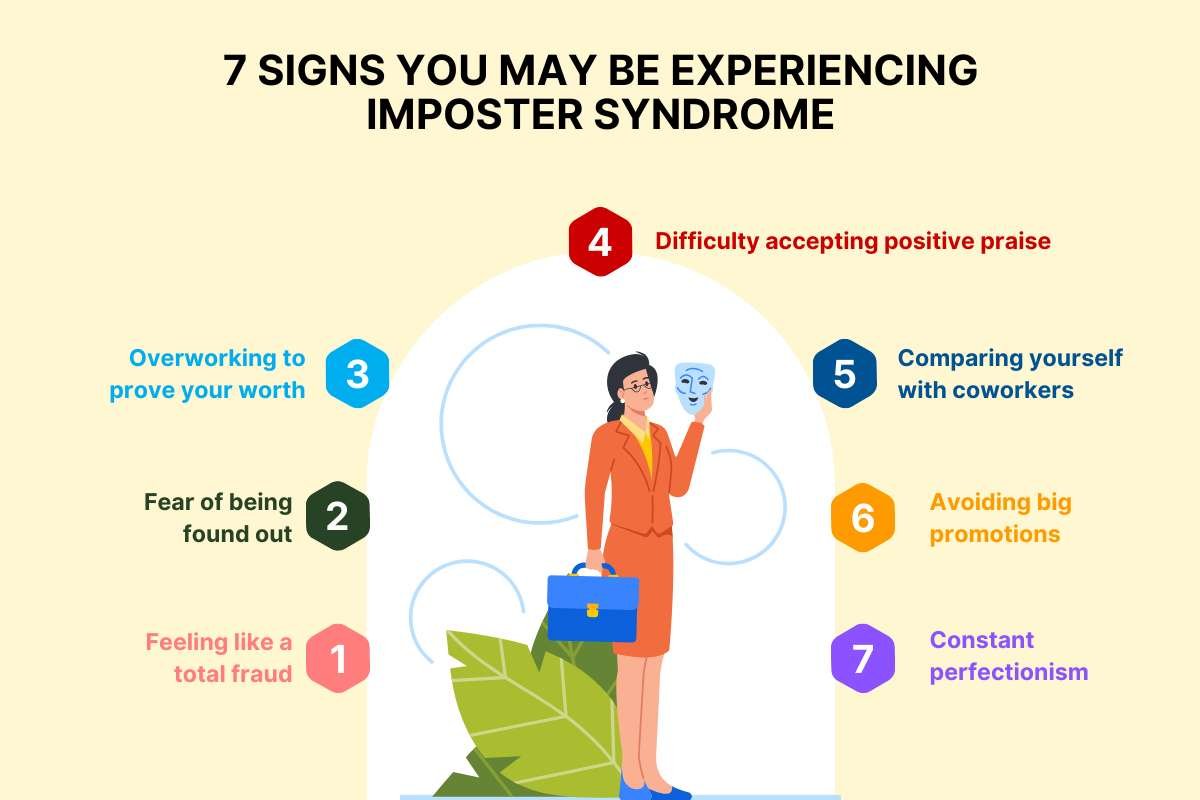
I face these same tough signs when I sit down to write. The traits below show how this loop holds your career back.
- Feeling like a total fraud: You think you do not earn your place on the team. You view your big wins as just luck or good timing.
- Fear of being found out: You live in constant worry that your boss will see the truth. You expect a sudden call that ends your whole job.
- Overworking to prove your worth: You stay late and take on too many tasks every day. This stress leads to burnout and hurts your health.
- Difficulty accepting positive praise: You brush off kind words and focus only on your flaws. This habit makes you miss how great you truly are.
- Comparing yourself with coworkers: You think everyone else is smart, while you lag. This view creates a false wall between you and your friends.
- Avoiding big promotions: This sign halts your career growth more than all the rest. You turn down new roles because you fear a new test.
- Constant perfectionism: You demand flawless work from your own hands every single time. One small mistake feels like a huge defeat to your name.
These habits block your path and keep you in one place. We need to look at how we can beat them.
What causes imposter syndrome at work?
See, it is very hard to spot the root of this loop. Multiple factors feed into how to handle imposter syndrome at work.
1. Toxic workplace culture
Bad bosses and constant criticism crush your inner trust each day. This harsh vibe makes you expect blame for every small task. You start to scan the room for threats instead of doing your best work.
2. High perfectionism
You think that a tiny slip means you are a failure. This rule makes even a small error feel like proof of fraud. You set a bar so high that no human can ever reach it.
3. New job or promotion
A new role forces you to learn new skills very fast. The steep shift makes you feel like you do not belong yet. You worry that they picked the wrong person for the slot.
4. Lack of representation
You might not see anyone else like you in the room. This gap makes you think the space is not for you. You feel the weight to speak for your whole group.
5. Childhood pressure
High grades were the only thing that got praise in the past. Now you tie your whole worth to your job output. You feel you must be first just to be safe.
6. Social comparison
You look at the top wins of others on your team. This view makes you think your own work is too slow. You miss the fact that they have low moments too.
These causes form a deep trap that keeps you from your goals. Let us look at how to break this loop next.
How to handle imposter syndrome at work?
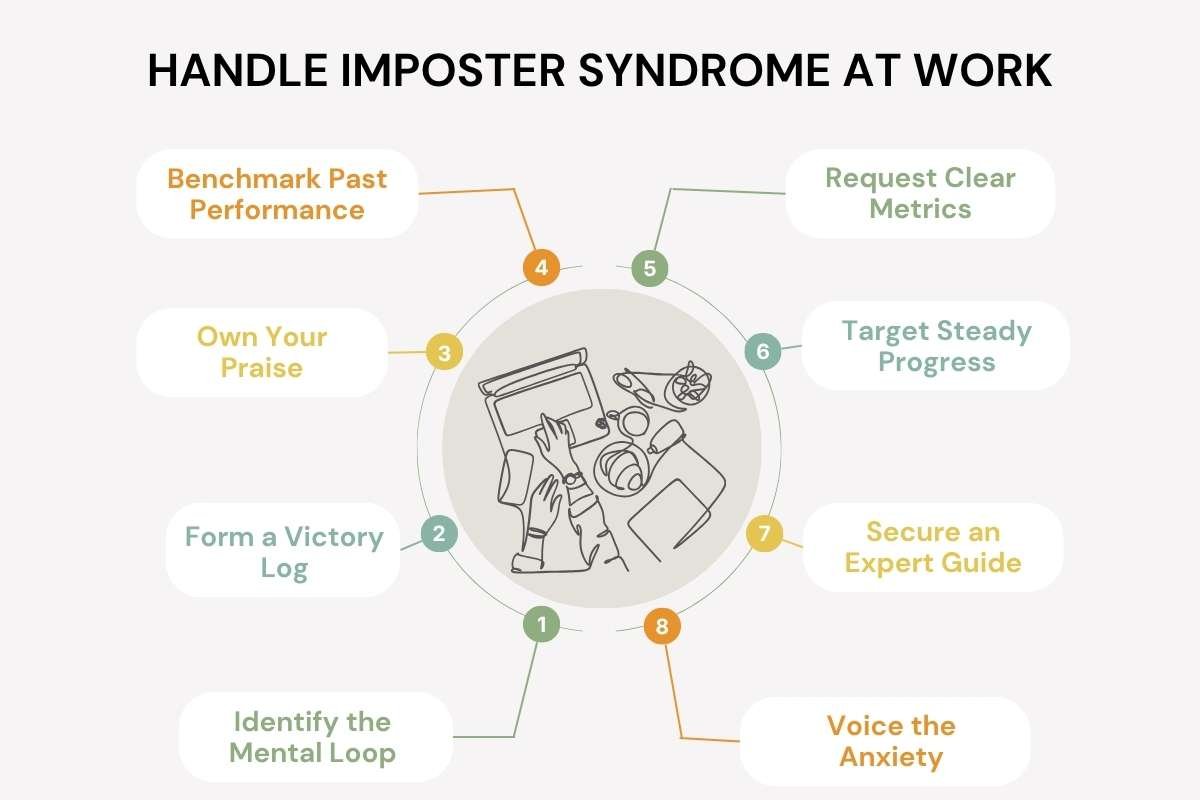
Actionable steps can break the mental cycle that keeps your career stuck. The following framework provides concrete tools to reshape your daily work life.
1. Identify the mental loop
Catch the voice of self-doubt the exact second it starts in your mind. This method separates factual reality from the false narratives that trigger panic. For example, a tight deadline might make you feel completely unfit for your role.
- Step One: Use the “Fact vs. Feeling” technique by drawing a line down a page. Write your worry on the left and the physical proof on the right.
- Step Two: Set a phone timer for two minutes to let the anxious thought pass without action.
2. Form a victory log
Track every single win, positive comment, and completed task in one place. Concrete data serves as hard proof when your mind tries to lie to you. For example, look back at the complex budget sheets you built last quarter.
- Step One: Create a private email folder called “Wins” to store kind notes from clients.
- Step Two: Log your top three daily tasks in a spreadsheet every Friday afternoon before you log off.
3. Own your praise
Accept kind words from managers without using luck or timing as an excuse. Internalizing positive feedback trains your brain to accept your true worth and talent. For example, simply reply with a polite thank you when someone commends your work.
- Step One: Say “Thank you, I put a lot of effort into that project” to match the compliment.
- Step Two: Write down the praise in your log to read when you have a tough week.
4. Benchmark past performance
Measure your current skill level only against where you stood one year ago. This practice highlights personal growth instead of forcing a race with other people. For example, observe how much faster you resolve complex client issues these days.
- Step One: Review your old performance goals from last year to see how many you hit.
- Step Two: Make a list of three tools you did not know how to use twelve months ago.
5. Request clear metrics
Gather direct data about your output rather than guessing your standing on teams. Facts eliminate the vague anxiety that fuels the fear of getting fired. For example, ask a manager if your weekly report meets the company standard.
- Step One: Ask your boss for three specific goals for your role during your next chat.
- Step Two: Use a shared dashboard to track your weekly sales numbers against the team average.
6. Target steady progress
Trade the trap of flawless results for consistent and reliable execution every day. Dropping impossible goals removes the constant stress of waiting for a minor error. For example, focus on delivering a solid draft rather than a perfect piece.
- Step One: Set a strict time limit of one hour to finish your first rough draft.
- Step Two: Share a project when it is eighty percent done to get early team feedback.
7. Secure an expert guide
Partner with a senior leader who can normalize common workplace struggles and doubts. Hearing seasoned professionals talk about past errors helps demystify the path to success. For example, a mentor can recount a time they mismanaged a major product launch.
- Step One: Send a brief note to a senior peer to ask for a monthly chat.
- Step Two: Ask them to share the biggest mistake they made early in their career path.
8. Voice the anxiety
Discuss these secret pressures with a trusted coworker or outside professional peers. Sharing the burden out loud strips away the deep shame of feeling like a fake. For example, a close desk neighbor might admit to having identical workplace fears.
- Step One: Tell a close work friend about one specific task that makes you nervous.
- Step Two: Join a local peer group for professionals in your field to talk about growth.
These strategic habits shift your focus back to tangible goals and real growth. Let us conclude with some final thoughts on managing your professional path.
Read More: How to Overcome Impostor Syndrome in Business?
Common mistakes that make imposter syndrome worse
Certain daily habits can amplify self-doubt and stunt your career path. Avoid these critical missteps to protect your professional growth over time.
- Moving the Goalposts: You finish a tough task, but immediately claim you could have done better. This black-and-white thinking trains your brain to treat solid wins as failures. Over time, you stop celebrating milestones, which completely drains your motivation and joy.
- Avoiding New Challenges: You turn down presentations or high-level jobs to shield yourself from critique. Dodging these spots prevents you from building new skills and expanding your network. This choice locks you into junior roles and stalls your long-term earnings.
- Seeking Constant Validation: You rely on non-stop praise from colleagues to feel safe at your desk. This habit makes your peace dependent on external opinions rather than your own data. Eventually, you lose the drive to make independent decisions for your team.
When should you seek professional help?

Persistent self-doubt can eventually compromise your physical and emotional well-being. Recognizing when to reach out for support protects your long-term health.
Signs you need support
Constant stress that leads to insomnia signals a need for outside guidance. Severe anxiety can disrupt your daily focus and trigger profound physical burnout. You might notice that negative thoughts prevent you from completing routine assignments.
Strength in guidance
Partnering with a career coach or licensed therapist is a sign of true strength. This step shows a commitment to growth rather than a professional failure. Experts provide objective tools to help you manage these heavy emotional weights.
These resources can assist you as you navigate complex career challenges. Let us look at some final thoughts to wrap up this blog.
Conclusion:
This psychological pattern affects countless talented people across every single industry. Experiencing these deep doubts does not mean you lack real skill or talent. True confidence builds over time when you take steady, decisive action at your desk. You can choose to practice small habits every day to reclaim your peace. These minor changes are exactly how to handle imposter syndrome at work.
You deserve to celebrate your hard wins and own your place on the team. Trust your background and the unique knowledge you bring to the table. Step forward with courage and let your work speak for itself today. You possess everything necessary to thrive and grow in your chosen career path.
People also ask
1. How long does imposter syndrome last?
This psychological pattern does not have a set timeline and can reappear during major career transitions. It can fade into the background when you establish steady daily habits to manage your thoughts.
2. Is imposter syndrome the same as low self-esteem?
No, low self-esteem impacts how you view your entire self across all parts of life. This specific syndrome targets your achievements and makes you feel like a fake despite clear success.
3. How to handle imposter syndrome at work every day?
You can practice how to handle imposter syndrome at work by logging one win before you head home. Reviewing this concrete data daily keeps your focus on actual facts instead of vague fears.