

Good bosses care for their teams. They hear each voice. This shows inclusive leadership characteristics. True trust helps a firm grow. It brings fresh thoughts to the room. Women owners build big networks fast. Staff stay when they feel safe. This keeps your whole brand strong. Do not guide teams with fear.
Many teams fail because great workers feel left out on the job. When employees hide their true selves, good ideas die quickly. That is why we must study inclusive leadership characteristics right now.
This approach means we hear and value every voice on your team. It helps companies grow and brings fresh thoughts to the table. Modern workplaces need this major shift to survive in our world.
We can build a much better workplace for all your people. We will learn the best ways to connect with your peers. We can fix the issues that hold most businesses back today.
The core characteristics of inclusive leadership are explained
Inclusive leadership Characteristics are the actions and traits that make all workers feel safe on the job. These distinct behaviors help diverse people feel valued and heard at work. This clear mindset empowers your teams to share their best ideas every day.
The main traits change workplaces for the better:
- Empathy – Great managers care about the real feelings of their peers.
- Active listening – Good leaders hear every voice with a clear, open mind.
- Fair decision-making – Smart bosses give each person an equal chance to grow.
- Cultural intelligence – Diverse teams respect the distinct backgrounds of all workers.
- Open communication – Clear updates share vital news with trust and total clarity.
- Accountability – Responsible folks take the blame for their own errors at work.
- Collaboration – Proud staff members join hands to hit big goals together.
These core habits change how groups work together on hard tasks. True safety helps staff members work with much more joy. Teams solve tough business problems much more quickly now. Fresh trust brings a huge jump in creative ideas from everyone. Brands win because every worker gives a great effort each day.
This joint growth leads to steady success for the whole firm. We must practice inclusive leadership characteristics to keep our top talent.
The 7 characteristics that define inclusive leadership
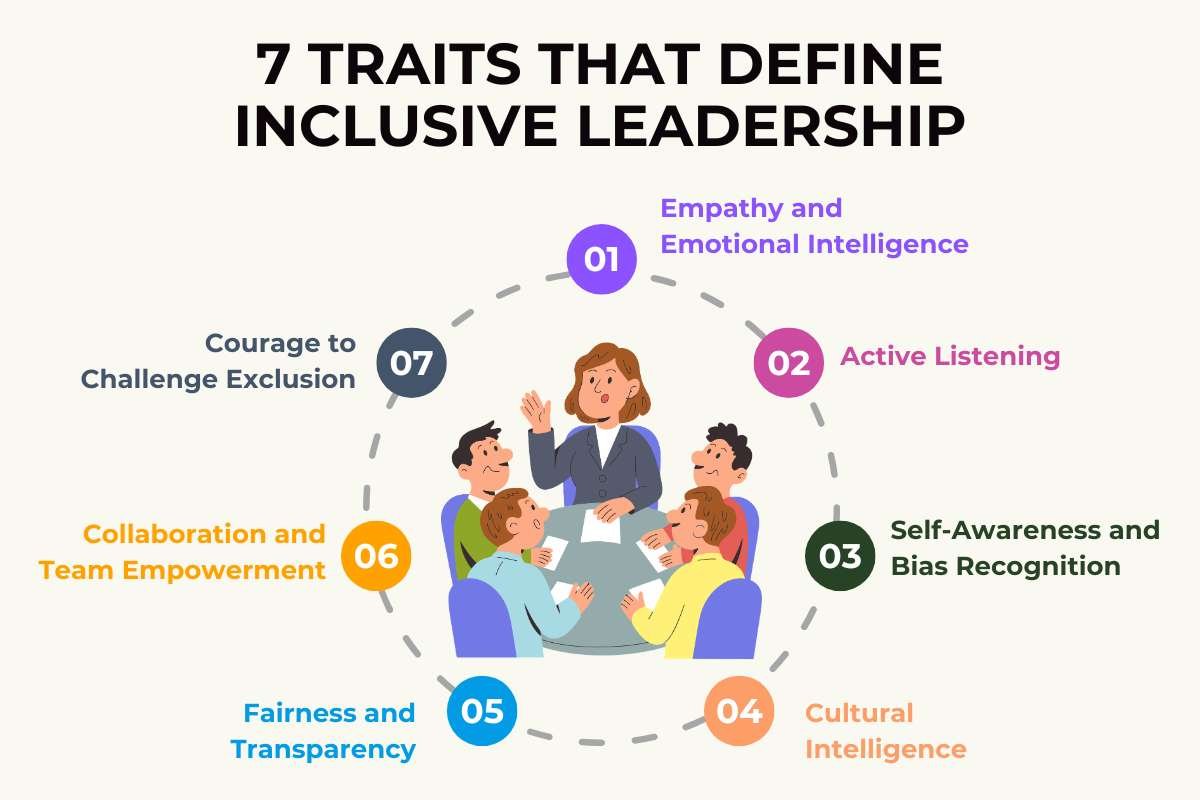
The six signature traits of inclusive leadership from major research reports show us how to guide teams well today. These models highlight key mindsets that make a workplace strong.
1. Empathy and emotional intelligence
Leaders must know how their staff feels on the job. We should see how personal issues impact the daily work of peers. This care helps build deep trust across the whole firm.
- Workers stay at their jobs much longer when managers show real care.
- Teams feel safe sharing their goals with their bosses each week.
For example, a great boss supports a worker through a tough move to a new city.
2. Active listening
Good managers hear every single voice without cutting anyone off during talks. This habit helps us learn from distinct points of view at meetings. It breaks down walls that stop clear talk in the office.
- Staff members share fresh ideas because they know people will listen.
- We make fewer errors when everyone understands the project plan.
For example, directors seek feedback from all staff levels before they alter a big company policy.
3. Self-awareness and bias recognition
True inclusive leadership characteristics require you to spot your own blind spots. We must check your old assumptions about people quite often. This focus leads to steady personal growth for every boss.
- Hiring choices become fair when you test your first thoughts.
- We build a balanced workforce by judging staff on real results.
For example, a panel reviews its hiring choices to ensure absolute fairness for all candidates.
4. Cultural intelligence
Modern firms require us to respect different cultures at all times. Managers must know how to guide global teams across many time zones. This skill makes cross-cultural talk smooth and clear for everyone.
- International workers feel like they belong to the main corporate home.
- Our brand wins new global markets by respecting local customs.
For example, a director changes their management style when working with overseas offices.
5. Fairness and transparency
We must give equal options to every single person on the staff. Decision-making must stay consistent so folks know they have a fair shot. Transparent paths for promotions keep the workplace honest.
- Staff trust increases when promotion rules are clear to see.
- Pride grows because workers know hard work leads to real rewards.
For example, a firm posts exact scoring rules for all yearly job reviews.
6. Collaboration and team empowerment
We should share the power of choice with the entire workforce. This step encourages all people to join in on big tasks. It creates a sense of true ownership over the final output.
- Small groups solve tough problems much faster when they work as one.
- Innovation thrives because multiple departments share their best skills.
For example, a company forms a mixed team from three separate fields to launch a product.
7. Courage to challenge exclusion
Brave leaders speak up when they notice unfair treatment in the room. We must speak out against bad practices that hurt our peers. This action forces total accountability from everyone in the firm.
- A culture of respect grows when we stop bad behavior fast.
- Marginalized workers feel safe because leaders protect their rights.
For example, a manager corrects a biased comment right during a big board meeting.
You must practice these inclusive leadership characteristics to help your modern teams thrive. True business growth happens when we live these values out every single day.
Read More: Inclusive Leadership Theory
Why inclusive leadership matters for women entrepreneurs?
Women business owners achieve massive goals when they use the right management tools. Let us look at how these smart choices change firms.
1. Creates stronger business networks
An open approach helps us build great relationships with many distinct firms. We can form solid corporate partnerships when we value all points of view. Joint projects thrive because people want to work with supportive owners.
2. Attracts diverse talent
Smart hiring plans improve when a company welcomes all kinds of workers. Folks stay at their jobs much longer when they feel respected. Your staff retention rates go up when managers treat everyone fairly.
3. Drives innovation
Different life backgrounds help your people create much better product ideas. In fact, inclusive firms are 73% more likely to gain innovation revenue. We solve tough company problems faster when multiple minds share their thoughts.
4. Improves customer understanding
We can connect with many distinct global audiences on a deeper level. Your staff mirrors the market, so we know what buyers need. This clear insight helps us build products that sell very well.
5. Builds sustainable growth
True workplace safety leads to higher employee engagement numbers every single year. Your company culture becomes a major strength that draws in big profits. We must study inclusive leadership characteristics to ensure our long-term business success.
What is the difference between a traditional leader and an inclusive leader?
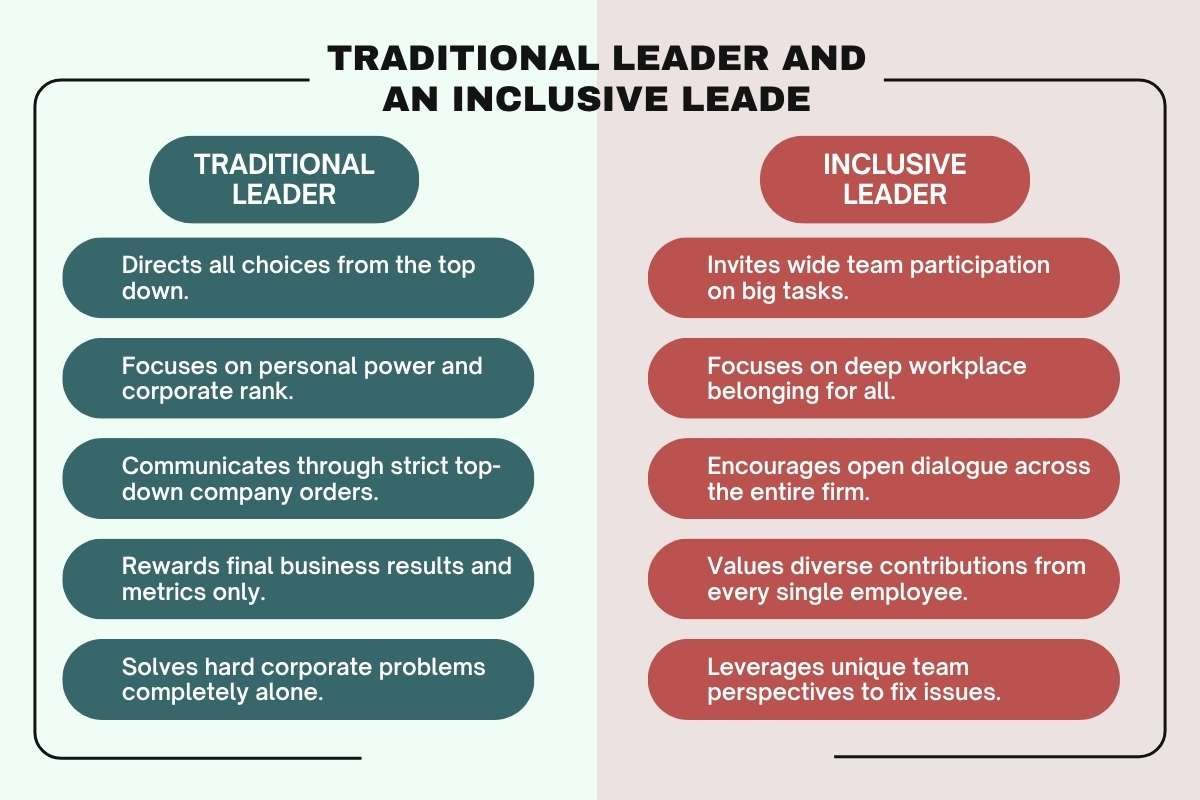
The way bosses guide staff has shifted a lot over the years. You can look at this simple table to see how management styles contrast in the modern workplace.
| Traditional Leader | Inclusive Leader |
| Directs all choices from the top down. | Invites wide team participation on big tasks. |
| Focuses on personal power and corporate rank. | Focuses on deep workplace belonging for all. |
| Communicates through strict top-down company orders. | Encourages open dialogue across the entire firm. |
| Rewards final business results and metrics only. | Values diverse contributions from every single employee. |
| Solves hard corporate problems completely alone. | Leverages unique team perspectives to fix issues. |
For instance, an old-school manager assigns a big project without asking for input. A modern boss brings the entire crew together to map out the strategy as a unit.
True effectiveness today depends on how well you make your people feel seen. You cannot just pass down work orders and track daily progress reports anymore. Growth happens when workers know their specific background adds real value to the company’s mission.
Managers must utilize inclusive leadership characteristics to build a safe environment where everyone thrives. This strategy keeps your workforce happy and keeps your brand strong in a fast world.
Daily inclusive habits and behaviors leaders should practice
Daily actions shape the culture of an office in a big way. You can practice these simple habits to make your team feel safe and respected.
- Invite quieter voices into discussions – This step ensures shy workers share their ideas during meetings.
- Give equal speaking opportunities – You stop dominant folks from taking over the room with this rule.
- Acknowledge contributions publicly – Praising good work openly boosts morale and builds trust fast among staff.
- Seek feedback regularly – Asking for honest thoughts shows your team that you value their perspective.
- Use inclusive language – Clear words make everyone feel welcome, no matter what their background is.
- Challenge personal assumptions – Stopping to check your own views prevents unfair choices on projects.
- Encourage collaboration – Mixing distinct people on tasks brings fresh solutions to tough business problems.
- Support flexible work needs – Helping staff balance life issues keeps them happy and productive at work.
- Mentor diverse employees – Guiding underrepresented talent creates a fair path to promotions within the company.
- Continue learning about inclusion – Reading new updates keeps your management style sharp for a changing world.
These small habits turn abstract goals into real workplace results every day. Your team stays strong because people know you care about their success.
Why inclusive leadership fails? Common pitfalls that undermine inclusive leadership
Even the best workplace programs can fail without the right approach. Organizations often make critical errors that stop progress and hurt staff morale.
1. Lack of authentic commitment
Many bosses talk about change but never alter their daily habits. To fix this issue, leaders must match their words with real corporate actions.
2. Unconscious bias
Hidden assumptions often guide promotions and the choice of project assignments behind the scenes. Firms should use objective data metrics to check every major staff choice.
3. Poor communication
Employees frequently do not understand the core goals of new corporate policies. Clear updates and open meetings will fix this common communication gap fast.
4. Resistance to change
Teams often prefer familiar old routines and fight against new management styles. Managers can solve this struggle by rewarding workers who adopt fresh methods.
5. Lack of accountability
Programs stall when a firm lacks clear penalties for bad workplace behavior. Executives must set strict rules to keep every team member honest today.
6. Tokenism
Hiring for looks without giving real power creates a very toxic office space. True progress happens when diverse workers hold actual decision-making roles at work.
According to a vital 2024 study, bad management can backfire on a firm. The research shows that poor execution creates a double-edged sword effect on teams. It can trigger high psychological entitlement where staff expect rewards without hard work.
This mindset leads directly to work withdrawal behavior among once-good employees. To avoid this trap, bosses must balance high tolerance with clear performance goals.
How to measure success: key KPI list
Tracking data helps you see how well your inclusion plans work. You can monitor these metrics to check your team’s growth.

- Retention rates – High scores show that diverse workers stay with your firm.
- Promotion balance – Fair stats mean all people get a real shot at moving up.
- Employee surveys – Regular polls tell you if staff members feel safe at work.
- Meeting participation – Quiet workers sharing ideas proves your team culture is healthy now.
Conclusion:
Building a great firm requires a true focus on inclusive leadership characteristics. Traits like deep empathy, active listening, and fair choices make workplaces thrive. These core habits bring significant business value to organizations today.
Women entrepreneurs can utilize these tools to grow strong global networks. Safe offices attract top talent and spark a wave of fresh innovation. Your brand wins when every worker feels valued and heard on the job.
We can look forward to a bright future for diverse corporate teams. True success belongs to managers who support their staff each and every day.
People also asked
1. How does inclusive leadership improve workplace performance?
It creates high psychological safety, so employees share their best ideas fast. This trust sparks innovation and boosts overall company profits each year.
2. Can inclusive leadership be learned?
Yes, any boss can build these skills through steady daily practice. You just need to check your own biases and listen to your peers.
3. Why is inclusive leadership important for women entrepreneurs?
This management style helps women owners build vast business networks very fast. It also draws top talent to small firms and improves customer connections.
4. What are the most important inclusive leadership characteristics?
The top traits include active listening, empathy, and strong cultural intelligence. These behaviors help managers build trust with diverse workers on their teams.
5. What is the biggest challenge in becoming an inclusive leader?
Most managers struggle to spot their own hidden or unconscious biases at work. Overcoming old corporate habits requires total honesty and constant self-improvement daily.
Thank You For Reading!
See more
Inclusive Leadership vs Servant Leadership