

Inclusive leadership has become a critical business capability, particularly for women entrepreneurs navigating increasingly diverse and dynamic workplaces. By fostering fairness, psychological safety, and collaboration, inclusive leaders drive innovation, improve team performance, and create stronger opportunities for growth. This article examines the principles, benefits, and practical frameworks of inclusive leadership, highlighting how women leaders can leverage inclusion to build resilient, high-performing organizations and achieve long-term business success.
Inclusive leadership is no longer a soft skill; it is a measurable business advantage. According to McKinsey research, companies in the top quartile for gender and ethnic diversity are 35% more likely to outperform their competitors in profitability. Yet, despite this, less than 30% of employees globally feel fully included at work, highlighting a major leadership gap.
In today’s diverse workforce, leadership is not just about managing people; it’s about ensuring every voice is heard and valued. Inclusive leaders consistently drive stronger innovation, better decision-making, and higher employee engagement by reducing bias and unlocking diverse perspectives.
For women entrepreneurs especially, inclusive leadership plays a critical role in breaking structural barriers and building equitable, high-performance teams. As workplaces become more global and complex, inclusion is shifting from being a value-driven idea to a data-backed driver of growth, performance, and long-term success.
What is inclusive leadership?
Inclusive leadership is a leadership approach where leaders ensure that people of all backgrounds feel valued, heard, and able to contribute meaningfully in decision-making and growth.
It is not just a cultural ideal; it is backed by data. Deloitte reports that inclusive leadership can improve team performance by up to 17% and decision-making quality by 20%. Gallup also finds that employees who feel included are 3.5x more likely to be engaged, directly boosting productivity and retention.
Unlike traditional leadership that relies on hierarchy and uniformity, inclusive leadership focuses on psychological safety and openness. Google’s Project Aristotle identified psychological safety as the top driver of high-performing teams.
At its core, inclusive leadership drives a simple outcome: when people feel they belong, they perform better. This makes it a critical capability in today’s diverse and global workplaces.
Why does inclusive leadership matter for women entrepreneurs?

Inclusive leadership is especially critical for women entrepreneurs because it directly impacts access, growth, and long-term sustainability in business environments that still show measurable gender gaps.
Despite progress, women-led businesses receive only about 2.3% of global venture capital funding, according to industry reports. This reflects a structural bias that inclusive leadership helps actively reduce.
Inclusive leadership strengthens women entrepreneurs in several key ways:
| Reduces bias in decision-making | Ensures fair evaluation of ideas, funding, and talent without gender-based assumptions |
| Improves access to opportunities | Creates equal visibility in networking, leadership roles, and business growth pathways |
| Boosts team performance: | Diverse and inclusive teams are 35% more likely to outperform financially. |
| Increases innovation | Psychological safety encourages open idea sharing, leading to stronger problem-solving |
| Improves retention and engagement | Employees in inclusive environments are significantly more committed and productive. |
For women entrepreneurs, this leadership style is not just supportive; it is strategic. It helps build stronger teams, unlock fairer opportunities, and create organizations that are more resilient, innovative, and growth-ready.
Inclusive leadership theory explained
Inclusive leadership theory explains how leaders can intentionally create environments where diverse individuals feel valued, respected, and able to contribute. It is rooted in organizational psychology and focuses on behavior patterns that improve engagement, collaboration, and performance.
The theory is built on the idea that inclusion is not accidental; it is a leadership capability that can be learned, measured, and improved over time.
Key foundations of inclusive leadership theory include:
- Diversity integration: Leveraging differences in gender, culture, and thinking styles as a performance advantage
- Psychological safety: Creating an environment where employees can speak up without fear of judgment or punishment
- Fairness in decision-making: Ensuring equal access to opportunities, recognition, and growth
- Empowerment mindset: Encouraging participation rather than top-down control
Research consistently supports this model. Studies by Harvard and Google’s Project Aristotle highlight that teams with high psychological safety and inclusive behaviors outperform others in collaboration, innovation, and problem-solving.
At its core, inclusive leadership theory shifts leadership from control-based management to people-centered influence where performance is driven by trust, belonging, and shared accountability.
Key characteristics of inclusive leadership
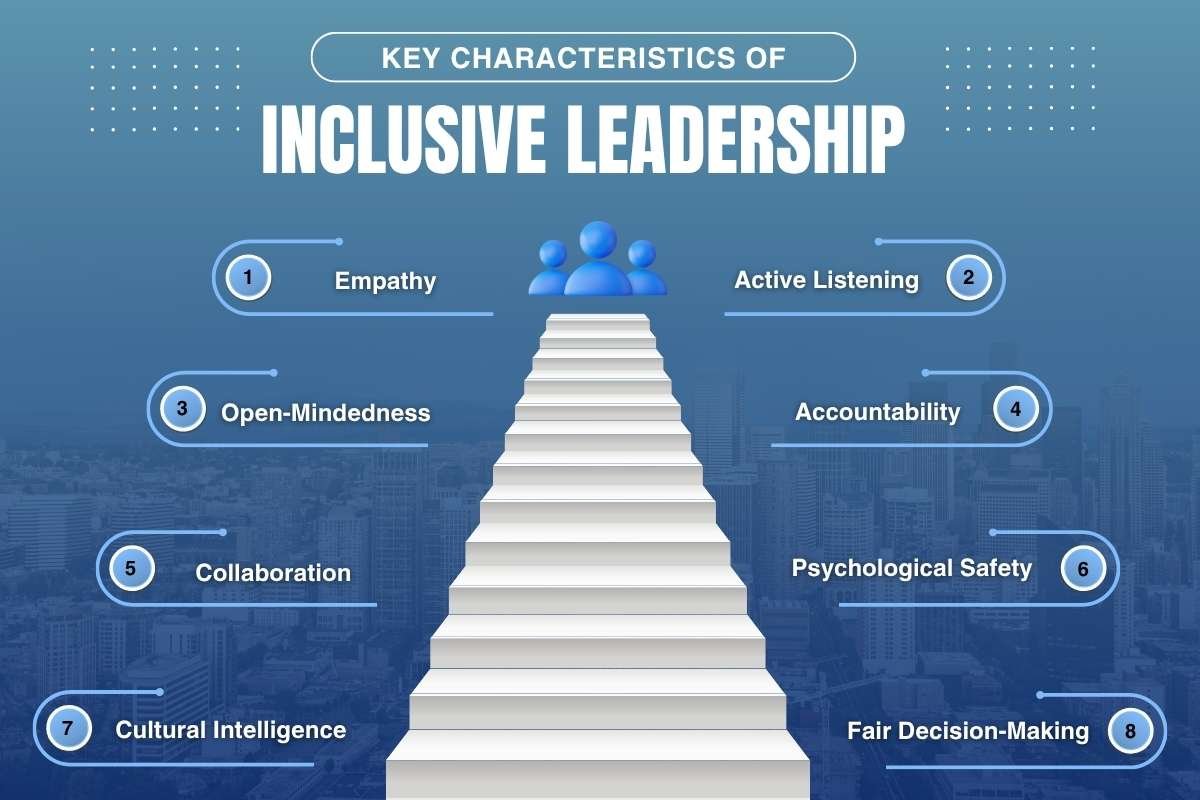
Inclusive leadership is defined by a set of behaviors that help people feel respected, valued, and empowered to contribute. These characteristics not only strengthen workplace culture but also drive measurable business outcomes. According to Deloitte, organizations with inclusive cultures are significantly more likely to be innovative and agile.
Some of the most important characteristics of inclusive leaders include:
- Empathy: Understanding different perspectives and responding with compassion and respect.
- Active Listening: Encouraging employees to share ideas and ensuring every voice is heard.
- Open-Mindedness: Welcoming diverse viewpoints and challenging personal assumptions or biases.
- Accountability: Taking responsibility for creating fair and equitable opportunities for all team members.
- Collaboration: Promoting teamwork across different backgrounds, experiences, and skill sets.
- Psychological Safety: Creating an environment where employees feel comfortable expressing opinions and taking risks.
- Cultural Intelligence: Recognizing and adapting to cultural differences in increasingly diverse workplaces.
- Fair Decision-Making: Evaluating people and ideas based on merit rather than unconscious bias.
Together, these characteristics help leaders build trust, strengthen engagement, and unlock the full potential of diverse teams. The result is a workplace where employees feel a stronger sense of belonging and where organizations are better positioned to innovate and grow.
Essential traits of women-inclusive leaders
While inclusive leadership benefits everyone, women-inclusive leaders take deliberate steps to ensure women have equal opportunities to grow, contribute, and lead. These leaders recognize that diverse perspectives drive stronger business outcomes and actively work to remove barriers that limit participation.
Key traits of women-inclusive leaders include:
- Championing Equal Opportunities: Ensuring fair access to promotions, leadership roles, and high-impact projects.
- Recognizing and Addressing Bias: Identifying unconscious biases that can affect hiring, evaluations, and decision-making.
- Encouraging Diverse Voices: Creating space for women to share ideas, challenge assumptions, and influence outcomes.
- Supporting Career Development: Investing in mentorship, sponsorship, and skill-building opportunities for women employees.
- Promoting Flexible Work Practices: Supporting work arrangements that help employees balance professional and personal responsibilities.
- Leading with Empathy: Understanding the unique challenges women may face and responding with fairness and support.
The business case is clear. McKinsey research shows that companies with greater gender diversity in leadership are more likely to outperform their peers financially. By fostering an environment where women can thrive, inclusive leaders strengthen innovation, improve employee engagement, and build more resilient organizations.
Ultimately, women-inclusive leaders do more than support diversity goals; they create cultures where talent is recognized based on ability, contribution, and potential.
How to become a more inclusive leader?
Inclusive leadership is not a title; it is a set of intentional behaviors practiced consistently over time. The good news is that these skills can be developed, measured, and strengthened.
Here are some practical ways to become a more inclusive leader:
- Listen More Than You Speak: Create opportunities for team members to share ideas and feedback without interruption or judgment.
- Seek Diverse Perspectives: Involve people with different backgrounds, experiences, and viewpoints in decision-making.
- Challenge Unconscious Bias: Regularly examine assumptions that may influence hiring, promotions, or daily interactions.
- Build Psychological Safety: Encourage open dialogue and ensure employees feel comfortable expressing opinions and concerns.
- Promote Transparency: Clearly communicate how decisions are made and how opportunities are allocated.
- Provide Equal Growth Opportunities: Ensure access to mentorship, training, and leadership development programs for all employees.
- Measure Inclusion: Use employee surveys, engagement data, and feedback mechanisms to track progress and identify gaps.
The impact can be significant. According to Deloitte, inclusive teams are over six times more likely to be innovative and twice as likely to meet or exceed financial targets compared to less inclusive teams.
Becoming an inclusive leader is an ongoing process. Small, consistent actions—whether inviting diverse viewpoints or addressing bias can create a workplace where people feel valued, engaged, and empowered to perform at their best.
Inclusive Leadership Models and Frameworks

While the principles of inclusive leadership are universal, several leadership models provide practical frameworks for putting them into action. These models help leaders create environments where diverse perspectives are valued and collaboration thrives.
1. Transformational Leadership
Transformational leaders inspire employees through a shared vision, trust, and empowerment. By encouraging innovation and recognizing individual strengths, they create a culture where people feel included and motivated to contribute.
2. Servant Leadership
This model focuses on serving the needs of employees first. Servant leaders prioritize empathy, active listening, and personal growth, making it easier for team members from diverse backgrounds to feel supported and valued.
3. Collaborative Leadership
Collaborative leaders emphasize teamwork and collective problem-solving. By involving employees in decision-making, they foster inclusion and ensure multiple perspectives shape business outcomes.
4. Emotional Intelligence (EQ) Framework
Leaders with high emotional intelligence are better equipped to understand different viewpoints, manage bias, and build strong interpersonal relationships. Research consistently links emotional intelligence with higher employee engagement and stronger team performance.
5. Diversity, Equity, and Inclusion (DEI) Framework
Many organizations use DEI frameworks to embed inclusion into hiring, promotion, compensation, and leadership development processes. These frameworks help translate inclusive leadership principles into measurable business practices.
Why these models matter: Organizations that combine inclusive leadership with structured frameworks are better positioned to improve innovation, employee engagement, and decision-making quality. Rather than relying on good intentions alone, these models provide leaders with actionable ways to build inclusive and high-performing teams.
Example: John Maxwell’s 5 Levels of Leadership and Inclusion
Inclusive leadership becomes more effective when viewed through established leadership frameworks. One of the most widely recognized models is John C. Maxwell’s 5 Levels of Leadership, which explains how leaders progress from relying on authority to creating lasting influence.
| Position | People follow because they have to. At this stage, inclusive leaders focus on treating everyone fairly and creating an environment of respect from day one. |
| Permission | People follow because they want to. Trust becomes the foundation of leadership. Inclusive leaders actively listen, encourage participation, and ensure every team member feels heard. |
| Production | People follow because of results. By leveraging diverse perspectives, inclusive leaders improve problem-solving, innovation, and team performance. |
| People Development | People follow because of what leaders do for them. Inclusive leaders invest in mentoring, coaching, and creating growth opportunities for individuals from all backgrounds. |
| Pinnacle | People follow because of who the leader is and what they represent. At this level, leaders create a lasting culture of inclusion that continues to influence the organization long after they move on. |
Inclusive Leadership and Work-Life Balance
Work-life balance is no longer just an employee benefit; it is a business necessity. Inclusive leaders recognize that employees have different responsibilities, challenges, and working styles, and they create environments that support both performance and well-being.
Research from Gallup shows that employees who experience higher levels of well-being are less likely to experience burnout and are more engaged at work. Inclusive leadership plays a key role in achieving this by promoting flexibility, trust, and empathy.
Here are some ways inclusive leadership supports work-life balance:
- Flexible Work Arrangements: Offering remote, hybrid, or flexible schedules to accommodate diverse needs.
- Reduced Burnout: Encouraging realistic workloads and healthy boundaries between work and personal life.
- Equal Support for Caregivers: Ensuring parents and caregivers have access to the resources they need to succeed.
- Focus on Outcomes, Not Hours: Measuring performance based on results rather than time spent at a desk.
- Open Communication: Creating a culture where employees feel comfortable discussing challenges and seeking support.
For women professionals, work-life balance can be particularly important. Studies consistently show that flexibility and supportive leadership contribute to higher retention rates, stronger job satisfaction, and greater career advancement opportunities.
Ultimately, inclusive leadership creates workplaces where employees can thrive both professionally and personally. When people feel supported, organizations benefit from higher engagement, stronger productivity, and improved long-term performance.
Why Does Inclusive Leadership Sometimes Fail?

While the benefits of inclusive leadership are well documented, implementation is often where organizations struggle. In many cases, the intention to be inclusive exists, but the actions and systems needed to support it are missing.
Common reasons why inclusive leadership fails include:
- Performative Inclusion: Organizations promote diversity publicly but fail to create meaningful inclusion internally.
- Unconscious Bias: Hidden biases continue to influence hiring, promotions, and everyday decision-making.
- Lack of Leadership Commitment: Inclusion initiatives lose momentum when leaders do not actively champion them.
- Poor Communication: Employees are not given safe channels to share feedback, concerns, or ideas.
- Resistance to Change: Existing workplace cultures may push back against new inclusive practices.
- No Measurement or Accountability: Without clear metrics, it becomes difficult to track progress and identify gaps.
The consequences can be significant. According to workplace studies, employees who do not feel included are more likely to disengage, experience lower job satisfaction, and seek opportunities elsewhere. This can lead to higher turnover costs, reduced innovation, and weaker team performance.
Best Books to Refine Your Inclusive Leadership Style
Great leaders are continuous learners. While experience is an important teacher, books provide valuable insights from leadership experts, researchers, and business practitioners who have spent decades studying what makes leaders effective and inclusive.
Here are some of the most influential books to strengthen your inclusive leadership skills:
1. The 5 Levels of Leadership by John C. Maxwell
A practical framework for understanding how leadership evolves from authority to influence. The book offers actionable strategies for building trust, developing people, and creating a lasting leadership legacy.
2. Inclusify by Stefanie K. Johnson
Focused specifically on workplace inclusion, this book explores how leaders can embrace diversity while fostering a strong sense of belonging and collaboration across teams.
3. Dare to Lead by Brené Brown
Based on years of research, Brown highlights the importance of vulnerability, courage, empathy, and trust, qualities that are central to inclusive leadership.
4. Leaders Eat Last by Simon Sinek
This book explains how leaders can create environments of psychological safety where employees feel valued, supported, and motivated to perform at their best.
5. The Fearless Organization by Amy C. Edmondson
A highly regarded resource on psychological safety, showing how leaders can encourage innovation, learning, and open communication without fear of failure.
Why Do These Books Matter?
- Help leaders develop empathy and self-awareness.
- Provide practical frameworks for building inclusive cultures.
- Improve communication, trust, and collaboration.
- Offer research-backed strategies for leading diverse teams.
- Support long-term leadership growth and organizational success.
The most effective inclusive leaders never stop learning. By investing time in proven leadership literature, professionals can strengthen their ability to create workplaces where every individual feels valued, respected, and empowered to contribute.
Read More: Success Stories of Inclusive Leaders
Conclusion:
Inclusive leadership is more than a leadership trend; it is a proven driver of business success. Organizations that foster inclusion benefit from stronger innovation, better decision-making, higher employee engagement, and improved performance.
For women entrepreneurs and leaders, inclusive leadership helps break barriers, unlock diverse talent, and build resilient, high-performing teams. By prioritizing fairness, empathy, and collaboration, leaders can create workplaces where every individual feels valued and empowered to contribute.
As the future of work becomes increasingly diverse, inclusive leadership will remain a critical skill for organizations seeking sustainable growth and long-term success.
FAQs:
1. Why is inclusive leadership important?
Inclusive leadership helps employees feel valued and heard, leading to higher engagement, better decision-making, and stronger business performance.
2. What is the inclusive leadership theory?
Inclusive leadership theory focuses on creating workplaces where diverse individuals feel included, respected, and empowered to contribute their best work.
3. Who developed inclusive leadership theory?
Inclusive leadership theory was developed through the contributions of multiple leadership and organizational behavior researchers, including Bernardo M. Ferdman, rather than a single individual.
4. What are the 6 C’s of inclusive leadership?
The 6 C’s of inclusive leadership are:
Commitment
Courage
Cognizance of Bias
Curiosity
Cultural Intelligence
Collaboration
These qualities help leaders build inclusive and high-performing teams.
5. Why is inclusive leadership important for women entrepreneurs?
It helps reduce bias, create equal opportunities, improve team collaboration, and build stronger, more innovative organizations that support long-term business growth.