
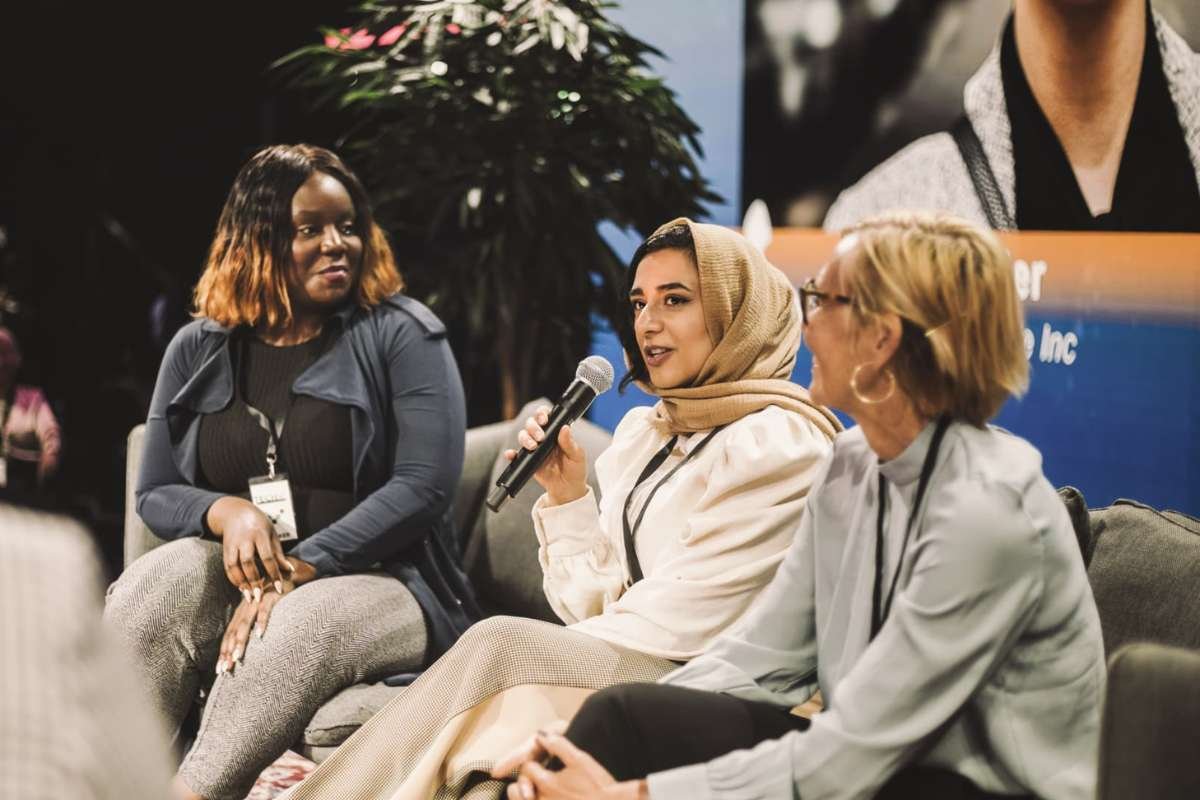
Women founders are increasingly choosing social entrepreneurship as a way to combine business growth with meaningful social impact. Driven by purpose, lived experiences, and persistent funding barriers in traditional startup ecosystems, many women are building ventures that address challenges in healthcare, education, sustainability, and community development. This article explores the motivations, challenges, funding realities, and unique strengths that make social entrepreneurship a powerful and purpose-driven path for women entrepreneurs worldwide.
Women are increasingly shaping global entrepreneurship, yet the gap remains stark: women-led startups receive under 3% of global venture capital funding, despite accounting for nearly 40% of new business creation in some economies.
At the same time, research from global entrepreneurship reports shows that women are more likely than men to start ventures driven by purpose, community impact, and social change rather than pure profit.
This is where social entrepreneurship becomes a natural fit. It enables women founders to build scalable businesses while addressing pressing challenges in education, healthcare, sustainability, and equality.
Against this backdrop, a critical question emerges: Why do women founders choose social entrepreneurship? The answer lies in a combination of purpose-driven ambition, lived experiences, funding realities, and a desire to create lasting impact. As more women redefine what entrepreneurial success looks like, social entrepreneurship is becoming an increasingly powerful path for driving both business growth and meaningful social change.
Understanding Social Entrepreneurship
Social entrepreneurship refers to building businesses that are designed not just to generate profit, but to solve social, environmental, or community challenges. Unlike traditional entrepreneurship, where financial return is often the primary goal, social entrepreneurship places equal or greater emphasis on measurable impact.
These ventures typically operate across areas like education access, healthcare delivery, climate solutions, women’s empowerment, and rural development. The key differentiator is intent: success is measured not only in revenue but in the scale of positive change created.
This model has gained momentum globally as consumers, investors, and governments increasingly support impact-driven businesses. For many founders, especially women, it offers a way to align personal values with professional ambition, making entrepreneurship both sustainable and purpose-led.
Why Do Women Founders Choose Social Entrepreneurship?

For many women founders, social entrepreneurship is not just an alternative; it is often the most aligned path between ambition and impact. Several clear factors explain this preference:
- Purpose-led motivation: Women entrepreneurs are more likely to prioritize solving real-world problems and creating long-term community impact rather than focusing only on valuation or rapid scaling.
- Funding gap reality: Women-led startups receive under 1-2% of global venture capital funding, pushing many founders toward models that depend less on traditional VC routes and more on grants, CSR funding, and impact investors.
- Lived experience of problems: Many women founders build ventures around challenges they have personally faced in areas like healthcare, education, safety, and financial inclusion, making solutions more grounded and practical.
- Impact-driven success metrics: Social entrepreneurship allows success to be measured through outcomes like improved literacy, better healthcare access, or environmental improvement, not just revenue growth.
- Greater ecosystem support: Global NGOs, development agencies, and impact funds increasingly support women-led social enterprises, making this path more accessible in comparison to high-pressure startup ecosystems.
This combination of intent, constraints, and opportunity makes social entrepreneurship a naturally strong fit for many women founders today.
What Motivates Women to Become Entrepreneurs?
Beyond women founders choose social entrepreneurship are driven by a mix of personal, economic, and social motivations that shape their entrepreneurial journey.
| Financial independence | Entrepreneurship offers women greater control over income, decision-making, and long-term financial stability. |
| Solving real-world problems | Many women start businesses to directly address gaps they have experienced in healthcare, education, safety, or daily life services. |
| Desire for autonomy | Flexibility in work structure and freedom from traditional workplace constraints are strong motivators, especially in regions with rigid career systems. |
| Creating social impact | A significant number of women founders are motivated by the idea of improving lives within their communities through sustainable solutions. |
| Career barriers in traditional sectors | Limited leadership opportunities and workplace bias often push women to build their own platforms instead of climbing existing corporate structures. |
| Role modeling and legacy building | Many women entrepreneurs are driven by the goal of inspiring the next generation and normalizing women-led leadership in business. |
Together, these motivations create a strong foundation for entrepreneurship that is both purpose-driven and impact-oriented, making social entrepreneurship a natural extension of their goals.
Challenges Women Entrepreneurs Face
While women founders are increasingly active in entrepreneurship, their journey is shaped by deep structural barriers that influence both access to capital and business direction.
- Severe funding gap: Globally, women-founded startups receive only about 2%–3% of total venture capital funding, despite rising participation in entrepreneurship. In India, the disparity is even sharper; reports show women founders receive as little as ₹4 for every ₹100 raised in startup funding markets.
- Bias in investor perception: Research shows women founders are more likely to face risk-focused questioning in pitch meetings, while men receive growth-focused questions directly impacting funding outcomes and valuations.
- Real-world example (India): Even well-qualified founders like Preksha Kaparwan, co-founder of AI startups AlphaaAI and Super AI, have shared experiences of unequal investor treatment during pitches, including a lack of engagement and biased questioning.
- Structural access limitations: Women are less likely to be part of high-value investor networks, making early-stage fundraising more difficult and increasing dependence on personal savings or family funding.
- Family and societal pressure: In many regions, lack of financial and emotional family support remains a first barrier; over 40% of women entrepreneurs in some surveys report limited family backing for their venture.
These challenges don’t reduce ambition, but they strongly influence how women choose to build businesses, often making social entrepreneurship a more accessible and purpose-aligned path.
Why Do Female Entrepreneurs Get Less Funding?
The funding gap is one of the biggest reasons women founders often lean toward alternative business models like social entrepreneurship.
| Network imbalance | Venture capital is still largely male-dominated, and funding often flows through informal networks where women have less access. |
| Investor bias | Studies show women are more likely to face risk-focused questioning in pitches, which can impact funding decisions and valuation. |
| Pattern recognition bias | Investors tend to fund ideas similar to past successful startups, most of which were founded by me,n making new or unconventional women-led ventures harder to back. |
| Sector bias | Women are more represented in sectors like education, healthcare, and social impact, which are often seen as lower-growth despite their long-term value. |
| Low representation in VC leadership | Fewer women decision-makers in investment firms can lead to unconscious bias in funding choices. |
Together, these factors make traditional funding harder to access, pushing many women founders toward models like social entrepreneurship that rely more on impact-driven capital sources.
Why Are There So Few Female Entrepreneurs?

Despite rising participation, women are still underrepresented in entrepreneurship due to long-standing structural and cultural barriers.
- Limited access to capital: Persistent funding gaps reduce the number of women who can move from idea to scalable business.
- Lack of mentorship and networks: Fewer women in senior entrepreneurial roles means fewer mentors and role models to guide early-stage founders.
- Societal expectations: In many regions, women are still expected to prioritize family responsibilities over business ambitions, limiting their time and risk-taking ability.
- Education-to-industry gap: While women’s education levels have improved globally, this has not fully translated into equal entrepreneurial participation or support systems.
- Risk aversion shaped by environment: Due to higher scrutiny and fewer safety nets, women often operate in environments where taking financial or business risks feels less viable.
These combined factors reduce overall participation rates, but they also explain why many women who do enter entrepreneurship often choose more resilient, impact-focused paths like social entrepreneurship.
Are Male and Female Entrepreneurs Really That Different?
Male and female entrepreneurs are often compared, but the differences are less about capability and more about context, opportunities, and constraints.
| Approach to goals | Studies suggest women founders are more likely to balance profit with purpose, while men are more frequently encouraged toward aggressive scale and valuation-driven growth. |
| Risk environment | Women typically operate in higher-scrutiny environments, which can make risk-taking more calculated rather than less ambitious. |
| Leadership style | Women entrepreneurs are often described as more collaborative and community-oriented in team-building, while male founders are more often associated with competitive, high-speed execution styles, though both styles exist across genders. |
| Access to resources | Differences in funding, networks, and mentorship often shape outcomes more than entrepreneurial ability itself. |
| Industry concentration | Women are more represented in sectors like education, healthcare, and social impact, while men are more concentrated in tech and capital-intensive industries. This influences business models and scaling paths. |
Overall, the differences are not about ability, but about ecosystem design and opportunity distribution, which strongly influence how and why women founders often gravitate toward social entrepreneurship.
Do Women Entrepreneurs Outperform Men?
The idea of one gender “outperforming” the other in entrepreneurship is less about skill and more about context, but data does show some interesting patterns in business outcomes.
- Higher survival rates in some studies: Research from several entrepreneurship ecosystems indicates that women-led businesses often show stronger long-term survival rates, partly because they tend to grow more sustainably rather than aggressively.
- More disciplined capital usage: Women founders are frequently found to be more capital-efficient, often achieving more with less funding due to tighter financial management and constrained access to capital.
- Lower failure through cautious scaling: While men-led startups may scale faster in early stages, they also show higher volatility, whereas women-led ventures often prioritize steady, controlled growth.
- Strong performance in impact sectors: In areas like education, healthcare, and community-focused businesses, women-led ventures often deliver higher measurable social outcomes alongside financial returns.
However, it’s important to note that these outcomes are heavily influenced by funding access, industry type, and ecosystem support, not inherent entrepreneurial ability.
This is also where social entrepreneurship becomes significant; it allows performance to be measured not only in profit, but in long-term, sustainable impact.
What Are the 5 C’s of Entrepreneurship?
The 5 C’s of entrepreneurship represent core traits that drive long-term business success, especially for founders navigating uncertain and competitive environments.
| Character | Integrity, resilience, and ethical decision-making that build trust with customers, investors, and teams. |
| Commitment | The ability to stay consistent through uncertainty, setbacks, and long development cycles. |
| Creativity | Identifying new solutions, rethinking old systems, and building innovative approaches to real-world problems. |
| Confidence | The belief in taking decisions independently and leading a venture despite risk and external pressure. |
| Communication | Clearly sharing vision, building relationships, and persuading stakeholders, including investors, partners, and customers. |
For many women founders in social entrepreneurship, these 5 C’s are not just theoretical principles; they directly shape how they build impact-driven ventures, manage limited resources, and create meaningful change in society.
Is It True That 90% of Startups Fail?

The widely quoted “90% startup failure rate” is often misunderstood, but it does reflect a reality: entrepreneurship carries high risk, especially in the early years.
Research from multiple startup ecosystems suggests that around 7–9 out of 10 startups may not survive long-term, but the exact figure varies by industry, funding access, and geography. Most failures occur due to common reasons like poor product-market fit, cash flow issues, and lack of scalable demand.
However, failure is not evenly distributed. Startups with stronger support systems, mentorship, steady funding, and clearer problem-solution alignment tend to have higher survival rates.
This is where social entrepreneurship shows a different pattern. Because these ventures are often built around clear, real-world problems and community needs, they can benefit from more stable demand, diversified funding sources (grants, CSR, impact investors), and stronger stakeholder support, improving resilience over time.
So while startup failure is common, the reasons behind it also explain why many founders, especially women, opt for more sustainable, impact-driven models.
Who Is the Most Influential Woman Entrepreneur in the World?
There is no single “number one” woman entrepreneur globally, but several influential founders have reshaped how business and impact intersect.
- Sara Blakely (Spanx): Built a billion-dollar brand from a simple idea with minimal external funding, becoming one of the most recognized self-made women entrepreneurs in the world.
- Whitney Wolfe Herd (Bumble): Redefined the dating app industry by putting women in control of initiating conversations, blending tech innovation with social empowerment.
- Kiran Mazumdar-Shaw (Biocon): One of India’s most prominent biotech entrepreneurs, known for making affordable healthcare solutions and building a globally respected life sciences company.
These founders highlight a key pattern: many of the most influential women entrepreneurs globally are not just building profitable companies but also reshaping systems in healthcare, technology, employment, and social access.
This aligns closely with the rise of social entrepreneurship, where impact and innovation go hand in hand.
Conclusion:
Women founders often operate at the intersection of ambition and systemic barriers, especially funding gaps, network limitations, and bias in traditional startup ecosystems.
Social entrepreneurship becomes a natural fit because it reduces dependence on VC-heavy models and aligns business success with real-world impact.
It allows women to build ventures around healthcare, education, sustainability, and community development while still ensuring financial sustainability.
In the end, it’s not just a business choice; it’s a model that aligns purpose, resilience, and long-term impact in one path.
Thank You For Reading!
Read More
Biggest Mistakes Social Enterprises Make That Stop Real Growth