Key Takeaways:
- Thinking Machines is betting on customizable AI for businesses.
- OpenAI models are becoming a stronger alternative to proprietary systems.
- Mira Murati’s startup enters an increasingly competitive AI market.
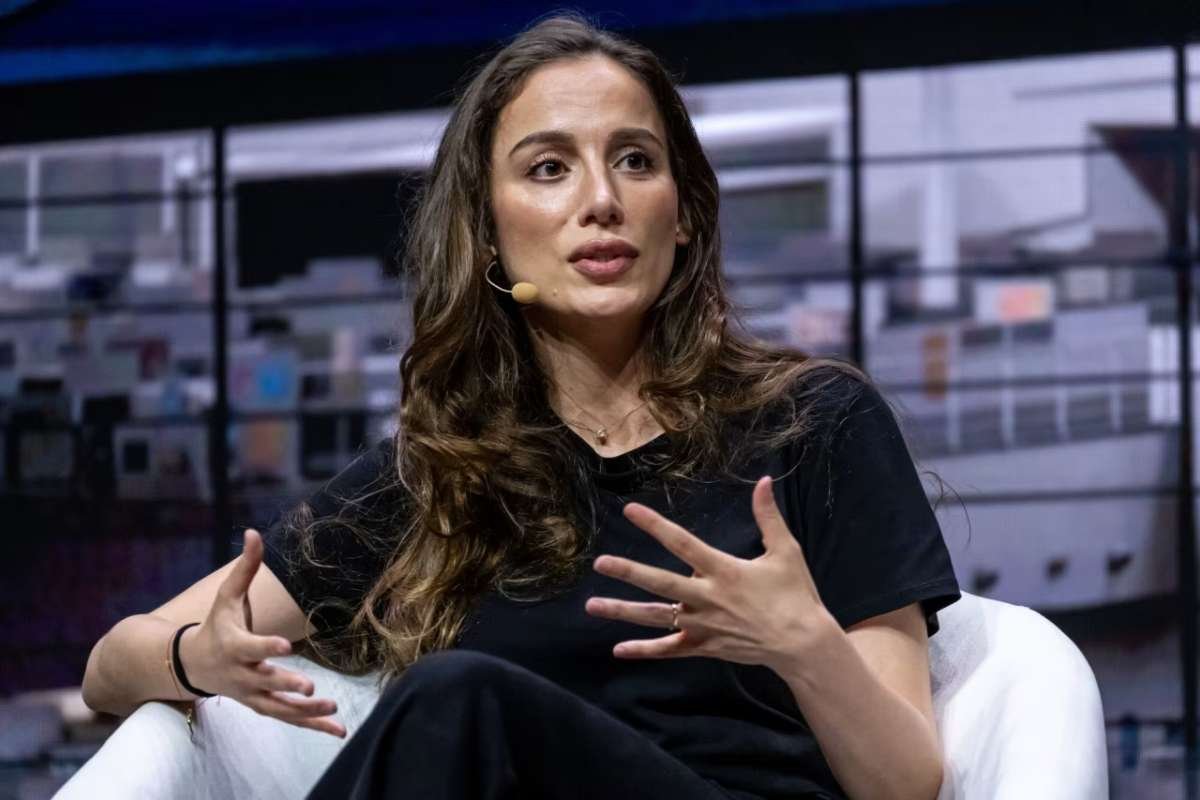
Thinking Machines Lab, the artificial intelligence startup founded by former OpenAI Chief Technology Officer Mira Murati, has launched Inkling, its first open-weight AI model. The release marks the company’s official entry into the foundation model market and signals its strategy of building AI systems that organizations can customize for their own needs rather than relying on a single model designed for every use case.
The launch comes nearly a year after Mira Murati Thinking Machines emerged from stealth mode and quickly became one of the most closely watched AI startups. Despite not having released a commercial product at the time, the company attracted billions of dollars in funding and a multi-billion-dollar valuation, reflecting investor confidence in Mira Murati’s leadership and the team’s technical expertise. With Inkling now available, Thinking Machines is taking its first major step toward competing with established AI developers such as OpenAI, Google, Anthropic, and Meta, while carving out a niche in the growing market for open AI models.
Inkling Focuses on Flexibility, Efficiency, and Enterprise Control
Unlike proprietary AI models that are typically accessed through cloud-based services, Inkling is being released as an open-weight model. This allows developers, researchers, and businesses to download, fine-tune, and deploy the model on their own infrastructure. The approach is designed to give enterprises greater control over how AI is trained, deployed, and integrated into internal systems, particularly in industries where data privacy, regulatory compliance, and intellectual property are major concerns.
Mira Murati, Thinking Machines, has positioned Inkling as a multimodal model capable of processing and generating text while also supporting images, audio, and video. Rather than competing solely on benchmark rankings, the company says the model has been developed to help organizations create AI solutions tailored to their own workflows, business processes, and industry-specific requirements.
The model is built using a mixture-of-experts (MoE) architecture, containing approximately 975 billion parameters, with only around 41 billion active during inference. By activating only the portions of the model required for a specific task, this architecture improves computational efficiency while reducing inference costs. The company believes this balance between scale and efficiency makes Inkling well-suited for enterprise applications where performance and operating costs are equally important.
Inkling is also available through Thinking Machines’ AI customization platform, allowing organizations to further adapt the model using proprietary data and specialized workflows. This reflects the company’s belief that future enterprise AI adoption will depend not only on raw model capability but also on how effectively businesses can customize AI for their own operations.
While proprietary frontier models continue to lead several industry benchmarks, Thinking Machines argues that benchmark performance alone is no longer the deciding factor for enterprise customers. Increasingly, organizations are evaluating AI solutions based on transparency, deployment flexibility, ownership of data, and long-term operating costs, creating opportunities for open-weight alternatives.
Growing Competition Reshapes the Open AI Landscape
The launch of Inkling comes at a time when open-weight AI models are gaining momentum across the industry. Businesses are increasingly looking for AI systems that can operate within their own environments instead of relying entirely on external cloud providers. This trend has been driven by growing concerns around data security, compliance requirements, infrastructure costs, and vendor dependence.
Thinking Machines believes this shift is creating demand for models that organizations can fully customize while maintaining greater control over their data and AI infrastructure. The company has also acknowledged drawing on publicly available research and open technologies during Inkling’s development, reflecting the increasingly collaborative nature of AI research, where advancements often build upon existing open-source innovations.
The competitive landscape has also expanded significantly over the past year. Alongside major U.S. AI companies, several international developers have accelerated work on high-performing open-weight models, increasing pressure on established players to offer greater transparency and flexibility. As a result, competition is no longer focused solely on building the largest or most powerful AI model but also on creating systems that organizations can deploy efficiently for specialized business applications.
For Thinking Machines, Inkling represents more than the launch of its first AI model. It is the company’s first opportunity to demonstrate that enterprise customers value adaptability alongside performance. By emphasizing customization, efficient deployment, and open access, the startup is betting that the next phase of AI adoption will be shaped less by universal models and more by solutions tailored to individual industries and business needs.
As enterprises continue integrating artificial intelligence into core operations, demand for flexible and customizable AI platforms is expected to grow. Whether Inkling can establish itself alongside the industry’s leading models remains to be seen, but its debut highlights a broader shift in the AI market, one where openness, efficiency, and enterprise control are becoming as important as raw computing power.