
Key Takeaways
- NASA is launching a next-generation space observatory.
- The mission will investigate the universe’s biggest mysteries.
- It could transform the search for alien worlds.
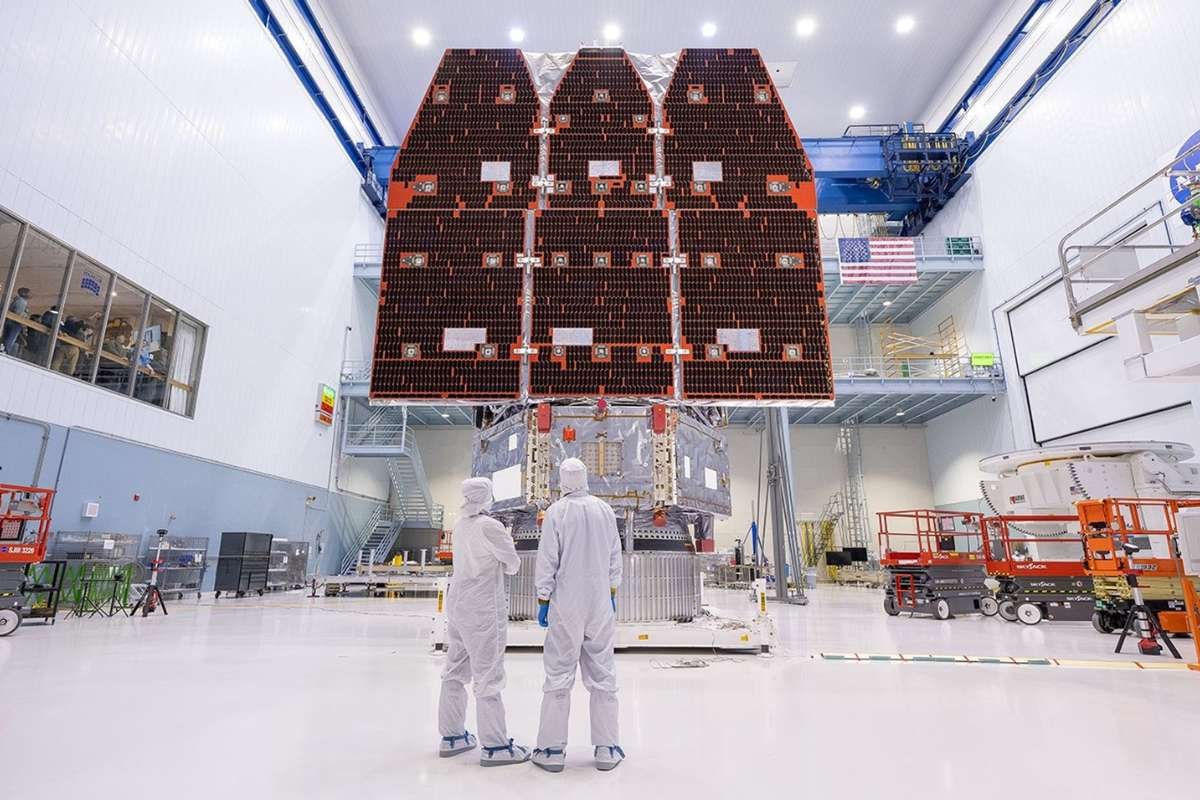
NASA is preparing to launch one of its most ambitious space observatories to date, the Nancy Grace Roman Space Telescope, a mission expected to transform scientists’ understanding of the universe. Scheduled to lift off in late August 2026 aboard a SpaceX Falcon Heavy rocket, the telescope will investigate some of the biggest mysteries in modern astronomy, including dark matter, dark energy, and thousands of undiscovered planets beyond the solar system.
Named after Nancy Grace Roman, NASA’s first Chief of Astronomy, the observatory is designed to complement the capabilities of the James Webb Space Telescope (JWST). While Webb focuses on detailed observations of individual celestial objects, Roman will capture expansive views of the universe, allowing astronomers to study vast regions of space with exceptional clarity. The mission is expected to provide researchers with an unprecedented amount of data, opening new opportunities to explore how the universe formed, evolved, and continues to expand.
A Wider Window Into the Universe
The Nancy Grace Roman Space Telescope has been built with one of the largest wide-field cameras ever sent into space, enabling it to survey the cosmos on a scale that previous observatories could not achieve. Its ability to image large sections of the sky while maintaining high resolution will allow scientists to map millions of galaxies and observe cosmic structures across billions of years of history.
One of the mission’s primary scientific objectives is to study dark matter and dark energy, two invisible components that together are believed to make up nearly 95% of the universe. Although they cannot be observed directly, their influence is evident in the way galaxies form, move, and interact. By examining the distribution of galaxies and tracking the expansion of the universe over time, Roman is expected to provide valuable insights into these mysterious forces and help researchers refine existing cosmological models.
The telescope will operate from the Sun-Earth L2 Lagrange point, approximately one million miles from Earth, where it will work alongside the James Webb Space Telescope. Scientists expect the two observatories to complement one another, with Roman identifying large-scale cosmic features and Webb conducting detailed follow-up observations of selected targets.
Roman is also expected to generate an extraordinary volume of scientific information. The observatory could collect hundreds of terabytes of data every year, surpassing the total amount of data gathered by the Hubble Space Telescope during its decades-long mission. This extensive dataset is expected to support astronomical research for years to come and potentially lead to discoveries beyond the mission’s original goals.
Advancing the Search for Alien Worlds
Beyond studying the structure of the universe, the Roman Space Telescope is expected to play a major role in the search for planets outside Earth’s solar system. Astronomers anticipate that the mission will discover thousands of new exoplanets, including many that have remained undetectable using existing observation techniques.
The telescope will primarily use gravitational microlensing, a method that identifies planets by observing how their gravity bends and magnifies the light from distant background stars. This technique is particularly effective at detecting smaller and more distant planets that orbit far from their host stars, expanding scientists’ understanding of the diversity of planetary systems across the Milky Way.
Roman is also equipped with a sophisticated Coronagraph Instrument, designed to block the overwhelming brightness of stars and allow nearby planets to be observed directly. While the instrument serves mainly as a technology demonstration, it represents an important step toward future missions capable of directly imaging Earth-like planets and analyzing their atmospheres for potential signs of habitability.
By combining wide-field surveys with advanced imaging technology, Roman will help astronomers identify promising targets for future investigation. Together with the James Webb Space Telescope, the mission is expected to provide a more comprehensive picture of planetary systems and their potential to support life.
A Mission Poised to Transform Astronomy
As final launch preparations move forward, anticipation continues to grow within the scientific community. Researchers believe the Nancy Grace Roman Space Telescope will contribute to a wide range of astronomical studies beyond its primary objectives, including the observation of distant supernovae, the evolution of galaxies, and the behavior of supermassive black holes.
Scientists also expect the observatory to detect thousands of tidal disruption events, rare cosmic phenomena that occur when stars are torn apart by the immense gravitational pull of black holes. Studying these events could offer new clues about how black holes formed and evolved in the early universe.
More importantly, Roman is expected to answer long-standing questions while uncovering entirely new ones. Its combination of wide-field imaging, infrared sensitivity, and cutting-edge technology is likely to reveal objects and events that have never been observed before, extending the boundaries of modern astronomy.
With its ability to survey the universe on an unprecedented scale, the Nancy Grace Roman Space Telescope is poised to become one of NASA’s most significant scientific missions. From probing the invisible forces that shape the cosmos to expanding the search for potentially habitable worlds, the observatory is expected to deepen humanity’s understanding of the universe and pave the way for the next generation of space exploration.
Read the latest articles and success stories on CIO Women Magazine.