
Key Takeaway:
- The U.S.-China technology rivalry has expanded into robotics.
- The restrictions could reshape the global robotics supply chain.
- The ban raises the stakes ahead of Trump-Xi talks.
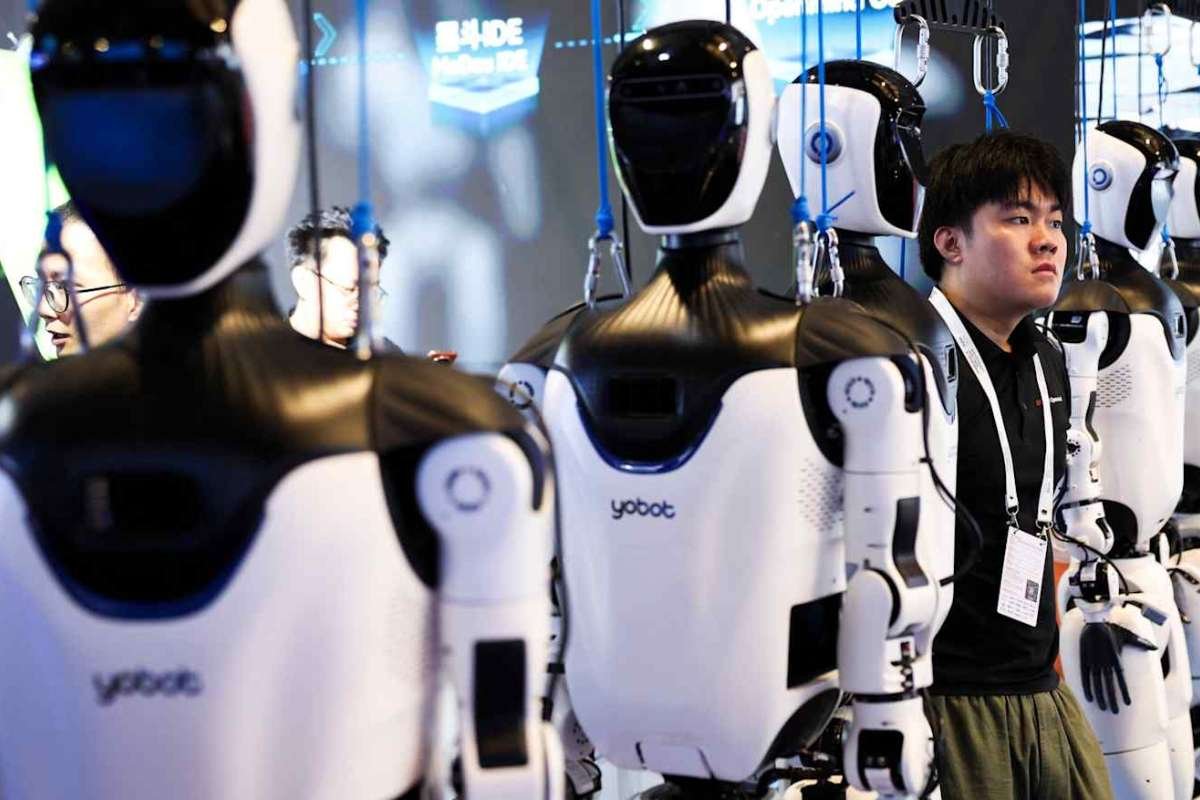
The United States has announced sweeping new restrictions on imports of advanced Chinese humanoid robots and other connected technologies, marking another major escalation in the technology rivalry between Washington and Beijing. The decision comes just weeks before an anticipated meeting between U.S. President Donald Trump and Chinese President Xi Jinping, adding fresh pressure to an already strained relationship shaped by disputes over trade, artificial intelligence (AI), and semiconductor exports.
The U.S. Federal Communications Commission (FCC) said the new rules will prohibit the authorization of certain Chinese-made humanoid robots, quadruped robots, and internet-connected power inverters for sale in the United States. Officials argued that these products could pose national security risks because they are capable of collecting sensitive data, communicating over networks, and potentially being exploited by foreign adversaries. Existing products that have already received approval will not be affected, allowing businesses and consumers to continue using previously authorized devices.
According to U.S. officials, the restrictions are part of a broader strategy to secure critical technology supply chains and reduce reliance on Chinese hardware in sectors considered vital to the country’s economic and national security. The latest action builds on a series of previous measures targeting Chinese technologies, including semiconductors, telecommunications equipment, drones, and AI-related products, as Washington seeks to strengthen domestic manufacturing and technological leadership.
China pushes back as Chinese humanoid robots face U. S. Restrictions
China responded swiftly, condemning the restrictions as politically motivated and warning that it would take necessary steps to protect the interests of its companies. Chinese officials argued that the United States is increasingly using national security as a justification for limiting competition and disrupting global trade, rather than addressing genuine security concerns.
Beijing also warned that the measures could undermine international cooperation in emerging technologies while creating uncertainty for businesses operating across global markets. The response reflects the growing divide between the world’s two largest economies as both nations compete for dominance in industries expected to shape the next generation of economic growth.
The timing of the restrictions has attracted significant attention because they come ahead of a planned summit between President Trump and President Xi. Analysts believe technology policy is likely to become one of the key topics during the discussions, alongside tariffs, export controls, and broader trade relations. While both governments have indicated a willingness to maintain diplomatic dialogue, the latest decision demonstrates that technological competition remains one of the most contentious issues in the bilateral relationship.
The move also reflects a broader shift in U.S. policy, where advanced technologies are increasingly viewed through the lens of national security. As AI-powered systems become more integrated into manufacturing, logistics, defense, and critical infrastructure, policymakers are placing greater emphasis on reducing potential vulnerabilities linked to foreign-made connected devices.
Global robotics industry braces for impact
The new restrictions are expected to have significant implications for the rapidly expanding humanoid robotics industry. Chinese companies have established themselves as global leaders in the sector by combining large-scale manufacturing with competitive pricing, enabling faster commercialization of humanoid robots across industries such as manufacturing, warehousing, healthcare, and logistics.
Supporters of the U.S. decision argue that restricting Chinese imports could create new opportunities for American robotics companies by encouraging investment in domestic research, manufacturing, and supply chains. They believe the policy could help reduce dependence on overseas suppliers while strengthening the United States’ position in one of the world’s fastest-growing technology sectors.
However, industry experts caution that the short-term effects may be more complicated. Many U.S. robotics startups and research organizations currently rely on Chinese-built hardware because it is more affordable and readily available than domestic alternatives. Limiting access to those platforms could increase development costs, delay product testing, and slow innovation while American manufacturers work to expand production capacity.
Beyond Chinese humanoid robots, the FCC’s decision also covers certain connected power inverters used in renewable energy systems, battery storage facilities, and AI-powered data centers. The inclusion of these products underscores Washington’s expanding efforts to scrutinize technologies that play a critical role in future infrastructure and digital ecosystems.
The latest measures highlight how the U.S.-China rivalry is evolving beyond traditional trade disputes into a broader competition over technological leadership. Artificial intelligence, robotics, advanced manufacturing, and digital infrastructure are increasingly becoming central to national economic and security strategies, making policy decisions in these sectors far more consequential than conventional trade measures.
As governments around the world accelerate investments in AI and automation, the growing divide between the United States and China is expected to reshape global supply chains, influence corporate investment decisions, and redefine the competitive landscape for emerging technologies. With the two countries racing to establish leadership in robotics and AI, the latest restrictions signal that the battle for technological dominance is entering a new and increasingly consequential phase.