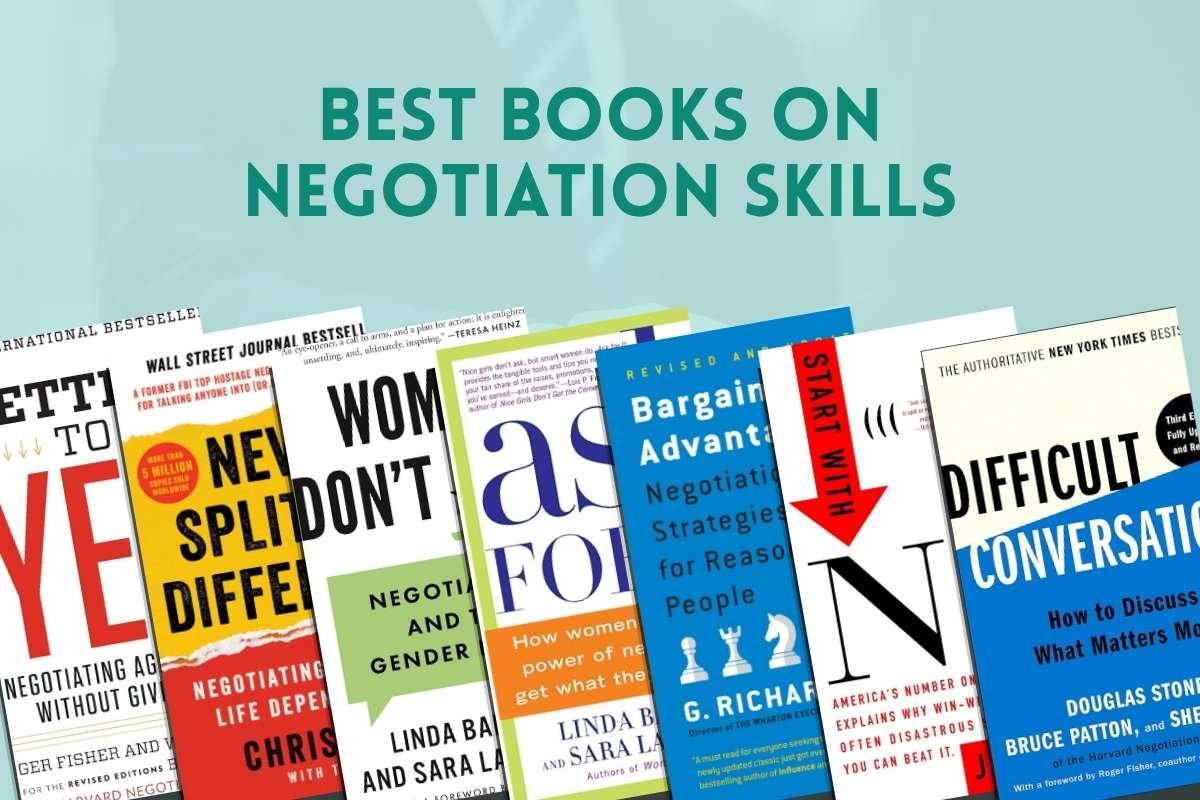

Negotiation is about more than asking for money. Negotiation scripts women can use can help secure promotions, stronger titles, expanded responsibilities, flexible schedules, bonuses, and career-building opportunities.
The stakes are significant. In 2024, women in the U.S. earned 85% of men’s median hourly earnings, according to Pew Research Center. Research also shows women are just as willing to negotiate when given the opportunity; they’re simply less likely to receive one.
That makes preparation essential. The best negotiation scripts women can use are frameworks for communicating value, making clear requests, and handling pushback with confidence.
The strongest negotiations start before you ask
A successful negotiation often starts long before the meeting itself. Knowing how women can negotiate effectively begins with documenting achievements, understanding the value of the request, and choosing the right moment to ask.
1. Build your brag sheet
Do not wait for an annual review to reconstruct everything you accomplished during the year.
Maintain a running record of:
- Revenue generated or protected
- Costs reduced
- Projects completed
- Processes improved
- Deadlines beaten
- New clients or accounts secured
- Problems solved independently
- Positive stakeholder feedback
- Team members mentored
- Responsibilities added to your role
- Skills developed
Track qualitative achievements as well. Becoming the person senior leaders rely on for complex decisions is evidence of growing responsibility even when there is no obvious financial figure attached.
The goal is to replace “I think I deserve a raise” with “Here is how my contribution has changed and what it has delivered.”
2. Choose the moment that gives your ask more weight
The annual review is not necessarily the only opportunity to negotiate.
| Timing | What to negotiate |
| Before accepting a new role | Salary, bonus, and benefits |
| After a measurable achievement | Raise or promotion |
| Before accepting additional responsibilities | Scope, title, or compensation |
| After strong performance feedback | Career progression |
| During budget planning | Future compensation |
| After completing a major project | Recognition or advancement |
A strong negotiation is easier to evaluate when it is connected to a specific business event.
Know what to say before the conversation starts
The most effective negotiation scripts women can use combine a clear request with evidence, flexibility, and thoughtful questions.
1. The golden rule: lead with organisational value
One of the most useful principles behind negotiation scripts women can use is to anchor the request to professional value rather than personal need. Strong negotiation skills for women also involve adapting your approach to the situation and the person across the table, without losing clarity or confidence.
Strong negotiation scripts women can use should connect personal career goals with the value you bring to the organisation.
Instead of:
“I need a raise because my expenses have increased.”
Try:
“Over the past year, I’ve taken ownership of X, improved Y, and delivered Z. Given the expanded scope and results, I’d like to discuss adjusting my compensation.”
Personal circumstances can explain why you want an outcome. Your contribution explains why the organisation should consider it.
2. The 70/30 rule
Negotiation should not become a long speech about why you deserve something. The 70/30 rule in negotiation offers a useful framework: spend less time presenting your case and more time listening, asking questions, and understanding the other side.
Aim to spend approximately 30% of the conversation presenting your case and 70% listening, asking questions, and understanding the other side.
Ask:
“What factors are being considered for compensation at this level?”
“What would need to happen for this request to be approved?”
“Are there budget or policy constraints I should understand?”
Then pause.
Strategic silence can prevent you from weakening your own position by immediately lowering your request or adding unnecessary explanations.
3. Keep every ask clear and specific
These principles may also need to be adapted to the context of the conversation. Cultural differences in negotiation can influence expectations around directness, hierarchy, silence, and relationship-building.
| Clear | State exactly what you want. |
| Concise | Give relevant evidence without over-explaining. |
| Confident | Present your contribution without apologising. |
| Collaborative | Connect the request to organisational outcomes. |
| Curious | Ask questions rather than assuming the answer is no. |
What you say is only part of the negotiation. Your posture, eye contact, facial expressions, and use of silence can also affect how your message is received. Understanding body language in negotiation can help you communicate confidence without appearing overly aggressive.
Salary & compensation scripts with delivery mediums
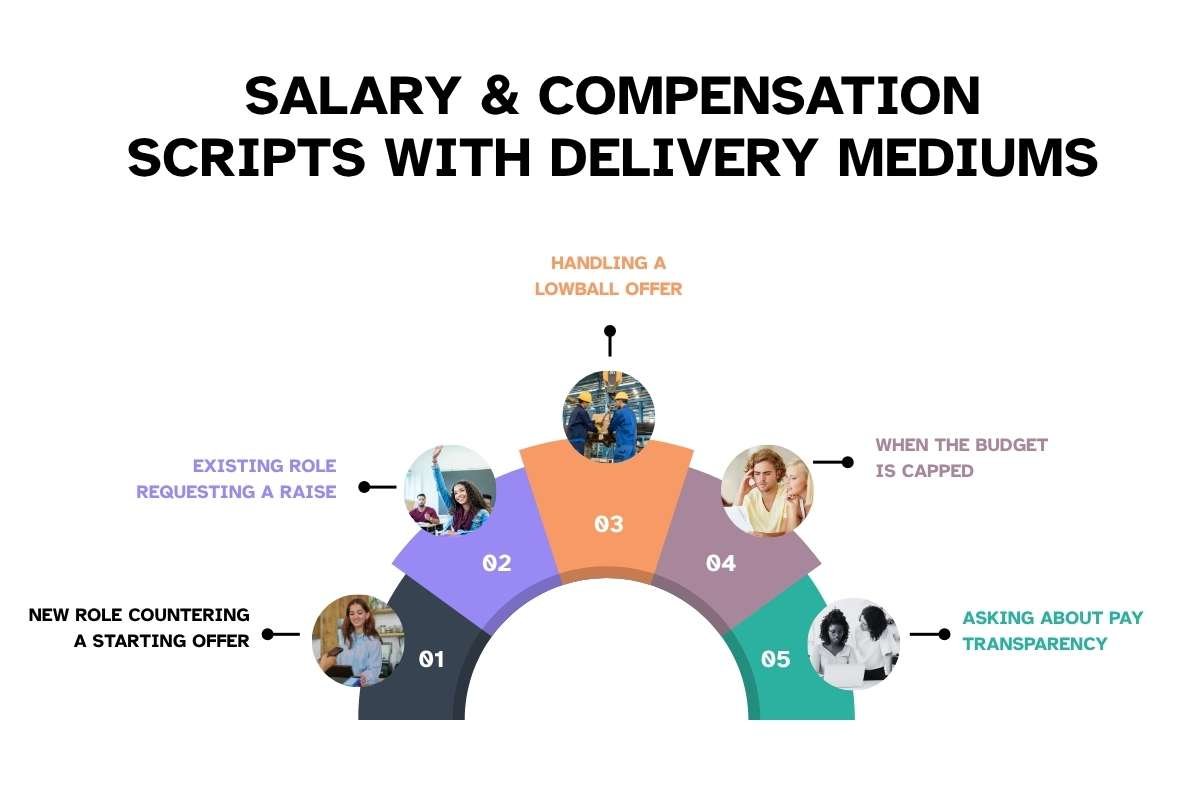
Negotiation scripts women can use can make salary conversations more structured, confident, and focused on measurable value. Pew’s analysis found that women earned 85 cents for every dollar earned by men in median hourly earnings in 2024.
That makes compensation conversations worth approaching deliberately rather than avoiding because they feel uncomfortable.
1. New role: countering a starting offer
Do not assume the first offer is necessarily the final number.
In-person or video call:
“Thank you for the offer. I’m excited about the opportunity. Based on my experience, the scope of the position, and the value I can bring, I was targeting compensation closer to ₹X. Is there flexibility in the base salary?”
Email:
Thank you for the offer. I’m very excited about the opportunity and the scope of the role.
Based on my experience, the responsibilities outlined for the position, and the value I expect to contribute, I was targeting compensation closer to ₹X. Is there flexibility to move the base salary toward that range?
I’m happy to discuss the details and find an approach that works for both sides.
2. Existing role: requesting a raise
Use a simple four-part structure:
Original scope → Expanded scope → Results → Request
For example:
“My role initially focused on A and B. Over the past year, I’ve also taken ownership of C and D, contributing to X result. Given the expanded scope and impact of my work, I’d like to discuss adjusting my compensation to ₹X.”
One of the most important negotiation scripts women can use is a raise request that connects expanded responsibilities with measurable results.
The research supports taking the conversation seriously. A peer-reviewed study of pay negotiation found that women were less likely to have the opportunity to negotiate over pay, but among those who had the opportunity, they were no less likely to negotiate.
3. Handling a lowball offer
Avoid reacting defensively.
“I appreciate the offer. Based on the responsibilities of the role, my experience, and the value I can contribute, I was targeting ₹X–₹Y. Is there room to move toward that range?”
This is one of the simplest negotiation scripts women can use when they need to challenge an initial anchor without turning the conversation adversarial.
4. When the budget is capped
A salary ceiling does not necessarily end the negotiation.
Consider:
- Sign-on bonuses
- Performance bonuses
- Equity
- Additional paid time off
- Professional development funding
- Flexible working arrangements
- Earlier compensation reviews
Try:
“If there is no flexibility in the base salary, could we explore a sign-on bonus or an accelerated compensation review?”
5. Asking about pay transparency
You can ask for information before making a compensation request:
“Could you share the compensation range for this role and how my experience places me within that range?”
For an existing position:
“I’d like to better understand how compensation is determined at my level and what progression within the range typically looks like.”
Turn your growing responsibilities into career progress
Negotiation scripts women can use can also help turn growing responsibilities into promotions, stronger titles, and career opportunities.
McKinsey’s Women in the Workplace 2025 research found that employees with sponsors were promoted at nearly twice the rate of employees without sponsors over the previous two years: 65% compared with 35%. Women were also less likely than men to have sponsors at several career stages.
That makes career conversations about visibility, sponsorship and scope particularly important.
1. Pitching a promotion
Do not make tenure your only argument. Show how your current responsibilities already resemble the next level.
“My responsibilities have expanded beyond my current role. I’m now leading X, influencing Y, and owning Z. I’d like to discuss whether my level and title should be adjusted to reflect the scope of the work I’m already performing.”
2. Negotiating a title change
Try:
“Given the strategic responsibilities I’m currently managing, I’d like to discuss aligning my title with the level and scope of my work.”
A title that accurately reflects your responsibilities can also make future internal and external career conversations easier.
3. Securing professional development budget
Position development as an organisational investment:
“This programme would strengthen my skills in X and directly support Y within the team. Could we allocate ₹X from the professional development budget?”
4. Stepping back from non-promotable tasks
Not all work provides the same career visibility. If you regularly handle administrative or low-visibility tasks, redirect your capacity without refusing to collaborate.
“I’m happy to support the team when needed, but I’d like to rebalance some of these responsibilities so I can dedicate more time to projects aligned with my growth and the team’s strategic priorities.”
4. Stepping back from non-promotable tasks

Negotiation scripts women can use can also help professionals ask for flexible work arrangements while keeping the conversation focused on performance and business outcomes. If you are preparing a more detailed flexibility proposal, how to negotiate flexible work arrangements effectively comes down to focusing on performance, collaboration, and measurable outcomes rather than convenience.
1. Pitching hybrid or fully remote work
Try:
“I’d like to propose a hybrid schedule of three days remote and two days in the office. I’ll remain available during core hours and maintain all project and collaboration commitments. Could we test this arrangement for 90 days and review the results?”
For a fully remote arrangement:
“I’ve consistently met my deadlines and collaboration requirements, and my responsibilities can be effectively performed remotely. I’d like to discuss transitioning to a fully remote arrangement with clear performance measures.”
2. Requesting non-standard hours
“I’d like to shift my working hours to 10 a.m.–7 p.m. This would allow me to maintain my responsibilities while ensuring sufficient overlap with the team’s core collaboration hours.”
3. Use the low-risk trial period
A 90-day pilot makes a flexible-work proposal easier to evaluate.
Set:
- A specific schedule
- A defined trial period
- Performance measures
- Communication expectations
- A review date
Then say:
“Rather than making this permanent immediately, could we run it as a 90-day pilot and evaluate productivity, deadlines, and stakeholder feedback?”
A low-risk proposal gives a manager something concrete to approve instead of asking them to make an irreversible decision.
Hard refusals & contingency scripts

A “no” can still produce useful information.
1. Scenario a: “There’s a company-wide budget freeze”
Try:
“I understand the current constraint. Could we set a specific date to revisit compensation once the freeze ends? In the meantime, could we discuss additional flexibility or professional development support?”
The objective is to replace “maybe later” with a defined review point.
2. Scenario b: “You’re not ready yet”
Turn subjective feedback into measurable criteria.
“I’m open to that feedback. Could we define the specific outcomes or responsibilities I would need to demonstrate to be considered ready, and set a date to review my progress?”
Once those targets are established, document them.
3. Scenario C: “That’s the Absolute Maximum”
Expand the negotiation beyond salary.
“I understand that the salary is at the maximum for this role. Could we explore additional PTO, flexible hours, professional development funding, or an accelerated compensation review?”
These contingency approaches are particularly valuable negotiation scripts women can use because they keep the conversation moving even when the original request cannot be fully approved.
Conclusion:
The most effective negotiation scripts women can use turn preparation into confident action. Know your value, document your achievements, connect your request to business impact, and prepare for pushback.
Negotiation should be a career habit, not an annual event. Whether asking for a raise, promotion, greater flexibility, or new opportunities, clear preparation makes self-advocacy more effective.
The goal is not to negotiate perfectly. It is to make advocating for your career a normal and confident part of professional growth.
FAQs:
1. What are the best negotiation scripts women can use to ask for a raise?
Focus on your achievements, expanded responsibilities, and measurable impact, then make a specific compensation request.
2. How should women respond when a negotiation is rejected?
Ask what would need to change for approval and request a clear timeline to revisit the conversation.
3. How can negotiation scripts women can use help with flexible work?
Frame the request around performance and business outcomes, and consider proposing a 60- or 90-day trial with clear success measures