
Key Takeaways:
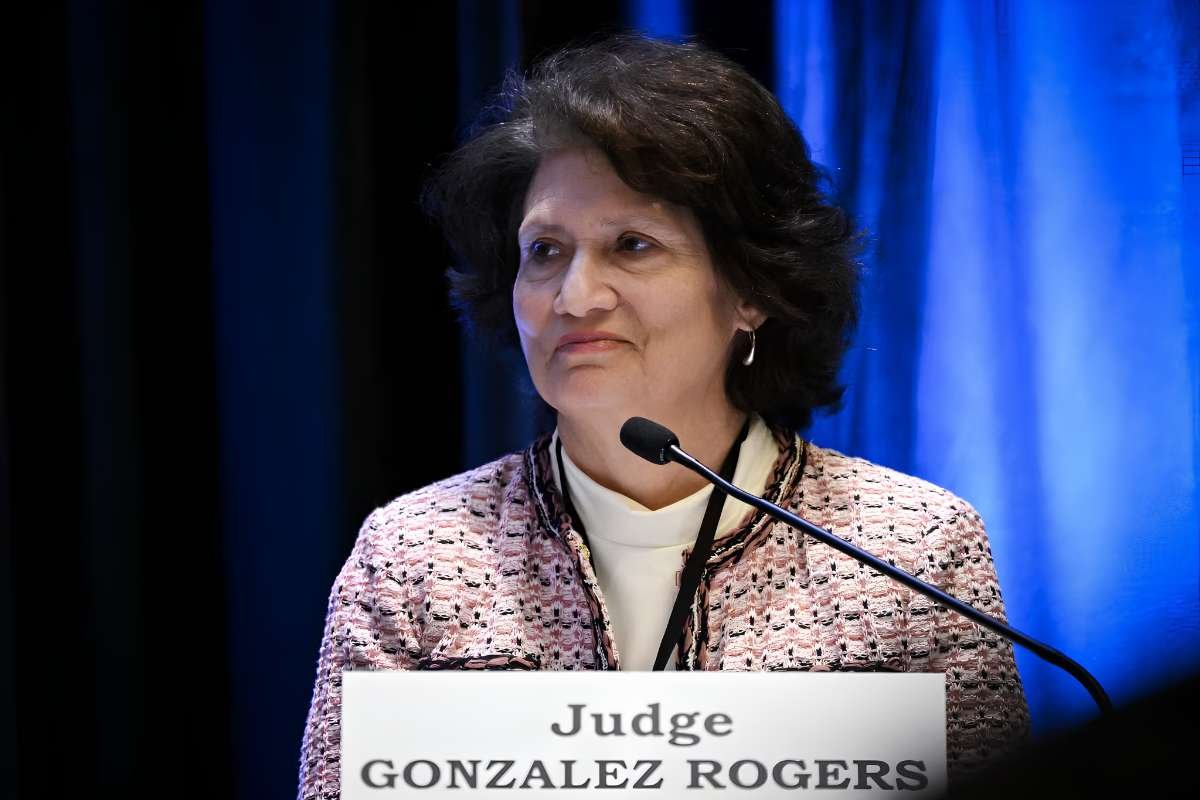
- Judge Yvonne Gonzalez Rogers is becoming a key figure in regulating Big Tech.
- Meta’s approach to child safety is facing serious legal scrutiny.
- The case could set a wider precedent for the social media industry.
The Yvonne Gonzalez Rogers Meta trial is putting the federal judge at the center of a closely watched legal battle that could force Meta to make significant changes to Facebook and Instagram. The federal trial, which began in Oakland on August 18, pits Meta against a coalition of 29 U.S. states over allegations that the company designed its social media platforms to keep children and teenagers engaged while failing to protect them from potential harm adequately.
Gonzalez Rogers, an Obama appointee to the U.S. District Court for the Northern District of California, has considerable experience handling high-profile technology disputes. Her earlier cases have included the closely watched legal fight between Epic Games and Apple, while more recently she presided over litigation involving Elon Musk and OpenAI.
That background has made her role in the Meta case particularly significant. Rather than simply overseeing a conventional jury trial, Yvonne Gonzalez Rogers Meta trial has structured the proceedings around an eight-member advisory jury. The five women and three men can assess the evidence and provide a recommendation, but the final decision on Meta’s liability rests with the judge.
Yvonne Gonzalez Rogers Meta trial could reshape social media practices
The case focuses on allegations that Meta intentionally used features such as infinite scrolling, recommendation algorithms, autoplay, and the “like” system to encourage young users to spend more time on its platforms.
The states also allege that Meta collected information from children under 13 without obtaining the required parental consent, potentially violating federal child-privacy requirements. Prosecutors argue that the company was aware of concerns surrounding youth safety but continued to prioritize engagement and business growth.
Former Meta engineering director Arturo Béjar has emerged as an important witness for the states. During testimony, Béjar described concerns he had raised about the experiences of young users and alleged that child safety did not receive sufficient priority within the company. His testimony has provided the states with an inside perspective on how Meta allegedly handled warnings about risks affecting teenagers.
Meta has rejected the allegations and maintains that it has invested heavily in safety measures. The company argues that the states have not demonstrated that its products were deliberately designed to harm children. It has also disputed claims linking its platforms directly to broader mental-health problems among young people.
The financial stakes are substantial, although figures circulating in the case require context. Meta has indicated that the states’ legal theories could potentially expose the company to penalties of up to $1.4 trillion. That figure represents a theoretical maximum under the states’ interpretation of the law rather than a guaranteed award or a direct demand for that amount.
The ruling could reshape social media practices
The proceedings are expected to last roughly six to eight weeks, with Meta CEO Mark Zuckerberg and Instagram head Adam Mosseri among the prominent figures expected to testify. The case could ultimately require Meta to change aspects of how Facebook and Instagram operate, particularly in relation to younger users, platform design and data collection.
The unusual advisory-jury arrangement also puts Gonzalez Rogers firmly in control of the outcome. While the jurors’ conclusions could influence her assessment of the evidence, they will not deliver a binding verdict. The final ruling, including any penalties or possible changes to Meta’s platforms, will come from the judge.
The trial is also unfolding against a wider wave of legal challenges targeting social media companies over alleged harm to children. That makes the outcome important beyond Meta itself. A decision against the company could encourage regulators and state governments to pursue stronger measures around youth safety, privacy and engagement-driven platform design.
For Yvonne Gonzalez Rogers Meta trial, the proceedings represent another major test of how existing laws should apply to some of the technology industry’s most influential business practices. Her eventual ruling could establish an important precedent for how social media companies are expected to balance user engagement with responsibility toward younger audiences.
As testimony continues, the spotlight will remain on Meta’s internal practices and its treatment of young users. But the case is equally a test of Gonzalez Rogers’ approach to regulating the boundaries of Big Tech through the courts.