
Inclusive leadership models provide structured ways for leaders to involve teams, encourage participation, and build trust through everyday actions. This article explains different models along with how each supports team dynamics in different situations. It also outlines how leaders can choose the right model based on team needs and goals.
Workplace dynamics have changed in subtle but important ways over the years. Teams are no longer made up of people who think and work alike, and that shift has made leadership far more complex than simply giving direction or making decisions. The way people contribute, communicate, and collaborate now plays a much bigger role in how successful a team can be.
Leaders are expected to create spaces where individuals feel comfortable speaking up and sharing ideas, even when those ideas challenge the norm. Inclusive leadership models focus on building that kind of environment, where participation is encouraged, and different perspectives are taken seriously rather than overlooked. But what exactly are these models?
What Are Inclusive Leadership Models?
Inclusive leadership models are clear ways leaders involve people in daily work. They bring in different skills, backgrounds, and viewpoints. The focus stays on fairness, respect, and equal chances to contribute. Leaders who use these models invite input and listen with care. They create a safe space where people speak up and share ideas. This helps teams communicate better and builds trust over time.
These models also help leaders spot and reduce bias. Leaders look at who gets heard and who may be left out. Then they take steps to fix those gaps. Each model offers a simple way to support inclusion at work. The goal stays the same across all of them. Teams perform better when people feel valued and involved.
What are the Different Types of Inclusive Leadership Models?
Inclusive leadership takes many forms. Each model offers a different way to guide teams and share decisions. Understanding the models below can help leaders pick the right approach. So, let us start!
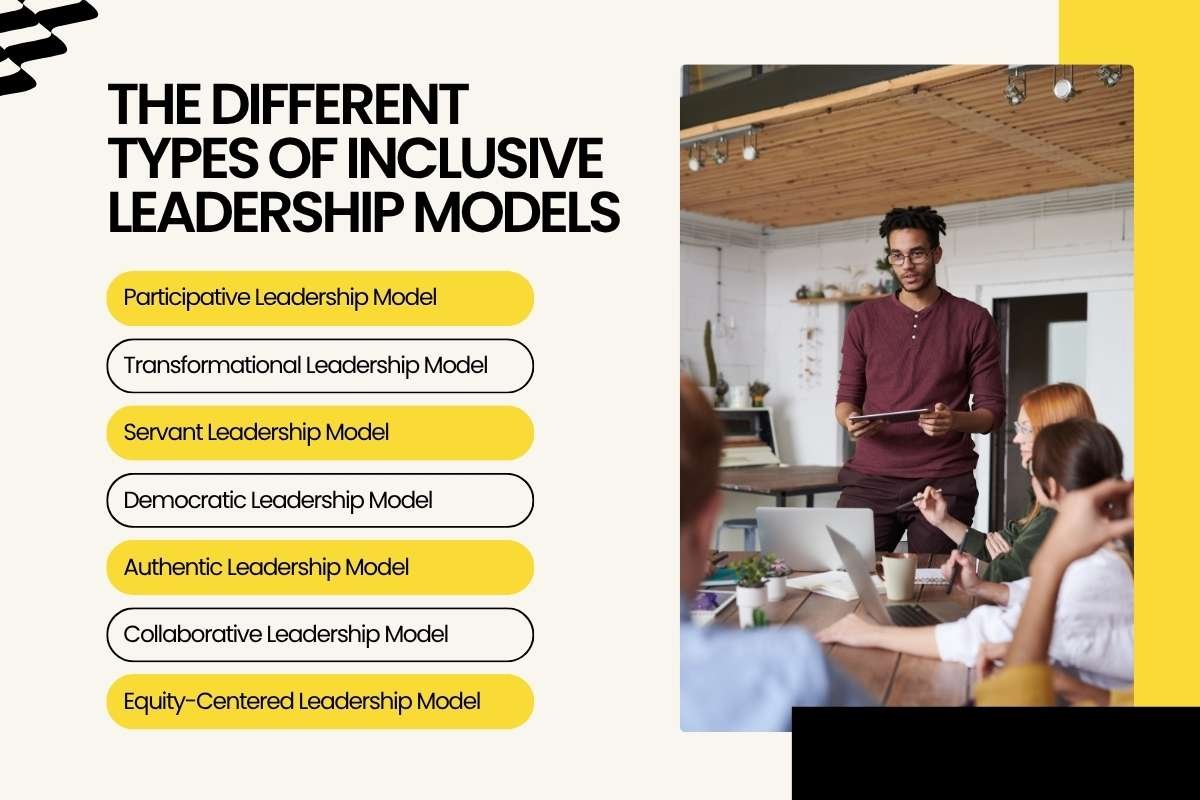
1. Participative Leadership Model: Leaders invite team members into the decision process. They ask for ideas, discuss options, and then make a final call. This model builds trust and keeps people engaged. It works well when teams need fresh ideas and shared ownership.
2. Transformational Leadership Model: Leaders focus on vision and growth. They motivate people to improve and try new ideas. Team members feel encouraged to learn and take initiative. This model fits teams that face change and need strong direction with support.
3. Servant Leadership Model: Leaders put the team first. They listen, support, and remove blockers from daily work. The focus stays on people and their growth. This model builds strong relationships and creates a safe work environment.
4. Democratic Leadership Model: Leaders give equal weight to team opinions. Decisions often come after group discussion or voting. This model promotes fairness and shared responsibility. It works best when time allows for open discussion.
5. Authentic Leadership Model: Leaders stay honest and self-aware. They communicate openly and act with consistency. Team members feel safe to express themselves. This builds trust and improves team connection.
6. Collaborative Leadership Model: Leaders bring people together across roles and levels. Teams work as one unit to solve problems and reach goals. This model reduces silos and improves teamwork. It helps teams share ideas more freely.
7. Equity-Centered Leadership Model: Leaders focus on fairness in outcomes, not just process. They check how work, rewards, and chances are shared. Then they fix gaps where needed. This model helps create balance within the team.
| Model | Focus Area | Decision Style | Best For | Key Benefit |
| Participative Leadership | Team input | Leader decides | Idea-driven teams | Higher engagement |
| Transformational Leadership | Growth and vision | Leader-led | Fast-changing environments | Strong motivation |
| Servant Leadership | Team support | Support-led | People-focused teams | High trust levels |
| Democratic Leadership | Equal opinions | Group-based | Teams with time for discussion | Fair decisions |
| Authentic Leadership | Transparency | Leader-guided | Trust-building environments | Honest communication |
| Collaborative Leadership | Teamwork | Shared | Cross-functional teams | Better coordination |
| Equity-Centered Leadership | Fair outcomes | Leader-driven | Diverse teams | Balanced opportunities |
Read More:
How to Choose an Inclusive Leadership Model?
Not every model will fit your needs. The right choice should match how your team works and grows.
A good model also supports trust and shared success. Leaders should look at team size, work style, and long-term plans. Below, we have outlined the steps that will help you choose the right model:
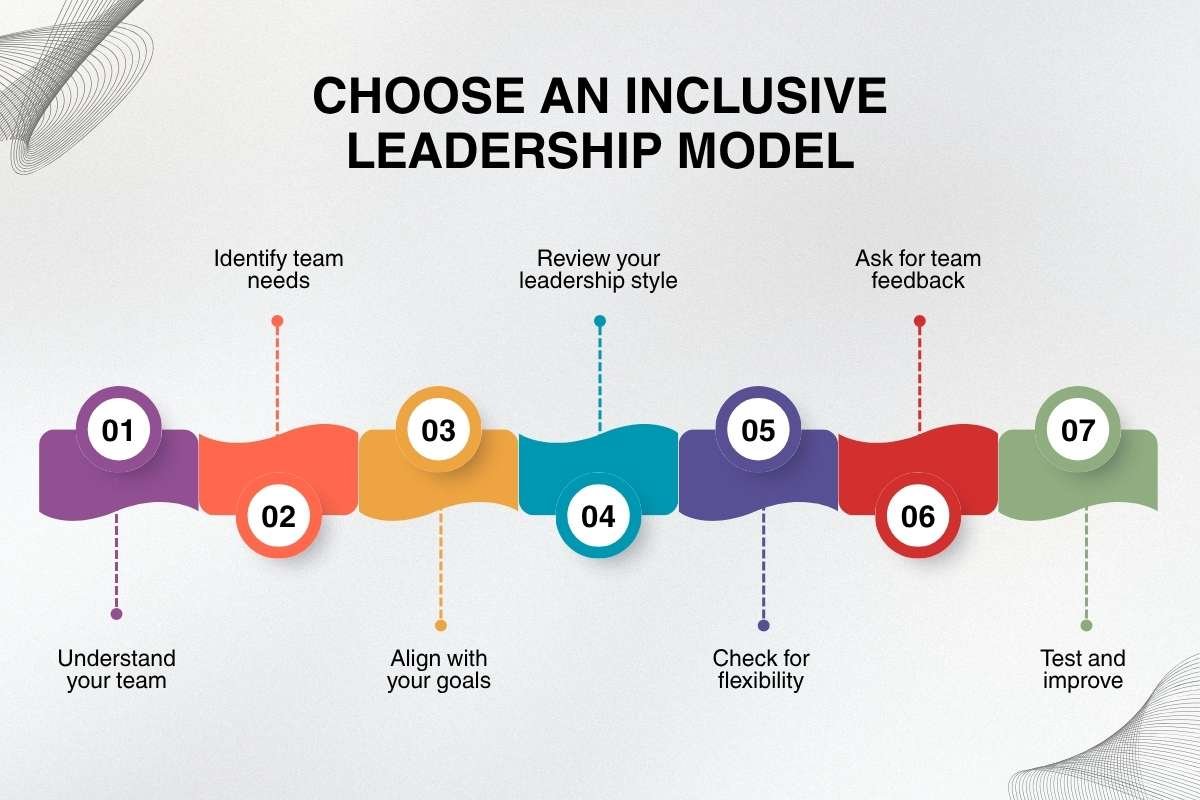
- Step 1: Understand your team
- Step 2: Identify team needs
- Step 3: Align with your goals
- Step 4: Review your leadership style
- Step 5: Check for flexibility
- Step 6: Ask for team feedback
- Step 7: Test and improve
Leaders should start by understanding their team and how they work together. Team size, roles, and communication style all shape how a model will fit. At the same time, it helps to identify gaps such as low trust or weak participation. These early checks make the choice clearer and more practical.
The next step is to align the model with team goals and leadership style. Some teams need more ideas, while others need faster decisions. Leaders should also pick a model that feels natural to them, since this makes daily use easier and more consistent.
Flexibility matters in real work settings. Teams face different situations, so one fixed approach may not work every time. Leaders can adjust their style or combine elements from different models when needed. This keeps the team balanced and responsive.
Feedback and improvement complete the process. Leaders should ask team members if they feel heard and involved. They should also watch performance and engagement over time. Small changes based on feedback help the model work better as the team grows.
How Do They Help in Improving Team Performance?
Inclusive leadership models improve how teams share ideas and make decisions. People feel safe to speak, so more viewpoints come into the discussion. This leads to better solutions and fewer blind spots. Teams also solve problems faster because they work together, not in silos.
These models build trust and keep people engaged in their work. Teams also stay longer when they feel valued. In 2025, 76% of employees said they are more likely to stay with companies that focus on human-centered, inclusive leadership. Clear communication reduces confusion and avoids repeated mistakes. Over time, this creates a steady and reliable workflow.
Inclusive teams also adapt better to change. They accept new ideas and adjust without much resistance. Leaders can spot issues early because people speak up more often. This helps the team stay strong and perform well even in tough situations.
Are Inclusive Leadership Models Useful for Startups?

“Never underestimate the value of being part of a team. Entrepreneurship is often portrayed as a solo journey, but the truth is that every successful leader is supported by mentors, partners, colleagues, clients, and advocates who contribute to that success.” – Amelia Costellanos
Amelia Castellanos is the founder of Buffaloe Digital. She built the company as a strategic growth partner, not a typical marketing agency. Her work focuses on connecting systems across the full customer journey. She brings together different teams and functions to drive long-term growth. This approach reflects inclusive leadership, where teams align around shared goals and not isolated tasks.
Startups benefit from this kind of leadership model. Amelia did not rely on rigid roles or siloed work. She created systems that helped teams collaborate and adapt as the business grew. She also worked across industries, which brought diverse ideas into her strategy. Her focus on learning, mentorship, and shared success helped teams improve over time.
Conclusion:
What ultimately determines leadership effectiveness is the ability to translate intention into everyday behavior that others can see, experience, and rely on. Inclusive Leadership models serve as a practical framework within this shift, guiding leaders to embed fairness, openness, and active participation into how decisions are made and how teams operate.
Sustainable progress depends on consistency rather than isolated efforts. When these models are applied with clarity and accountability, they strengthen collaboration and lead to more balanced decisions across teams. The result is a leadership approach that is better equipped to navigate complexity and deliver meaningful results.
People Also Ask
1. What does inclusivity in leadership look like in real situations?
They appear in everyday actions: inviting quieter team members to speak, sharing credit based on contribution, and using different viewpoints to shape final decisions.
2. Is this something that can be learned or developed over time?
Yes, it usually develops through practice. Paying attention to team dynamics and being open to feedback helps leaders adjust their approach.
3. How can teams support this kind of leadership?
Teams can contribute by speaking up, respecting differing opinions, and engaging in discussions instead of relying entirely on the leader to drive everything.
Thank You for Reading!
See More
Inclusive Leadership Lessons from a CIO Women Leaders Driving Modern Success