

Moving to a new country can create opportunities for career growth, international exposure, and leadership development. However, entering an unfamiliar job market also means rebuilding professional relationships, understanding local workplace expectations, and identifying the right industry connections.
For women professionals, this transition can involve additional challenges, including limited access to established networks, cultural differences, and fewer opportunities for mentorship and sponsorship. Building a professional network becomes an important step towards establishing career visibility and accessing opportunities in a new market.
From reconnecting with former colleagues to joining women-led communities, a structured networking approach can help women develop meaningful professional relationships and build a stronger career presence abroad.
Why Building a Professional Network Matters for Women?
Professional networks influence access to industry information, job referrals, mentorship, and career advancement. For women navigating global mobility, these connections can provide insights into local hiring practices, workplace culture, and professional expectations across international markets.
The World Economic Forum’s Global Gender Gap Report 2024 highlights a gender difference in professional networking. Its LinkedIn analysis found that men had larger professional networks than women in 97% of the economies studied.
This gap makes building a professional network particularly relevant for women relocating for work or restarting their careers in a different market. Developing local connections can help women improve professional visibility, access industry knowledge, and identify opportunities beyond publicly advertised vacancies.
6 Steps to Build a Professional Network in a New Country
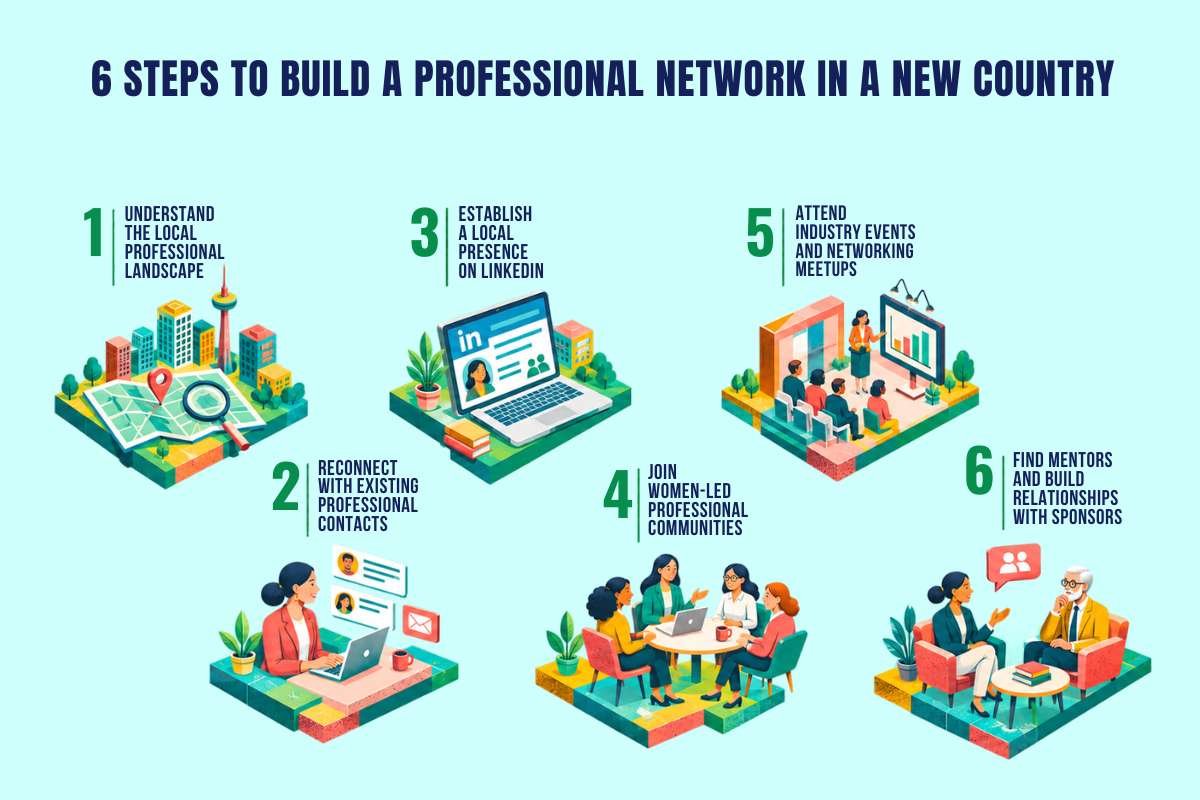
1. Understand the Local Professional Landscape
Before approaching potential contacts, research the industry and employment environment in your new country.
Identify leading employers, professional associations, industry events, relevant qualifications, and local hiring practices.
For International career moves for women, understanding local employment requirements and professional expectations can make the transition into a new market easier.
Understanding business etiquette and workplace communication styles can also enhance professional interactions.
For example, women entering the financial services industry may need to understand local regulatory requirements, professional certifications, and industry associations before approaching potential employers.
Once you understand these factors, you can identify the professionals and organisations most relevant to your career goals.
2. Reconnect With Existing Professional Contacts
Relocating does not mean starting without professional connections. Former colleagues, university classmates, clients, and previous managers can help women establish introductions in a new market.
Reach out to people who already work in your destination country. Explain your relocation, professional background, and current career interests.
University alumni networks can also be useful. Connecting with graduates who have experience in the local market provides an opportunity to discuss industry expectations and potential career pathways.
3. Establish a Local Presence on LinkedIn
To strengthen your professional presence:
- Update your location and professional headline.
- Highlight transferable skills and international experience.
- Follow companies and industry leaders in your sector.
- Join relevant professional groups.
- Participate in industry discussions.
- Send personalised connection requests.
Avoid approaching every new contact with a job request. Instead, introduce yourself, explain your professional interests, and establish a genuine reason for connecting.
Consistent engagement helps women maintain industry connections and develop professional relationships, particularly when physical networking opportunities are limited.
Example of a personalised LinkedIn connection request:
Hello [Name],
I recently relocated to [Country] and came across your profile while connecting with professionals in the [Industry] sector. Your experience at [Company] caught my attention. I would be glad to connect and learn more about your experience in the local industry.
Best regards,
[Your Name]
4. Join Women-Led Professional Communities
Women-focused professional communities can help newcomers connect with experienced professionals, entrepreneurs, and peers who understand the challenges of navigating unfamiliar workplaces.
Consider joining:
- Women in business associations.
- Women in leadership networks.
- Industry-specific women’s groups.
- International women’s professional communities.
- Networks supporting migrant and expatriate women.
The International Labour Organization’s publication For Women, By Women highlights how groups formed by women migrant workers strengthen collective support, information-sharing, and community connections. These groups can also serve as starting points for professional networking by helping women exchange employment information, identify relevant contacts, understand local workplace practices, and access referrals.
Such communities can help women move beyond informal support to develop professional relationships, exchange industry knowledge, discuss workplace challenges, and identify potential career opportunities.
5. Attend Industry Events and Networking Meetups
Industry events give women opportunities to meet recruiters, exchange ideas with peers, identify potential collaborators, and build relationships beyond their existing professional circles.
Women starting over in a new market should prioritise events related to their industry and career interests.
Rather than trying to meet as many people as possible, focus on a few meaningful conversations. Prepare a short introduction explaining your professional background, current interests, and areas of expertise.
Regular participation helps women establish industry connections, exchange knowledge, and become familiar faces within their professional communities.
6. Find Mentors and Build Relationships With Sponsors
Mentors and sponsors can play different but complementary roles in women’s career development.
A mentor provides guidance, shares industry knowledge, and helps professionals navigate career decisions. A sponsor actively advocates for someone’s advancement and recommends them for important opportunities.
Women do not always need to begin by formally requesting a mentor. They can start by seeking advice on a specific career challenge, asking about local industry expectations, or discussing professional development opportunities. Following up on these conversations and applying the advice received can gradually establish a stronger professional relationship.
Such relationships can also help women access Global Assignment Opportunities for Women by connecting them with international projects, cross-border leadership roles, and decision-makers involved in global talent development.
McKinsey and LeanIn.Org’s Women in the Workplace 2025http://leanin.org
report highlights the career advantage associated with sponsorship. Employees with sponsors were promoted at nearly twice the rate of those without sponsors.
For women entering a new country, developing relationships with experienced local professionals can provide valuable insights into career progression, leadership expectations, and industry opportunities.
Common Networking Mistakes Women Should Avoid

While building a professional network, women should focus on developing genuine relationships instead of treating networking as a job-search activity.
Some common mistakes include:
- Connecting only when seeking employment: Build relationships before needing referrals or recommendations.
- Limiting connections to senior professionals: Peer relationships can provide valuable industry information and collaboration opportunities.
- Sending generic messages: Personalised communication makes professional introductions more meaningful.
How to Measure Your Networking Progress

The success of building a professional network should not be measured only by the number of LinkedIn connections or events attended. The quality and relevance of professional relationships matter more.
Women can evaluate their networking progress through the following indicators:
| Networking indicator | What it demonstrates |
| Industry conversations | Better understanding of the local market |
| Mentorship opportunities | Access to professional guidance |
| Referrals and introductions | Growing professional trust |
| Event participation | Increased industry visibility |
| Collaboration opportunities | Stronger professional relationships |
| Job and project enquiries | Potential career opportunities |
A smaller network of relevant and supportive professionals can be more valuable than hundreds of inactive connections.
Conclusion:
Building a professional network in a new country requires patience, consistency, and a willingness to establish new professional relationships. For women entering an unfamiliar market, local industry knowledge, women-led communities, mentorship, and professional events can create valuable opportunities.
The objective is not simply to meet more people but to develop relationships that support career growth, improve professional visibility, and create access to opportunities in the long term.
Frequently Asked Questions:
1. How Can Women Build a Professional Network in a New Country?
Women can start by reconnecting with former colleagues, joining local professional associations, attending industry events, using LinkedIn, and participating in women-led communities. Regular communication and meaningful professional relationships help establish a network over time.
2. Why Is Networking Important for Women Professionals?
Networking provides women with access to career information, mentorship, sponsorship, referrals, and professional opportunities. It can also improve industry visibility and help women establish credibility in unfamiliar professional environments.
3. How Can I Network Without Knowing Anyone in a New Country?
Identify professionals in your industry through LinkedIn, attend relevant events, and join local professional groups. Send personalised connection requests, ask for brief coffee chats, and follow up after conversations to build relationships gradually.
4. How Can Women Find Professional Mentors Abroad?
Women can identify potential mentors through industry associations, women’s professional communities, conferences, alumni groups, and LinkedIn. Approaching experienced professionals with specific career-related questions can help establish meaningful mentoring relationships.
5. How Long Does It Take to Build a Professional Network?
There is no fixed timeline. Initial connections can develop within weeks, but trusted professional relationships take longer. Regular participation, meaningful conversations, and consistent follow-ups help strengthen a network.