

This article explains how multitasking affects attention by exploring the neuroscience behind task-switching, cognitive overload, and declining focus. It examines the impact of frequent multitasking on memory, productivity, stress, and brain health while debunking common misconceptions about multitasking. The article also shares five science-backed strategies to reduce distractions, strengthen concentration, and build healthier attention habits in an increasingly digital world.
Every day, the average person is interrupted by emails, messages, notifications, and endless browser tabs, all competing for attention. While juggling multiple tasks may feel productive, science tells a different story.
Research shows that nearly 40% of adults regularly multitask with digital devices, yet studies also reveal that frequent task-switching can reduce productivity by up to 40%. That’s because the brain isn’t built to perform multiple attention-demanding tasks simultaneously. Instead, it rapidly switches between them, draining mental energy, overloading working memory, and increasing the likelihood of mistakes.
What feels like multitasking is actually constant task-switching, and your brain pays the price every time it changes focus.
As digital distractions become a normal part of daily life, understanding how multitasking affects attention is more important than ever. This article unpacks the neuroscience behind multitasking, its impact on focus and brain health, and practical, research-backed strategies to regain lasting attention.
The biological reality: task-switching vs. True multitasking
Despite its name, multitasking is largely a myth. Unless one of the activities is automatic, such as walking while talking, the brain cannot fully concentrate on two attention-intensive tasks at the same time. Instead, it rapidly shifts its attention from one task to another, a process known as task-switching. This explains how multitasking affects attention at a neurological level, as the brain continuously shifts resources instead of maintaining deep focus.
Each switch may take only a fraction of a second, but it comes at a cost. Before focusing on a new task, the brain must disengage from the previous one and reorient itself. This repeated mental reset, known as the switching cost, consumes valuable cognitive resources. Research published in the Annals of Medicine & Surgery estimates that frequent task-switching can reduce productive time by up to 40%, making people slower, less accurate, and more mentally fatigued.
At the center of this process is working memory, the brain’s temporary workspace for storing and processing information. Every time you switch tasks, your working memory must unload one set of information and load another, increasing cognitive load, or the mental effort required to process information.
Why task-switching hurts your attention?
| Your brain cannot truly multitask | It can only switch rapidly between attention-demanding tasks. |
| Every switch has a cost | Refocusing takes time and mental energy, reducing overall efficiency. |
| Working memory becomes overloaded. | Frequent switching forces the brain to constantly replace information, making it harder to retain details. |
| Attention becomes fragmented | Repeated interruptions break concentration and make it difficult to stay engaged with a single task. |
| Mistakes become more common. | As cognitive load increases, accuracy declines, and decision-making suffers. |
What feels like multitasking is actually a series of rapid mental resets, each one quietly reducing your focus, productivity, and cognitive performance.
Understanding how multitasking affects attention begins with recognizing that frequent task-switching, not true multitasking, is the real source of mental fatigue and reduced concentration.
What constant multitasking does to the brain?
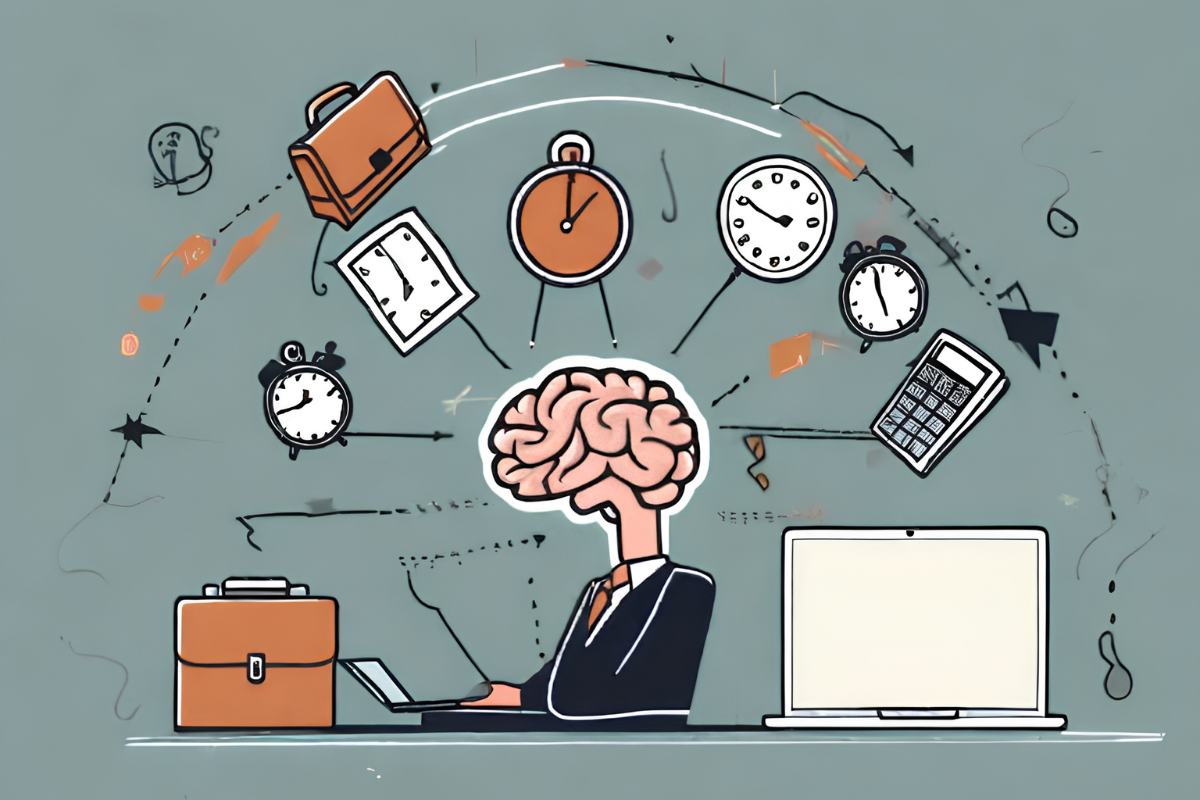
Understanding how multitasking affects attention goes beyond productivity. Frequent task-switching changes how the brain processes information, influencing attention, memory, and cognitive control over time. Over time, frequent task-switching affects attention, memory, and cognitive control, making it increasingly difficult to focus on a single task. Brain imaging studies using MRI and EEG have shown that heavy multitaskers process information differently from those who multitask less.
1. Your brain works harder, not better
Many people assume that multitasking improves efficiency with practice. Research suggests the opposite. Studies have found that heavy media multitaskers recruit more brain regions to complete the same cognitive task, indicating that their brains must expend greater mental effort for similar performance. This increased neural activity contributes to faster mental fatigue and lower overall efficiency.
2. Cognitive control starts to weaken
Your brain relies on executive function to plan, prioritize, and stay focused. However, EEG research published in the International Journal of Psychophysiology found that heavy media multitaskers show weaker activation in attention-control networks and greater activation in the brain’s salience network, making them more likely to react to distractions instead of maintaining sustained focus.
Read More:
- Use Attentional Intelligence in the Workplace for Maximum Productivity
- How Women Leaders Use Attentional Intelligence Differently?
3. You become more distractable
One of the earliest and most influential studies on media multitasking, published in the Proceedings of the National Academy of Sciences (PNAS), found that heavy media multitaskers were more susceptible to irrelevant information and performed worse on tasks requiring them to filter distractions. Rather than becoming better at juggling multiple streams of information, they struggled to ignore unnecessary stimuli and switch attention efficiently.
4. Working memory performance declines
Working memory allows you to temporarily hold and manipulate information while solving problems or making decisions. Research published in Memory found that heavy media multitaskers consistently performed worse on working memory tests, resulting in poorer long-term memory and reduced ability to retain relevant information during complex tasks. This is another clear example of how multitasking affects attention, making it harder to retain and use information efficiently.
5. Your attention span gradually shrinks
Frequent switching between emails, messages, videos, and social media trains the brain to constantly seek new stimulation. Instead of maintaining deep focus, attention becomes fragmented, making prolonged concentration feel increasingly difficult. Researchers suggest that this pattern shifts attention toward bottom-up processing, where external distractions dictate focus rather than deliberate control.
6. Long-term brain changes may occur
Perhaps the most striking finding comes from a 2014 PLOS ONE brain imaging study. Researchers observed that individuals with higher levels of media multitasking had smaller gray matter density in the anterior cingulate cortex (ACC), a region responsible for attention regulation, emotional control, and decision-making. While the study does not prove that multitasking directly causes these structural changes, it highlights a significant association between chronic multitasking and reduced cognitive control.
How multitasking impacts your mental and physical health?
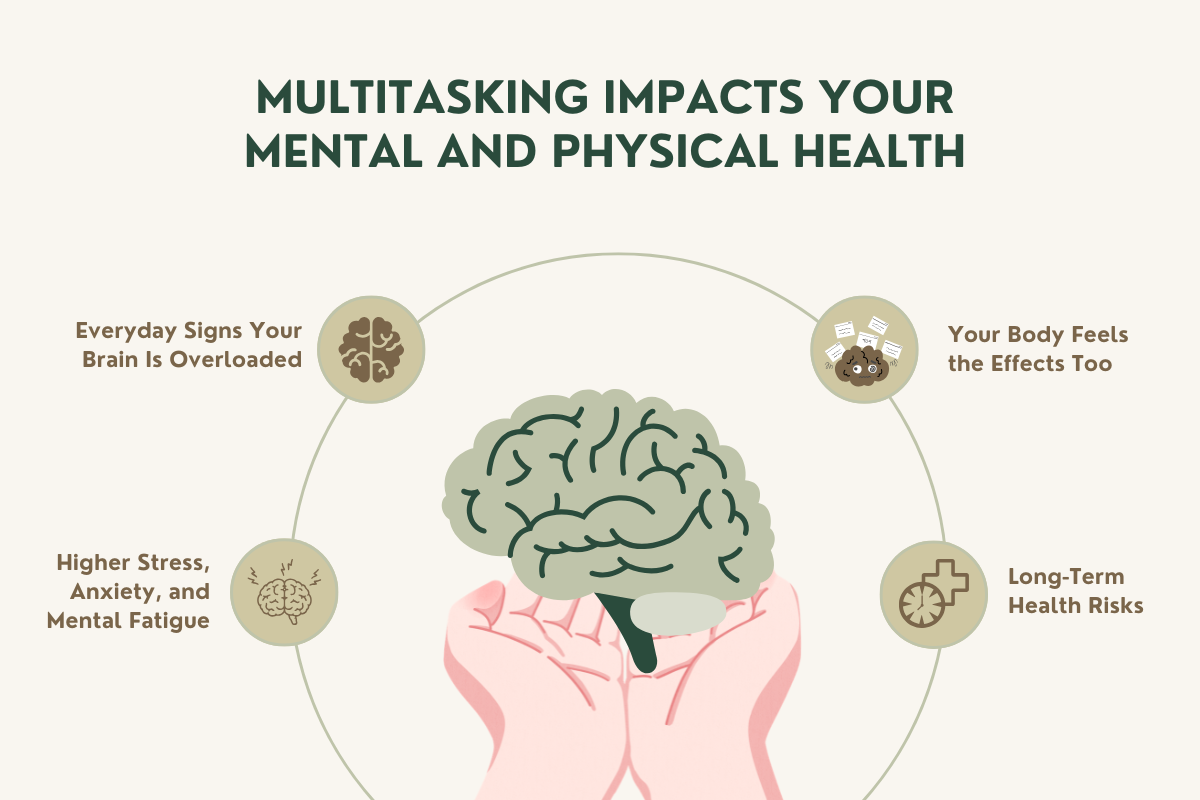
The consequences of multitasking extend well beyond reduced focus. As your brain repeatedly switches between tasks, it experiences continuous cognitive strain that can affect your mood, stress levels, and even physical health. Over time, these effects compound, making it harder to stay productive while increasing the risk of long-term health issues. The long-term effects demonstrate how multitasking affects attention while also influencing emotional well-being, stress levels, and overall brain health.
1. Higher stress, anxiety, and mental fatigue
Constant task-switching keeps the brain in a heightened state of alertness. Instead of completing one task before moving to the next, the brain remains occupied with unfinished activities, increasing mental fatigue.
Research has found that heavy media multitaskers report significantly higher levels of anxiety and depressive symptoms than individuals who multitask less. Frequent digital interruptions also elevate perceived stress, making even routine tasks feel mentally exhausting.
2. Everyday signs your brain is overloaded
The effects of multitasking often appear long before you notice a decline in productivity. If you regularly juggle multiple tasks, you may recognize these common warning signs:
- Brain fog and difficulty thinking clearly
- Forgetfulness, such as losing track of conversations or misplacing items
- Difficulty concentrating on a single task for more than a few minutes
- Mental exhaustion, even after a relatively light workload
- Increased irritability and frustration
- More frequent mistakes and overlooked details
- The urge to constantly check notifications, even without alerts
These symptoms are signs that your working memory is becoming overloaded, leaving fewer cognitive resources available for sustained attention.
3. Your body feels the effects too
Multitasking not only challenges the brain; it also activates the body’s stress response.
When you’re constantly switching between tasks, your body releases stress hormones such as cortisol and adrenaline, temporarily increasing:
- Heart rate
- Blood pressure
- Muscle tension
- Mental alertness
While this response is helpful during short periods of pressure, remaining in this state throughout the day places unnecessary strain on both the brain and cardiovascular system.
4. Long-term health risks
If chronic multitasking becomes a daily habit, the cumulative effects may extend beyond reduced attention.
Research suggests prolonged cognitive overload and chronic stress are associated with:
- Persistent high blood pressure
- Sleep disturbances and poor recovery
- Burnout and emotional exhaustion
- Reduced cognitive performance with age
- An increased risk of cerebrovascular disease and cognitive impairment, particularly when chronic stress remains unmanaged
Although multitasking alone is unlikely to cause these conditions, it can contribute to the chronic stress that increases their likelihood over time.
Read More: Use These 5 Strategies to Boost Attentional Intelligence and Get Results
How to protect your brain: 5 science-backed ways to improve focus

The good news is that your brain is remarkably adaptable. Just as frequent multitasking trains it to become more distractible, consistent focus-building habits can strengthen attention, improve working memory, and reduce mental fatigue. The key isn’t to eliminate technology—it’s to use it more intentionally.
Once you understand how multitasking affects attention, the next step is adopting habits that reduce unnecessary task-switching and strengthen your ability to concentrate.
1. Use time-blocking to reduce task switching
Instead of jumping between emails, meetings, and projects, dedicate uninterrupted blocks of time to one task. Research shows that sustained focus helps reduce cognitive load and improves both productivity and accuracy.
Try this:
- Work in 20–30-minute focused sessions.
- Turn off notifications during each session.
- Take a short 5-minute break before switching tasks.
Why it works: Your brain spends less energy refocusing and more energy completing meaningful work.
2. Batch similar tasks together
Not every task requires deep concentration. Grouping similar activities, such as replying to emails, scheduling meetings, or returning phone calls, reduces the number of times your brain has to switch contexts.
Examples include:
- Checking emails only 2–3 times a day
- Returning all phone calls in one session
- Completing administrative tasks together
Why it works: Fewer context switches mean lower cognitive load and greater efficiency.
3. Create a digital detox routine
Notifications are one of the biggest triggers of attention fragmentation. Even seeing a phone light up can interrupt focus and increase the temptation to switch tasks.
Simple ways to unplug include:
- Muting unnecessary notifications
- Closing unused browser tabs
- Keeping your phone out of sight during focused work
Research suggests that reducing digital interruptions allows the brain to recover from constant stimulation and improves sustained attention over time.
4. Practice mindfulness
Mindfulness isn’t just a wellness trend; it has measurable cognitive benefits. Studies have found that regular mindfulness practice can improve working memory, executive function, and attentional control, while reducing stress and mental fatigue.
You don’t need lengthy meditation sessions to see benefits.
Start with:
- Five minutes of focused breathing
- A short guided meditation
- Paying full attention to a single activity without distractions
Why it works: Mindfulness trains the brain to notice distractions without immediately reacting to them.
5. Optimize your workspace
Your environment plays a bigger role in attention than you might realize. A cluttered desk, multiple open windows, and constant visual distractions force the brain to process unnecessary information, increasing cognitive load.
Create a focus-friendly workspace by:
- Keeping only essential items on your desk
- Closing unused applications and browser tabs
- Wearing noise-cancelling headphones if needed
Why it works: A simpler environment allows your brain to devote more resources to the task that matters most.
Conclusion:
Understanding how multitasking affects attention is essential in a world where constant connectivity is often mistaken for productivity. Neuroscience consistently shows that frequent task-switching overloads working memory, fragments attention, increases stress, and gradually reduces our ability to focus. Yet, neuroscience paints a different picture. Rather than helping us accomplish more, frequent task-switching overloads working memory, fragments attention, increases stress, and gradually reduces our ability to focus.
The encouraging news is that attention isn’t fixed; it’s a skill that can be rebuilt. By adopting simple habits like time-blocking, minimizing digital distractions, batching similar tasks, and practicing mindfulness, you can train your brain to sustain focus instead of constantly reacting to interruptions.
The goal isn’t to do less; it’s to do one thing well before moving to the next. Every uninterrupted work session allows your brain to think more clearly, make better decisions, and perform at its full potential.
Your attention is one of your brain’s most valuable resources. Protect it, and you’ll not only become more productive, but you’ll also support better mental well-being, sharper thinking, and long-term cognitive health.
Frequently asked questions (FAQs)
1. How does multitasking affect attention?
Multitasking forces the brain to switch rapidly between tasks, increasing cognitive load, reducing focus, and making it harder to retain information.
2. Is multitasking harmful to the brain?
Frequent multitasking can weaken attention, working memory, and cognitive control over time. Studies also link heavy media multitasking to changes in brain function.
3. Does multitasking reduce productivity?
Yes. Research suggests frequent task-switching can reduce productivity by up to 40%, while increasing errors and mental fatigue.
4. What are the signs of too much multitasking?
Common signs include brain fog, forgetfulness, poor concentration, mental exhaustion, irritability, and frequent distractions.
5. How can I improve my focus?
If you’re concerned about how multitasking affects attention, use time-blocking, batch similar tasks, limit notifications, practice mindfulness, and focus on one task at a time to strengthen concentration and reduce cognitive overload.
Thank You for Reading!
See More
What Is Low Attentional Intelligence? Signs, Causes, and How to Improve It