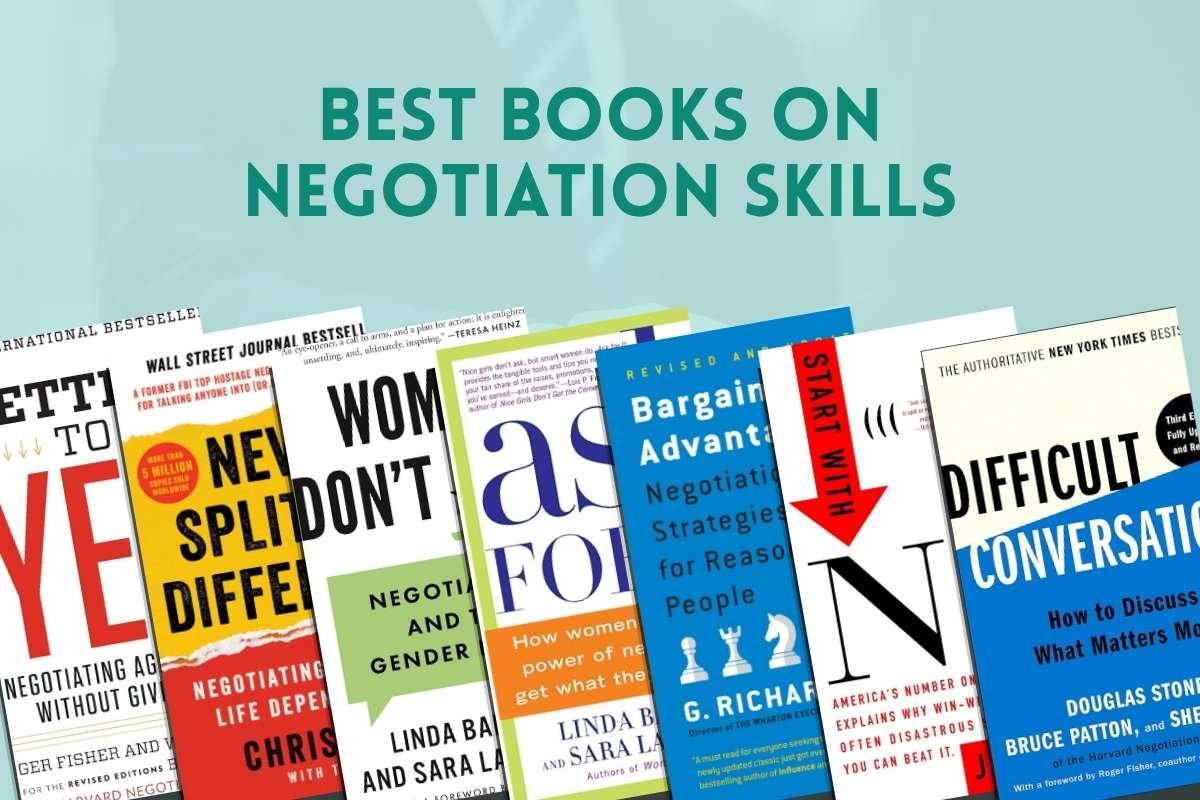

A woman can have the right experience, the right results, and the right reasons to ask for more, yet the way she makes that request can still influence the conversation. That is why negotiating in person vs over email is more than a question of communication preference.
The stakes are significant. In 2024, women in the U.S. earned an average of 85% of men’s median hourly earnings, according to Pew Research Center. The gap was smaller among women aged 25 to 34, who earned 95 cents for every dollar earned by men in the same age group, but a difference remained.
At the same time, the idea that women simply “do not negotiate” is becoming increasingly outdated. A 2024 study published in Academy of Management Discoveries, which examined working adults, MBA students, and alumni, found that women reported negotiating their salaries at least as often as men and, in some samples, more often.
So the question is no longer simply whether women ask.
It is how they ask, when they ask, and which approach gives them the strongest position.
An in-person conversation can create connection, allow immediate responses, and make it easier to read the room. Email, on the other hand, gives you time to think, refine your language, and create a record of what was discussed.
Neither is automatically better. The smartest approach is to know when each one works in your favour.
Negotiating in Person vs Over Email: Better for Women
Imagine that you have just been offered a promotion. Your responsibilities have increased, you are managing a larger team, and your results have been strong, but the salary increase does not seem to reflect the new scope of your role.
When a negotiation involves a promotion, expanded responsibilities, or a change in title, understanding how to approach negotiating job title and role scope can help you make a stronger case.
You have two obvious choices. You could request a meeting and discuss the matter directly, or you could write an email explaining your case.
Which one should you choose?
The answer depends on what you need from the negotiation.

| In-Person Negotiation | Factor | Email Negotiation |
| Strong | Building rapport | Moderate |
| Limited once the conversation begins | Control over wording | High |
| Limited during the discussion | Time to prepare | High |
| Immediate | Reading reactions | Limited |
| Requires a follow-up | Documentation | Built into the process |
| Can be higher | Emotional pressure | Often easier to manage |
| Helpful for back-and-forth | Complex discussion | Helpful for detailed proposals |
| Promotions, leadership and relationship-based discussions | Best suited for | Salary proposals, detailed terms and formal follow-ups |
For women, choosing the format can be particularly important because research suggests that the context surrounding a negotiation can affect whether people feel comfortable making an ask. This makes negotiating in person vs over email an important strategic choice rather than simply a matter of personal preference.
A large-scale field experiment involving nearly 2,500 job seekers found that when employers explicitly stated that wages were negotiable, the gender difference in willingness to negotiate disappeared and even tended to reverse. When negotiability was left unclear, men were more likely to negotiate.
That finding offers a useful lesson: clarity matters. When deciding between negotiating in person and over email, women can choose the format that gives them the most control over how they present their position, evidence, and desired outcome.
Why Negotiation Matters for Women’s Careers?
Negotiation is often reduced to salary, but that is only one part of the picture.
Women negotiate for promotions, titles, responsibilities, project ownership, flexible schedules, professional development, bonuses, benefits, and access to opportunities. These decisions can shape a career long after one conversation is over. This is where negotiating in person vs over email becomes a strategic consideration, helping women choose the communication approach that best supports their career goals.
That matters because women continue to be underrepresented in decision-making positions.
In the U.S., women accounted for 46% of managers in 2023, according to Pew Research Center, compared with 29% in 1980. Women represented 49% of all U.S. workers that year, meaning their representation in management had improved substantially but still had not quite reached their overall share of the workforce.
Globally, the gap is wider. The International Labour Organization reports that women hold only about 30% of managerial positions worldwide.
This is why negotiation should not be viewed as a one-time attempt to get a higher salary. Developing strong negotiation skills for women can help women communicate their value and negotiate access to the responsibilities and opportunities that can influence their next career move.
When Should Women Negotiate in Person?
An in-person conversation is often the stronger choice when the negotiation depends on trust, discussion, and real-time problem-solving.
In these conversations, body language and negotiation can also influence how confidence, openness, and engagement are perceived.
This is particularly true when you are speaking with someone who will continue to influence your career, such as your manager, a senior leader, or a potential business partner.
When does the relationship matter?
A face-to-face discussion can make a difficult conversation feel more collaborative.
Instead of saying, “I want a promotion,” you could explain:
“Over the past year, my responsibilities have expanded considerably, and I would like to discuss how my title and compensation can reflect the level at which I am now contributing.”
The statement makes your position clear without turning the conversation into a confrontation.
When the negotiation has several moving parts
Suppose you are being promoted, but the company cannot meet your salary expectations.
There may still be room to negotiate your title, bonus, professional development budget, working arrangement, or timing of your next compensation review. If flexibility is part of the discussion, knowing how to negotiate flexible work arrangements can help you structure the request around business needs and measurable outcomes.
This is where negotiating in person vs over email can make a meaningful difference. A live conversation makes it easier to explore those possibilities, ask follow-up questions, and respond to the employer’s concerns in real time.
You can ask:
“If there is limited flexibility on base salary, what other parts of the package could we consider?”
That question changes the conversation from “yes or no” to “what else is possible?”
When you need to understand the other person’s concerns
One of the biggest advantages of speaking directly is that you can ask questions and respond immediately.
If your manager says the budget is limited, you can find out whether that means the department has no flexibility at all or whether the salary band for your particular role is the constraint.
That information can completely change your next move.
When persuasion is important
If you are asking for a leadership opportunity or a role with greater responsibility, your ability to explain your achievements and future contribution can matter as much as the number you are requesting.
However, preparation is essential. When considering negotiating in person vs over email, know your target, your evidence, your alternatives, and the questions you want answered before the meeting.
Confidence does not mean improvising.
It means being prepared enough that you do not lose your position when the conversation takes an unexpected turn.
When Is Negotiating Over Email the Better Choice?
Email has a different advantage: it gives you control over the message before anyone else sees it.
That can be particularly useful when you want to avoid being pressured into an immediate answer or when the negotiation involves several specific terms.
When you need time to think
Imagine your manager unexpectedly offers you a new role and asks whether you are comfortable with the proposed salary.
You do not have to answer immediately.
You can say:
“Thank you for discussing the opportunity with me. I would like some time to review the details and come back to you with my thoughts.”
That short pause can give you the time to research the market, review the responsibilities, and decide what you actually want.
When you want greater control over your language?

Email allows you to write your request, read it again, and remove unnecessary apologies or qualifiers. This is one reason negotiating in person vs over email can lead to different experiences, particularly when you want time to refine how you communicate your value.
Instead of:
“I was just wondering if there might be some flexibility in the salary, although I completely understand if there isn’t.”
You can write:
“Based on the expanded scope of the role and my experience, I would like to discuss adjusting the compensation to ₹X–₹Y.”
The second version is not rude. It is simply more precise.
When documentation matters
Some negotiations should always end with a written record.
Salary, job titles, working arrangements, responsibilities, bonuses, and promotion timelines can all become unclear when agreements are made verbally and never documented.
If you negotiate in person, send a follow-up email such as:
“Thank you for discussing this today. To recap, we agreed that I will take on X responsibility, the title will be reviewed in June, and compensation will be revisited following the next performance cycle.”
That email can protect both sides from future misunderstandings.
When the negotiation crosses time zones or locations
For women working with international teams or remote companies, email can also make negotiation more practical. It is also worth considering cultural differences in negotiation, particularly when expectations around directness, hierarchy, communication, and decision-making vary across workplaces.
Does Negotiating Over Email Make You Look Less Confident?
Confidence is communicated through the quality of your argument, not simply through the medium you choose. When considering negotiating in person vs over email, a carefully written email can actually make your position stronger because you have the opportunity to remove vague language, organise your evidence, and make your request specific.
Research also challenges the old assumption that women simply avoid salary negotiations. The 2024 Academy of Management Discoveries study found that women in its samples reported negotiating salaries at least as often as men. The researchers argued that the belief that women “don’t ask” is outdated and can itself reinforce gender stereotypes.
That is an important shift in the conversation. Women do ask. The bigger question is whether the workplace provides a fair environment in which those requests can be heard and evaluated.
This is particularly relevant because research has also found that women can face social penalties when they are perceived as overly assertive in self-advocacy situations. Earlier experimental research found that women sometimes anticipate backlash and adjust their negotiation style accordingly.
That does not mean women should make themselves smaller. Understanding different negotiation styles can instead help women choose an approach that is firm, evidence-based, and collaborative without becoming apologetic.
What Is the 70/30 Rule in Negotiation?
The 70/30 rule in negotiation is a popular negotiation principle suggesting that you should spend roughly 70% of the conversation listening and 30% speaking.
It is better treated as a useful guideline than a strict mathematical rule.
Its real value is that it prevents you from talking so much that you accidentally weaken your own position.
This can happen when someone makes an important request and then immediately starts explaining why the request is reasonable.
For example:
“I would like to discuss increasing my salary to ₹X–₹Y. I know budgets are difficult, and I understand that the company has constraints, and I also know that perhaps this is a significant increase…”
By the end of the sentence, you have already started negotiating against yourself.
Instead, make the request clearly and then give the other person room to respond.
“Based on the expanded scope of my role and the results I have delivered, I would like to discuss compensation in the range of ₹X–₹Y.”
Then listen.
If the response is “That is above the range for this role,” you have learned something valuable. You can now ask:
“What is the current range, and what would I need to demonstrate to move toward the higher end?”
The 70/30 principle works differently over email, but the idea remains useful. Read carefully before replying, identify the actual concern, and answer it directly rather than sending a long explanation that addresses problems the other person has not raised.
What Is the Golden Rule of Negotiation?
One of the most useful rules is simple: be firm about what you want while remaining respectful toward the person you are negotiating with. This is an important consideration when negotiating in person vs over email, because the medium can influence how clearly your tone, confidence, and intent come across.
The goal is not to defeat the other side. It is to find an agreement that recognises your value while taking legitimate constraints into account. The same principle applies in more complex commercial conversations, where B2B negotiation tactics can help structure discussions around value, priorities, and trade-offs.
Instead of saying:
“You are undervaluing my work.”
You could say:
“I would like the compensation to better reflect the scope and measurable impact of my current responsibilities.”
The second statement protects your position without unnecessarily making the other person defensive.
For women, this distinction can be especially useful because research has documented the complicated relationship between assertiveness, gender expectations, and workplace evaluations.
Some studies have found that women can face backlash when they advocate strongly for themselves, although more recent research has challenged simplistic assumptions about how consistently these effects appear.
The takeaway should not be that women need to become less assertive.
It should be that women deserve negotiation environments in which clear self-advocacy is treated as a professional behaviour rather than a personality problem.
What Are the 5 Cs of Email Etiquette?

When you negotiate through email, the writing itself becomes part of your professional presence. The 5 Cs—clear, concise, complete, courteous, and correct offer a useful framework.
| Clear | Your reader should understand what you want without having to interpret the message. |
| Concise | Give enough context to support your request, but do not bury the request beneath several paragraphs of explanation. |
| Complete | Include the information necessary for the other person to evaluate your proposal. For a salary negotiation, that might include your expanded responsibilities, measurable results, and proposed range. |
| Courteous | Being direct does not require being cold. You can make a strong request while maintaining a professional tone. |
| Correct | Before sending the email, check every figure, date, job title, and attachment. A small error can distract from an otherwise strong argument. |
A useful test is to read the email and ask: Would someone who has never spoken to me understand exactly what I am requesting and why?
If the answer is yes, the email is probably doing its job.
What Should Women Not Say When Negotiating?
The problem is not that certain phrases are forbidden. The problem is that some phrases unnecessarily weaken an otherwise strong request.
Instead of saying:
“Sorry to bother you, but I wanted to ask…”
Say:
“I would like to discuss…”
Instead of:
“I was just wondering if there might be some flexibility…”
Say:
“I would like to discuss whether the compensation range is flexible.”
Instead of:
“I completely understand if you cannot do this.”
Say:
“If that range is not possible, I would be interested in discussing what alternatives are available.”
The difference is subtle but important.
You are not being aggressive. You are simply allowing the other person to make the decision instead of conceding to them.
Most importantly, avoid negotiating against yourself.
If you ask for ₹X and the other person pauses, you do not need to immediately say, “But I could accept ₹Y.”
Let them respond.
A pause is not necessarily rejection.
Sometimes it is simply someone thinking.
What Is the #1 Rule of Salary Negotiation?
The most important rule is to know your value before you negotiate your number.
A salary request becomes much stronger when it is supported by evidence.
Start by documenting what has changed since your salary was last determined. Have your responsibilities increased? Are you managing people? Have you taken ownership of major clients or projects? Have you generated revenue, reduced costs, or improved efficiency?
Then quantify your contribution wherever possible.
Instead of saying:
“I have taken on much more responsibility.”
Say:
“Over the past year, I have taken responsibility for three additional client accounts, managed a team of eight, and reduced project turnaround time by 20%.”
That gives the other person something concrete to evaluate.
You should also research market compensation for comparable roles, taking experience, location, industry, and responsibilities into account. This preparation becomes especially important when negotiating in person vs over email, because having clear evidence allows you to communicate your value confidently whether you are making your case verbally or putting it in writing.
The gender pay gap makes this preparation especially relevant. Pew found that women earned 85% of men’s median hourly earnings in 2024.
But negotiation should not be presented as the sole solution to pay inequality.
The ILO reports that women hold only around 30% of managerial positions globally, and women continue to face barriers involving employment opportunities, pay, and access to leadership.
Individual negotiation can help a woman advocate for herself, but organisations also have a responsibility to create transparent and equitable compensation and promotion systems.
When Should You Not Negotiate?
Not every situation calls for an immediate counteroffer.
Sometimes the smartest thing you can do is ask questions first.
You may want to pause when you do not yet understand the role, have not researched the market, do not know whether the company has flexibility, or have not identified what you actually want.
For example, if a recruiter gives you a salary figure that seems low, you do not necessarily have to respond with a counteroffer within seconds.
Instead, ask:
“Could you tell me a little more about how the compensation range for this role was determined?”
That answer might reveal a salary band, bonus structure, or benefits package that changes how you evaluate the offer.
Similarly, if you receive a promotion without a corresponding salary increase, ask what criteria determine compensation at the next level.
Negotiation becomes much easier when you understand the rules of the game.
This connects back to the NBER field experiment mentioned earlier. When the possibility of negotiation was explicitly stated, the gender difference in negotiation behaviour disappeared.
Clarity does not remove every workplace inequality, but it can remove unnecessary uncertainty.
A Simple Decision Framework for Negotiating in Person vs Over Email

When you are unsure which route to take, consider four questions.
- Do I need a relationship-building conversation?
If the answer is yes, start with a meeting.
- Do I need time to prepare my words and evidence?
If you do, email may be the better first step.
- Is the negotiation complicated?
If there are several moving parts, a meeting can help you work through them, followed by an email recap.
- Do I need documentation?
If the answer is yes, make sure the final agreement is in writing, regardless of where the actual negotiation took place.
In many cases, the strongest option is a combination of both.
Send a short email explaining that you would like to discuss your role or compensation. Have the actual conversation in person or over video. Then follow up in writing with the key points.
This approach gives you the preparation and documentation of email without giving up the connection and flexibility of a live conversation.
Negotiation Scripts Women Can Use
For an in-person salary conversation, you could say:
“I would like to discuss my compensation in light of how my role has evolved. Over the past year, I have taken on [responsibility], delivered [measurable result], and expanded my contribution to [area]. Based on the scope of the role and relevant market benchmarks, I would like to discuss compensation in the range of ₹X–₹Y.”
For an email negotiation, you could write:
“Thank you for the offer. I am very interested in the opportunity. Based on the scope of the position, my experience, and the responsibilities outlined, I would like to discuss whether the compensation can be adjusted to ₹X–₹Y.”
Knowing when to use each approach is a key part of negotiating in person vs over email, particularly when you want your message to sound confident while leaving room for discussion.
If you are negotiating a promotion, try:
“My responsibilities have expanded significantly beyond my current position. I would like to discuss aligning my title and compensation with the level at which I am now operating.”
If your employer says there is no room in the salary budget, you can ask:
“I understand the budget constraint. If the base salary cannot move to the proposed range, could we discuss other elements of the package, such as a bonus, professional development support, additional leave, or an earlier compensation review?”
And if you simply need more time:
“Thank you for the offer. I appreciate the opportunity and would like some time to review the full package before making a decision. Could I come back to you by [date]?”
These scripts are not meant to be memorised word for word. They are starting points. The strongest negotiation language is language that sounds natural when you say it.
Conclusion:
The best choice between negotiating in person vs over email depends on the situation, not on which format feels easier. Use in-person conversations when rapport, persuasion, and real-time discussion matter, and choose email when preparation, precision, and documentation are more important.
For women, the strongest approach is to focus on evidence, communicate value clearly, and avoid negotiating against themselves. When the stakes are high, combining both formats can offer the best of each conversation for connection and email for clarity.
FAQs:
Is it better to negotiate salary in person or by email?
Neither approach is universally better. In-person conversations work well when you need relationship-building, persuasion, and immediate feedback, while email gives you more control over your wording, preparation, and documentation.
2. Is email a good way to ask for a raise?
Yes. A concise, evidence-based email can clearly communicate your request and provide supporting details. For a more complex negotiation, you can use email to initiate the conversation and then follow up with a meeting.
3. What is the 70/30 rule in negotiation?
The 70/30 rule is a commonly used negotiation guideline suggesting that you spend roughly 70% of the conversation listening and 30% speaking. It encourages active listening and helps prevent unnecessary over-explaining.
4. What should women avoid saying during a negotiation?
Avoid unnecessary apologies, excessive hedging, and phrases that minimise your request, such as “I was just wondering” or “anything would help.” Be courteous and confident without negotiating against yourself.
5. What is the number one rule of salary negotiation?
Know your value before naming your number. Research the market, understand the responsibilities of the role, and prepare measurable evidence of your contribution before making a compensation request.