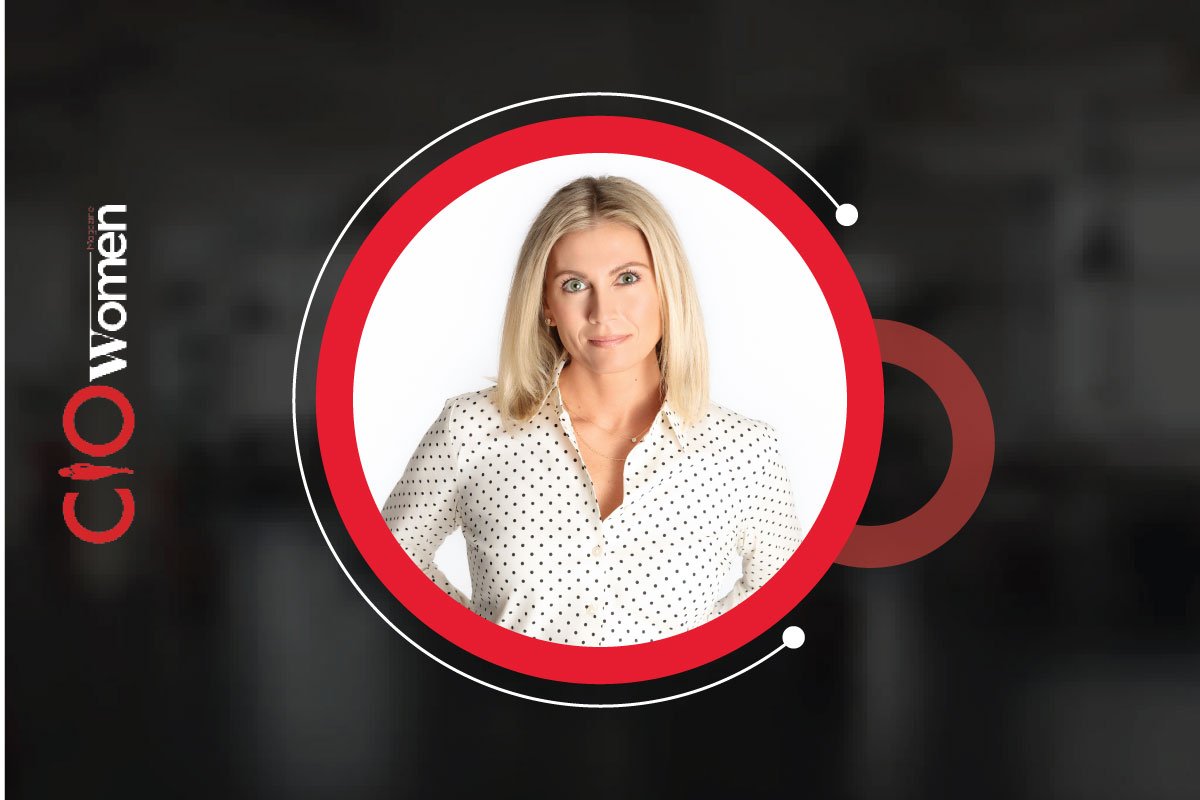
Some careers are carefully planned, while others take shape through experience and the courage to step into unfamiliar territory. For Stephanie Sirois, the journey into finance and operational due diligence was not something she envisioned early on. Growing up in a small town, her path was shaped by discipline, consistency, and a strong work ethic that later became the foundation of her professional life.
Stephanie Sirois is the Co-Founder and Managing Principal of Channel Diligence, a firm built on the belief that operational due diligence should be more than a routine exercise. Her work focuses on helping investors and fund managers understand risk, strengthen operations, and build platforms that can sustain long-term growth. She believes that while performance may attract attention, operational integrity is what builds lasting trust.
Stephanie Sirois’ 20+ year career began in finance and fund accounting, with roles at AllianceBernstein, Citigroup, and a hedge fund, where she developed a strong understanding of investment operations. A defining shift came during her time at UBS, where she discovered operational due diligence and went on to lead it at a global level. This experience shaped her perspective on how operational strength directly impacts investment outcomes.
The idea to co-found Channel Diligence came from a clear gap in the industry. Together with her co-founder, she built a firm focused on bringing consistency, transparency, and practical insight into the diligence process, ensuring it is meaningful and actionable.
In a recent interaction with CIO Women, Stephanie Sirois shared insights into her journey, the evolving role of operational due diligence, and how thoughtful leadership and consistency continue to shape her approach to building a trusted and impactful firm.
Q: Stephanie Sirois, your journey as a leader is both inspiring and impactful. Can you walk us through your professional path and the key milestones that led you to your current role as Co-Founder and Managing Principal at Channel Diligence?
I grew up in a small town called Madawaska, Maine, on the Canadian border, with a population of under 5,000. At that time, a career in global finance was not something I had imagined. What I did gain early on was discipline and responsibility. I started working young, from babysitting in middle school to retail, an ice cream shop, and waiting tables through college. These experiences shaped my work ethic and taught me consistency and the importance of showing up every day.
I began my career in finance through fund accounting roles at firms such as AllianceBernstein and Citigroup, along with experience at a Japanese equities-focused hedge fund. These early roles gave me a clear understanding of how investment platforms function in practice. A turning point came when I received a call from UBS, which introduced me to operational due diligence, a path I had not originally planned but quickly connected with.
At UBS Asset Management, I joined as an analyst and grew within the function, eventually becoming Global Co-Head of Operational Due Diligence. During this time, I worked across a wide range of alternative investment managers globally. This gave me visibility into strong institutional platforms and areas where operational weaknesses could create real risk.
It was during this phase that I developed a core belief that still guides my work today: performance may attract capital, but operational strength is what retains it and builds long-term trust.
Starting Channel Diligence was a natural next step, built on partnership and shared vision. My co-founder, Wendy Beer, brings deep experience across governance, legal, and regulatory areas. Through her work on fund boards and within advisory roles, she saw how gaps in diligence directly impact oversight and decision-making. She conceived the idea of an independent ODD firm and helped bring that vision to life with our strategic partner, Channel Capital Group.
By combining her governance perspective with my investor-side experience, we built a firm that is practical, independent, and grounded in how due diligence is actually used in real investment decisions.
Q: What inspired you to start Channel Diligence, and what gap were you aiming to address in the industry?
Channel Diligence was born from what we consistently observed in our careers. Outside large institutional investors, operational due diligence is often treated as a box-ticking exercise rather than a meaningful input into decision-making. In many cases, the insights lacked depth and context.
There was also a lack of consistency in how diligence was performed and communicated, making it difficult to assess risk clearly or compare managers effectively. At the same time, very few firms were truly focused on this area with the level of independence and detail it requires.
We saw an opportunity to raise the standard by bringing:
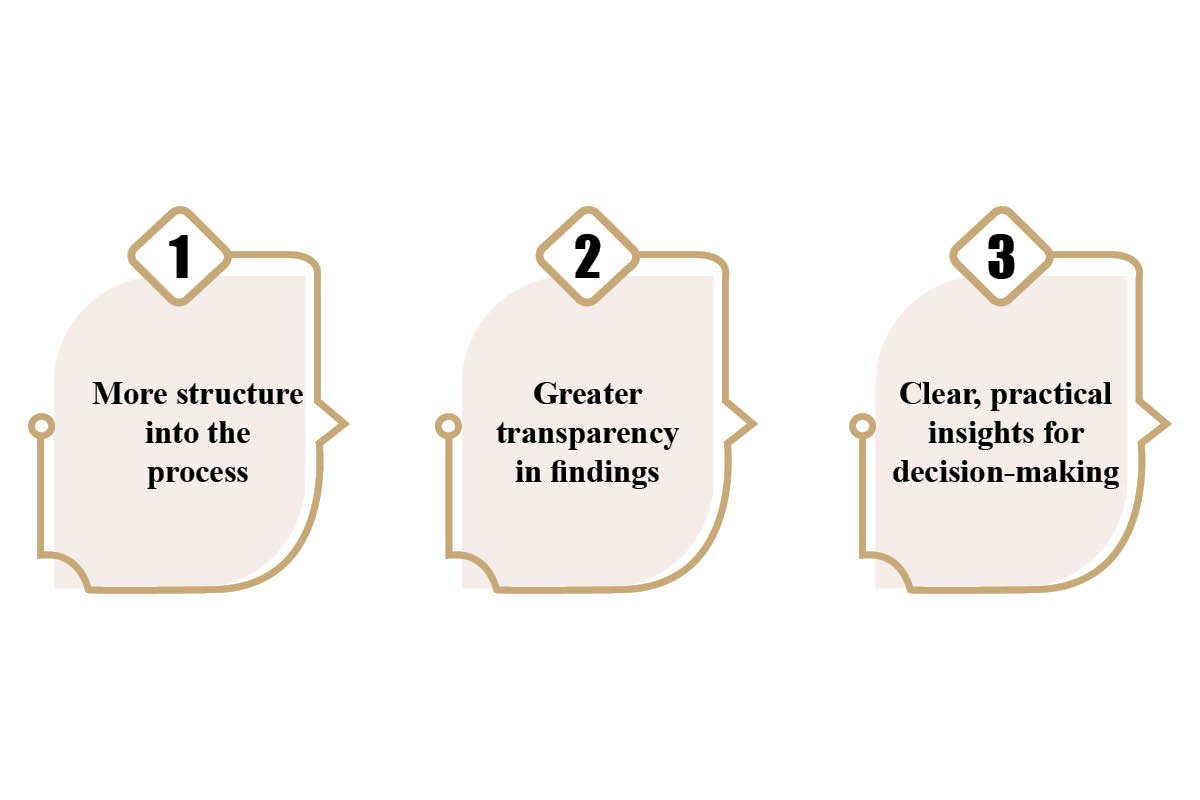
- More structure into the process
- Greater transparency in findings
- Clear, practical insights for decision-making
Beyond identifying risks, we also work closely with managers to strengthen operations and close gaps. The goal is to highlight weaknesses and help build stronger, more resilient platforms that can attract and retain long-term capital.
Q: Channel Diligence operates in a dynamic and competitive environment. How do you ensure innovation, agility, and sustained value creation within your organization?
In operational due diligence, innovation is not about being loud or disruptive. It is about staying relevant as risks and markets evolve.
We focus on:
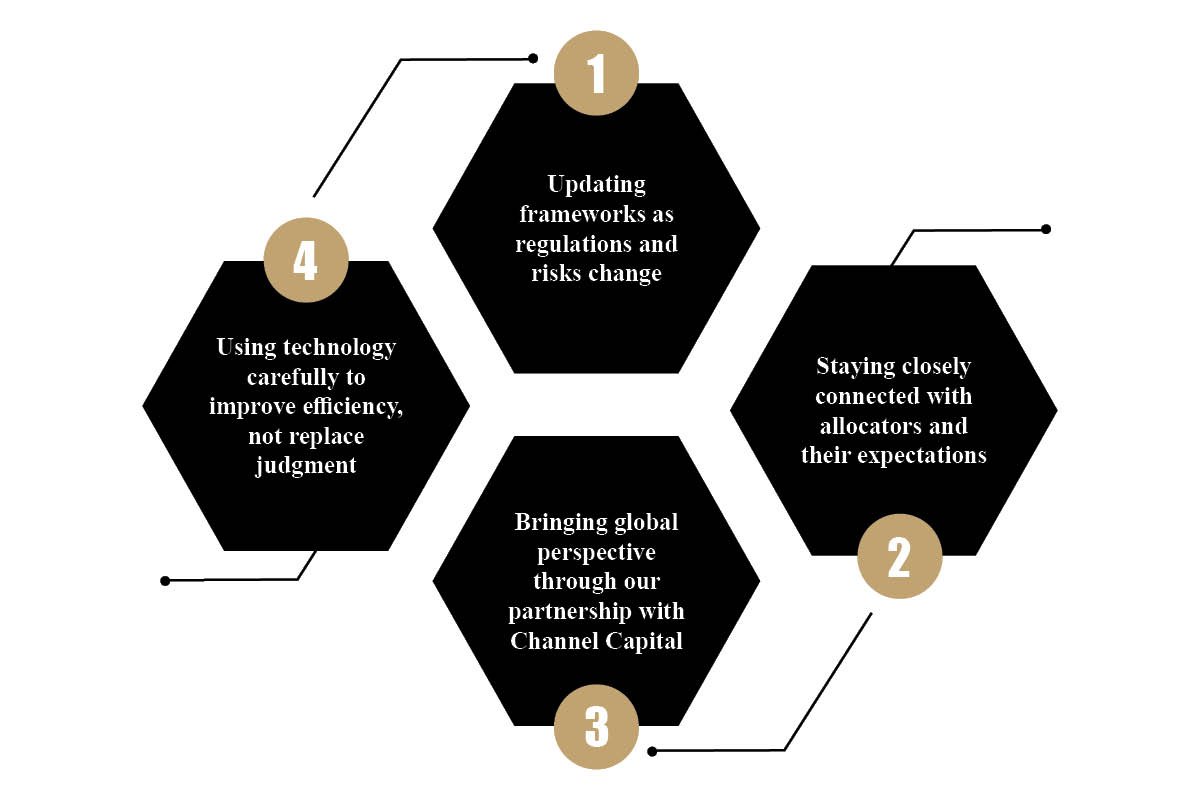
- Updating frameworks as regulations and risks change
- Staying closely connected with allocators and their expectations
- Bringing a global perspective through our partnership with Channel Capital
- Using technology carefully to improve efficiency, not replace judgment
Our structure is also a strength. With Erika Jordan leading Australia and the firm being fully female-led alongside Wendy and myself, we bring diverse perspectives + via experience that shape how we solve problems and serve clients.
Q: How do you see the operational due diligence space evolving over the next 3–5 years, and how is Channel Diligence positioning itself to stay ahead of these changes?
Operational due diligence is no longer a background function in investment decisions. It is becoming central to how capital is evaluated and allocated. Over the next few years, this shift will only deepen as regulatory expectations increase, fund structures become more complex, and areas like cybersecurity, data governance, and artificial intelligence take on greater importance. There is also a clear move away from one-time reviews toward continuous monitoring, where oversight becomes an ongoing process rather than a single checkpoint.
At the same time, the industry is beginning to split in two directions. On one side are more standardized, volume-driven approaches, and on the other are specialized providers focused on depth and conviction. Investors today are looking for more than surface-level assessments. They want clarity, consistency, and processes they can stand behind in front of investment committees and boards.
Channel Diligence is intentionally built on that second path. The focus is not on scale or volume, but on delivering thoughtful, detailed work that reflects a real understanding of operational risk. The goal is to provide insights that are accurate and practical enough to support stronger decision-making and long-term confidence.
Q: Can you highlight any notable recognitions, certifications, media features, or industry acknowledgments that reinforce your credibility and expertise?
My academic background includes a Master of Science in Banking and Financial Services Management from Boston University and a Bachelor of Arts in Economics from Saint Michael’s College, which laid the foundation for my understanding of financial systems and investment operations.
Over the years, I’ve also contributed to industry conversations through various platforms and publications, including a podcast discussion on elevating operational due diligence, which can be accessed here:
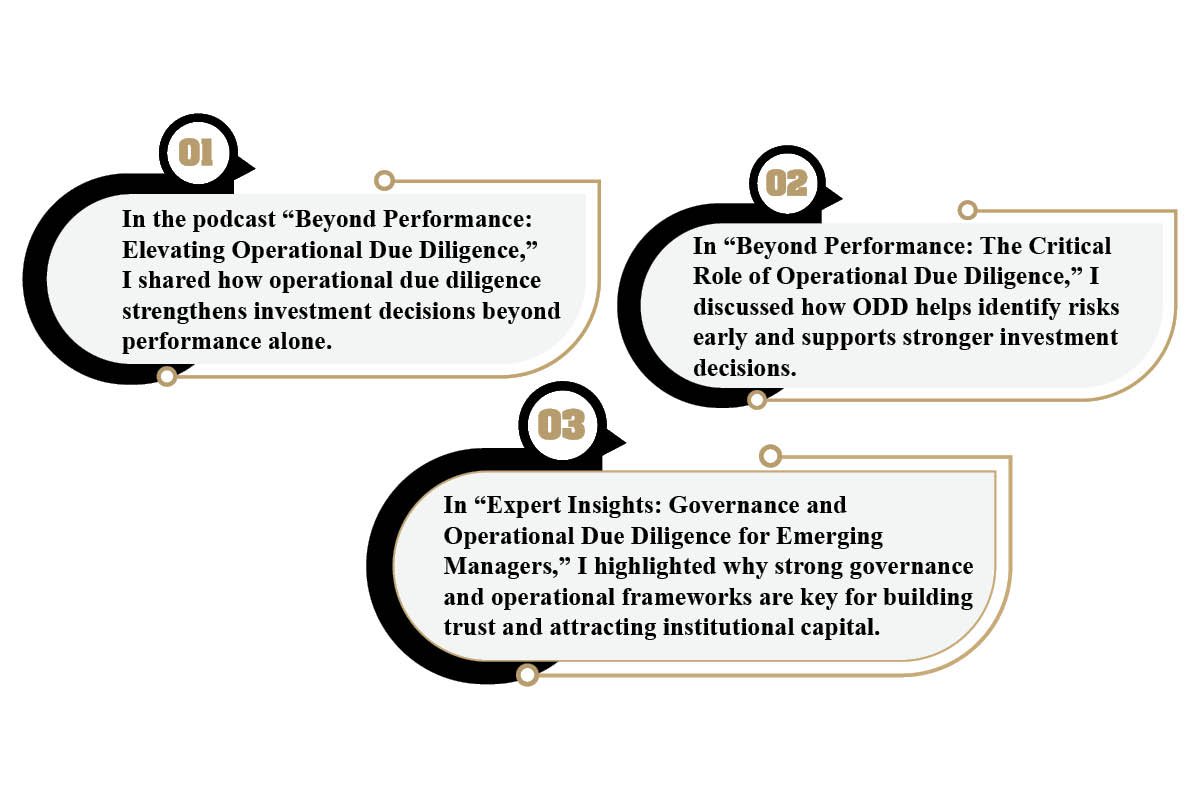
- In the podcast “Beyond Performance: Elevating Operational Due Diligence,” I shared how operational due diligence strengthens investment decisions beyond performance alone.
- In “Beyond Performance: The Critical Role of Operational Due Diligence,” I discussed how ODD helps identify risks early and supports stronger investment decisions.
- In “Expert Insights: Governance and Operational Due Diligence for Emerging Managers,” I highlighted why strong governance and operational frameworks are key for building trust and attracting institutional capital.
In addition to written and podcast contributions, I speak at several industry forums, including the Hedge Fund Billion Dollar Leaders’ Summit 2024, “AI Governance and Operational Impact in Investment Funds: Risks, Policies, and Real-World Applications” in January 2026, GAIM Ops Cayman 2026, and the SuperReturn CFO/COO North America Summit 2026.
Q: What legacy do you aim to build through your leadership, and how do you define success in this new era of entrepreneurship?
I hope to help reshape how operational due diligence is viewed. Today, it is often seen as a checkpoint in the investment process, but I believe it can play a far more meaningful role. At its best, it should identify risk and help strengthen businesses and improve outcomes over time. My aim is to contribute to that shift, where ODD becomes a value-building part of decision-making rather than just a control function.
For me, success is about building a firm that is trusted for its independence, respected for its depth of expertise, and recognized for raising the standard of what strong operational practice looks like in this industry. It is about creating work that holds up under scrutiny and genuinely adds value to how capital is allocated and managed.
On a personal level, success is also about balance. I am a wife and a mother of four young children, and being present for my family while building something meaningful professionally is very important to me. That balance does not happen by chance; it requires intention, discipline, and support. I am fortunate to have a very supportive partner in my husband, Ed. Building an entrepreneurial journey while raising a family is not something you do alone, and his support allows me to show up fully in parts of my life.
Ultimately, I define success as building something that matters, while staying grounded in the values and relationships that matter even more.
Q: As a woman leader, what unique perspectives or strengths have you brought to your leadership journey?
Some of the most meaningful strengths in leadership are not always the most visible. For me, it has been about listening carefully, asking the right questions, and creating space for honest conversation. In a field like operational due diligence, where small details often carry significant weight, these qualities make a real difference.
A large part of the work involves understanding how people, processes, and controls actually function together in practice, not just on paper. That means looking beyond surface-level answers and understanding how something will hold up when tested in real situations. Over time, I’ve learned that this ability to read between the lines is just as important as technical expertise.
My approach is also highly collaborative. I place strong value on shared thinking and ensuring that decisions are well considered and durable. Building Channel Diligence alongside Wendy and working closely with Erika has reinforced how important it is to lead with clarity, accountability, and mutual respect.
Q: What advice would you give to aspiring women entrepreneurs who aim to lead with confidence and resilience?
I never had a perfect plan. My career evolved through decisions made in real time, often by saying yes to opportunities that felt uncertain.
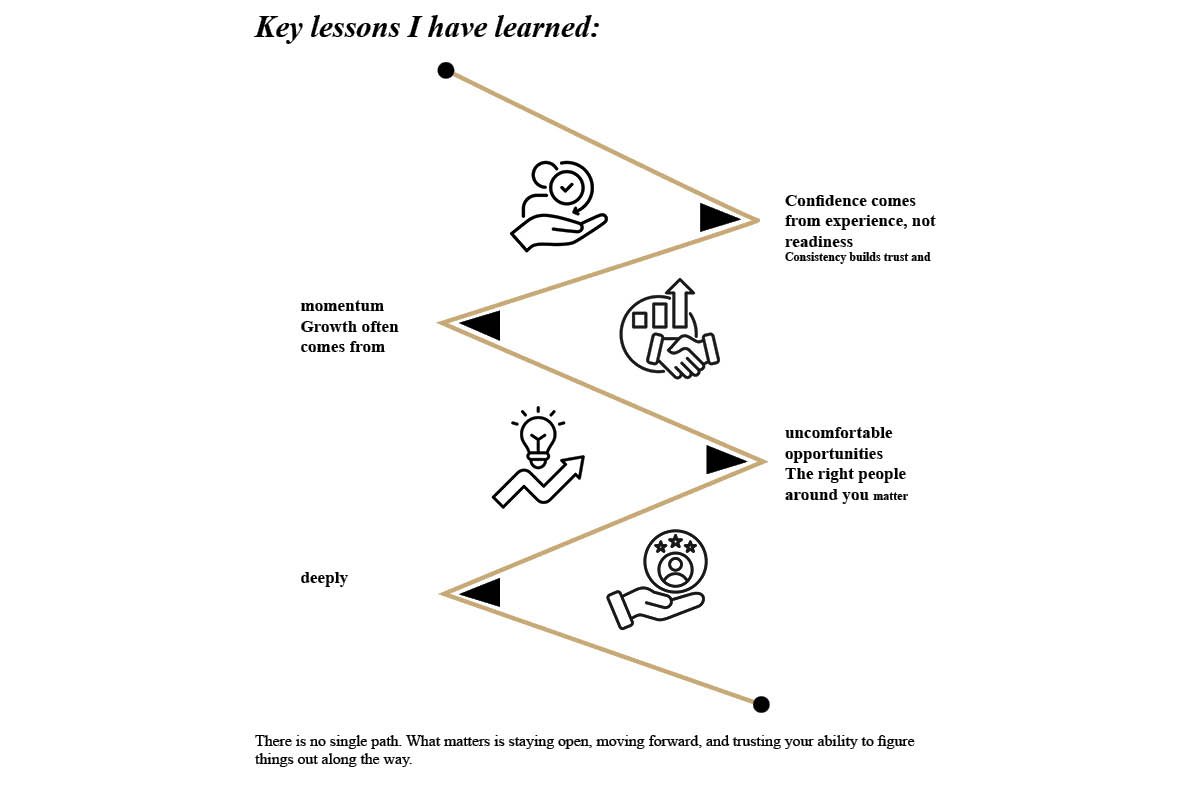
Key lessons I have learned:
- Confidence comes from experience, not readiness
- Consistency builds trust and momentum
- Growth often comes from uncomfortable opportunities
- The right people around you matter deeply
There is no single path. What matters is staying open, moving forward, and trusting your ability to figure things out along the way.