
Changing countries can open doors to industries, leadership roles, and professional networks that may be difficult to access in familiar markets. The World Economic Forum’s Global Gender Gap Report 2026 highlights this opportunity gap. Women account for 41.8% of the global workforce but only 29.6% of senior leadership positions, with representation falling from 46% at entry level to 23% in the C-suite.
Against this backdrop, women crossing borders are using international education, overseas assignments, fellowships, and entrepreneurship to expand their career opportunities. However, successful global mobility also depends on financial independence, professional networks, and access to employment opportunities in destination markets.
3 Ways Global Mobility Creates Career Opportunities for Women
For women crossing borders, international mobility creates three important career advantages and highlights the growing importance of women and global mobility in international workforce development.
- Access to larger professional markets: Moving to international business hubs can connect women with multinational employers, investors, industry associations, and leadership opportunities that may be limited in their home markets.
- Opportunities for career reinvention: International education and cross-border employment can help professionals move into unfamiliar industries. Employers may value transferable skills, international exposure, and the ability to work across different markets.
- Stronger leadership capabilities: Managing international teams, understanding different business environments, and handling cross-cultural negotiations can strengthen the experience required for senior management positions.
These opportunities also highlight the importance of global assignment opportunities for women, particularly in expanding access to international leadership roles, cross-border experience, and professional advancement.
Women Who Transformed Their Careers Through International Mobility
The experiences of women leaders demonstrate how moving across countries can create opportunities for professional growth and entrepreneurship.

1. Indra Nooyi : From Chennai to the Global Boardroom
The Move: Chennai, India → New Haven, Connecticut, USA → Global Corporate Leadership.
Indra Nooyi’s journey illustrates how international education and cross-market experience can transform a professional career. Born in Chennai in 1955, she studied at Madras Christian College before earning an MBA from the Indian Institute of Management Calcutta in 1976. She began her career at Mettur Beardsell, a British textile company, before joining Johnson & Johnson as a product manager in Mumbai. One of her early assignments involved marketing Stayfree sanitary pads in a market where advertising such products faced restrictions.
Recognizing the importance of international business education, Nooyi applied to Yale School of Management and moved to the United States in 1978. She attended Yale on a partial scholarship and took up a receptionist job to support herself while studying. In 1980, she graduated with a master’s degree in public and private management.
Her international career developed through strategic roles at Boston Consulting Group, Motorola, and Swiss-Swedish engineering company Asea Brown Boveri (ABB). These positions exposed her to corporate restructuring, international markets, business planning, and executive decision-making.
In 1994, Nooyi joined PepsiCo, where she played a significant role in shaping its corporate strategy. She contributed to major business decisions, including the acquisitions of Tropicana and Quaker Oats. In 2001, she became president and CFO before being appointed CEO in 2006.
During her leadership from 2006 to 2018, she championed Performance with Purpose, connecting business growth with healthier product offerings, environmental sustainability, and social responsibility. PepsiCo’s annual net profit increased from approximately $2.7 billion to $6.5 billion during her tenure.
The Career Lesson: Nooyi’s journey shows how international education, exposure to different business environments, and strategic career choices can help women move from domestic management roles to global executive leadership.
2. Zhang Xin: From a Factory Worker in Hong Kong to a Global Real Estate Entrepreneur
The Move: Beijing, China → Hong Kong → United Kingdom → China and International Business Markets.
Zhang Xin’s career demonstrates how international mobility can turn limited early opportunities into a foundation for entrepreneurship. Born in Beijing in 1965, she moved to Hong Kong with her mother at the age of 14. Rather than entering higher education immediately, she spent five years working in factories, saving money to finance her studies abroad.
At 19, she moved to the United Kingdom, where she pursued a bachelor’s degree in economics at the University of Sussex and a master’s degree in development economics at the University of Cambridge. This educational transition introduced her to international economic systems and gave her access to professional opportunities beyond her initial circumstances.
Following her education, Zhang entered investment banking, working with Goldman Sachs and Travelers Group. Her experience in international finance helped her develop an understanding of capital markets, investment decisions, and large-scale business development.
In 1995, she returned to China and co-founded SOHO China with her husband, Pan Shiyi. The company focused on commercial real estate development, particularly in Beijing and Shanghai. Rather than following conventional property-development models, Zhang brought international architectural perspectives into the business through collaborations with prominent architects, including Zaha Hadid and Kengo Kuma.
Under her leadership, SOHO China developed a portfolio of major commercial properties and became known for its distinctive architectural projects. She also expanded her business interests internationally, establishing Closer Properties in New York in 2008 and later founding Closer Media in 2021.
Her journey illustrates how international education and financial experience can be brought back to emerging markets to identify opportunities and build businesses with global influence.
The Career Lesson: Zhang’s experience highlights the value of circular mobility. International exposure does not have to lead to a permanent overseas career. Women can use global education, financial expertise, and professional networks to build influential businesses in their home markets.
The Challenges Women Face When Building Careers Abroad
Despite these opportunities, women on global assignment often encounter barriers that extend beyond relocation costs and professional adjustments, including employment restrictions, unequal compensation, and limited family support.
1. Visa Restrictions and Employment Dependence
Some countries restrict employment opportunities for spouses accompanying international workers. Women relocating as dependent partners may find themselves unable to work independently, even when they possess relevant qualifications.
Understanding work visa options for women professionals, including dependent visa conditions, employment authorization, and pathways to independent residency, is therefore essential before accepting an international opportunity.
2. Gender Pay Gaps and Career Progression
International relocation does not eliminate workplace inequality. UN Women’s Gender Snapshot 2026 reports that female managers earned less per hour than male managers in 80% of countries with available data.
Women must therefore evaluate salary structures, promotion policies, and leadership representation before accepting international opportunities.
3. Unpaid Care Responsibilities and Cultural Adjustment
Relocating can mean losing access to familiar childcare arrangements, extended family support, and established social networks.
The UN’s gender research also highlights that women perform approximately 2.5 times as much unpaid domestic and care work as men globally. These responsibilities can become more difficult to manage in a new country.
For women crossing borders, access to childcare, family-friendly employment policies, and supportive professional communities can significantly influence long-term career sustainability.
How Women Can Prepare for Successful International Career Moves
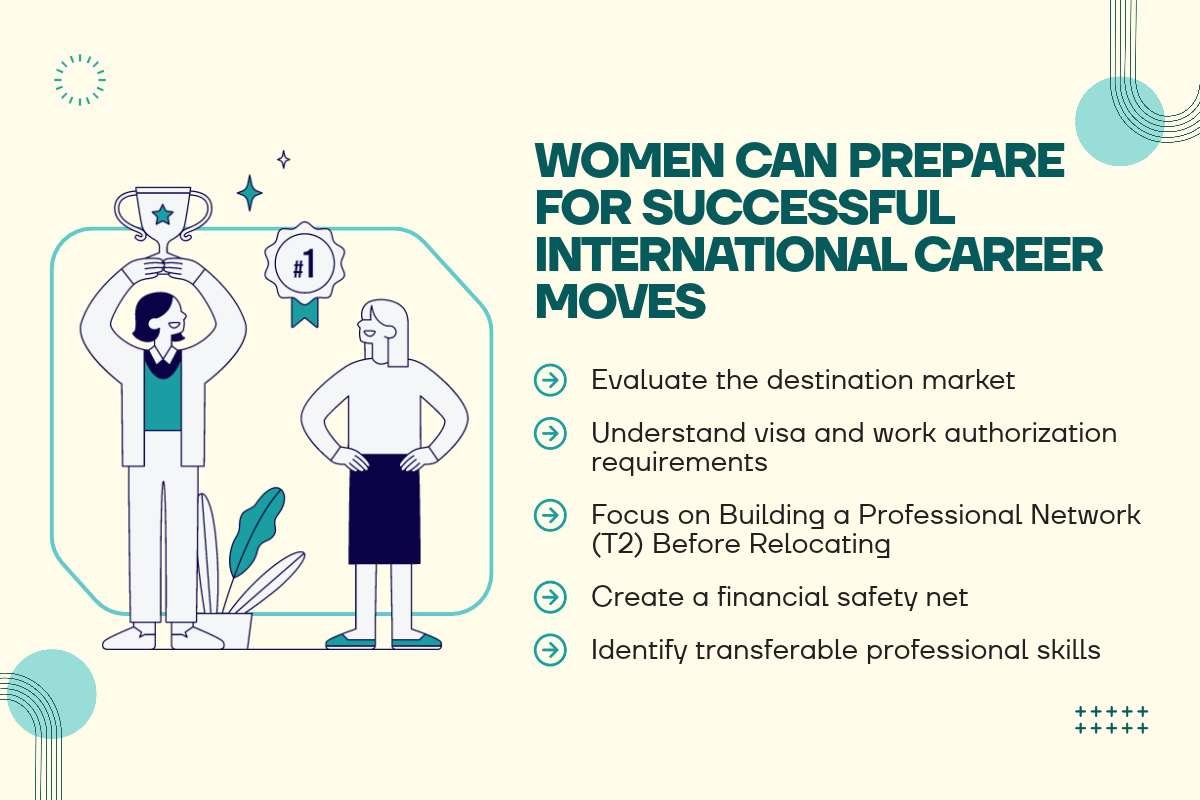
A successful international transition requires more than securing an overseas job. Women crossing borders should approach relocation as a structured career decision.
- Evaluate the destination market: Research industry demand, salary benchmarks, leadership opportunities, workplace equality, and employment regulations before choosing a country.
- Understand visa and work authorization requirements: Check whether the visa permits employment, self-employment, or business ownership. Also assess whether family members can work independently.
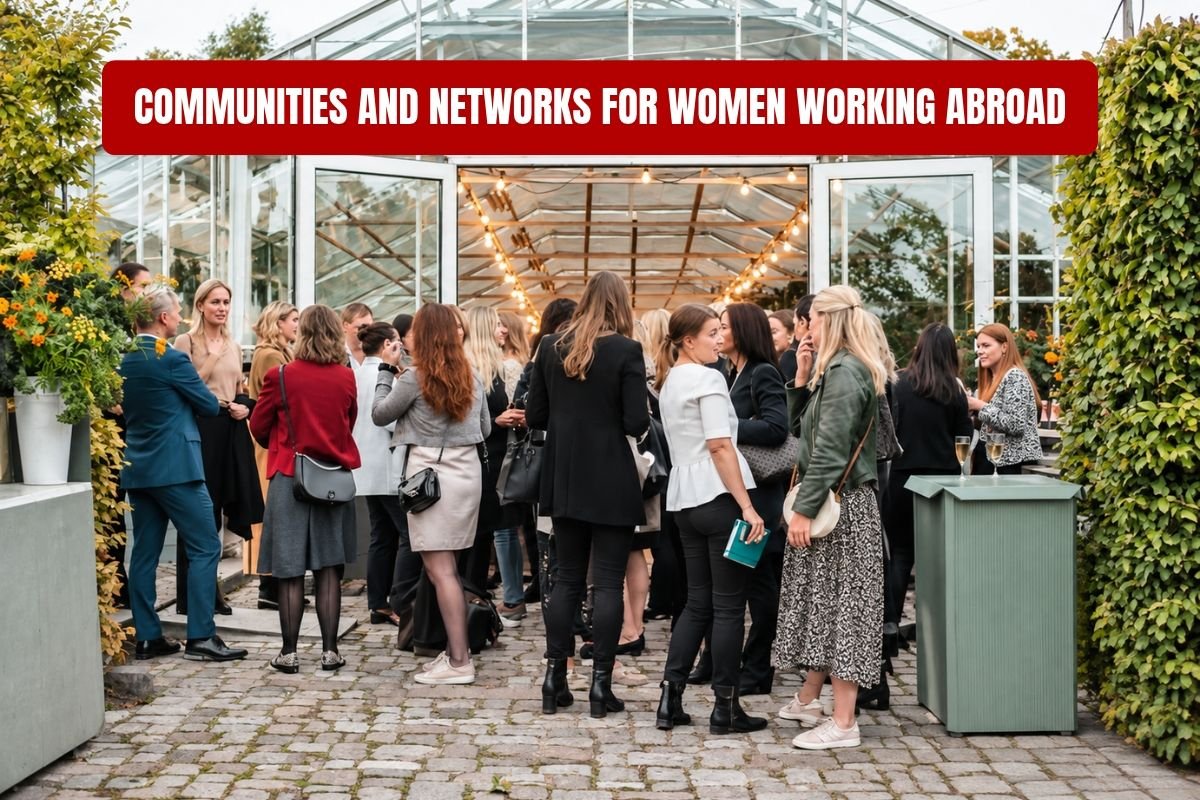
- Focus on Building a Professional Network Before Relocating: Connect with alumni groups, international women’s networks, industry associations, and professionals already working in the destination country.
- Create a financial safety net: Maintain a relocation budget and a separate six-to-nine-month living reserve to manage employment delays, housing costs, and unexpected expenses.
- Identify transferable professional skills: Present achievements through measurable outcomes such as revenue growth, team leadership, project delivery, and international client management rather than relying only on domestic job titles.
The Future of Women Crossing Borders
Global mobility is changing how women approach career development. International assignments, overseas education, research opportunities, and cross-border entrepreneurship are creating new pathways for international career moves for women, allowing professionals to access different markets and expand their leadership potential.
However, geographical movement alone cannot overcome structural inequalities.
Employers must improve access to international assignments, provide relocation support, establish fair promotion systems, and address the challenges faced by employees relocating with families.
For women crossing borders, the real opportunity lies in turning international exposure into lasting professional influence. Whether through corporate leadership, entrepreneurship, or academic research, crossing borders can expand career possibilities when supported by the right opportunities, resources, and networks.
A different country may offer a new beginning, but strategic career planning determines how far that opportunity can go.
Conclusion:
For women professionals, crossing borders can open access to international markets, new career opportunities, and leadership roles. However, successful global mobility depends on more than securing an overseas position. Employment rights, financial independence, professional networks, and inclusive workplaces are equally important.
Through remote work, overseas education, corporate assignments, and entrepreneurship, women are building careers beyond geographical boundaries. Ultimately, the value of an international move lies in how it strengthens their career growth, leadership potential, and long-term independence.
Frequently Asked Questions:
1. How does global mobility benefit women professionals?
It provides access to international jobs, leadership opportunities, professional networks, and cross-cultural experience.
2. What challenges do women face when working abroad?
Common challenges include visa restrictions, pay gaps, cultural barriers, limited networks, and caregiving responsibilities.
3. How can women prepare for an international career move?
Women should research destination markets, understand visa requirements, build professional connections, and plan their finances before relocating.