
Key Takeaways
- Internal rifts and the withdrawal of a key partner led to the fall of Latvia’s government.
- Drone incidents and defence weaknesses escalated disagreements and accelerated the crisis.
- With elections approaching, forming a stable new government will be difficult, increasing the risk of prolonged instability.
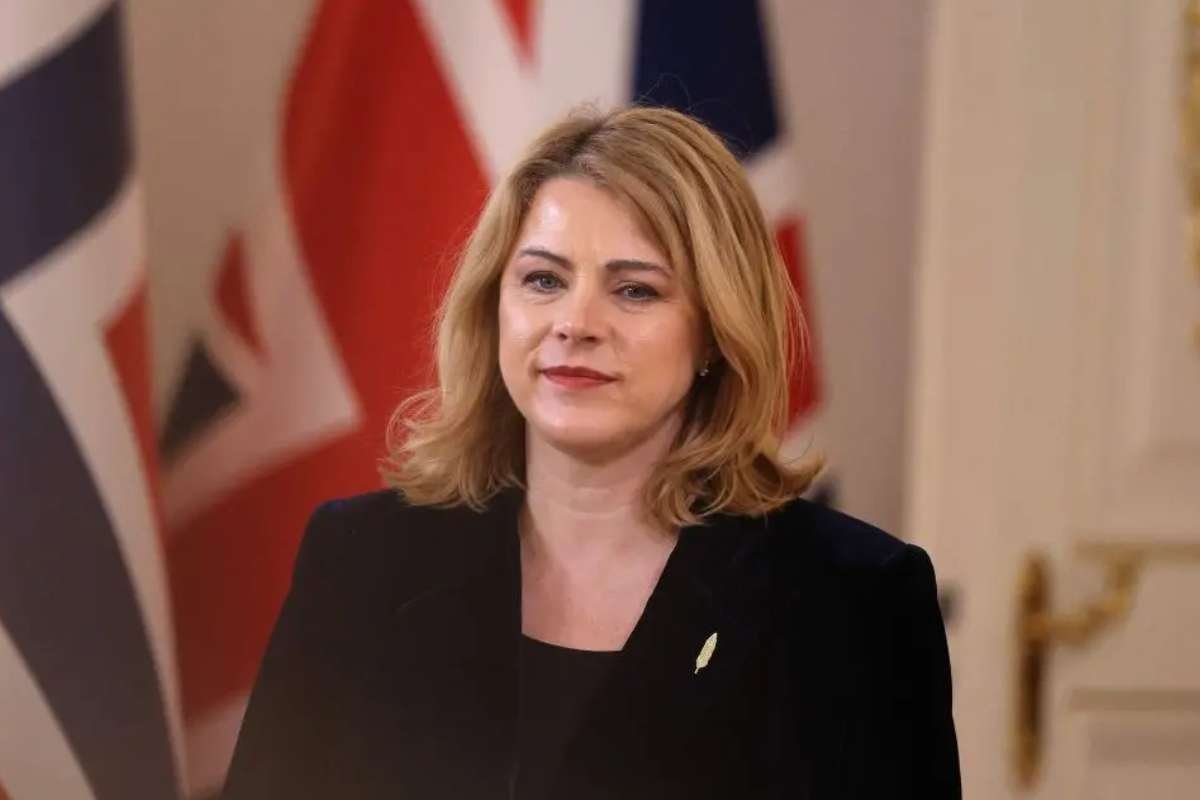
Latvia has been pushed into a phase of political instability after Prime Minister Evika Siliņa resigned following the collapse of her governing coalition. The resignation came after a key coalition partner withdrew its support, leaving the government without a parliamentary majority and unable to sustain stable governance.
Evika Siliņa had led the country since 2023, heading a fragile three-party coalition comprising her centre-right New Unity party, the Union of Greens and Farmers, and the Progressive Party. While the alliance initially provided a workable majority, internal disagreements gradually widened over policy direction, particularly in relation to defence strategy and national security decision-making.
The decisive rupture occurred after the dismissal of Defence Minister Andris Sprūds, who was closely aligned with the Progressive Party. The government defended the move as necessary in response to growing concerns about security preparedness, but it was viewed by coalition partners as a unilateral action that undermined trust within the alliance.
The Progressive Party responded by withdrawing from the coalition entirely, stripping the government of its majority in parliament. With no clear path to continue governing effectively, Evika Siliņa stepped down, effectively dissolving the administration and opening the door for political negotiations to form a new government.
The resignation has triggered immediate discussions about Latvia’s political future, with the president expected to begin consultations with parliamentary parties to determine whether a new coalition can be formed or whether fresh elections may be required.
Drone Incidents and Defence Concerns Fuel Political Tensions
The collapse of the government did not occur in isolation but was strongly influenced by a series of recent drone-related security incidents that heightened tensions within Latvia’s political system.
In recent weeks, multiple unmanned aerial vehicles entered Latvian airspace under unclear circumstances, raising alarm within defence and intelligence circles. Some of these drones are believed to have originated from the ongoing war zone in Ukraine, but may have been diverted due to electronic interference or other external disruptions. While investigations are still ongoing, the incidents have intensified concerns about the vulnerability of NATO’s eastern flank.
One of the most serious events reportedly involved a drone crashing near a fuel storage facility in eastern Latvia. Although no casualties or major damage were reported, the incident exposed potential risks to critical infrastructure and triggered urgent discussions within government institutions about air defence readiness.
Prime Minister Evika Siliņa publicly raised concerns about the effectiveness of Latvia’s defensive systems, suggesting that the country needed to urgently reassess its preparedness for modern aerial threats. Her comments placed additional pressure on the defence establishment and deepened divisions within the coalition government.
Tensions escalated further following the removal of Defence Minister Sprūds, a decision that was closely linked to the handling of the drone incidents. For the Progressive Party, the dismissal represented a breakdown in cooperative governance, while for Siliņa’s administration, it was framed as a necessary step to strengthen accountability in national security management.
The dispute highlighted broader regional anxieties across Eastern Europe, where NATO members are increasingly facing hybrid threats, including airspace violations, electronic interference, and spillover risks from the ongoing conflict in Ukraine.
Political Uncertainty Ahead as Latvia Seeks New Leadership
The resignation of Evika Siliņa marks a critical turning point for Latvia at a time when regional security pressures remain high and domestic political divisions are deepening.
With the government dissolved, attention now shifts to the presidential office, which is expected to initiate formal consultations with all parliamentary parties. The objective will be to determine whether a new coalition can be formed from the current parliamentary composition or whether the political deadlock will necessitate early elections.
However, analysts suggest that forming a stable government may prove challenging. Latvia’s parliament is currently fragmented, and ideological differences between parties—particularly on defence spending, social policy, and coalition alignment—may complicate negotiations. The loss of trust triggered by the coalition collapse further adds to the difficulty of rebuilding a functional governing majority.
The political uncertainty comes just months ahead of scheduled national elections, increasing pressure on all major parties to demonstrate stability and leadership. Public concern over national security is also expected to play a significant role in shaping political debates, particularly following the recent drone incidents and broader fears of regional escalation linked to the war in Ukraine.
At a broader level, Latvia’s crisis is being closely observed by NATO allies and neighbouring Baltic states, which face similar security challenges. The situation underscores how geopolitical tensions are increasingly influencing domestic politics in frontline European countries, where security concerns are becoming central to government stability.
As Latvia enters this transitional phase, the key challenge will be balancing urgent national security demands with the need to rebuild political consensus. The coming weeks are likely to determine whether the country can quickly restore stable governance or whether it will move into a prolonged period of political uncertainty.
Visit CIO Women Magazine for the latest information.