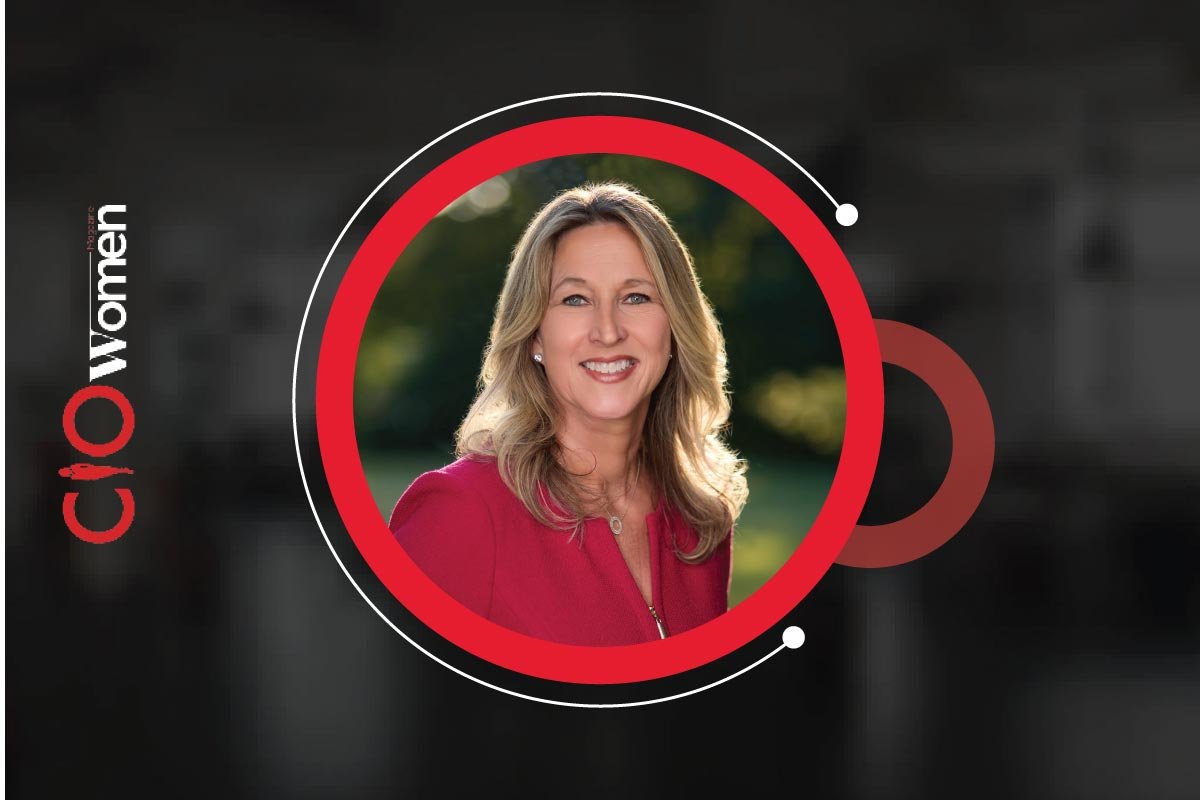
The financial services industry stands at a rare inflection point, where traditional institutional infrastructure and the programmable promise of digital assets are finally beginning to blur into something real. Few people have navigated that boundary longer than Annelise Osborne, Founder of Osborne Capital Partners. Her credibility was forged across twelve years of institutional rigor at Moody’s, overseeing a $400 billion book of structured bonds, and later executive roles at digital asset firms like Propellr, Acra, and Kadena. Today, she advises companies across AI, blockchain, privacy, and stablecoins with one filter: real products that remove expensive institutional friction, not narratives built around a coin.
As an author, her book From Hoodies to Suits: Innovating Digital Assets for Traditional Finance has become a trusted primer for institutions seeking operational clarity, while her debut novel Hold On for Dear Life captures the human story behind the 2017 crypto boom, and this fall she brings all of it into the classroom at the University of Connecticut, training the next generation to skip the expensive lessons learned in real time. This is not a story about choosing between hoodies and suits; it is a story about a career, a body of work, and a vision for finance that refuses to choose at all.
The art of speaking two languages at once
In the quiet corridors of Moody’s, where a $400 billion book of structured bonds demanded precision and zero room for narrative, Annelise Osborne learned the language of institutional trust, financial structuring, and regulation. Years later, as Chief Business Officer at Kadena, she found herself decoding a different dialect code, consensus mechanisms, and a deep suspicion of the very institutions she once represented. In that cultural collision, she discovered her real skill was neither finance nor technology alone, but translation. Both sides held a piece of the truth, and neither fully trusted the other.
That insight became the foundation of her book From Hoodies to Suits, which laid out how digital assets could survive the transition into regulated markets through custody, compliance, and operational reality rather than whitepaper promises alone. Today, through Osborne Capital Partners, she lives that thesis daily, advising companies building real infrastructure across AI, blockchain, privacy, and stablecoins and guiding them to speak both languages well enough to earn something far more valuable than hype: genuine institutional adoption.
Solving friction, not chasing headlines
At Osborne Capital Partners, Annelise Osborne is not drawn to headlines or token prices. She looks for products that solve expensive, real-world friction: settlement that takes days instead of seconds, cross-border payments that cost a fortune in fees, compliance that remains manual when it could be programmable. She recalls cashing a check that took five days to clear when a stablecoin could have settled instantly, not as a hypothetical, but as the everyday inefficiency this technology is built to remove.
The companies she wants to advise are the ones building toward real-world displacement of cost and friction, not the ones building a narrative around a coin. She sees AI following the same pattern, where the interesting work is not the model itself but the intersection of AI and on-chain infrastructure with actual capital markets workflows like underwriting, collateral verification, and compliance monitoring. Privacy in an ever-digital world is another aspect she focuses on, working to develop avenues to protect people and their data. Her filter is simple: if a company can show her the friction it removes and the institutional path to adoption, she is interested.
Where programmable money meets a dispersed nation?
This story is personal for Annelise Osborne. Having spent much of her childhood in the Marshall Islands, watching M1X become the proving ground for a new model of sovereign finance is something she does not take lightly. At its center sits USDM1 a sovereign, U.S. dollar-denominated bond issued natively on-chain by the Marshall Islands government, fully collateralized by U.S. Treasuries and structured under New York law. That architecture makes it real sovereign debt, not a private promise, fundamentally changing how institutions can treat it.
In practice, USDM1 now powers the world’s first nationwide on-chain Universal Basic Income program, delivering tokenized Treasury-backed funds directly to citizens through the Lomalo digital wallet across one of the most geographically dispersed island nations on earth, where traditional banking infrastructure has never reached everyone. This is programmable money, not as a thought experiment, but as a functioning government program moving real value to real people today.
Why fiction capture what a primer cannot?
Her first book, From Hoodies to Suits: Innovating Digital Assets for Traditional Finance, explains the mechanics of how and why digital assets matter and will become infrastructure behind finance, complete with the custody, the compliance, and the operational plumbing. It is a primer. But what it cannot capture, Annelise Osborne realized, is what it actually felt like to be inside the 2017 ICO boom: the idealism, the ambition, the ego, the resilience, the people who built an entire industry in real time with almost no rulebook.
That is a human story, not a case study, and fiction became the only format that would let a reader live inside it rather than simply read about it afterward. Hold On for Dear Life follows a small group of founders and early believers through that boom and its unraveling. Tonally, she describes it as The Social Network crossed with the energy of a campus novel fast, funny, a little reckless, with real romantic tension running underneath the financial stakes. Readers who lived through that era will recognize the rooms. Those who did not will, she hopes, finally understand why an entire generation got swept up in it and what it cost some of the people who were.

The legal wrapper is the whole game
Most leaders, Annelise Osborne observes, are still treating digital dollars as one single category, when the legal structure underneath determines almost everything about how institutions can actually use them. A privately issued stablecoin and a sovereign-issued, Treasury-backed instrument like USDM1 can look nearly identical on a screen, but they sit in completely different risk and accounting categories. One is a private liability, while the other behaves like collateralized sovereign debt, carrying the legal protections that come with that status.
That distinction is exactly what determines whether a bank’s treasury desk or a pension fund can actually hold it. The leaders who will win the next phase, she believes, are not the ones waiting for new regulation to arrive. They are the ones that are experimenting and structuring instruments today that fit inside the legal frameworks institutions are required to use. Regulatory clarity is an obstacle to adoption, but for the people structuring things correctly, it is the unlock.
The test that separates innovation from noise
Annelise Osborne uses the same filter she wrote about in From Hoodies to Suits: does this survive contact with custody, compliance, and audit? Are the founders reasonable? Is it a real product? She has watched too many digital asset products look brilliant in a pitch deck only to fall apart the moment a real institution’s legal and risk teams start asking questions.
What she looks for are founders who are building toward institutionalization from day one, not founders who see compliance as a problem to route around once they are big enough. That mindset, she finds, shows up early in how they structure the cap table, how they think about custody, and whether they can explain their product to a regulator as clearly as they can to a developer. If a founder can do that, she knows she can help them get to the next level.
The quiet revolution in operations and risk
Years ago, in early interviews about her book, Annelise Osborne flagged a future where bonds could pay themselves interest and margin calls could trigger automatically rather than waiting on a person to notice a breach. That future, she now says, is considerably closer because artificial intelligence can sit on top of on-chain collateral data and perform the monitoring and verification work in real time, at a scale no back office team could ever match manually.
The most underrated opportunity in the convergence of AI and blockchain, she believes, is programmable compliance and automated settlement. What makes it underrated is that this is not a trading story. It is an operations and risk story. The firms that quietly automate their compliance and settlement infrastructure using AI layered on blockchain rails will walk away with a structural cost advantage that the market has not yet fully priced in.
Measured in adoption, not headlines
For Annelise, success is measured in real adoption, not press coverage. She traces a deliberate arc of milestones: at Propellr, her team structured some of the first digital assets in traditional form; at Arca, they created the first tokenized treasury fund approved by the SEC. Today, watching USDM1 move from a whitepaper into a functioning UBI disbursement reaching citizens in the Marshall Islands matters far more to her than another crypto headline.
On the writing side, success sounds like readers telling her that From Hoodies to Suits changed how they explain digital assets to their boards and clients, and now, with Hold On for Dear Life, reaching an entirely different audience who will absorb the industry’s history through character and story instead. This fall, she brings all of it into the classroom at the University of Connecticut, teaching FinTech and Cryptocurrencies with the goal of training the next generation to understand the industry with rigor and to skip the expensive lessons her generation learned in real time.
Leaving the 2017 playbook behind
The 2017 era rewarded speed and conviction, moving fast, breaking things, raising capital, and figuring out the rules later. That world, Annelise Osborne states plainly, is gone. Trying to operate in today’s market with that old playbook is a fast way to lose institutional trust permanently. The leaders who succeed now are the ones who can speak fluently in both rooms: the technical room, where builders care about protocol design and developer experience, and the institutional room, where compliance officers and risk committees care about custody, legal structure, and audit trails.
No one has to choose one over the other. In fact, she believes you cannot anymore. Build credibility in both early, and the capital and the partnerships will follow. That, she says, is the entire thesis behind everything she has built since leaving Moody’s.
Sitting in the tension between worlds
Growing up in the Marshall Islands and later working in Ukraine after college gave Annelise Osborne an early sense of how financial infrastructure can be disconnected from the people who actually need it, something she thinks about now as she watches USDM1 reach citizens there directly. Twelve years at Moody’s then taught her institutional rigor, the discipline of how risk actually gets underwritten and rated at scale. Moving into the startup world of blockchain taught her to operate with founder speed and tolerate ambiguity.
Running her own advisory practice now means she has to hold all three of those instincts at once, every single day. That range, she believes, is exactly why she leads the way she does. She does not assume the institutional answer is automatically right, and she does not assume the builder’s answer is automatically right either. She has learned to sit in the tension between them and find what actually works. Life, she adds, is not boring, and she is constantly learning, which she loves.
Resilience as a survival skill
Annelise Osborne has sat in meetings where she proposed an idea, only to watch a male colleague say the same thing moments later and receive the credit. She was once told to stop excelling because she made others uncomfortable, and she was passed over for a promotion while pregnant because of uncertainty around whether she would return from maternity leave. What she took from those experiences is that not every job is the right job without internal support. She learned to be a cockroach and keep going. Resilience, she says, is key.
Writing and publishing From Hoodies to Suits became an act of advocacy. As a senior finance executive, she told traditional institutions that an industry many dismissed as a fad deserved serious attention, while telling the digital asset world that they needed compliance and custody to last; the hoodies and suits needed each other. Resistance came from both sides. She learned that the people most annoyed by an idea are often the ones who most need to hear it, and that being early and being right may not be the same as being comfortable.
The discipline of the page
Writing forces a kind of clarity that advisory meetings do not always demand. On the page, Annelise Osborne explains, you cannot hide behind jargon. If an explanation does not hold up in plain English, it was not actually clear in her head either. That discipline carries directly into how she advises clients, leads teams, and develops strategy. She pushes for the version of an idea that a regulator, an investor, and a developer could all understand in the same room.
Working on Hold On for Dear Life reminded her of something else as well: the empathy for how decisions actually get made under pressure, ego, and uncertainty, which is the truest version of what founders go through and far messier than any case study captures. She brings that humanity into advisory conversations now, not just the framework.
Building a personal boardroom
Early in her career, Annelise created her own board of directors. She was being tapped for public company boards and had never been a CEO, so surrounding herself with experienced business leaders helped her understand executive roles and function better when she did not yet have as many years of experience. She values mentors highly because they can offer a different perspective, having been there before. She notes that her mentors were almost exclusively men due to the lack and her proximity to the few women leaders, and she still works to maintain those relationships, which can be difficult in her world.
At the same time, she always works to be a mentor herself, believing it is important to help develop talent and the next generation of leaders. She also emphasizes the importance of reverse mentorship, admitting that her mentees have helped her understand acronyms, new technology that people are using, and the generational mindset, all of which keeps her from getting old in her mentality.

No one hands you a map for uncharted territory
It is hard to define a playbook for innovation, and Annelise Osborne would argue that is precisely the point. She has never fit into a mold, but she believed in herself and kept pushing forward because the people who built this industry were largely improvising, driven by a vision of how finance could be better rather than a pre-written career script. For a woman who does not see herself in the existing pathways, her advice is simple: work hard, follow your passions, do interesting things, and stay curious.
On the practical side, she insists on getting fluent in the fundamentals of traditional finance because that credibility opens institutional doors, and then going to learn the technology directly from the builders rather than absorbing it secondhand. Do not wait for someone to hand you a defined role, she urges; create your own, take a risk, raise your hand, don’t be afraid of the thing that does not exist yet. She acknowledges the easier route is a comfortable day job, but then she pauses on the obvious follow-up: why follow everyone else?