
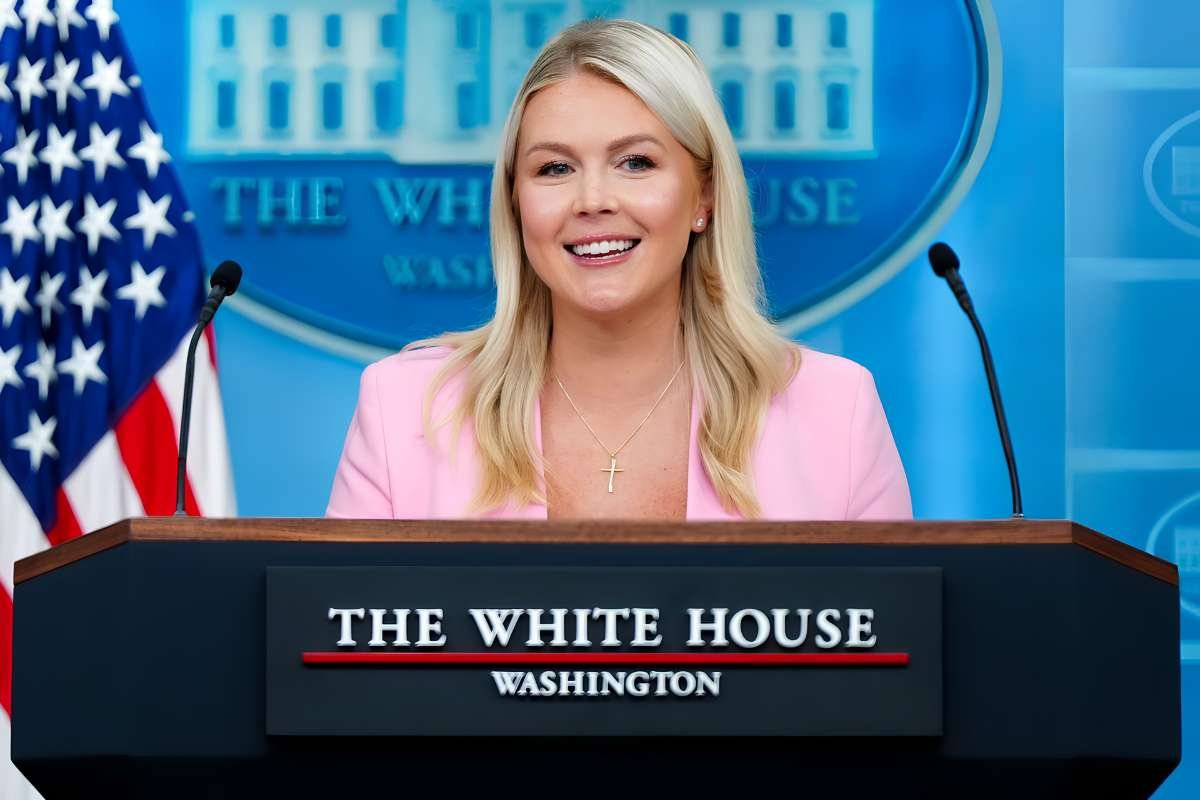
Key Takeaway:
- Karoline Leavitt is leaving the White House, but not Trump’s political circle.
- Her tenure reshaped the White House’s relationship with the media.
- Her departure leaves a major communications role open ahead of the midterm elections.
White House Press Secretary Karoline Leavitt is preparing to leave the Trump administration at the end of August, bringing an end to a high-profile tenure that made her one of the most recognizable figures in the White House communications operation.
President Donald Trump announced Leavitt’s departure this week, praising her as a trusted member of his administration. At 28, Leavitt became one of the youngest people to hold the White House press secretary position and spent roughly 19 months defending the administration’s policies and responding to reporters’ questions.
Leavitt said her decision was driven largely by her desire to spend more time with her young family. She recently returned from maternity leave following the birth of her second child and has acknowledged the difficulty of balancing the demands of one of Washington’s most visible political positions with motherhood.
The departure is expected to take effect at the end of August. Trump has indicated that Leavitt will remain connected to his political operation as an outside adviser, meaning her influence may continue even after she leaves the White House.
Her decision comes at a significant point for the administration, which will now have to find a replacement for a press secretary who played a central role in shaping its public messaging.
Reporters Acknowledge Karoline Leavitt’s Effectiveness Despite Frequent Clashes
Leavitt’s announcement has prompted an unusual degree of praise from members of the White House press corps. Although she regularly engaged in tense exchanges with journalists during briefings, several reporters have acknowledged her accessibility, communication skills, and close relationship with the president.
Fox News senior White House correspondent Jacqui Heinrich, who also serves as president of the White House Correspondents’ Association, highlighted Leavitt’s accessibility and ability to communicate directly with the president. Her close relationship with Trump gave her insight into his thinking and allowed her to serve as a key link between the administration and reporters.
NBC News White House correspondent Garrett Haake also pointed to the level of trust Trump placed in Leavitt. That relationship positioned her as one of the administration’s most important public communicators and gave her a prominent role in explaining the president’s positions on major political issues.
Other journalists have credited Leavitt with expanding access to the briefing room. During her tenure, she frequently called on reporters representing smaller, newer, and conservative media organizations, reflecting the administration’s broader effort to engage audiences outside traditional news organizations.
Her approach, however, remained controversial. Leavitt developed a reputation for forcefully defending Trump and challenging reporters whose questions she considered hostile or unfair. Critics argued that her close alignment with the president sometimes blurred the traditional distinction between a press secretary and a political advocate.
That combination of accessibility and confrontation became a defining feature of her time in the role. Even journalists who disagreed with her political approach acknowledged that she had become an influential figure in the administration’s communications strategy.
Her Departure Could Shape the White House’s Media Strategy
Karoline Leavitt’s legacy also extends beyond her daily press briefings. Her tenure coincided with major changes in the White House’s relationship with the media, particularly the administration’s increased engagement with independent outlets, podcasters, influencers, and digital creators.
One of the most visible changes was the introduction of a dedicated “new media” seat in the White House briefing room. The move opened opportunities for journalists and media personalities outside the traditional Washington press corps to question administration officials.
The shift reflected Trump’s broader preference for communicating directly with audiences through alternative media platforms. It also signaled the administration’s recognition of a rapidly changing media landscape in which podcasts, social platforms and independent publications increasingly compete with established news organizations.
Leavitt’s departure could therefore influence more than the personnel occupying the press secretary’s office. Her successor will inherit a communications operation that has increasingly emphasized direct messaging, presidential loyalty and expanded access for nontraditional media.
The White House has not yet announced who will replace her. The choice could offer an indication of whether the administration intends to continue Leavitt’s approach or introduce a different style of media engagement.
For Karoline Leavitt, the departure marks the end of a consequential chapter. She leaves after becoming a prominent defender of Trump, a frequent participant in contentious exchanges with journalists and, at the same time, a press secretary whom several members of the White House press corps recognized as accessible and effective.
While her decision is being framed primarily around family priorities, her expected continuation as an outside adviser means she is unlikely to disappear from Trump’s political orbit. Her White House tenure may be ending, but her role in the broader political landscape is likely to continue.