
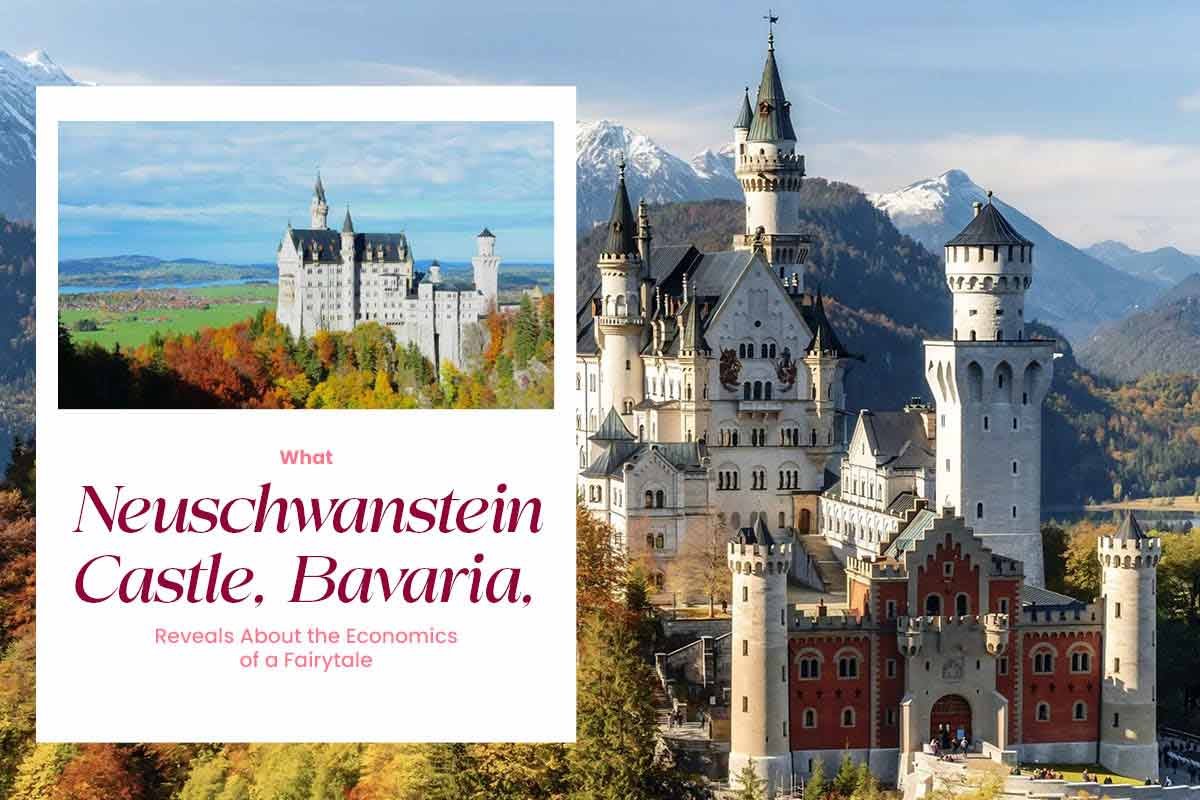
Perched on a hilltop in southern Germany, Neuschwanstein Castle, Bavaria, looks like it belongs in a storybook, and in many ways, it inspired one. The 19th-century palace helped shape the design of Disney’s Sleeping Beauty Castle, a connection that still draws visitors today. Now recognised as a UNESCO World Heritage Site, this Bavarian landmark welcomes more than a million tourists each year, making it one of Germany’s biggest attractions.
That popularity raises a simple question: how did a single royal building become such a major draw? The answer touches on ticket sales, visitor numbers, government spending, and a growing fairy-tale reputation.
The History behind the Castle’s Creation
A Reign Built in Stone: Timeline
- 1864: Ludwig II takes the Bavarian throne, opening a reign later defined by ambitious building projects.
- 1866: Defeat in the Austro-Prussian War strips Bavaria of much of its political weight. With little left to govern, the young king turns inward, toward a private world he alone controls.
- 1867: Planning begins, drawing on medieval German legend, Romantic ideals, and Richard Wagner’s operas.
- 1869: The foundation stone is laid on a steep alpine ridge. Ludwig envisions a secluded retreat styled after a knight’s stronghold, though the walls hide modern plumbing and heating.
- 1886: Ludwig dies before the palace is finished. Weeks later, Neuschwanstein opens its gates to paying visitors, giving the king’s private refuge a new, public role.
Construction closed out six years after Ludwig’s death, leaving behind a monument to one man’s imagination and the fortune it consumed.
A King’s Debt Becomes a Nation’s Draw
A private refuge built on borrowed money, Neuschwanstein Castle, Bavaria, now earns its keep as one of Bavaria’s biggest tourism assets.
Stage 1 — Private Retreat (pre-1886): Built as Ludwig II’s personal refuge, closed to outsiders.
Stage 2 — Public Attraction (1886): Neuschwanstein opened to paying visitors soon after his death, turning a royal residence into a source of admission income.
Stage 3 — Managed Enterprise (today): The Bavarian Palace Administration runs ticketing, guided tours, and structural upkeep. Entry fees fund daily operations and conservation work, though no verified figures confirm what, if anything, the site nets in profit.
Direct vs. Regional Value
- Direct: ticket and tour receipts
- Regional: hotels, restaurants, transport, and shops around Füssen and Hohenschwangau
The open question: can one 19th-century landmark support visitor demand, operating costs, and preservation all at once?
How the Castle’s Tourism Business Works
Running Neuschwanstein as a tourist site takes more organization than its fairy-tale image suggests.
- Guided Access
Visitors cannot walk through Neuschwanstein on their own. Entry to the interior requires a scheduled group tour, keeping foot traffic through fragile rooms under control. - Booking the Visit
Tickets sell online in advance through the official shop. A limited number of same-day passes remain available at the Hohenschwangau ticket centre, subject to availability. Every booking carries a fixed entry time, spacing arrivals through the day. - Why Timing Matters
Staggered slots turn one attraction into a manageable flow, letting staff move thousands of guests through the palace without strain. - Beyond the Gate
Admission receipts fund the palace itself. Hotels, restaurants, shuttle operators, and shops in Hohenschwangau and Füssen collect much of the wider spending.
The castle earns its keep at the gate, but the region earns its living well beyond it.
Visitor Performance in Recent Years
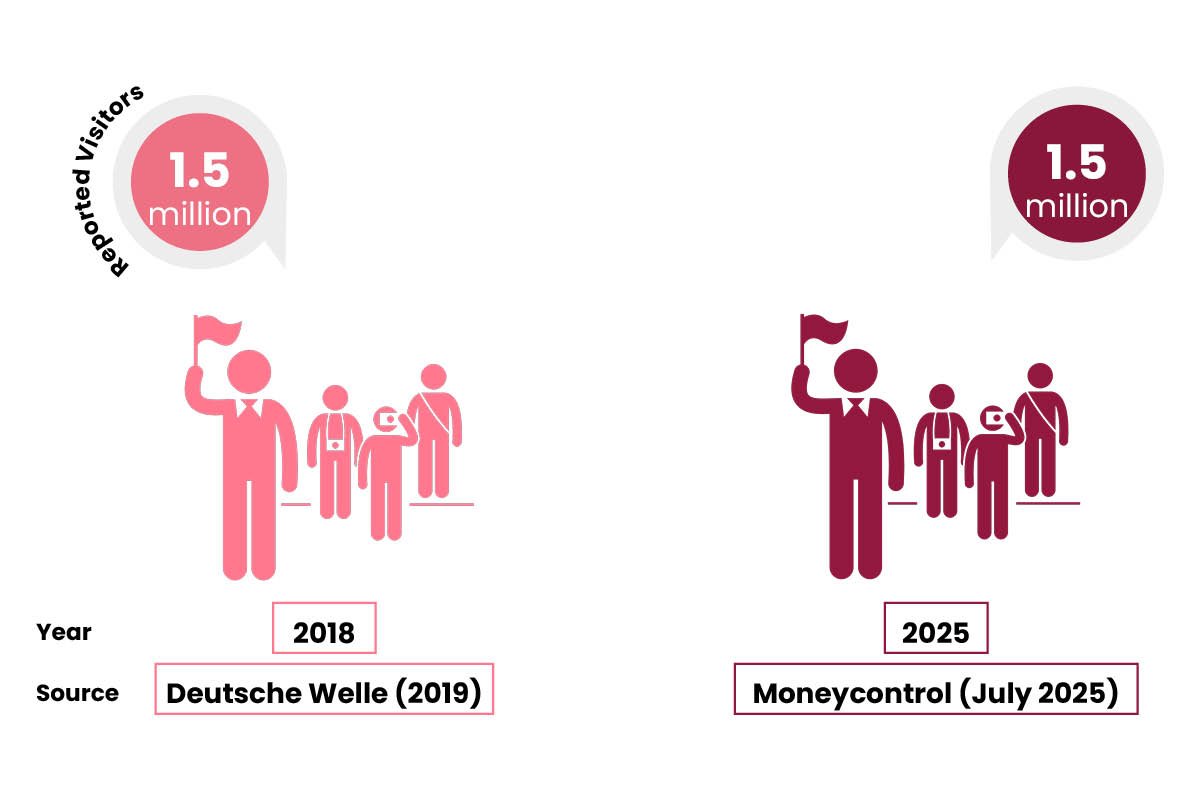
A closer look at two snapshot years shows how steadily Neuschwanstein Castle, Bavaria, has held its pull on travellers.
| Year | Reported Visitors | Source |
| 2018 | 1.5 million | Deutsche Welle (2019) |
| 2025 | 1.5 million | Moneycontrol (July 2025) |
Neuschwanstein drew nearly 1.5 million guests in 2018, making it Bavaria’s most visited attraction that year, according to Deutsche Welle. By 2025, Moneycontrol reported a comparable annual total, alongside the landmark’s new UNESCO World Heritage status.
These figures should not be read as proof of steady growth. They come from separate reports covering different years and rely on rounded estimates, not a continuous count.
What they do confirm is lasting international appeal. That popularity carries real operational weight: timed-entry queues, fragile interiors that need careful protection, and restoration work that occasionally limits visitor access.
Visitor totals alone reveal nothing about yearly profit, running costs, or the actual return to the state treasury.
UNESCO Recognition and Its Business Significance
In July 2025, UNESCO added Neuschwanstein Castle, Bavaria, to its World Heritage List, alongside three other palaces built under King Ludwig II: Linderhof, Herrenchiemsee, and Schachen. The Bavarian Castles Administration called the listing an honour and a serious responsibility, pointing to years of preservation work behind it.
What the status could bring:
- Wider international media coverage
- Fresh interest among heritage-focused travellers
- More attention from tour operators abroad
None of this guarantees higher visitor numbers or income. The title also raises expectations. Conservation standards, crowd management, and protection of original interiors remain central to running the site, heritage recognition or not. Cultural value, in this case, carries no fixed price tag.
Why Walt Disney Was Inspired by the Castle
Neuschwanstein Castle, Bavaria, reads like an illustration lifted from a storybook, its romantic, medieval silhouette rising sharply above the Alpine foothills.
Visual Signature
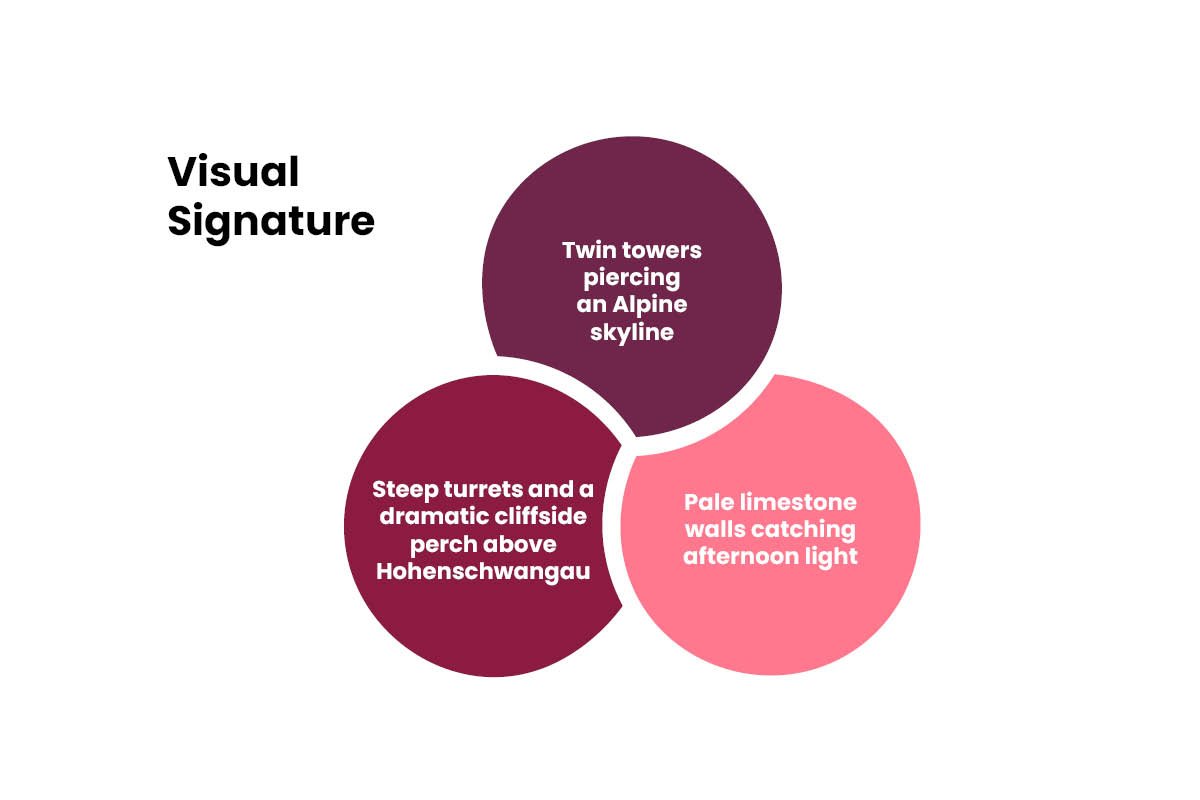
- Twin towers piercing an Alpine skyline
- Pale limestone walls catching afternoon light
- Steep turrets and a dramatic cliffside perch above Hohenschwangau
That fairy-tale profile became a natural template for fantasy architecture. Its resemblance to Disneyland’s Sleeping Beauty Castle is widely reported, though the tie is one of visual inspiration, not an exact copy of the original design. The comparison invites curiosity, not confusion, about which came first.
The association carries real commercial weight. Millions who have never set foot in Bavaria recognize this profile through Disney branding alone, turning a nineteenth-century royal folly into instantly readable global imagery.
The Cost of Preserving a Famous Landmark
Conservation Note, Bavarian Palace Administration file:
Restoring stonework on a 19th-century hillside structure demands patience; money cannot rush. Painted interiors need protection from humidity and thousands of daily footsteps. Access routes must stay safe without disturbing original craftsmanship.
Deutsche Welle reported in February 2019 that authorities budgeted close to €20 million for one major restoration phase, a single project cost rather than a yearly maintenance figure. Any honest read of the castle’s finances has to set this conservation burden against ticket income. Crowds and preservation rarely sit comfortably together at Neuschwanstein.
The Final Ledger: Closing Reflection
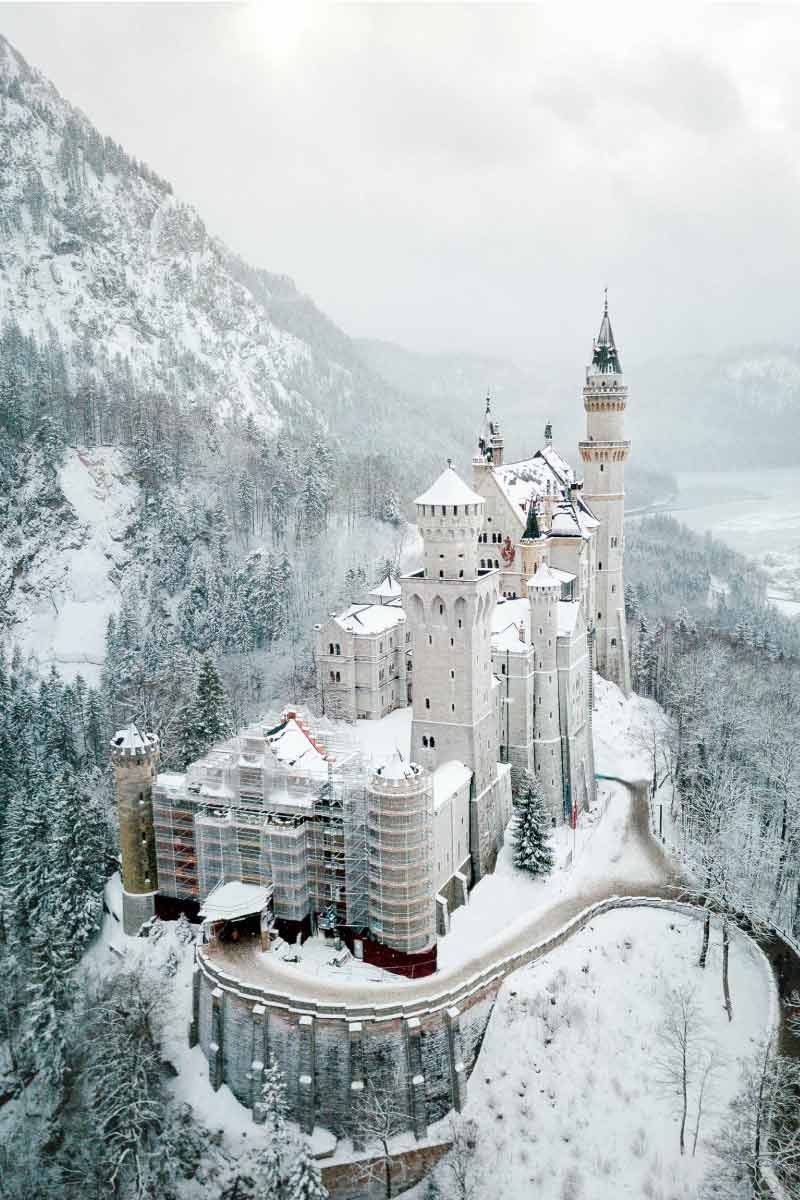
Ludwig II built this retreat for solitude, not spectacle, yet Neuschwanstein Castle, Bavaria, now runs on timed tickets, guided tours and careful restoration budgets. Its business story rests on steady visitor demand, an organised admission system, and a supporting role in the wider Allgäu tourism economy.
Real economic value shows up in ticket receipts, running costs and regional visitor data, not backdrop cameos or online buzz. Its fairy-tale image, Disney legacy and UNESCO status add worth no balance sheet can capture. The real question ahead: can Bavaria keep the gates open while protecting a nineteenth-century dream for generations still to come?