
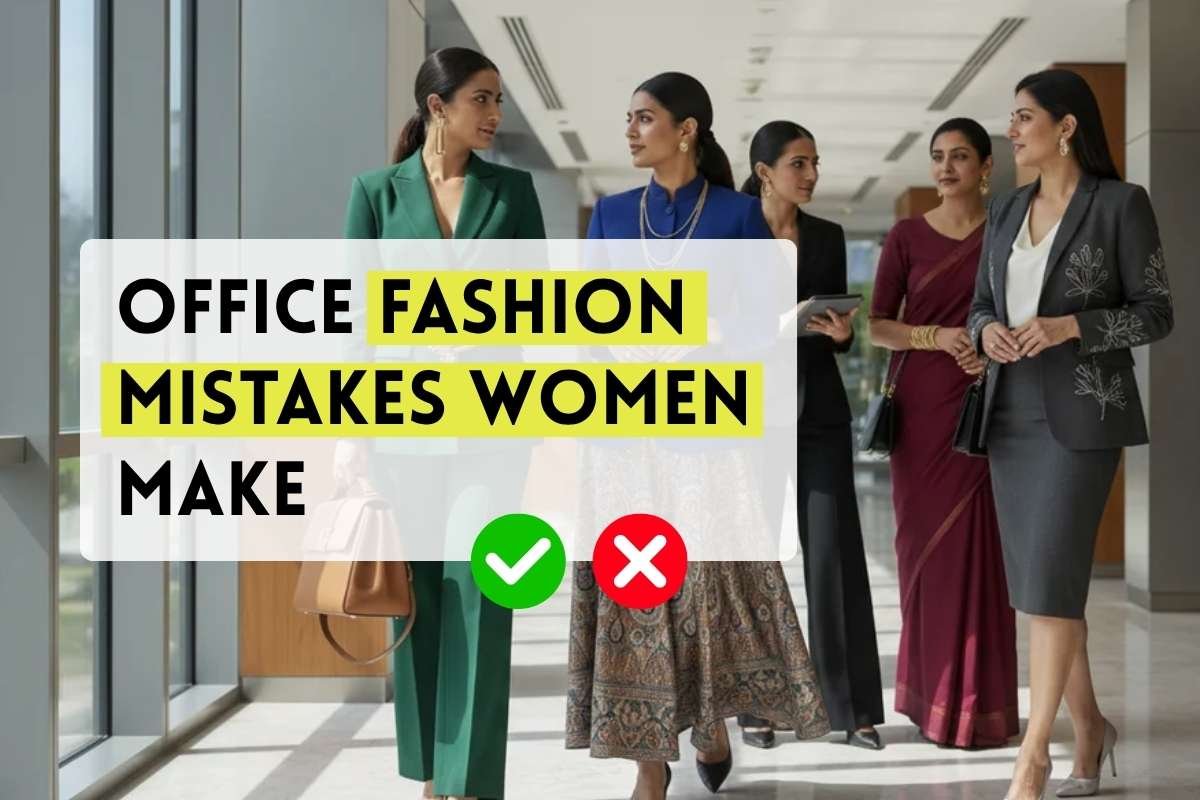
Getting dressed for work should make your morning easier, not give you another problem to solve. Office fashion mistakes women make can sometimes affect how polished and professional an outfit appears.
For women, professional dressing often means balancing personal style with workplace expectations. Research also suggests that attire and grooming can influence perceptions of professionalism and competence.
The goal is not to follow rigid fashion rules, but to choose outfits that are appropriate, comfortable, and authentic to your professional identity.
10 Easy Fixes for a More Polished Work Wardrobe:
You do not need a completely new wardrobe to avoid office fashion mistakes women make. A few simple changes to fit, styling, comfort, and clothing care can make your existing workwear look more polished and professional.
1. Wearing Clothes That Do Not Fit Properly

One of the most common office fashion mistakes women make is overlooking fit.
A shirt that pulls across the chest, trousers that bunch at the ankles, or a blazer that is too tight at the shoulders can make an outfit look unfinished, regardless of how much it cost.
Fit does not mean wearing fitted clothing. Oversized blazers and relaxed trousers can look polished too. What matters is proportion.
Try this:
- Check shoulder seams on blazers.
- Make sure trousers sit correctly at the waist.
- Avoid shirts that pull or gape.
- Get frequently worn pieces tailored.
- Test clothes while sitting and walking.
A well-fitting ₹2,000 garment can often look more polished than an expensive piece that does not fit properly.
2. Following Every Trend
Fashion trends change quickly. Your professional image does not need to change at the same speed.
Oversized tailoring, bold colours, statement jewellery and contemporary footwear can all work in an office. The mistake is wearing a trend simply because it is trending.
Ask three questions before adding a statement piece:
Does it suit my workplace? Does it suit the occasion? Does it still feel like me?
This is particularly important for women in client-facing or senior roles, where clothing may become part of their overall professional presentation.
Your wardrobe should support your career rather than compete with it.
3. Ignoring the Dress Code

Another common mistake is treating every workplace as though it has the same definition of professional dressing.
A corporate office, technology company, creative agency, and academic institution can have completely different expectations.
Business formal may require tailored separates or suits. Business casual may allow trousers, knitwear, dresses, and loafers. A creative workplace may give you considerably more freedom.
Before an important meeting, presentation, or client interaction, consider the environment rather than relying on a universal fashion rule.
This is also where how to dress for success at every career stage becomes relevant. As responsibilities change, the occasions you dress for can change too. Your wardrobe should evolve with your role without requiring you to abandon your personal style.
4. Choosing Comfort That Looks Too Casual
Comfort should be part of professional dressing.
But comfortable does not have to mean overly casual.
Worn sneakers, stretched T-shirts, casual leggings, or hoodies may work outside the office but can look out of place in more formal environments.
Instead, consider comfortable alternatives such as:
- Loafers
- Ballet flats
- Tailored trousers
- Fine-knit tops
- Structured cardigans
- Clean, minimalist sneakers where appropriate
The goal is not to make women uncomfortable for the sake of looking professional. It is to find pieces that allow movement while maintaining a polished appearance.
5. Overloading Your Outfit
Accessories can make a simple outfit feel personal. Too many can make it feel distracting.
One easy approach is to choose one focal point.
For example:
White shirt + tailored trousers + loafers + statement earrings
The outfit remains simple while the earrings add personality.
You can also use the popular 70/30 rule in fashion as a loose styling framework. Keep around 70% of an outfit classic and versatile, while using 30% for colour, texture, accessories, or current trends.
It is not a workplace requirement. It is simply a useful way to keep outfits balanced.
6. Wearing Clothes You Constantly Have to Adjust
A professional outfit should allow you to concentrate on your work.
If you are constantly pulling down a skirt, adjusting a neckline, fixing a slipping strap, or worrying about your blouse, the outfit is not serving you well.
This becomes particularly important during:
- Presentations
- Interviews
- Conferences
- Client meetings
- Networking events
Before leaving home, sit down, walk around, and raise your arms.
If you spend more time adjusting the outfit than wearing it, choose something else.
7. Treating Colour Rules as Facts
There is no universal rule that says two specific colours should never be worn together.
Instead, colour should be considered in terms of balance and workplace context.
Black, navy, grey, white, beige and camel provide easy foundations. A brighter colour can then be introduced through a blouse, blazer, bag or accessory.
The 60-30-10 rule can also help:
- 60% dominant colour
- 30% secondary colour
- 10% accent colour
For example, navy trousers and a blazer could form the dominant colour, with a cream blouse and burgundy handbag adding contrast.
The goal is not to avoid colour. It is to use it intentionally.
8. Forgetting About Shoes
Shoes can change the entire appearance of an outfit.
That does not mean women need heels to look professional.
Depending on your workplace, polished flats, loafers, block heels, ankle boots, or clean sneakers can all work.
The bigger mistake is wearing footwear that is visibly worn, dirty, or unsuitable for the occasion.
Choose shoes that are both appropriate and practical. If your job involves commuting, walking between meetings, or standing for long periods, comfort is not a luxury. It is part of functional dressing.
9. Neglecting Clothing Maintenance

Some of the most overlooked office fashion mistakes women make have nothing to do with buying the wrong clothes.
They involve failing to maintain the clothes already in the wardrobe.
Wrinkles, stains, pilling, loose threads, missing buttons, and scuffed shoes can make an otherwise strong outfit appear unfinished.
A five-minute check before leaving home can help:
Wrinkle check → stain check → shoe check → hair check → accessory check.
You do not need a designer wardrobe to look polished. You need clothes that are clean, maintained, and appropriate for the setting.
10. Dressing According to Rigid Ideas of Femininity
Women should not have to choose between looking professional and expressing their personality.
A woman can look polished in trousers and loafers just as she can in a dress and heels.
Research on workplace appearance has shown that gendered appearance expectations can influence how women’s professional qualities are interpreted.
That is why professional dressing should not be reduced to rules about how feminine a woman should look.
Your wardrobe can include:
- Tailored trousers
- Dresses
- Skirts
- Shirts
- Blazers
- Knitwear
- Flats
- Loafers
- Statement jewellery
- Bold colours
Professional style is not about looking the same as everyone else. It is about looking intentional.
How to Avoid Office Fashion Mistakes Women Make
You do not need to replace your entire wardrobe.
Start with five simple checks:
- Check the fit: Does the clothing fit comfortably and sit correctly?
- Check the context: Is it appropriate for your workplace and today’s schedule?
- Check the balance: Does the outfit have too many competing colours, patterns, or accessories?
- Check the practicality: Can you comfortably sit, walk, commute, and work?
- Check the condition: Are the clothes clean, wrinkle-free, and well maintained?
These simple checks can eliminate many of the office fashion mistakes women make without turning professional dressing into a complicated set of rules.
What Makes a Woman Look Elegant at Work?
Elegance at work is rarely about wearing the most expensive clothes.
It usually comes from fit, simplicity, consistency, and intention.
A well-maintained blazer, tailored trousers, a simple blouse, and polished flats can create a stronger professional look than a wardrobe full of expensive pieces that do not work together.
Most importantly, your clothes should help you feel prepared.
The best professional wardrobe is one that lets you walk into a meeting without wondering whether your outfit is appropriate. You already know it works.
Conclusion:
Avoiding office fashion mistakes women make is less about following strict fashion rules and more about making intentional choices. The right fit, appropriate styling, comfortable pieces, and well-maintained clothing can make a noticeable difference in how polished you feel at work.
You do not need expensive clothes or a completely new wardrobe. Start with what you already own, identify what is not working, and make small adjustments. By avoiding common office fashion mistakes women make, you can build a work wardrobe that feels polished, practical, and true to your personal style.
FAQs:
1. What are the most common office fashion mistakes women make?
Poor fit, ignoring the dress code, overdoing trends or accessories, wearing impractical clothing, and neglecting garment maintenance are common office fashion mistakes women make.
2. What is considered unprofessional attire?
It depends on the workplace. Clothing that is excessively casual, poorly maintained, distracting, or unsuitable for a particular professional setting may be considered inappropriate.
3. What is the 70/30 rule in fashion?
It is a styling guideline where around 70% of an outfit consists of classic, versatile pieces and 30% adds personality, colour, texture, or trend.