

A structured blazer, a signature colour, or a distinctive accessory can become part of how people recognise a woman leader. Beyond appearance, these choices can communicate professionalism, individuality, and confidence. The women executives who use style as strategy demonstrate that personal presentation can complement leadership without replacing expertise or performance.
For women navigating corporate workplaces, executive dressing can also involve additional scrutiny around femininity, authority, and professionalism. The answer is not to follow a rigid dress code but to develop a wardrobe that reflects personal identity and professional goals. This article explores five different approaches to executive style, from signature jackets and tailoring to colour, cultural identity, and accessories, so you can see which ideas might work for your own wardrobe.
6 powerful women executives who use fashion to shape their public image
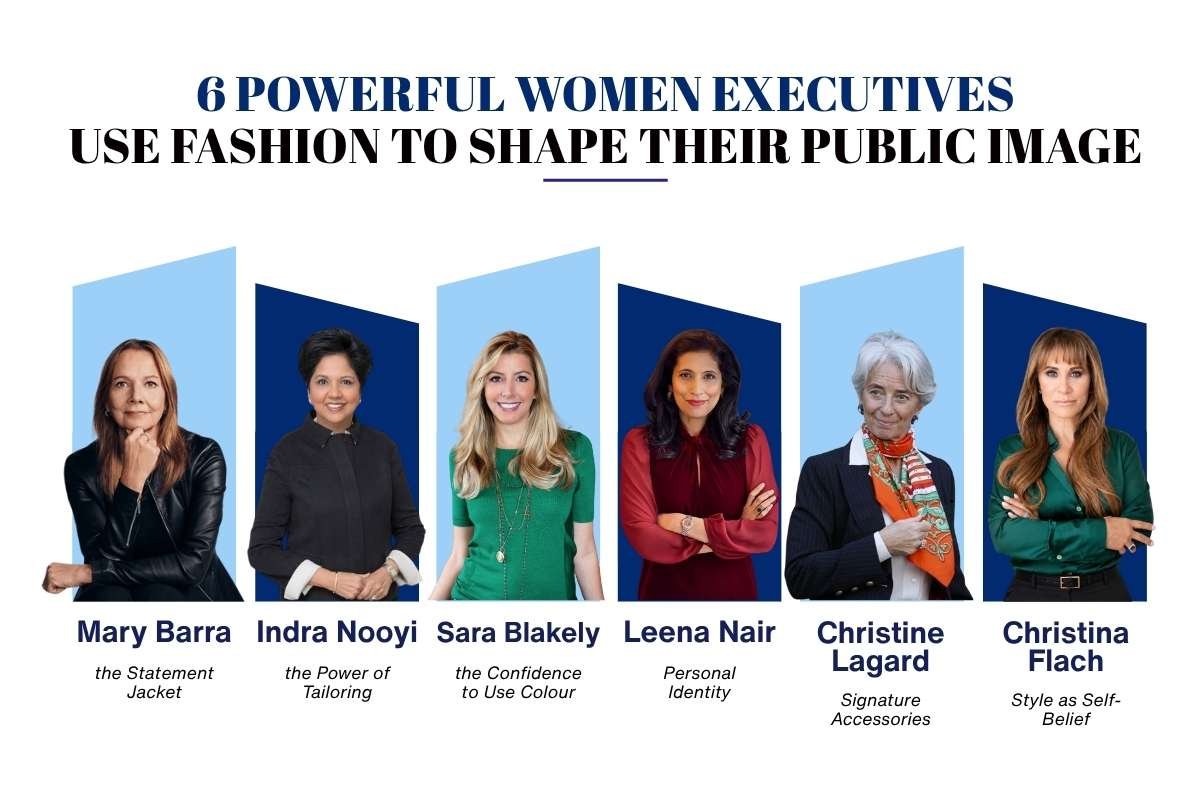
1. Mary Barra and the Statement Jacket
General Motors CEO Mary Barra has appeared at prominent business events wearing distinctive jackets, including a pink leather jacket at Davos. Her public style offers an example of how a signature garment can make an executive wardrobe more recognisable.
Style lesson: Choose a signature piece. A structured blazer, colourful jacket, or distinctive pair of earrings can add personality to workwear without requiring an entirely new wardrobe.
2. Indra Nooyi and the Power of Tailoring
Former PepsiCo CEO Indra Nooyi has discussed how changing her corporate wardrobe influenced perceptions of her in the boardroom. In an interview with McKinsey, she recalled moving from conventional suits towards tailored dresses and jackets, often paired with pearls or scarves. A board member subsequently told her that her new appearance made her seem more intimidating.
Her experience highlights the different standards women can face when presenting authority.
Style lesson: Combine structure with individuality. Well-fitting trousers, tailored jackets, and elegant accessories can create a polished wardrobe without requiring women to imitate men’s clothing.
3. Sara Blakely and the Confidence to Use Colour
Spanx founder Sara Blakely represents a more expressive approach to professional dressing. Her entrepreneurial identity offers an opportunity to consider how colour and personal preferences can distinguish a leader from conventional corporate styling.
Style lesson: Use colour intentionally. A bright blazer, patterned blouse, or colourful accessory can introduce personality into a professional wardrobe. Women do not need to restrict themselves to black, grey, and navy to look polished.
4. Leena Nair and Personal Identity
Chanel global CEO Leena Nair brings an important perspective to conversations about women in international leadership. Her career illustrates how women can lead across industries and cultures without treating their backgrounds as separate from their professional identities.
Style lesson: Make space for personal and cultural expression. Jewellery, fabrics, colours, and silhouettes can reflect individual preferences while remaining appropriate for the workplace. A professional wardrobe does not need to look identical across cultures.
5. Christine Lagarde and Signature Accessories
European Central Bank President Christine Lagarde is frequently seen in tailored outfits complemented by scarves and jewellery. Her public presentation illustrates how accessories can provide continuity across different professional occasions.
Style lesson: Build variety with accessories. A few versatile scarves, necklaces, or pairs of earrings can refresh familiar outfits and help women create different looks without repeatedly buying new clothes.
6. Christina Flach and Style as Self-Belief
Christina Flach, founder and CEO of Pretty Girl Makeup, was featured by CIO Women Magazine for her mission to help people feel beautiful inside and out. A former image consultant and personal shopper, she shows how personal style can build confidence
Style lesson: Let style support your confidence. Choose colours and finishing touches that make you feel like your best self, not just ones that follow a trend.
What research says about executive style
The women executives who use style as strategy reflect a broader finding in leadership research: clothing can influence how people interpret professional identity.
A 2025 study published in the Academy of Management Proceedings examined how clothing affected evaluations of women leaders. Across two preregistered studies, women wearing feminine clothing were perceived as more likable, while women wearing gender-neutral clothing were perceived as more effective leaders in the study settings. These findings highlight a potential gendered perception bias, not a universal rule about what women should wear.
A separate 2021 study in the Journal of Business Research found that formal attire increased perceptions that leaders matched conventional leadership expectations, while clothing that contrasted with organisational norms could improve perceptions of charisma and approval.
Together, these studies suggest that context matters. Clothing can shape first impressions, but it cannot establish a person’s competence or explain career success.
How women can build their own executive style strategy

The women executives who use style as strategy show how women can build a professional wardrobe that evolves with their roles and responsibilities, helping them dress for success at every career stage.
- Define your professional identity: Decide whether you want your style to communicate creativity, authority, approachability, or a combination of qualities.
- Invest in versatile essentials: Choose well-fitting trousers, blazers, shirts, dresses, and comfortable footwear that work across multiple occasions. For women who want to simplify their daily outfit choices, the minimalist wardrobe guide for busy professional women offers practical ideas for building a versatile workwear collection.
- Develop a signature: Repeat colours, silhouettes, or accessories that feel authentic rather than following every trend.
- Adapt to the setting: Consider the workplace, industry, audience, and occasion without abandoning your personal preferences. Being mindful of workplace expectations can also help women avoid common office fashion mistakes women make while maintaining their personal style.
- Prioritise comfort and fit: Clothes should support your working day, not distract you from your responsibilities.
Conclusion:
The women executives who use style as strategy demonstrate that professional dressing can be intentional without becoming restrictive. From statement jackets to tailored silhouettes and distinctive accessories, each approach offers a different way to express personal identity.
Women do not need expensive labels to build a professional wardrobe and look polished on a tight budget. The most useful strategy is to choose clothing that suits the occasion, reflects individual preferences, and supports confidence. Ultimately, style should complement a woman’s leadership, while her experience, decisions, and results remain central to her professional reputation.
FAQs
1. What does it mean to use style as a strategy?
It means choosing clothing and accessories intentionally to support a professional identity, communicate personal preferences, and suit different workplace settings.
2. Which women executives are known for distinctive personal styles?
Mary Barra, Indra Nooyi, Sara Blakely, Leena Nair, and Christine Lagarde offer different examples of signature pieces, tailoring, colour, and accessories.
3. Can clothing influence perceptions of women leaders?
Yes. Research suggests clothing can influence perceived competence, likability, and leadership status. However, these perceptions may reflect social expectations and should not be confused with actual ability.