Asynchronous vs Synchronous Work examines two core communication styles shaping modern workplaces. Asynchronous work enables flexible, delayed communication that supports deep focus and time-zone independence, while synchronous work relies on real-time interaction for faster decisions and active collaboration. The blog highlights key differences, benefits, and challenges of both approaches, supported by research and workplace data. It also explains how organizations are increasingly adopting hybrid models to balance productivity, reduce burnout, and improve team efficiency in remote and hybrid environments.
The modern workplace is changing faster than ever, and the debate around Asynchronous vs Synchronous Work is becoming central to how businesses operate. With remote and hybrid work models rising globally, companies are rethinking how teams communicate, collaborate, and stay productive.
According to Microsoft, employees spend nearly 60% of their workweek in meetings, emails, and chats, leaving less time for focused work. This has pushed many organizations toward asynchronous work, where employees communicate on flexible schedules instead of relying on constant real-time interaction.
At the same time, synchronous work remains essential for quick decisions, brainstorming, and team collaboration through live meetings and instant communication tools like Zoom and Slack.
The discussion around Asynchronous vs Synchronous Work is no longer just about flexibility — it is about improving productivity, reducing burnout, and building smarter workplaces. In this blog, we will explore the key differences, benefits, challenges, and future of both work styles in modern organizations.
What is asynchronous work?
Asynchronous work is a work model where employees communicate and complete tasks without needing to respond in real time. Instead of constant meetings and instant replies, teams collaborate through emails, recorded updates, shared documents, and project management platforms.
The demand for asynchronous work has grown rapidly with the rise of remote and hybrid workplaces. According to research from Microsoft, employees are interrupted every two minutes by meetings, emails, or notifications during the workday, making focused work increasingly difficult.
To reduce distractions and improve productivity, many companies are adopting asynchronous communication tools like Asana, Notion, and Slack. These platforms allow employees to collaborate flexibly while minimizing unnecessary interruptions.
Research also shows that 68% of employees feel they do not have enough uninterrupted focus time during the workday because of excessive meetings and chats. This is why asynchronous work is becoming popular among global and remote-first companies that want to improve efficiency, employee autonomy, and work-life balance.
However, asynchronous work also depends heavily on clear documentation, transparency, and structured communication. Without proper systems, delayed responses can create confusion and slow decision-making.
What is synchronous work?
Synchronous work is a collaboration style where employees communicate and work together in real time through meetings, video calls, phone calls, and live chats. It is designed for instant feedback, faster decisions, and active team collaboration.
Despite the rise of flexible work, synchronous communication still plays a major role in modern organizations. According to Microsoft, time spent in meetings has increased by 252% since 2020, while workplace chats have also risen significantly in hybrid work environments.
Platforms like Zoom, Microsoft Teams, and Slack have become essential for real-time collaboration, especially for brainstorming sessions, project discussions, and urgent problem-solving.
The biggest advantage of synchronous work is speed. Teams can clarify issues instantly, align faster, and improve collaboration. However, excessive meetings and constant notifications are also contributing to workplace fatigue. Microsoft research shows employees are interrupted every two minutes by meetings, emails, or messages, reducing deep-focus productivity.
As a result, many companies are now balancing synchronous collaboration with asynchronous workflows to reduce burnout while maintaining effective teamwork.
Asynchronous vs synchronous work: major differences
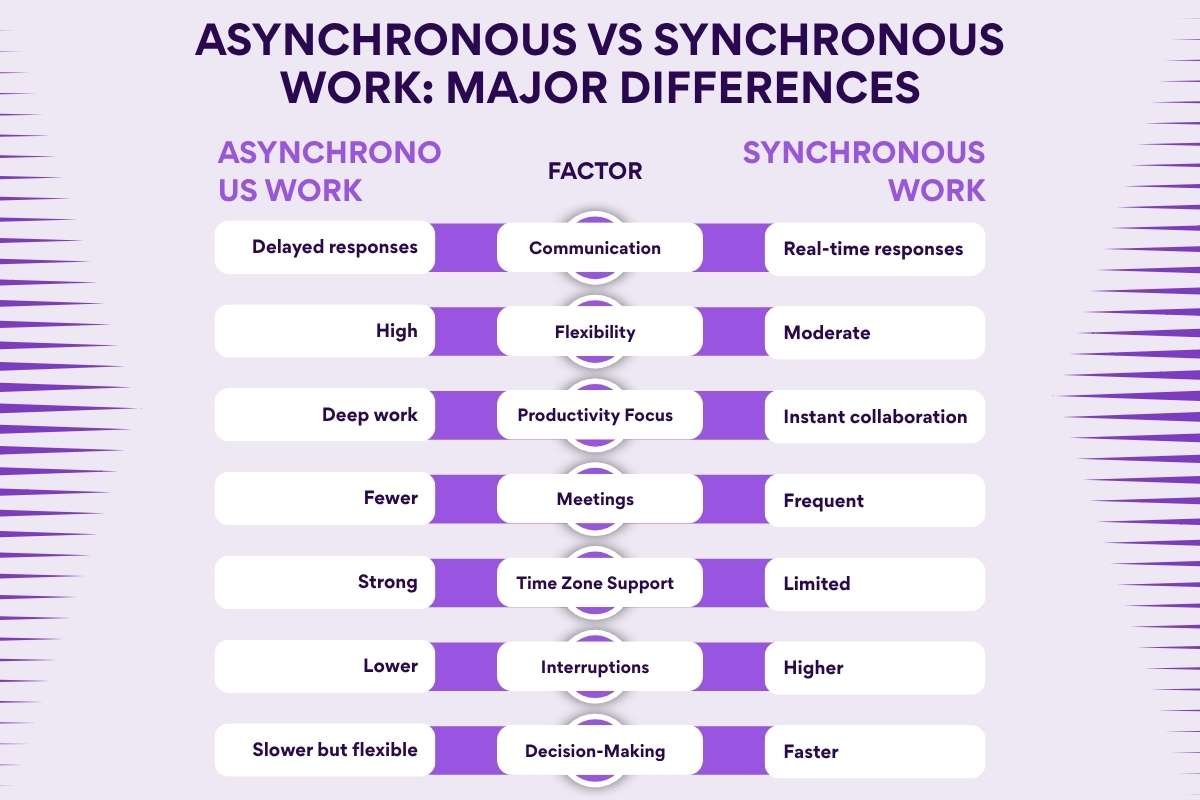
The core difference between asynchronous and synchronous work is timing. Asynchronous work allows employees to communicate and complete tasks on flexible schedules, while synchronous work depends on real-time collaboration through meetings, calls, and instant messaging.
As hybrid work grows, businesses are increasingly balancing both models to improve productivity and reduce burnout.
| Factor | Asynchronous Work | Synchronous Work |
| Communication | Delayed responses | Real-time responses |
| Flexibility | High | Moderate |
| Productivity Focus | Deep work | Instant collaboration |
| Meetings | Fewer | Frequent |
| Time Zone Support | Strong | Limited |
| Interruptions | Lower | Higher |
| Decision-Making | Slower but flexible | Faster |
According to Microsoft’s 2025 Work Trend Index, employees are interrupted every two minutes by meetings, emails, or notifications, nearly 275 interruptions per day. Excessive real-time communication has also increased workplace fatigue, with nearly half of employees saying their work feels chaotic and fragmented.
At the same time, synchronous collaboration remains critical for fast decision-making and brainstorming. Research shows distributed teams still spend more than 16 hours weekly in scheduled and unscheduled meetings to maintain coordination.
This is why modern organizations are moving toward hybrid communication models using asynchronous workflows for focused productivity and synchronous communication for collaboration and urgent discussions.
Benefits of asynchronous work
Asynchronous work is becoming increasingly popular as businesses look for ways to improve productivity, flexibility, and employee well-being in remote and hybrid workplaces.
1. Better productivity and focus
One of the biggest benefits of asynchronous work is reduced interruptions. According to Microsoft’s Work Trend Index, employees are interrupted every two minutes by meetings, emails, or notifications, making focused work difficult. By limiting constant real-time communication, asynchronous workflows help employees spend more time on deep, high-value tasks.
2. Improved work-life balance
Asynchronous work gives employees greater schedule flexibility, allowing them to manage tasks more efficiently. Research from Gallup found that flexible work models significantly improve employee engagement and reduce burnout in remote teams.
3. Better collaboration across time zones
For global organizations, asynchronous communication removes the need for employees to stay online at the same time. Teams can collaborate through shared platforms like Notion and Asana without disrupting productivity across regions.
Because of these advantages, many modern companies are now adopting asynchronous-first communication strategies to create more productive and employee-friendly workplaces.
Benefits of synchronous work

Synchronous work remains essential for businesses that rely on fast communication, real-time collaboration, and quick decision-making. Despite the growth of flexible work models, many organizations still depend on live interactions to maintain efficiency and team alignment.
1. Faster decision-making
Real-time communication allows teams to solve issues instantly and make quicker decisions. According to research from McKinsey & Company, effective collaboration technologies can improve productivity by up to 20-25% in organizations with connected teams.
2. Stronger team collaboration
Live meetings and instant discussions help teams brainstorm ideas and align faster. Tools like Zoom and Microsoft Teams have become central to workplace collaboration, especially in hybrid environments.
3. Better employee engagement
Real-time interaction also strengthens workplace relationships. Research from Gallup shows employees who feel connected to their teams are more engaged and productive at work.
However, excessive meetings and constant notifications can also increase employee fatigue. This is why many modern organizations now combine synchronous communication with asynchronous workflows to improve both collaboration and productivity.
Challenges of asynchronous work

While asynchronous work improves flexibility and focus, it can also create communication and collaboration challenges if not managed properly.
1. Slower decision-making
Since responses are delayed, approvals and discussions may take longer compared to real-time communication. This can affect project speed, especially in fast-moving teams that require quick coordination.
2. Higher risk of miscommunication
Asynchronous work depends heavily on written communication. Without instant clarification, misunderstandings can increase. Research from Harvard Business Review shows remote teams often face communication gaps when workflows and documentation are unclear.
3. Employee disconnection
Limited real-time interaction can reduce team bonding and engagement. According to Gallup, employees who feel disconnected from coworkers are less engaged and more likely to experience workplace dissatisfaction.
Studies also show that poor communication costs businesses significantly. Research from the Project Management Institute found that ineffective communication is one of the leading causes of project failure in organizations.
Because of these challenges, many companies combine asynchronous work with selective real-time collaboration to maintain both flexibility and efficiency.
Challenges of synchronous work
Although synchronous work improves collaboration and decision-making, excessive real-time communication can negatively affect productivity, focus, and employee well-being.
1. Meeting overload
One of the biggest challenges of synchronous work is excessive meetings. According to Microsoft, meeting time for employees has increased significantly since the rise of hybrid work, contributing to longer and more fragmented workdays.
2. Constant interruptions reduce productivity
Frequent calls, chats, and notifications make it difficult for employees to focus on deep work. Microsoft research shows employees are interrupted every two minutes during the workday, reducing concentration and task efficiency.
3. Increased employee burnout
Continuous real-time collaboration can also lead to digital fatigue and stress. Research from Gallup suggests excessive workplace communication and lack of focus time are major contributors to employee burnout in modern organizations.
Because of these limitations, many organizations are now reducing unnecessary meetings and combining synchronous communication with asynchronous workflows to create more balanced and efficient work environments.
Asynchronous vs synchronous work in remote and hybrid teams
The rise of remote and hybrid work has made the discussion around Asynchronous vs Synchronous Work more important than ever. Businesses are no longer relying on a single communication style. Instead, most organizations are combining both models to improve flexibility, collaboration, and productivity.
Remote-first companies often prefer asynchronous communication because it allows employees to work across different time zones without needing to stay online simultaneously. Platforms like Notion, Asana, and Slack help teams share updates, track tasks, and collaborate without constant meetings.
Companies such as GitLab have successfully adopted asynchronous-first workflows to reduce meeting overload and improve employee autonomy. This approach helps employees focus more on meaningful work while maintaining flexibility.
At the same time, synchronous communication remains critical in hybrid teams for brainstorming, team discussions, onboarding, and urgent decision-making. Tools like Zoom and Microsoft Teams continue to play a major role in maintaining real-time collaboration across distributed workplaces.
Research from McKinsey & Company shows employees increasingly prefer flexible work environments that balance independent work with collaborative interaction. This is why many organizations are now moving toward hybrid communication strategies instead of depending entirely on one model.
The future of work is not fully asynchronous or fully synchronous. Successful modern teams are learning how to combine both approaches to create workplaces that improve productivity, reduce burnout, and support better employee experiences.
Best tools for asynchronous and synchronous work
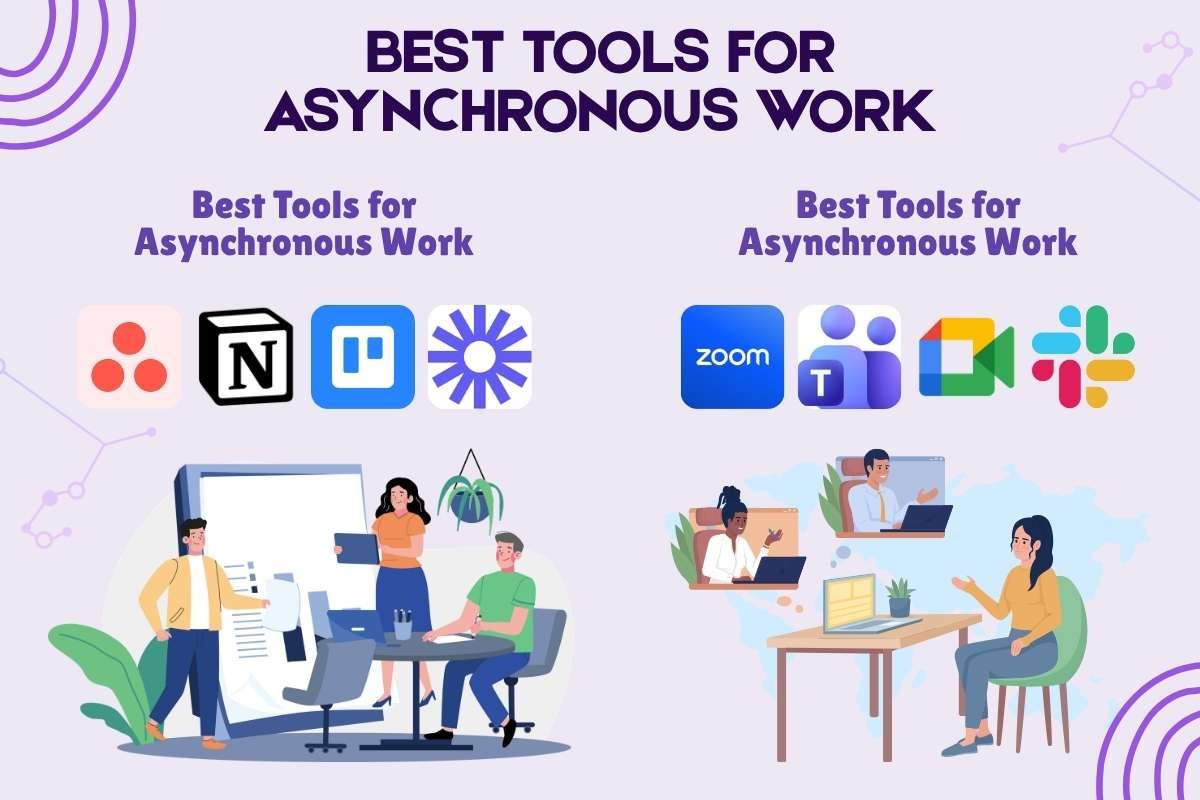
As businesses adopt hybrid communication models, workplace collaboration tools have become essential for managing productivity, communication, and team coordination. The right platforms help organizations balance asynchronous flexibility with synchronous collaboration more effectively.
Best tools for asynchronous work
- Asana: Widely used for task management, workflow tracking, and team collaboration. It helps teams manage projects without requiring constant real-time meetings.
- Notion: Popular for documentation, knowledge sharing, and project organization. Many remote-first companies use it to centralize communication and reduce information gaps.
- Trello: A visual task management platform that helps teams track progress asynchronously through boards and workflow systems.
- Loom: Allows employees to share recorded video updates instead of scheduling live meetings, helping teams save time and improve flexibility.
Best tools for synchronous work
- Zoom: One of the most widely used platforms for virtual meetings, webinars, and real-time collaboration in remote and hybrid workplaces.
- Microsoft Teams: Combines video meetings, live chat, and file sharing, making it a preferred collaboration platform for enterprises.
- Google Meet: Used for real-time video conferencing and team communication, especially within cloud-based work environments.
- Slack: Supports both asynchronous and synchronous communication through channels, instant messaging, and workflow integrations.
According to workplace productivity research from McKinsey & Company, organizations using connected digital collaboration tools can significantly improve communication efficiency and team productivity.
As remote and hybrid work continue growing, businesses are increasingly investing in tools that support both asynchronous vs synchronous workflows to create smarter and more flexible work environments.
Which work style is better?
There is no one-size-fits-all answer in the debate around Asynchronous vs Synchronous Work. The most effective workplaces today combine both models to balance flexibility, productivity, and collaboration.
Asynchronous work is ideal for deep-focus tasks and flexible schedules. According to Gallup, 76% of hybrid employees say flexibility improves their work experience and engagement. It also helps reduce interruptions and meeting overload in remote teams.
At the same time, synchronous work remains critical for brainstorming, urgent discussions, and faster decision-making. Research from McKinsey & Company shows that effective collaboration tools and real-time communication can significantly improve team productivity and operational efficiency.
However, excessive meetings can negatively affect focus and employee well-being. Microsoft research found employees are interrupted every two minutes during the workday because of meetings, emails, and notifications, increasing workplace fatigue.
This is why modern organizations are adopting hybrid communication strategies — using asynchronous workflows for focused productivity and synchronous communication for collaboration and quick alignment.
The future of work is not about choosing one model over the other. It is about finding the right balance that improves efficiency, employee satisfaction, and long-term business performance.
Future trends in workplace collaboration
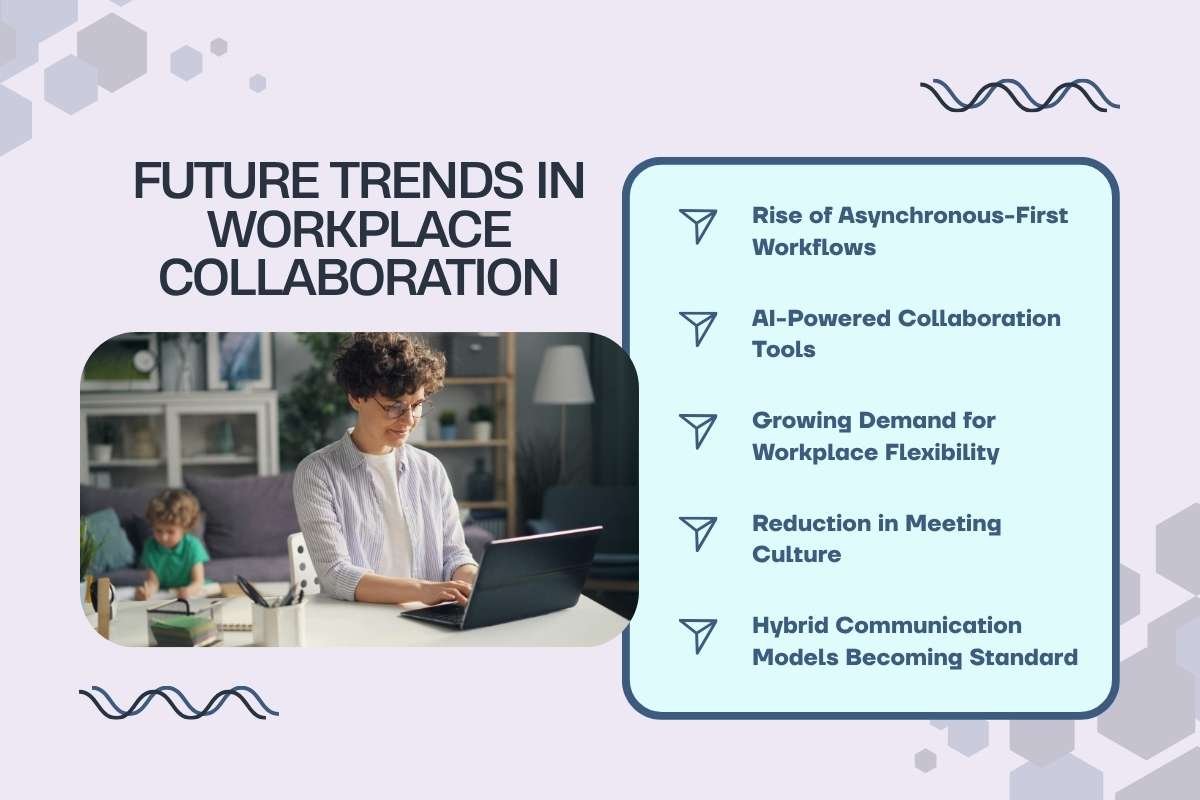
Workplace collaboration is rapidly evolving as businesses focus on flexibility, productivity, and employee well-being. The future of work is no longer centered around constant meetings; it is shifting toward smarter and more balanced communication models.
Key future trends shaping workplace collaboration
1. Rise of asynchronous-first workflows
Companies are reducing unnecessary meetings and encouraging communication through recorded updates, shared documents, and project management tools to improve focus and efficiency.
2. AI-powered collaboration tools
Platforms like Microsoft Teams and Slack are integrating AI features such as meeting summaries, workflow automation, and smart task management to reduce repetitive work.
3. Growing demand for workplace flexibility
According to Gallup, flexibility has become one of the top priorities for employees in remote and hybrid workplaces, especially among younger professionals.
4. Reduction in meeting culture
Microsoft research shows employees are interrupted nearly every two minutes by meetings, emails, or notifications, pushing organizations to reduce meeting overload and protect deep-focus work time.
5. Hybrid communication models are becoming standard
Businesses are increasingly combining asynchronous workflows for focused productivity with synchronous communication for brainstorming and urgent collaboration.
As organizations continue adapting to remote and hybrid work, the future workplace will focus on creating communication systems that balance flexibility, collaboration, and productivity more effectively.
Conclusion:
The discussion around Asynchronous vs Synchronous Work highlights how modern workplaces are evolving toward more flexible and productivity-focused communication models.
Asynchronous work improves flexibility, deep focus, and work-life balance, while synchronous work supports faster decisions, real-time collaboration, and stronger team alignment. Research from Gallup, McKinsey & Company, and Microsoft shows that balanced communication strategies help organizations improve efficiency while reducing burnout.
The future of work is not about choosing one approach over the other. It is about combining asynchronous and synchronous workflows to create smarter, more flexible, and employee-friendly workplaces.
FAQs:
1. What is the difference between asynchronous and synchronous work?
Asynchronous work allows flexible, delayed communication, while synchronous work happens in real time through meetings, calls, or live chats.
2. Which work style is better for remote teams?
Asynchronous work is often better for remote and global teams because it supports flexibility and reduces meeting dependency.
3. Why are companies reducing meetings?
Research from Microsoft shows that excessive meetings and notifications reduce focus and increase employee burnout.
4. Which tools are commonly used for these work styles?
Tools like Notion and Asana support asynchronous work, while Zoom and Microsoft Teams are widely used for synchronous collaboration.
5. What is the future of workplace communication?
Most organizations are adopting hybrid communication models that combine asynchronous flexibility with synchronous collaboration for better productivity and employee well-being.