
You look in the mirror and notice changes. Your clothes fit better, you feel lighter, maybe even stronger. But then you check your weight, and it barely reflects any of it. That disconnect can make you question if you’re actually making progress.
The answer often lies beyond the scale. Understanding body fat percentage for women gives you a clearer way to read those changes. It helps you see what your body is losing, what it’s building, and why progress doesn’t always show up as a lower number. Once you start paying attention to that, your fitness journey feels a lot less confusing and a lot more meaningful.
In this article, we will go in-depth on how the body fat percentage for women differs depending on various factors. But first, we must understand body fat.
Body Fat: The Hidden Role it Plays in Health
Body fat is the fat stored in your body. It is not just extra weight. Your body needs some fat to work well every day.
There are two main types of body fat. Essential fat supports key functions like hormones, brain health, and organ protection. Stored fat acts as energy that your body can use later when needed.
Fat also helps control body temperature and protects your organs from damage. It keeps your skin and hair healthy, too. Without enough fat, your body cannot perform these basic tasks.
How to Measure Body Fat Percentage for Women?
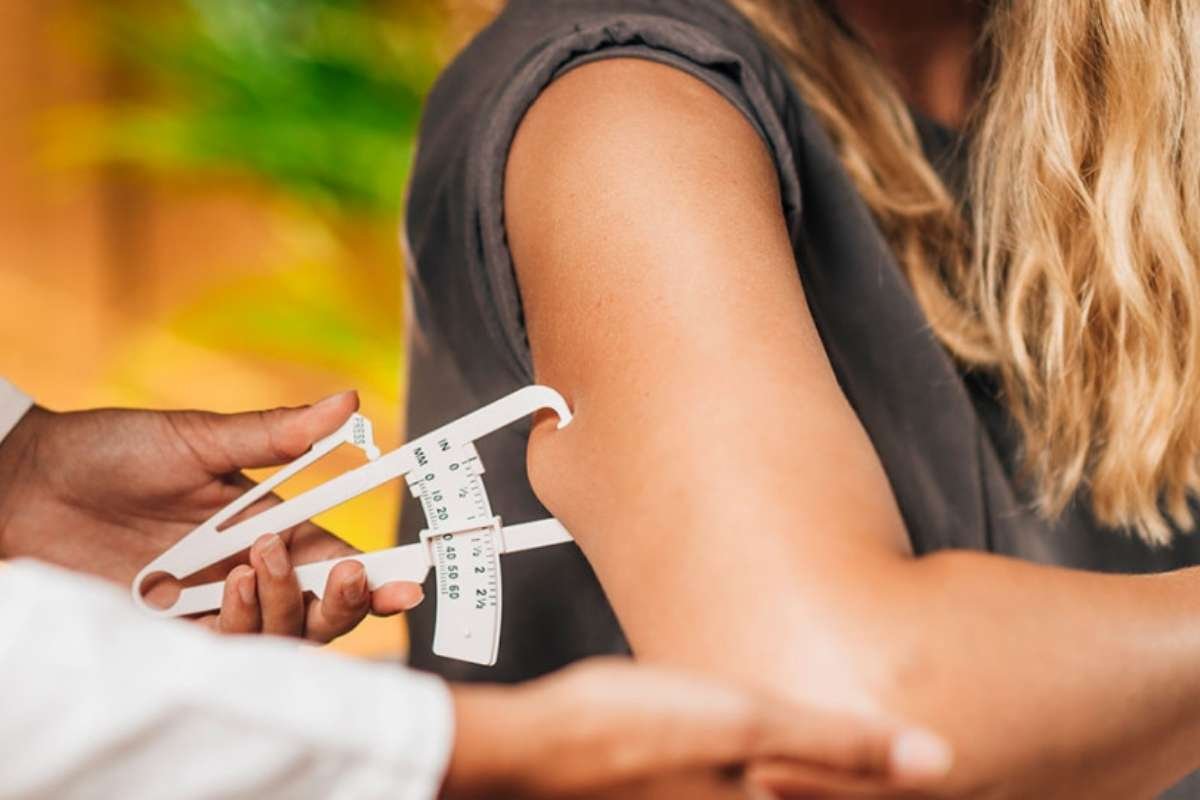
You can measure body fat in different ways. Some methods are simple and can be done at home. Others need special tools and trained experts. Each method gives a slightly different result. Some are more accurate, while others are quick and easy to use. Pick one method and stay consistent to track changes over time.
Once you get your result, the number falls into a category. This helps you understand what the percentage means for your health.
This table shows how body fat percentage for women is grouped. Essential fat is the minimum your body needs to stay alive and support basic functions. Going below this level can affect hormones, energy, and organ health.
The athlete’s range is lower because of high activity levels and strict training. The fitness range reflects a lean body with good muscle tone and active habits. These ranges are often linked with better strength and endurance.
The average range is the most common for many women. It still supports normal body function and daily energy needs. Many people stay in this range without major health issues. Higher levels can increase the risk of heart disease, diabetes, and other health problems over time. Use these ranges as a guide, not a strict target.
What is an Ideal Body Fat Percentage for Women?
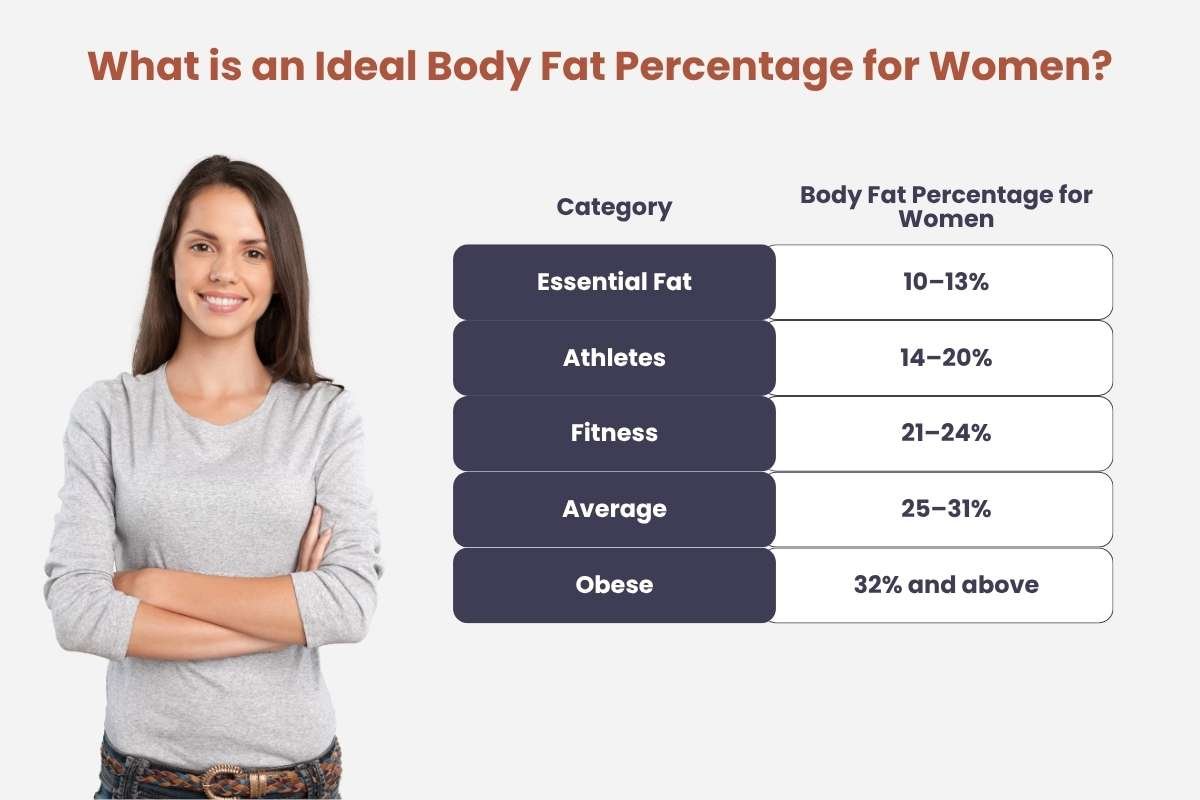
A good body fat level depends on age, activity, and overall health. There is no single perfect number for everyone. Most healthy women fall between 21 and 31 percent, which supports both function and long-term well-being.
| Category | Body Fat Percentage for Women |
|---|---|
| Essential Fat | 10–13% |
| Athletes | 14–20% |
| Fitness | 21–24% |
| Average | 25–31% |
| Obese | 32% and above |
According to the American Council on Exercise (ACE), the average range, from 25% to 31%, is considered healthy for women. This range supports strong muscles, better endurance, and steady energy levels. The body has enough fat to support hormones, but not so much that it slows movement or affects performance. Many women in this range feel stronger, recover faster, and maintain better balance in daily life.
It allows the body to function without stress while still storing enough energy for daily needs. Hormones stay stable, and the body can support normal processes like metabolism and reproduction. This range is easier to maintain and still supports good health.
Very low body fat may look appealing, but it can harm the body over time. Fat is needed for hormone balance, brain function, and organ protection. When levels drop too low, the body struggles to perform basic functions.
Risks of very low body fat include:
- Irregular or missed periods
- Low energy and constant fatigue
- Weak bones and higher injury risk
- Poor immune response
- Mood changes and irritability
High body fat can also lead to health problems. Excess fat puts stress on the heart, joints, and organs. Over time, it can affect how the body uses insulin and stores energy.
Risks of high body fat include:
- Higher risk of heart disease
- Increased chance of type 2 diabetes
- Joint pain and reduced mobility
- High blood pressure
- Lower overall stamina and energy
The ideal range works because it keeps the body in balance. It supports strength, energy, and normal body functions without adding extra strain. Instead of chasing a low number, focus on a range that helps you feel strong, active, and healthy.
How to Maintain a Healthy Body Fat Percentage for Women?
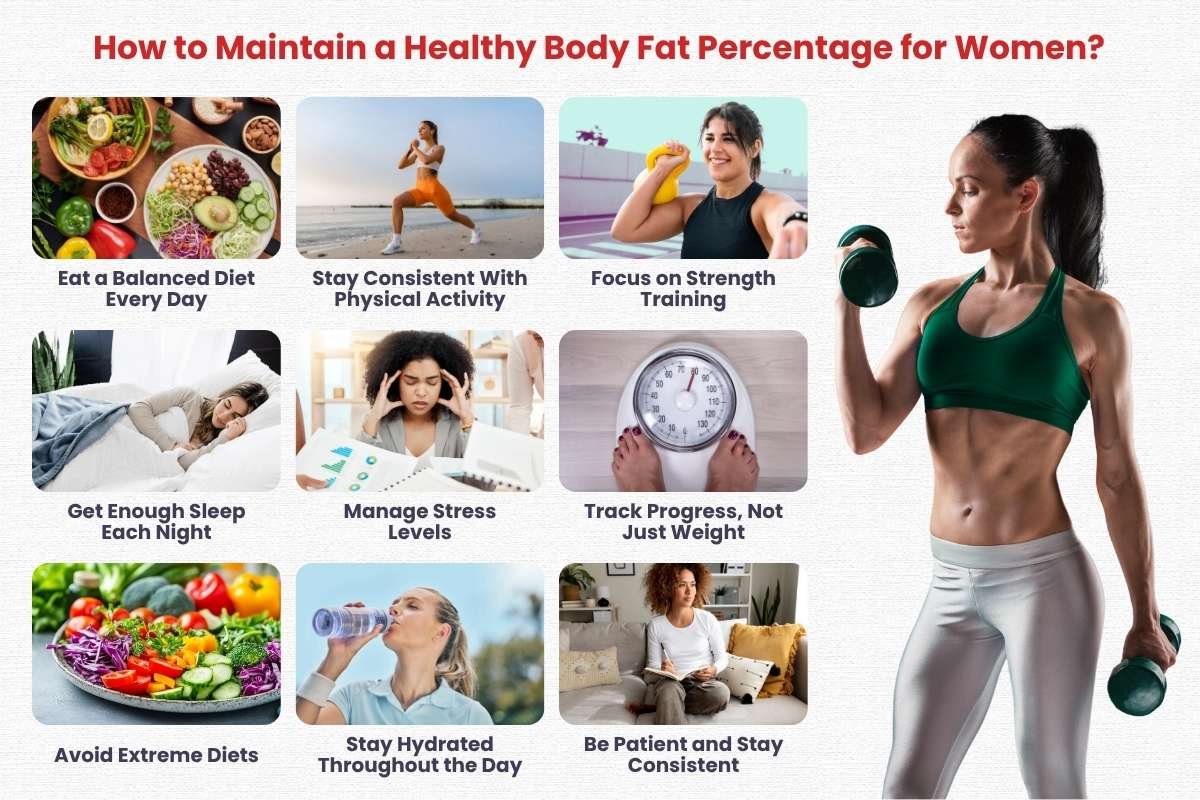
Keeping body fat in a healthy range takes consistent habits. Small daily choices matter more than irregular efforts. Focus on balance instead of extreme changes.
Here are practical ways to maintain a healthy level:
1. Eat a Balanced Diet Every Day
Your body needs the right mix of nutrients to stay stable. Include protein, healthy fats, and complex carbs in each meal. Protein helps build and repair muscles, while fats support hormones and brain function. Whole foods like fruits, vegetables, grains, and lean proteins keep energy steady and prevent overeating.
2. Stay Consistent With Physical Activity
Regular movement helps control fat levels and improve fitness. Combine strength training with cardio for better results. Strength training builds muscle, which helps burn more calories even at rest. Cardio activities like walking, cycling, or running support heart health and fat loss.
3. Focus on Strength Training
Muscle plays a key role in maintaining body composition. More muscle means your body uses energy more efficiently. Aim to train major muscle groups a few times each week. This helps you stay strong and keeps fat levels in check over time.
4. Get Enough Sleep Each Night
Sleep affects hormones that control hunger and fat storage. Poor sleep can increase cravings and lead to weight gain. Aim for 7 to 9 hours of quality sleep each night. A steady sleep routine helps your body recover and stay balanced. It also plays a direct role in improving the body fat percentage for women.
5. Manage Stress Levels
High stress can lead to fat gain, especially around the abdomen. Stress hormones like cortisol affect how your body stores fat. Simple habits like deep breathing, walking, or spending time offline can help reduce stress. Keeping stress low supports better control over body fat.
6. Track Progress, Not Just Weight
Weight alone does not show body fat changes. Use measurements, photos, or the same body fat method over time. This gives a clearer picture of progress. Small changes add up and show real improvement.
7. Avoid Extreme Diets
Crash diets may lower weight fast, but they often reduce muscle too. This slows your metabolism and makes it harder to maintain results. Focus on steady and realistic changes instead. A balanced approach helps you keep results for the long term.
8. Stay Hydrated Throughout the Day
Water supports digestion, energy, and overall health. It can also help control hunger and prevent overeating. Drinking enough water keeps your body functioning well and supports fat balance.
9. Be Patient and Stay Consistent
Changes in body fat percentage for women take time. Quick results often do not last. Stay consistent with your habits and give your body time to adjust. Consistent effort leads to better and more stable results. Small, steady actions each day will always beat short bursts of effort.
What is the Difference Between Body Fat Percentage for Women and Men?
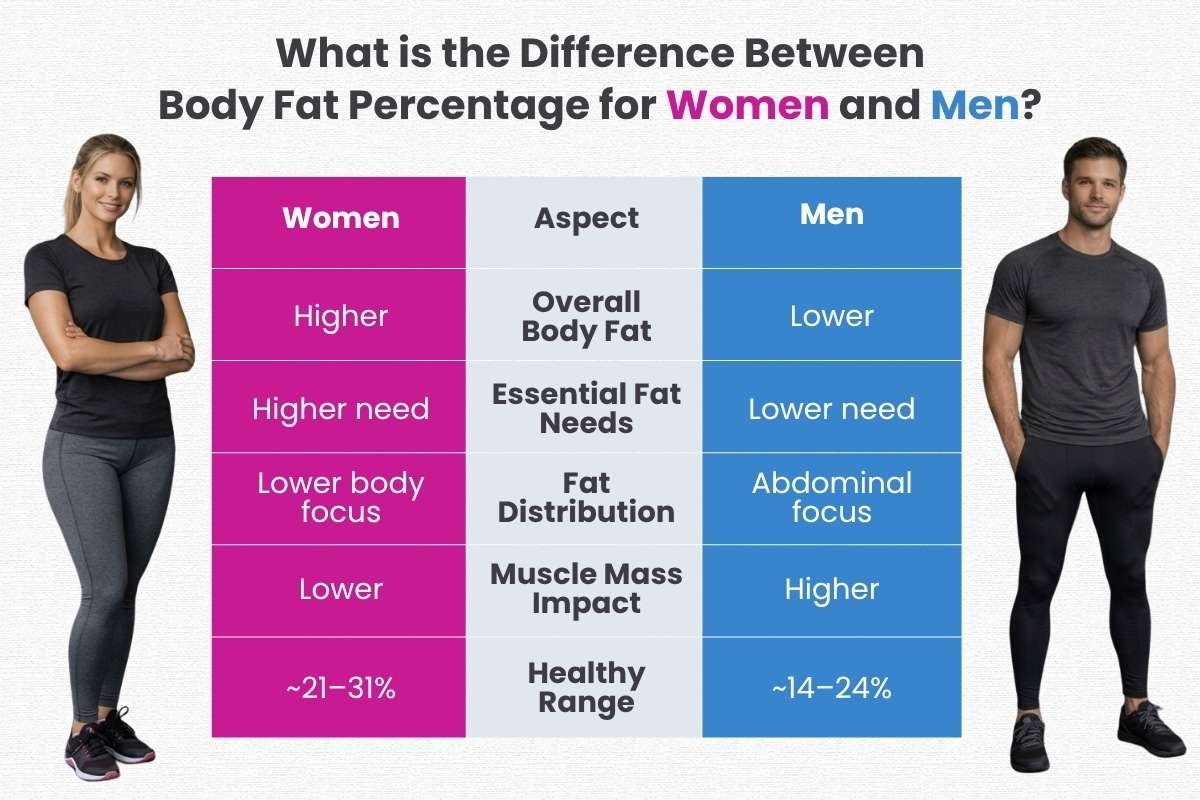
Men and women have different body fat levels because their bodies serve different functions. Hormones, muscle mass, and fat distribution all play a role. This is why the same percentage does not mean the same thing for both.
| Women | Aspect | Men |
| Higher | Overall Body Fat | Lower |
| Higher need | Essential Fat Needs | Lower need |
| Lower body focus | Fat Distribution | Abdominal focus |
| Lower | Muscle Mass Impact | Higher |
| ~21–31% | Healthy Range | ~14–24% |
The differences come down to how each body is built and how it functions. Women need more fat to support hormone balance and reproductive processes. This raises both the minimum and healthy range compared to men.
Fat is also stored in different areas. Women tend to store fat in the lower body, which helps with energy reserve and protection. Men store more fat around the abdomen, which is why lower percentages are considered normal for them.
Muscle mass also changes the picture. Men usually have more muscle, which lowers their overall fat percentage even if their body weight looks similar. Women have less muscle on average, so their fat percentage stays higher even when they are fit.
Because of these factors, comparing body fat between men and women can lead to wrong conclusions. The same number can reflect very different health levels. It makes more sense to compare within the correct range for each body type.
Conclusion:
Progress is not always obvious when you rely on a single number. The scale can stay the same even when your body is changing in the right way. That is why looking deeper at your composition gives you a more honest view of your fitness journey.
When you understand body fat percentage for women, you stop guessing and start tracking real change. It becomes easier to stay motivated because you can see improvements that the scale often hides. Over time, this approach helps you focus less on numbers and more on how your body feels, performs, and improves.
FAQs
1. What is considered a healthy body fat percentage for women?
Most women fall within a healthy range of 25 % to 33%, though it can vary based on age and activity level.
2. How often should you check body fat percentage?
Checking once every few weeks is usually enough, as daily changes are not very accurate or meaningful.
3. Is body fat percentage more useful than weight?
In many cases, yes. It provides a clearer view of body composition and overall fitness progress.