
Key Takeaways:
- ECB Hits Pause, But Inflation Risks Persist
- Iran Tensions Could Delay Rate Cuts
- September Meeting Becomes the Next Big Market Trigger
The European Central Bank (ECB) kept its key interest rates unchanged on Thursday, adopting a wait-and-watch approach as escalating tensions involving Iran threaten to rekindle inflation across the eurozone. The decision comes after the central bank raised borrowing costs in June for the first time in nearly three years and reflects growing uncertainty over how geopolitical developments could shape the region’s economic outlook.
The ECB left its deposit facility rate at 2.25%, the main refinancing rate at 2.40%, and the marginal lending facility at 2.65%, signaling that policymakers believe current borrowing costs remain appropriate while they assess the evolving risks. Although inflation has eased significantly from the record highs seen in recent years, renewed volatility in global energy markets has complicated the path ahead.
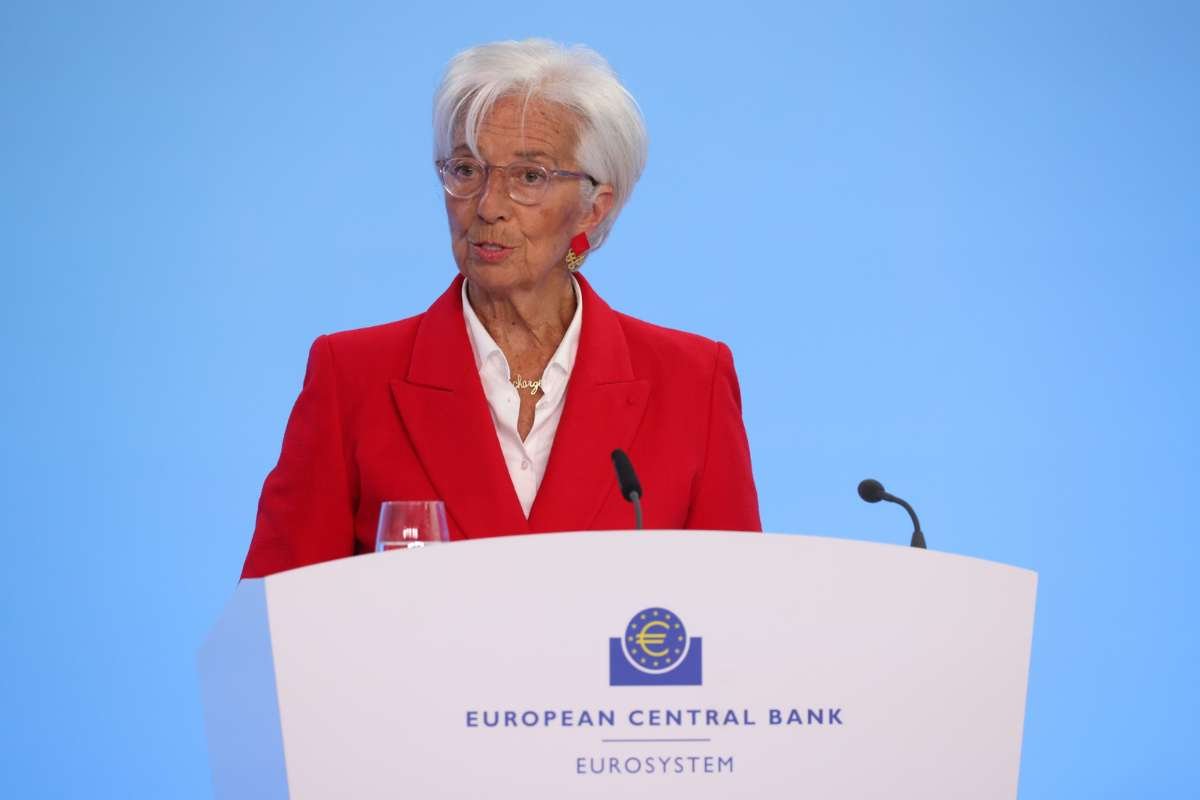
Speaking after the policy meeting, European Central Bank President Christine Lagarde said future decisions would continue to be guided by incoming economic data rather than a fixed policy path. She reiterated that the Governing Council remains committed to bringing inflation sustainably back to its 2% target while ensuring that monetary policy responds appropriately to changing economic conditions.
The latest policy decision also reflects the central bank’s confidence that previous rate increases are continuing to work their way through the economy. However, officials acknowledged that fresh external shocks, particularly those linked to energy markets, could delay the progress made in reducing inflation over the past year.
Middle East Uncertainty Raises Fresh Inflation Concerns
A key factor influencing the European Central Bank’s decision is the renewed rise in oil prices following heightened geopolitical tensions involving Iran. Fears of supply disruptions and increased shipping costs have pushed crude prices higher, reviving concerns that energy could once again become a major driver of inflation across Europe.
Higher fuel prices typically feed into transportation, manufacturing and household energy costs, eventually affecting the prices consumers pay for a broad range of goods and services. While underlying inflation has moderated and wage growth has shown signs of easing, policymakers warned that a prolonged surge in energy prices could reverse recent gains.
At the same time, the eurozone economy continues to face a fragile recovery. Higher borrowing costs have already weighed on consumer spending, housing activity and business investment, making it increasingly important for the ECB to balance inflation control with the need to support economic growth. Raising rates too aggressively could slow the economy further, while easing policy too early could allow inflationary pressures to return.
For now, the central bank believes holding rates steady provides an opportunity to evaluate whether the latest energy-driven price increases prove temporary or begin spreading more broadly across the economy. Officials stressed that future policy decisions will depend on how inflation, labour market conditions and economic activity evolve over the coming months.
Financial markets largely viewed the decision as expected, though investors continue to price in the possibility of additional rate hikes later this year if inflation remains stubborn or geopolitical tensions intensify.
September Meeting Now in Focus for Investors and Businesses
Attention has now shifted to the European Central Bank’s next monetary policy meeting in September, when policymakers will have access to updated inflation forecasts, economic growth projections and additional data on the impact of higher energy prices. Those assessments are expected to play a crucial role in determining whether the current pause marks a temporary break or the beginning of a more prolonged period of stable interest rates.
Following the announcement, financial markets remained cautious. The euro weakened modestly against the U.S. dollar as investors interpreted the ECB’s statement as measured rather than overtly hawkish. Market participants also continued to monitor developments in the Middle East, recognizing that further escalation could quickly alter the inflation outlook and influence future central bank decisions.
Lagarde emphasized that the ECB remains prepared to respond if inflationary risks intensify but made clear that policymakers are not committing to either further rate increases or future cuts. Instead, each decision will be taken on a meeting-by-meeting basis, with close attention paid to inflation trends, wage growth, financial conditions and broader economic performance.
The central bank’s latest stance highlights the increasingly complex environment facing policymakers. While inflation has moved closer to the ECB’s target, geopolitical uncertainty and volatile energy markets continue to pose significant risks to price stability. At the same time, businesses and households remain sensitive to higher borrowing costs, creating a delicate balance between safeguarding economic growth and preventing another wave of inflation.
For now, the European Central Bank has chosen caution over immediate action. However, with global energy markets remaining volatile and geopolitical tensions showing little sign of easing, the September meeting is expected to be closely watched by investors, businesses and governments alike as they look for clearer signals on the future direction of Europe’s monetary policy.
Visit CIO Women Magazine for the latest business and technology insights.