
Millions of people across Africa still live without reliable access to electricity, while floods, droughts, and other climate-related disasters continue to put lives and livelihoods at risk. Without strong policies, regional cooperation, and access to funding, these challenges become even harder to overcome. Turning climate commitments into real solutions requires experienced leaders who can bring countries together and help create a path toward a more secure and sustainable future.
One of those leaders is Ms. Sibongile Winnie Mavimbela, Senior Programme Officer for Environment and Climate Change at the Southern African Development Community (SADC) Secretariat. Through her work, she has helped shape regional climate and energy policies while strengthening cooperation among member states.
Key contributions include:
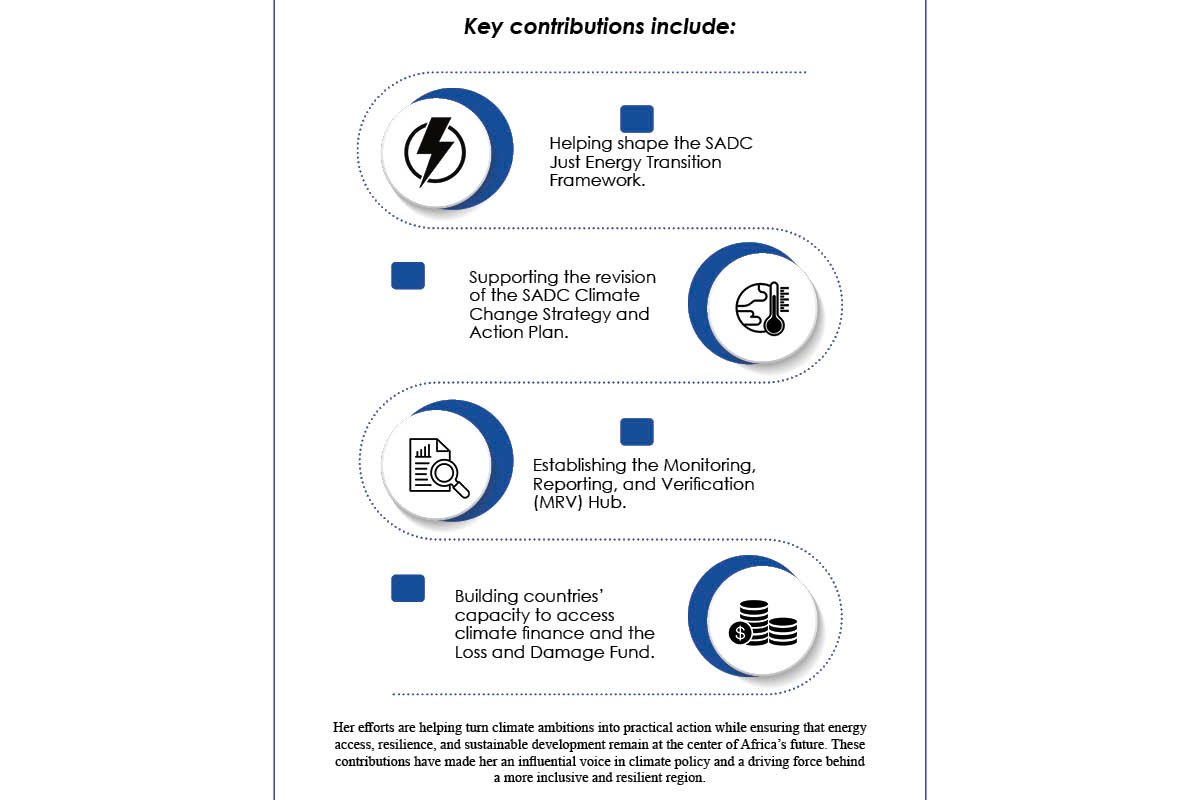
- Helping shape the SADC Just Energy Transition Framework.
- Supporting the revision of the SADC Climate Change Strategy and Action Plan.
- Establishing the Monitoring, Reporting, and Verification (MRV) Hub.
- Building countries’ capacity to access climate finance and the Loss and Damage Fund.
Her efforts are helping turn climate ambitions into practical action while ensuring that energy access, resilience, and sustainable development remain at the center of Africa’s future. These contributions have made her an influential voice in climate policy and a driving force behind a more inclusive and resilient region.
Fair and inclusive energy future for Southern Africa
As a member of the SADC Secretariat, Ms. Mavimbela plays a key role in helping countries address some of the region’s most pressing challenges, including energy poverty, inequality, and limited access to essential services. She recognizes that for many Southern African nations, the priority is not simply moving away from traditional energy sources, but ensuring that people have access to affordable and reliable electricity. With this understanding, she contributed to the development of the SADC Just Energy Transition Framework, which supports countries in reducing emissions while taking into account their development needs and long-term goal of achieving carbon neutrality by 2050.
Ms. Sibongile Winnie Mavimbela has also helped guide the revision of the SADC Climate Change Strategy and Action Plan (2020-2030), aligning it with the Paris Agreement, the Sustainable Development Goals, and Africa Agenda 2063. The strategy promotes low-carbon and climate-resilient development and strengthens cooperation among member states to support climate action and emission reduction efforts.
Her work reflects the realities facing the African continent, where nearly 600 million people still do not have access to electricity. Rather than focusing solely on a rapid shift away from conventional energy sources, the region is pursuing a balanced energy mix that can deliver energy security and sustainability. One of its major goals is to increase the contribution of renewable energy to 35 percent of the regional energy mix by 2030.
Through the implementation of the Regional Energy Access Strategy and Action Plan across all 16 SADC member states, Ms. Mavimbela is helping countries tackle energy poverty, climate change, and infrastructure challenges while promoting inclusive economic growth. Her work is focused on ensuring that the transition to cleaner energy benefits communities, strengthens resilience, and creates lasting social and economic opportunities across the region.
Africa is turning climate commitments into action
Africa contributes less than 5% of global greenhouse gas emissions, yet it remains one of the regions most vulnerable to the effects of climate change. Widespread poverty, limited resources, weak adaptive capacity, and a heavy dependence on rainfed agriculture have made many communities increasingly vulnerable to extreme weather events and changing climate conditions.
According to Ms. Sibongile Winnie Mavimbela, the climate policy landscape in Africa has changed considerably in recent years. Having previously served as a climate negotiator and now working within an intergovernmental organization, she has witnessed a growing shift in the continent’s approach to climate action. African countries are moving beyond discussions and commitments and placing greater emphasis on implementation and measurable results.
Rather than simply making pledges, African leaders and negotiators are increasingly calling for commitments to be honored and translated into practical actions that strengthen resilience and deliver meaningful benefits to communities across the continent. At the same time, she believes continued support from global and regional stakeholders remains essential to close existing gaps and ensure that climate commitments lead to lasting change.
Advancing cleaner energy for a sustainable future
One of the most significant initiatives Ms. Mavimbela has contributed to is the development of the SADC Just Energy Transition Framework from a climate change mitigation perspective. The framework has been put into action through the SADC Just Energy Transition Action Plans (2026–2030), which provide a practical roadmap for governments, regulators, utilities, development finance institutions, and regional organizations. By setting clear priorities, targets, responsibilities, and timelines, the framework is helping countries across Southern Africa move from climate commitments to coordinated action.
Ms. Sibongile Winnie Mavimbela has also contributed to the development of the Low Sulphur Diesel Guidelines, which promote cleaner fuel standards throughout the region. These efforts have supported the transition to diesel with lower sulphur content in several SADC countries, leading to improved environmental outcomes. South Africa has emerged as a regional leader in this area, with an increasing number of fuel stations now offering cleaner 10ppm diesel. Together, these initiatives are helping advance cleaner energy systems and support a more sustainable future for Southern Africa.
Strengthening Climate Cooperation Across Borders
Ms. Mavimbela believes that geopolitical and economic differences have a major impact on climate cooperation, particularly when it comes to access to funding. Much of the available climate finance is directed toward emission reduction and energy transition projects, which are often priorities for developed countries. However, for many countries in Southern Africa, adaptation is just as important because communities are highly vulnerable to floods, droughts, and other climate-related challenges. Since many people depend on agriculture and natural resources for their livelihoods, she believes that stronger partnerships and a more balanced distribution of resources between mitigation and adaptation are essential for effective climate cooperation.
Despite these challenges, African countries continue to pursue their climate goals through national policies, strategies, and action plans, including their Nationally Determined Contributions (NDCs) under the UNFCCC. To strengthen regional cooperation and improve transparency, Ms. Sibongile Winnie Mavimbela supported the establishment of a Monitoring, Reporting and Verification (MRV) Hub for SADC member states. The platform allows countries to share data, exchange knowledge, and work more closely together, helping to create a more coordinated approach to climate action across Southern Africa.
Science and data to shape effective climate policies
According to Ms. Mavimbela, the Department of Environmental Affairs serves as the country’s National Focal Point for Climate Change and plays a key role in coordinating and consolidating work under the United Nations Framework Convention on Climate Change (UNFCCC). While Africa contributes less than 5 percent of global greenhouse gas emissions, the continent remains among the most vulnerable to the effects of climate change. As a result, strengthening adaptation has become a development and economic priority.
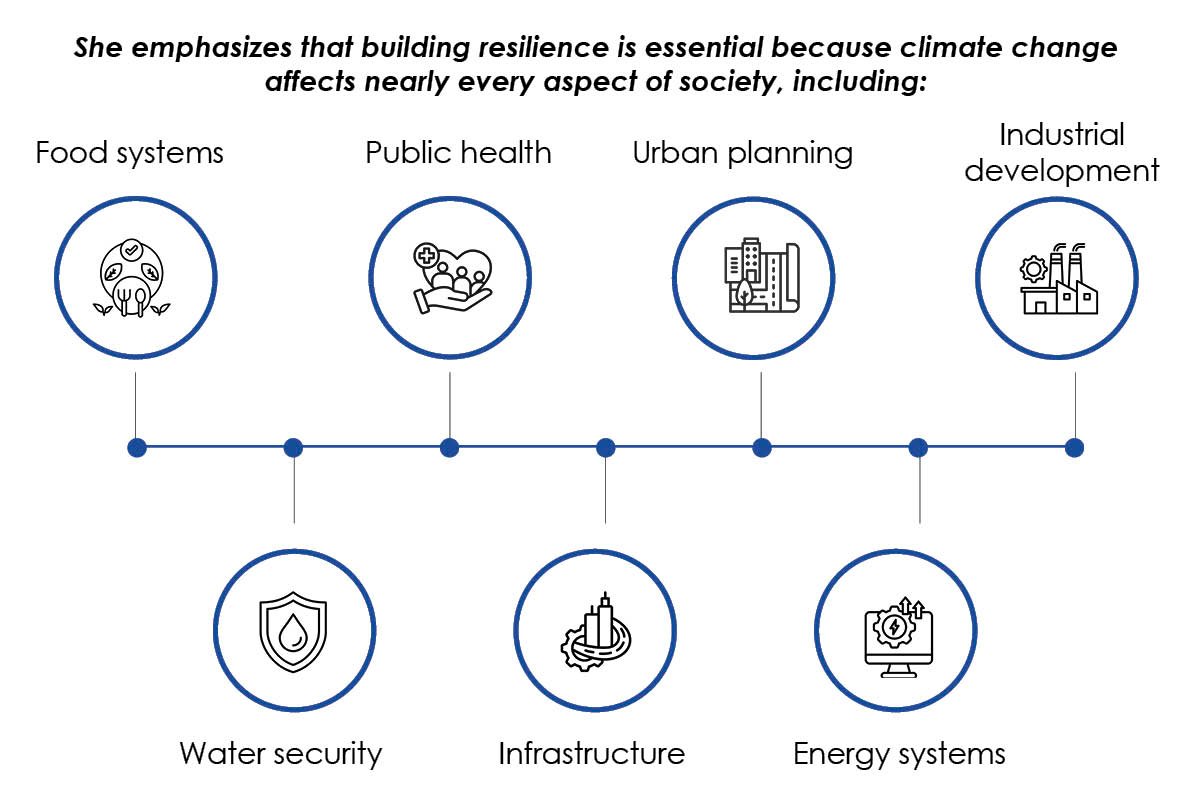
She emphasizes that building resilience is essential because climate change affects nearly every aspect of society, including:
- Food systems.
- Water security.
- Public health.
- Infrastructure.
- Urban planning.
- Energy systems.
- Industrial development.
Africa has therefore supported the adoption of the Belém Adaptation Indicators and continues to advance the implementation of the Global Goal on Adaptation, which is expected to be further strengthened through the emerging Belém-Addis Vision on Adaptation.
In her view, these efforts provide a stronger foundation for measuring collective progress. However, the next challenge lies in ensuring that these frameworks are practical, adequately financed, measurable, and capable of being implemented across different national contexts. She believes this highlights the vital role that data, scientific research, and evidence-based analysis play in shaping effective climate policies and informed decision-making.
Strategic partnerships
Ms. Sibongile Winnie Mavimbela has witnessed a significant shift in the relationship between developed and developing countries, moving away from the traditional donor-recipient model toward stronger international partnerships built on shared interests and mutual goals. Today, cooperation is increasingly focused on areas such as resilient value chains, green industrialization, sustainable investment, and climate security.
She believes that collaboration among governments, development institutions, multilateral organizations, the private sector, research bodies, and non-governmental organizations is playing an important role in advancing renewable energy and shaping the climate agenda across Africa. In support of these efforts, she has contributed to several high-level engagements with African heads of state, including the Africa Climate Change, Africa Blue Economy, and Africa Green Economy Summits. These platforms have helped strengthen partnerships and encourage collective action toward a more sustainable future for the continent.
Regulatory barriers are slowing down renewable energy adoption
Ms. Mavimbela emphasizes that achieving meaningful climate progress requires strong political commitment, science-based policies, and better access to financial resources. Governments, development partners, financial institutions, the private sector, and international organizations all have a role to play in supporting investments and delivering solutions that benefit communities and economies. However, the high cost of renewable energy infrastructure and delays in accessing funding often slow down progress.
According to Ms. Sibongile Winnie Mavimbela, one of the biggest challenges facing developing countries is the growing gap in adaptation finance. While the need for funding continues to increase, the resources currently available fall far short of what is required. At the same time, countries in Southern Africa are experiencing more frequent and severe climate-related disasters, including floods, cyclones, droughts, heatwaves, pests, and diseases. These challenges have become increasingly serious over the past two decades, making urgent action more important than ever.
To help address these issues, Ms. Mavimbela has been supporting SADC member states in strengthening their ability to access the Loss and Damage Fund. Through this work, she is helping vulnerable countries secure the resources they need to protect communities, strengthen resilience, and better respond to the growing impacts of climate change.
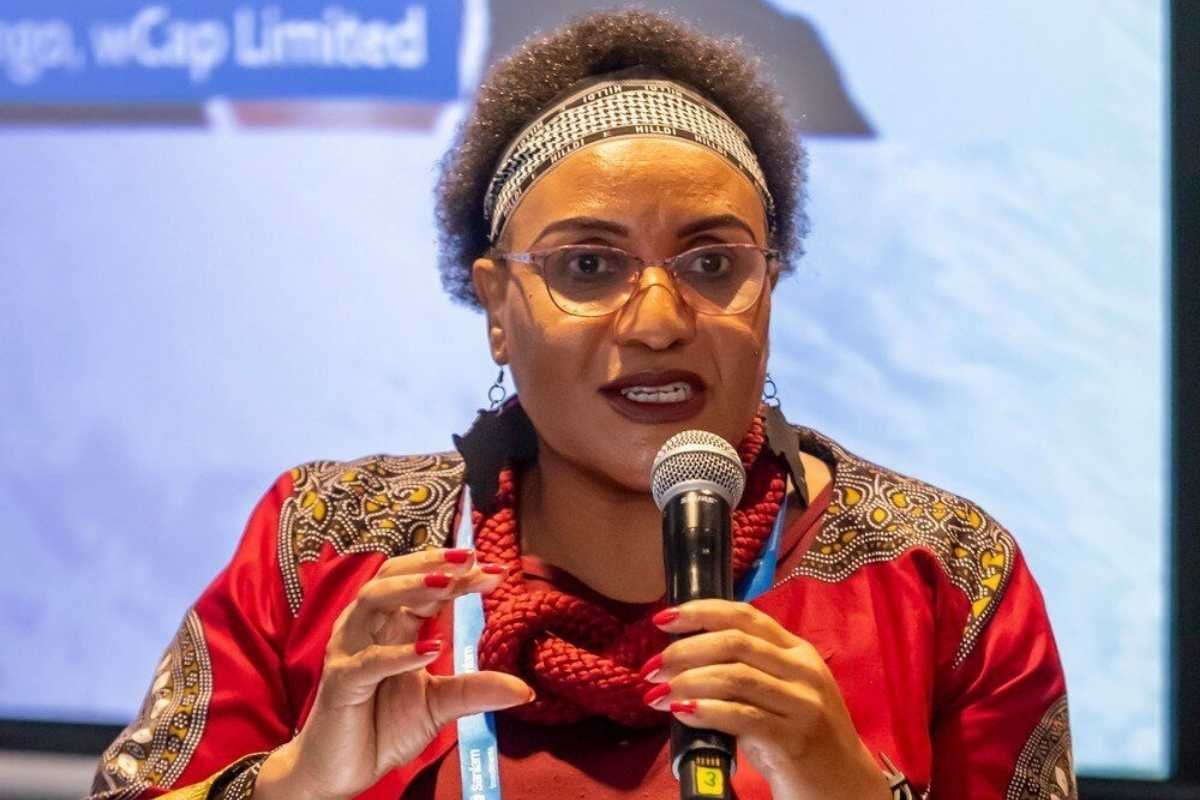
Giving Africa a stronger voice in global climate talks
According to Ms. Sibongile Winnie Mavimbela, Africa’s climate landscape has undergone significant changes in recent years. Having previously served as a member of South Africa’s climate negotiation team, she has witnessed firsthand how African countries have become more confident and vocal in shaping the global climate agenda. Today, the continent is taking bolder positions and advocating for climate action based on the principles of equity and Common but Differentiated Responsibilities and Respective Capabilities (CBDR-RC), which recognize historical emissions and the different circumstances of individual nations.
She believes that for African countries, strengthening climate adaptation requires more than improving systems and institutions. It also depends on greater access to predictable, new, and additional grant-based public finance from developed countries. In her view, ensuring adequate support for adaptation is essential to helping vulnerable communities build resilience and address the growing impacts of climate change.
A vision for Africa’s clean energy future
Looking ahead, Ms. Sibongile Winnie Mavimbela highlights several priorities that can help strengthen Africa’s energy future:
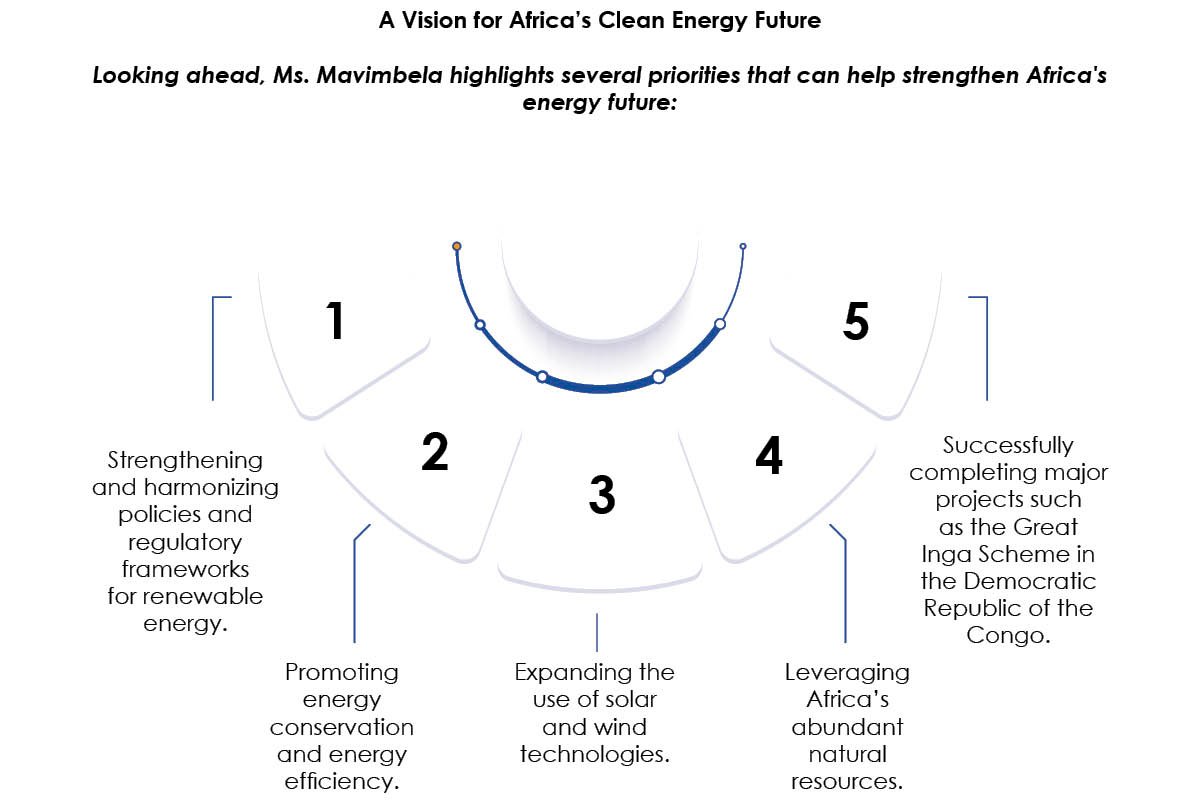
- Strengthening and harmonizing policies and regulatory frameworks for renewable energy.
- Promoting energy conservation and energy efficiency.
- Expanding the use of solar and wind technologies.
- Leveraging Africa’s abundant natural resources.
- Successfully completing major projects such as the Great Inga Scheme in the Democratic Republic of the Congo.
In her view, clear and coordinated policies are essential for creating sustainable and resilient energy systems. With its enormous hydropower capacity, the Great Inga Scheme has the potential to provide electricity across the African continent and play a transformative role in Africa’s long-term energy future.
Women’s corner
For Ms. Sibongile Winnie Mavimbela, a career in Environmental Science opened the door to a much broader world of climate science, geopolitics, environmental diplomacy, and international negotiations. Over the years, her experience across sectors ranging from water and forestry to wildlife and biodiversity has shaped her approach to leadership. While she once led from the front, she now focuses on creating opportunities for younger generations to bring forward new ideas while she shares the wisdom gained through experience. Guided by discipline, professionalism, and a commitment to continuous learning, she hopes to leave behind a legacy that inspires future generations to solve global challenges.
As a woman working in a field that has traditionally been dominated by men, Ms. Sibongile Winnie Mavimbela has faced challenges that have required resilience and personal sacrifice. The demands of international climate work and extensive travel have not always been easy, but with inner strength and the support of her family, she has turned those experiences into motivation to continue making a difference. She considers mentorship an important part of her journey and actively supports young people through training, youth networks, and entrepreneurship initiatives.
Her message to women aspiring to careers in climate policy and leadership is clear: women are equally capable of succeeding in any field. They should not wait to be invited but should confidently claim their place at the table, use their voices, and create opportunities for others to rise alongside them.