Key Takeaways
- AMD has entered the $1 trillion market-cap club
- AI and data-center demand are driving AMD’s growth
- The milestone raises expectations for AMD’s next phase of growth
Advanced Micro Devices has crossed a $1 trillion market capitalization for the first time, pushing its AMD $1 trillion market value milestone into focus as the semiconductor company continues its transformation under CEO Lisa Su.
The milestone reflects years of investment in high-performance computing, data-center processors and artificial intelligence hardware. It also highlights how the rapid expansion of AI has changed investor expectations across the semiconductor industry.
AMD’s decade-long transformation and $1 trillion market value
The AMD $1 trillion market cap milestone reflects the company’s long-term shift toward high-performance computing, data centers and artificial intelligence.
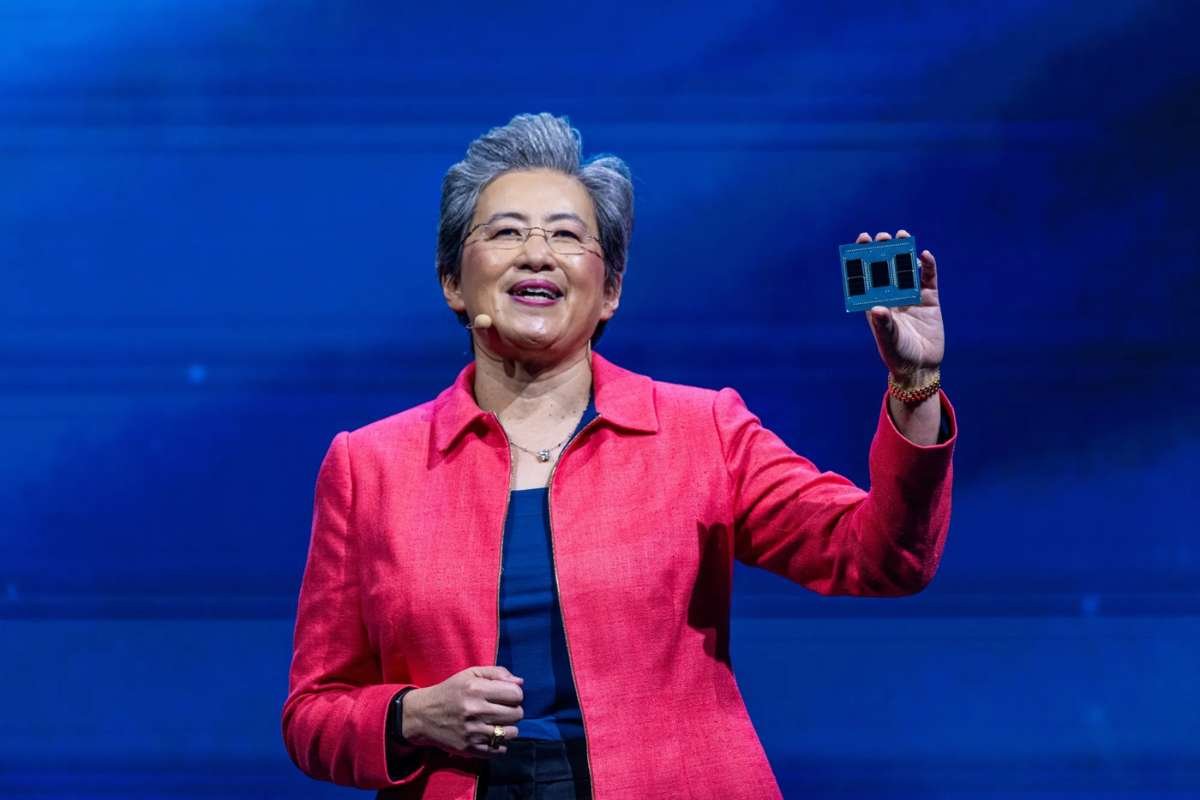
Lisa Su became AMD’s chief executive in 2014, beginning a period of significant change for the company. Under her leadership, AMD shifted its focus toward higher-performance processors and strengthened its position in markets beyond traditional personal computing.
The company expanded its Ryzen processor business for PCs while building its EPYC portfolio for data centers. It also continued developing graphics processors and later expanded into dedicated AI accelerators designed to support demanding workloads.
The strategy helped AMD become a stronger competitor in markets historically dominated by larger chip companies. The AMD $1 trillion market value milestone reflects how significantly the company’s position has changed over the past decade. Its growing presence in data centers became particularly important as cloud providers and technology companies began increasing spending on computing infrastructure.
AMD’s recent share-price performance has reflected rising expectations around that strategy. The stock climbed sharply in September, helping AMD reach the $1 trillion market cap threshold and making the AMD $1 trillion market cap milestone one of the year’s major semiconductor developments. At its September 21 peak, AMD shares traded at roughly $614, taking the company’s market capitalization above the milestone.
The achievement placed AMD among a select group of semiconductor companies to reach a trillion-dollar valuation, alongside Nvidia, Broadcom and Micron.
AI becomes a major driver of AMD’s $1 trillion market value
AMD’s $1 trillion market cap also highlights how strongly investors are connecting the company’s growth prospects with rising demand for AI computing infrastructure.
Artificial intelligence has become central to AMD’s growth story as companies around the world invest heavily in the computing infrastructure required to train and operate AI systems.
This expanding AI and data-center business has become an important factor behind the AMD $1 trillion market cap milestone. Its EPYC processors are used for general-purpose computing, while its Instinct accelerator family is designed for AI and other high-performance workloads.
The company’s data-center business has expanded rapidly as demand for these products has increased. AMD reported record quarterly revenue of about $11.5 billion in its second quarter, while data-center revenue reached approximately $6.7 billion, more than double the level from the same period a year earlier.
The expansion of AI agents and increasingly complex applications has added another potential source of demand. AI systems require significant computing capacity not only during training but also when responding to users and running applications at scale.
Major technology companies are therefore continuing to invest in servers, accelerators and other infrastructure. AMD has benefited from this spending through relationships with large cloud and technology customers.
The company has also set ambitious targets for its data-center business. CEO Lisa Su has indicated that AMD expects data-center sales to double in 2027, underlining the importance of AI-related demand to its future growth plans.
AMD faces a bigger competitive challenge
The AMD $1 trillion market value also puts greater attention on the company’s ability to sustain its AI-driven growth.
Nvidia remains the dominant company in AI accelerators, with a market value several times larger than AMD’s. AMD is attempting to narrow that gap by expanding its accelerator portfolio and offering customers an alternative for AI computing workloads.
The company is also competing across multiple markets, including CPUs, graphics processors and data-center hardware. Its ability to maintain product performance, secure large technology customers and increase AI-related revenue will be important as competition intensifies.
The rapid increase in AMD’s valuation also demonstrates how strongly financial markets are linking semiconductor companies to the expansion of artificial intelligence. Demand for AI infrastructure has created significant opportunities for chip designers, manufacturers and suppliers across the technology sector.
For AMD, the $1 trillion milestone represents the culmination of more than a decade of strategic changes under Su. The company has moved from being primarily a challenger in PC processors and graphics into a broader computing company with a growing role in data centers and AI.
Following the AMD $1 trillion market value milestone, its next phase will depend on whether it can convert the current AI boom into sustained revenue growth while continuing to compete in an increasingly crowded semiconductor market.